.webp&w=384&q=75)

Loading, please wait...
Loading, please wait...

The World Health Organization (WHO) recently highlighted several experimental Bundibugyo Ebola treatments for clinical trials. Currently, an active outbreak of this rare Ebola strain is affecting the Democratic Republic of the Congo and Uganda. Because there are no approved therapies or vaccines for this specific strain, health authorities must evaluate these candidates urgently.
The expert panel recommended evaluating three experimental therapeutics. Specifically, these include Mapp Biopharmaceutical's MBP134, Regeneron's monoclonal antibody maftivimab, and Gilead's antiviral remdesivir. Additionally, advisors suggested testing a combination of a monoclonal antibody and remdesivir. Consequently, clinical trials will help establish efficacy data. Meanwhile, Regeneron has already supplied maftivimab to the Democratic Republic of the Congo for prospective research.
For post-exposure prophylaxis, Gilead’s oral antiviral obeldesivir is a leading candidate. However, its success heavily relies on robust contact tracing. Furthermore, the International AIDS Vaccine Initiative is developing a single-dose vaccine candidate called rVSV Bundibugyo. Although this vaccine is promising, it will not be ready for trials for seven to nine months. Alternatively, the ChAdOx1 Bundibugyo vaccine, developed by Oxford and the Serum Institute, may be ready in three months. Nevertheless, researchers still need more animal data for this candidate. Finally, the WHO advised against using Merck's Ervebo vaccine outside research settings due to inconclusive protection data.
Q1: Are there any approved vaccines for the Bundibugyo strain of Ebola?
Currently, there are no approved vaccines or therapies specifically licensed for the Bundibugyo virus disease.
Q2: What treatments are being prioritized for clinical trials?
The WHO recommends clinical trials for MBP134, maftivimab, and remdesivir, including potential combination therapies.
Disclaimer: This content is for informational and educational purposes only. It does not constitute medical advice or replace professional judgment. Refer to the latest local and national guidelines for clinical practice.
References

Read summarized clinical updates, watch expert medical content, and earn CME certifications right from your smartphone.
Open your smartphone camera to scan and install.





The WHO identifies experimental treatments and vaccines for clinical trials during the active Bundibugyo Ebola outbreak in the DRC and Uganda....
4 months ago
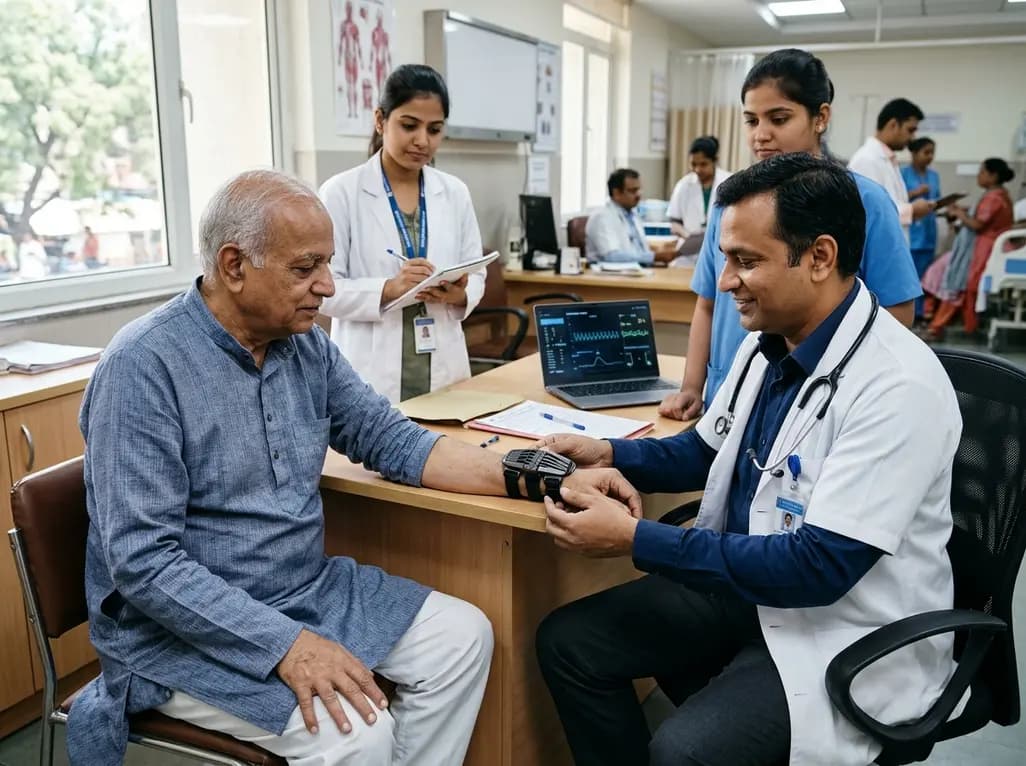
The TREM-AB open-label pilot study evaluated a wearable passive nonlinear vibration absorber for essential tremor. The Nonlinear Energy Sink bracelet reduced clinical Fahn-Tolosa-Marin tremor scores by 32.1% and electrophysiological tremor power by 49.2% with no adverse effects reported.
Today

A study in JAMIA Open shows lightweight open-source reasoning LLMs achieve up to 95% sensitivity and accelerate evidence synthesis screening by nearly twentyfold, presenting a cost-effective, scalable AI solution for biomedical research and systematic reviews.
Today
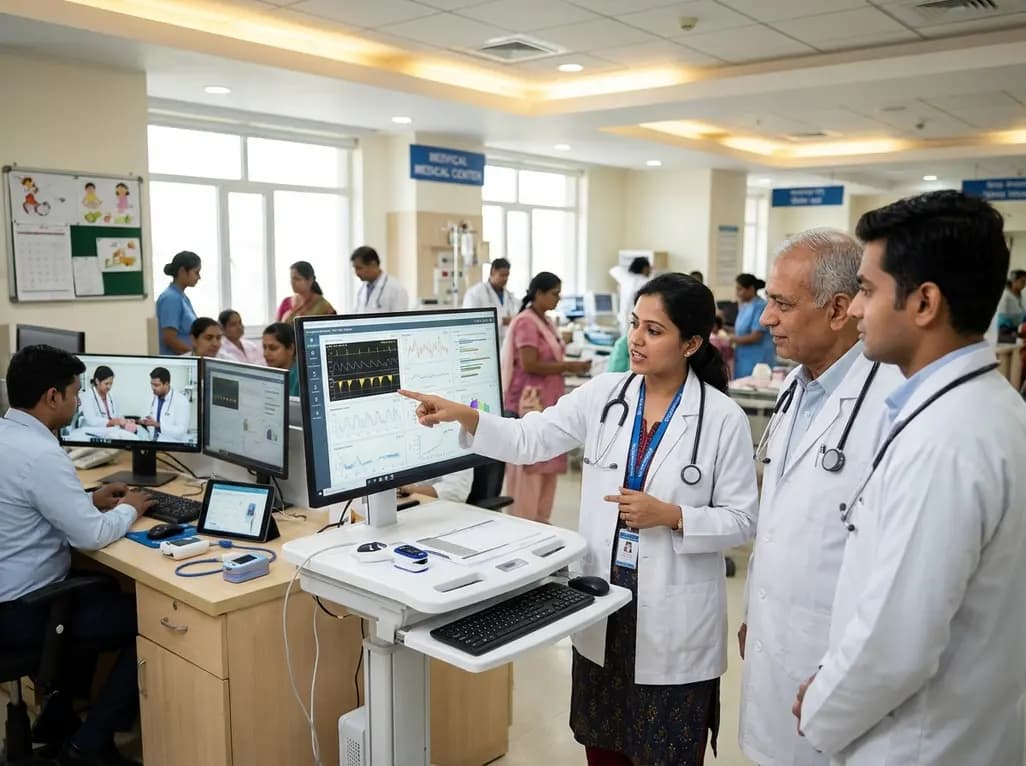
A landmark study details how an enterprise pediatric remote patient management model expanded from a single cardiology pilot to 16 diverse specialty programs by combining centralized digital operations with specialty clinical leadership.
Today

A comparative review of tension band wiring and intramedullary screw fixation in thumb metacarpophalangeal arthrodesis, evaluating union rates, hardware complications, and clinical outcomes.
Today
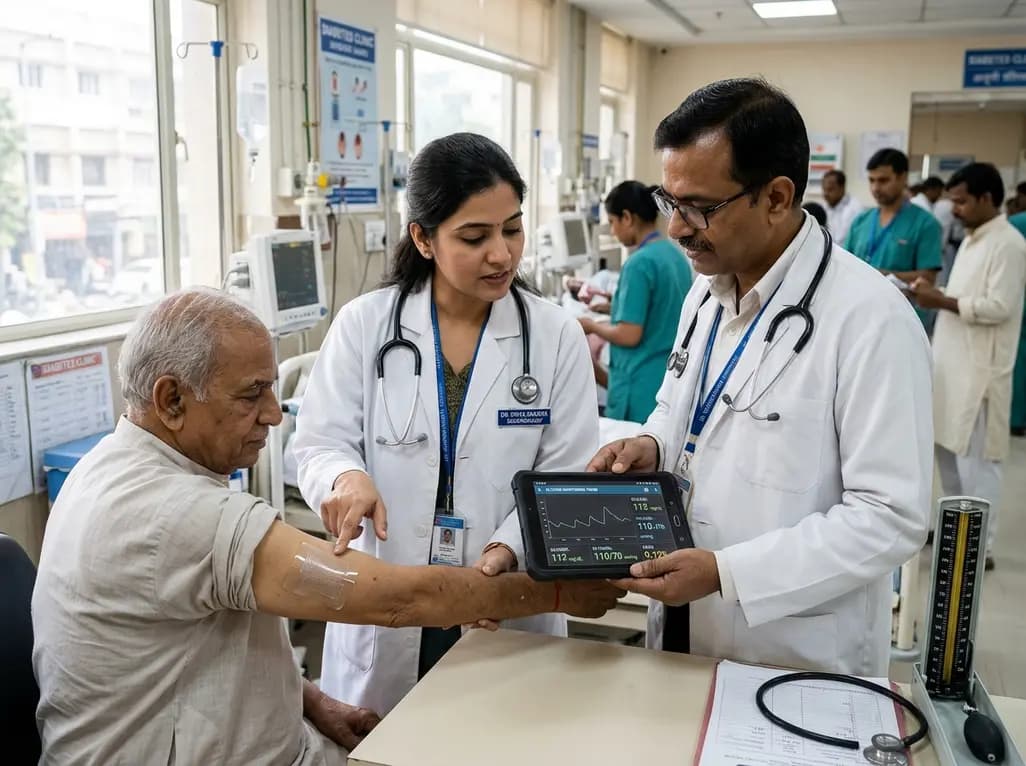
A breakthrough ultrathin multimodal sensor decouples physical hemodynamic monitoring from disposable electrochemical calibration, achieving long-term wearable glucose prediction with 81.36% accuracy and a 9.12% MARD. This offers a robust, drift-free solution for outpatient metabolic surveillance.
Today
