

Loading, please wait...
Loading, please wait...

Continuous glycemic surveillance remains vital for mitigating chronic microvascular and macrovascular complications in patients with diabetes mellitus. However, traditional continuous glucose monitoring platforms often depend heavily on invasive subcutaneous needles or transdermal enzymatic electrodes that degrade over time. Therefore, researchers developed an ultrathin multimodal epidermal sensing system to realize reliable wearable glucose prediction. This bioelectronic platform separates continuous physical hemodynamic tracking from intermittent, disposable electrochemical calibration. By tracking physiological parameters alongside periodic biochemical reference points, clinicians can anticipate metabolic fluctuations without causing skin irritation or enzymatic sensor decay. Consequently, this breakthrough bridges an important gap in digital metabolic healthcare.
Fluctuating glycemic excursions continuously modulate systemic vascular mechanics, microvascular tone, and cardiac intervals. To capture these cardiovascular markers reliably, researchers designed an ultrathin multimodal system measuring approximately 1.3 micrometers in thickness. The epidermal platform continuously monitors electrocardiogram waveforms, arterial pulse dynamics, and local skin temperature. Furthermore, autonomic nervous system tone shifts during glycemic excursions, producing distinct variations in heart rate variability and arterial stiffness. By recording high-fidelity physical biometrics over 60-second intervals, the platform tracks hemodynamic variations that directly correlate with circulating blood sugar levels. In addition, the seamless integration of physical sensing arrays eliminates the bulky profiles of conventional diagnostic apparatuses. Patients wear the ultra-conformal polyimide membrane throughout routine activities without experiencing shear displacement or motion artifacts. Clinicians thus receive steady streams of physiologic data reflecting real-time glycemic shifts. Because these physical sensors avoid enzyme-substrate interactions, they prevent degradation and maintain baseline operational stability indefinitely. Consequently, this physiological linkage demonstrates that continuous hemodynamic tracking provides a viable surrogate framework for non-invasive metabolic profiling.
Achieving mechanical resilience at epidermal boundaries requires robust nanoscale materials capable of withstanding repetitive human biomechanical motion. To solve this challenge, the pulse sensor incorporates an embedded silver nanowire network paired with a cracked chromium, molybdenum trioxide, and gold nanostructure. This multi-layered composite resides securely within a flexible polyimide matrix. As a result, the strain sensor achieves an impressive gauge factor of 5.49 across a 0 to 4 percent strain range. Moreover, it demonstrates an exceptionally rapid response time of 55 milliseconds alongside structural integrity exceeding 15,000 cyclical stretching deformations. In parallel, the detachable electrochemical glucose module incorporates a specialized co-crosslinked porous enzymatic matrix. This sophisticated biochemistry significantly delays active-site catalytic saturation, allowing for an expanded linear dynamic detection range spanning 0 to 20 millimoles per liter. Importantly, the modular architecture permits temporary adhesion during the initial operational period without disrupting the primary physical sensing chassis. Therefore, physicians and patients obtain crisp baseline electrochemical calibration points during initial onboarding. Once calibration finishes, users simply detach the enzymatic component, thereby preventing prolonged biochemical residue from contacting the epidermis.
Traditional wearable biosensors encounter severe operational roadblocks during sustained epidermal deployments. Specifically, enzymatic bio-recognition elements suffer from rapid enzyme denaturation, passive surface biofouling, local sweat volume fluctuations, and spontaneous electronic drift. These factors inevitably degrade signal fidelity, which frequently forces patients to perform uncomfortable finger-prick blood calibrations multiple times each week. In contrast, the hybrid system resolves this vulnerability by assigning distinct tasks to durable physical transducers and short-term biochemical reagents. Because biofluid accumulation and foreign body encapsulation degrade electrochemical surfaces over time, confining enzymatic activity to a brief three-day calibration window eliminates chronic drift. After this brief period, the primary physical sensors handle ongoing monitoring independently. Furthermore, the stable silver nanowire conductors and inert thin-film electrodes resist moisture exposure, sweat acidity, and mechanical shear. Consequently, the sensing system avoids the systemic signal loss that typically plagues conventional continuous glucose sensors. This clever separation of duties protects patients from erratic device alerts caused by progressive sensor decay.
Transforming complex multispectral hemodynamic inputs into accurate glycemic estimates demands sophisticated analytical computation. Accordingly, the platform utilizes an optimized random-forest machine learning model trained on synchronized 60-second epochs of electrocardiogram, pulse waveforms, and temperature data. After completing three days of personalized electrochemical calibration, the algorithm aligns individual hemodynamic signatures with verified glucose concentrations. The model achieved an outstanding overall tolerance-based prediction accuracy of 81.36% across validation trials. Additionally, it demonstrated a mean absolute relative difference of 9.12%, which comfortably satisfies recognized clinical benchmarks for outpatient diabetes technology. In subsequent longitudinal testing, the model maintained prediction accuracy levels of at least 80% across both single-day and 15-day continuous on-body observation protocols. Furthermore, the decision-tree ensemble resists individual sensor noise, effectively filtering transient motion spikes while tracking true metabolic shifts. Because metabolic responses differ substantially among individuals, this personalized calibration step tunes the algorithm to unique vascular compliance and autonomic profiles. Consequently, the combination of machine learning and hybrid sensors provides stable, patient-specific glycemic forecasting without demanding repeated invasive recalibrations.
India faces an escalating public health crisis driven by high type 2 diabetes prevalence, premature cardiovascular disease, and distinct metabolic phenotypes. Traditional continuous glucose monitoring remains inaccessible or cost-prohibitive for many Indian patients due to frequent sensor replacements and costly enzyme-coated consumables. Furthermore, warm and humid ambient climates frequently accelerate the enzymatic degradation of traditional transdermal patches, exacerbating sensor inaccuracy and contact dermatitis. This multimodal platform addresses these challenges by dramatically reducing reliance on continuous enzymatic components. Because the disposable calibration strip operates for only three days, manufacturing expenses and recurring patient costs decline significantly. Moreover, the durable physical array measures central cardiovascular metrics simultaneously, allowing clinicians to screen for diabetic autonomic neuropathy, nocturnal dysglycemia, and microvascular stiffness in a unified platform. In high-volume outpatient clinics across India, deploying low-profile, cost-effective bioelectronics can democratize longitudinal metabolic surveillance. By empowering primary care physicians and endocrinologists with dependable hemodynamic surrogates of blood sugar, remote patient monitoring becomes substantially more sustainable. Ultimately, integrating ultraflexible sensors into routine diabetic care can improve therapeutic compliance, prevent severe glycemic variability, and reduce long-term microvascular complications.
Decoupling physical sensing from electrochemical detection addresses the rapid degradation inherent to biological recognition elements. Traditional sensors fail due to enzyme denaturation, biofouling, and sweat fluctuations during prolonged epidermal exposure. By utilizing the electrochemical module only for initial three-day calibration, enzymatic exhaustion is avoided entirely. Meanwhile, robust physical sensors tracking pulse, temperature, and cardiac intervals remain operational for weeks without chemical degradation, ensuring durable, long-term predictive accuracy.
A mean absolute relative difference below 10% serves as a critical benchmark for continuous glucose monitoring systems. Achieving a MARD of 9.12% confirms that machine-learning-derived predictions closely mirror true systemic concentrations. Consequently, this level of precision allows clinicians and patients to make dependable clinical decisions regarding mealtime lifestyle adjustments, nocturnal hypoglycemia surveillance, and medication titration while minimizing the risk of adverse therapeutic miscalculations.
Standard continuous glucose monitors rely on invasive subcutaneous filament insertions that often trigger local tissue inflammation, skin irritation, and adhesive dermatitis. In contrast, this multimodal platform measures merely 1.3 micrometers in thickness and adheres conformally to the skin like a temporary tattoo. By avoiding chronic transcutaneous penetration and eliminating continuous chemical reactions after initial calibration, the device markedly enhances patient comfort and adherence during routine daily use.
Disclaimer: This content is for informational and educational purposes only and does not constitute medical advice. Consult qualified healthcare professionals for diagnosis and treatment decisions. Refer to the latest local and national guidelines for clinical practice.
References

Read summarized clinical updates, watch expert medical content, and earn CME certifications right from your smartphone.
Open your smartphone camera to scan and install.





A breakthrough ultrathin multimodal sensor decouples physical hemodynamic monitoring from disposable electrochemical calibration, achieving long-term wearable glucose prediction with 81.36% accuracy and a 9.12% MARD. This offers a robust, drift-free solution for outpatient metabolic surveillance.
Today

Demanding exhaustive hormonal profiling can inadvertently discourage clinical studies involving females. Methodological standards must align with the specific scientific question to expand, not restrict, equitable evidence for women.
Today

Co-administering antiseizure medications and DOACs frequently causes pharmacokinetic interactions, subtherapeutic drug levels, and thromboembolic failures. This review highlights enzyme induction risks, unpredictable outcomes with levetiracetam, and the vital role of therapeutic drug monitoring.
Today

A comparative review of tension band wiring and intramedullary screw fixation in thumb metacarpophalangeal arthrodesis, evaluating union rates, hardware complications, and clinical outcomes.
Today
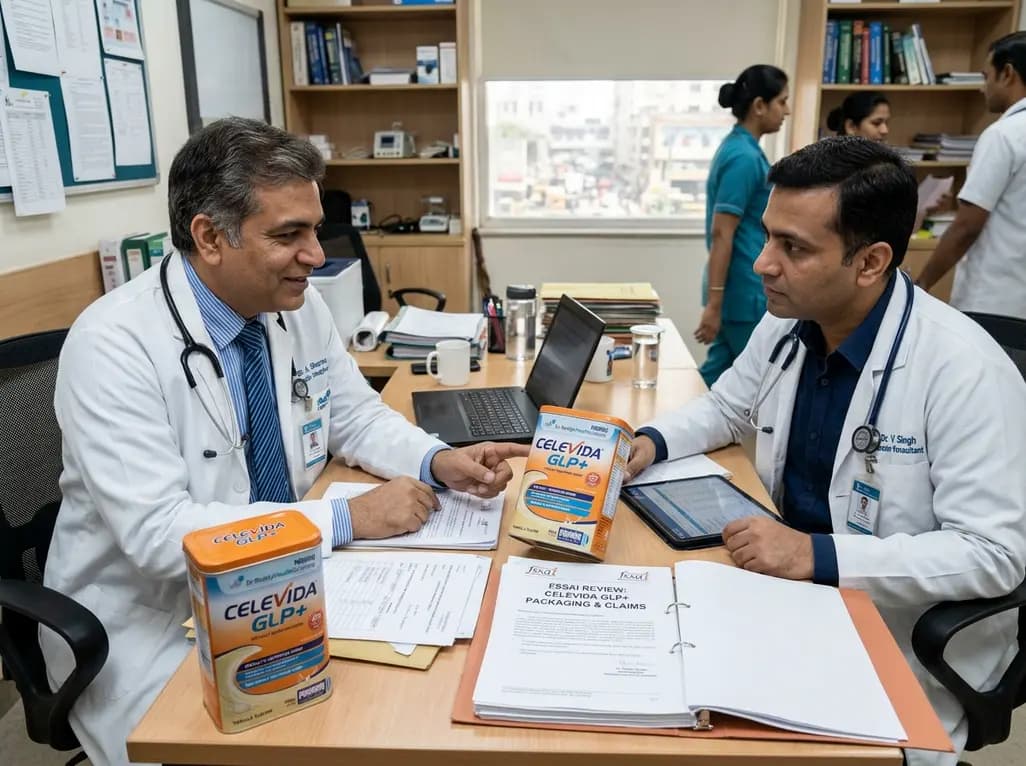
Following regulatory scrutiny from FSSAI regarding promotional representations and lean muscle preservation claims, Dr. Reddy's Laboratories and Nestlé Health Science are currently reviewing the branding and marketing strategy for their joint nutritional supplement Celevida GLP+.
Today
