.webp&w=384&q=75)

Loading, please wait...
Loading, please wait...

Clinical psychology has traditionally relied on patient self-reports. However, these reports are often susceptible to significant memory biases and social desirability effects. To address these limitations, researchers are developing wearable alcohol biosensors that provide objective behavioral data. These devices offer a continuous, non-invasive method to monitor alcohol consumption in real-world settings, marking a significant shift toward precision medicine in addiction treatment.
Transdermal technology captures alcohol excreted through the skin via sweat and water vapor. Although early prototypes faced significant hardware challenges, recent developments have introduced compact, wrist-worn sensors. These newer versions exhibit substantially lower error rates. Consequently, clinicians can now access more reliable estimates of a patient's drinking behavior without requiring active participation from the individual.
The integration of machine learning analytic tools has been transformative for this field. These algorithms translate raw transdermal signals into meaningful estimates of breath or blood alcohol concentration. Moreover, rapid-sampling capabilities allow for a more granular understanding of drinking episodes. Because these tools process complex time-series data, they can better account for the natural lag between ingestion and transdermal emission.
Despite these gains, several hurdles remain in clinical practice. Device longevity and battery life are primary concerns for long-term monitoring. Additionally, the accuracy of devices in producing fine-grained estimates of high-risk drinking quantity is still under refinement. Researchers must also distinguish between random and systematic errors when evaluating sensor performance. Therefore, measurement diversification remains a top priority for clinical psychology moving forward.
Subjective measures often fail to capture the full spectrum of alcohol use. In contrast, wearable alcohol biosensors provide an objective baseline that is independent of a patient's cognitive or motivational resources. This objectivity is vital for identifying relapse early and tailoring interventions. Furthermore, by moving beyond the implicit ideal of perfect measurement, the field can better utilize current tools while striving for future technological refinements.
These are skin-worn devices, such as wristbands, that detect ethanol molecules in perspiration to provide continuous and objective monitoring of alcohol consumption.
They remove the reliance on biased self-reports, allowing clinicians to see real-time drinking patterns and provide timely, data-driven interventions for relapse prevention.
While modern sensors show high correlation with breathalyzer results, they are currently used as complementary tools rather than replacements due to transdermal lag and variable environmental factors.
Disclaimer: This content is for informational and educational purposes only. It is not intended as a substitute for professional medical advice, diagnosis, or treatment. Always seek the advice of your physician or other qualified health provider with any questions you may have regarding a medical condition. Refer to the latest local and national guidelines for clinical practice.
References
Fairbairn CE et al. Objective Assessment in Clinical Psychological Science: Progress in Wearable Alcohol Biosensors. Annu Rev Clin Psychol. 2026 Feb 12. doi: 10.1146/annurev-clinpsy-061724-080804. PMID: 41678272.
Brobbin E et al. Accuracy of wearable transdermal alcohol sensors: systematic review. J Med Internet Res. 2022 Apr 14;24(4):e35178.
Fairbairn CE, Kang D. Temporal dynamics of transdermal alcohol concentration measured via new-generation wrist-worn biosensor. Alcohol Clin Exp Res. 2019 Oct;43(10):2060-2069.
"
Read summarized clinical updates, watch expert medical content, and earn CME certifications right from your smartphone.
Open your smartphone camera to scan and install.





Explore the progress of wearable alcohol biosensors in clinical psychology, moving from subjective self-reports to objective, continuous transdermal monitor...
8 months ago
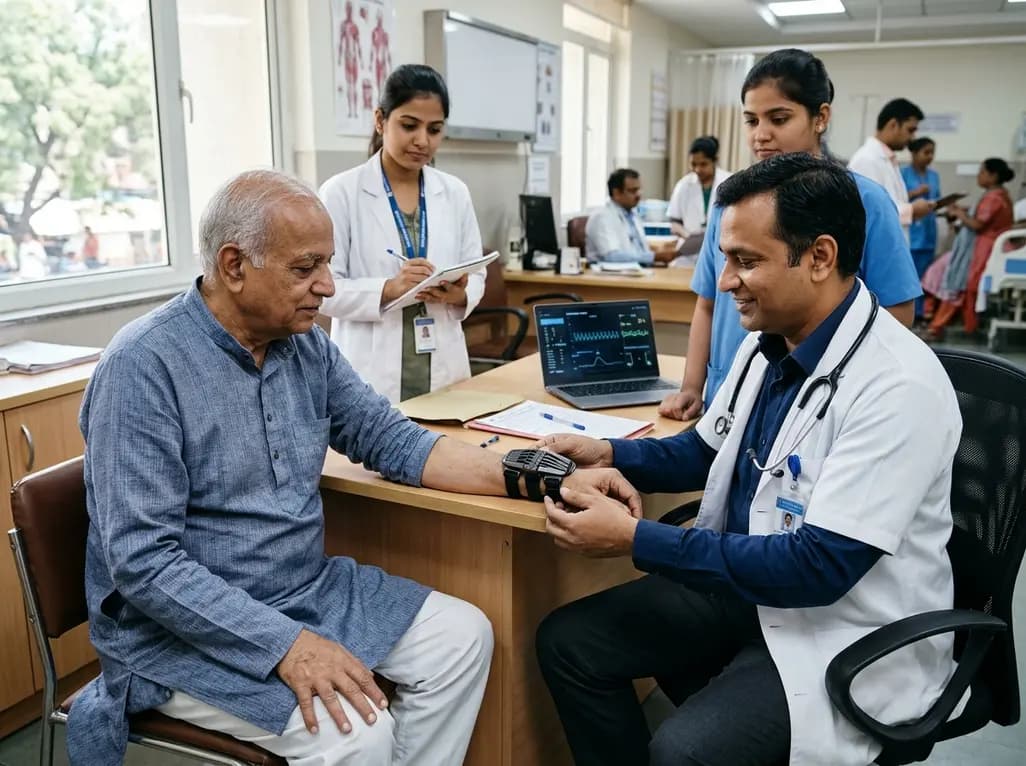
The TREM-AB open-label pilot study evaluated a wearable passive nonlinear vibration absorber for essential tremor. The Nonlinear Energy Sink bracelet reduced clinical Fahn-Tolosa-Marin tremor scores by 32.1% and electrophysiological tremor power by 49.2% with no adverse effects reported.
Today

A study in JAMIA Open shows lightweight open-source reasoning LLMs achieve up to 95% sensitivity and accelerate evidence synthesis screening by nearly twentyfold, presenting a cost-effective, scalable AI solution for biomedical research and systematic reviews.
Today
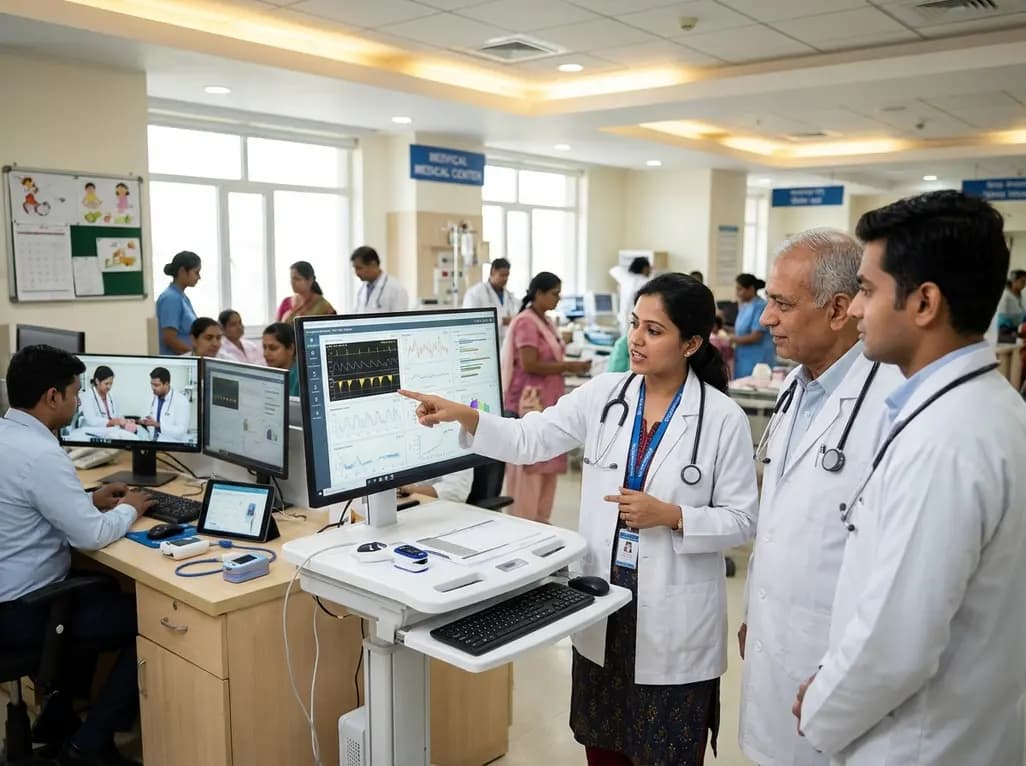
A landmark study details how an enterprise pediatric remote patient management model expanded from a single cardiology pilot to 16 diverse specialty programs by combining centralized digital operations with specialty clinical leadership.
Today

A comparative review of tension band wiring and intramedullary screw fixation in thumb metacarpophalangeal arthrodesis, evaluating union rates, hardware complications, and clinical outcomes.
Today
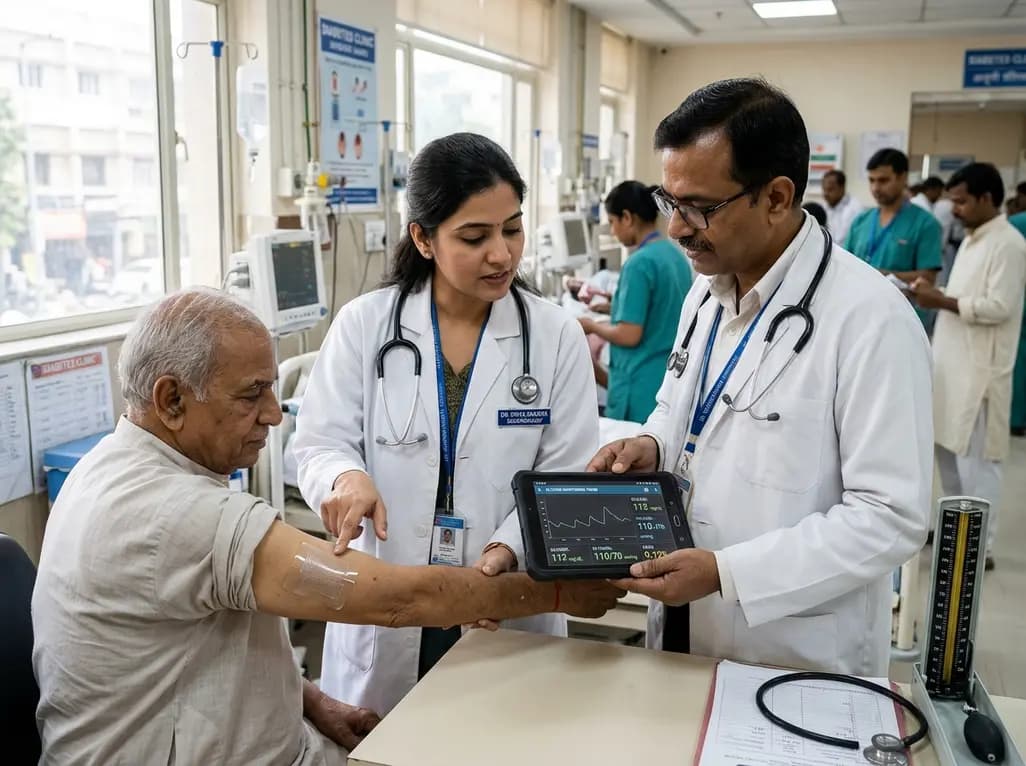
A breakthrough ultrathin multimodal sensor decouples physical hemodynamic monitoring from disposable electrochemical calibration, achieving long-term wearable glucose prediction with 81.36% accuracy and a 9.12% MARD. This offers a robust, drift-free solution for outpatient metabolic surveillance.
Today
