

Loading, please wait...
Loading, please wait...

Clinicians regularly rely on serum urate testing to identify hyperuricemia, monitor gout, and evaluate systemic cardiometabolic vulnerability. However, measuring serum urate demands a dedicated venous blood draw, creating operational friction and minor patient discomfort during routine community consultations. In contrast, urinalysis using automated dipsticks provides an immediate, highly accessible, and non-invasive evaluation in primary outpatient clinics worldwide. A groundbreaking multicenter investigation explored whether integrating nine standard urine dipstick parameters with age, sex, and body mass index could effectively triage patients for definitive venipuncture. By deploying advanced ensemble machine learning architectures, investigators rigorously evaluated whether simple dipstick metrics meaningfully improve discrimination beyond conventional demographic risk factors alone.
Hyperuricemia represents a major global health challenge that frequently leads to recurrent gout flares, nephrolithiasis, and accelerated renal dysfunction. In everyday clinical settings, opportunistic screening often misses individuals with asymptomatic elevations because biochemical testing requires laboratory venipuncture. Conversely, routine urine dipstick analysis occurs during ordinary preventive visits, antenatal assessments, and occupational screenings. Urine dipsticks capture key physiochemical markers such as urinary pH, specific gravity, protein, bilirubin, and occult blood. Many physicians hypothesized that these metabolic signatures might mirror renal uric acid clearance dynamics and systemic metabolic stress. Consequently, researchers designed artificial intelligence algorithms to evaluate whether combining these routine urinary features could prioritize high-risk patients. If successful, such a triage framework could substantially reduce unnecessary venipunctures while ensuring timely diagnosis for vulnerable patients. However, clinical implementation requires robust evidence demonstrating whether urinalysis actually adds incremental predictive value over basic clinical variables. Age, biological sex, and body mass index already strongly influence serum urate homeostasis. Therefore, determining the exact standalone benefit of urine dipstick metrics remained an essential unanswered clinical question.
To answer this question, researchers assembled a development cohort of 129,535 adult outpatients evaluated at a tertiary medical center between 2010 and 2025. Among these individuals, 21,124 presented with confirmed hyperuricemia, defined by serum urate concentrations of 7.0 mg/dL or greater. The research team constructed calibrated twelve-input machine learning ensembles utilizing Light Gradient Boosting Machine, Extreme Gradient Boosting, and Categorical Boosting algorithms. The feature set incorporated nine routine dipstick fields alongside age, biological sex, and body mass index. The investigators established model hyperparameters, feature coding schemes, and patient-level training splits before commencing algorithm training. They evaluated a primary cutoff of 7.0 mg/dL and a secondary threshold of 9.0 mg/dL, which indicates markedly severe hyperuricemia. Within the internal validation split comprising 25,907 individuals, the primary ensemble model achieved an area under the receiver operating characteristic curve of 0.825. Furthermore, the model exhibited consistent discriminatory ranking across diverse internal sub-cohorts. Nevertheless, the researchers recognized that internal hospital-based validation frequently inflates statistical optimism. Therefore, confirming real-world generalizability across unselected community populations remained an indispensable methodological requirement.
The investigators conducted rigorous external validation using 49,987 adult participants from the Korea National Health and Nutrition Examination Survey spanning 2016 through 2024. In this extensive community survey cohort, 5,068 participants met the criteria for serum urate levels of 7.0 mg/dL or greater. External evaluation revealed an overall area under the curve of 0.845, demonstrating strong rank discrimination across the national sample. However, the models suffered from noticeable overprediction, yielding an observed-to-expected event ratio of 0.73. This discrepancy occurred because the tertiary development hospital managed a population with a markedly higher disease prevalence than the community survey cohort. Fortunately, fitting a simple logistic recalibration intercept restored the observed-to-expected ratio to a perfect 1.00. Most importantly, the dipstick features yielded only modest incremental predictive utility. Specifically, adding urinalysis fields to basic age, sex, and body mass index models increased the external area under the curve by merely 0.017 to 0.024. In practical terms, this modest increment identified only 3.1 additional hyperuricemic cases per 1,000 screened individuals when referring the top tenth of risk scores.
Detailed subgroup analyses uncovered striking performance discrepancies between male and female cohorts that present critical challenges for clinical deployment. In the external survey cohort, the model demonstrated an area under the curve of 0.710 in men compared to 0.795 in women. When investigators applied an internally derived 80% sensitivity threshold, the triage algorithm flagged nearly 30% of the entire adult population. Alarmingly, 97.4% of all flagged individuals were men. Consequently, overall sensitivity reached 77.1%, but sensitivity among women plummeted to an unacceptable 10.1%. Positive predictive value remained modest at 26.2%. In contrast, simply referring every male participant yielded an 89.6% sensitivity, producing decision net benefit comparable to the algorithm. For the secondary outcome of serum urate of 9.0 mg/dL or higher, external discrimination reached 0.860. Nevertheless, the positive predictive value was only 2.6%, and the scaled Brier score was 0.002, indicating no meaningful advantage over basic prevalence estimation. These pronounced sex imbalances reveal that male physiology heavily dominated model feature weights, thereby creating significant diagnostic blind spots for high-risk female patients.
These comprehensive findings offer profound insights for Indian clinicians managing hyperuricemia, metabolic syndrome, and gout across resource-constrained healthcare environments. India currently experiences an escalating burden of cardiometabolic conditions, frequently characterized by early-onset dyslipidemia, visceral obesity, and chronic kidney disease. In rural community dispensaries and busy district hospitals, routine automated urinalysis is accessible, while venipuncture infrastructure often faces logistical and financial constraints. However, this study demonstrates that adding routine urine dipstick strips provides negligible incremental predictive value over basic clinical data. Clinicians must recognize that male sex, advanced age, and elevated body mass index drive the vast majority of hyperuricemia risk. Implementing complex digital algorithms without thorough local recalibration could divert scarce phlebotomy resources without improving patient outcomes. Furthermore, the extreme underdetection observed among women highlights the peril of adopting foreign algorithmic thresholds without rigorous domestic adjustment. Rather than relying on dipstick surrogates, healthcare providers should identify established clinical risk indicators, prioritize targeted laboratory venipuncture, and promote structured lifestyle modifications for at-risk populations.
No, urine dipstick analysis cannot replace formal laboratory venipuncture. Dipstick parameters reflect urinary chemistry, pH, and protein excretion, but they do not provide direct quantification of circulating uric acid concentrations. Current clinical guidelines require validated blood measurements to confirm hyperuricemia, diagnose gout, and monitor urate-lowering therapy. Although urine dipstick data contribute minor statistical signals, clinicians must continue using standard biochemical serum testing to make definitive therapeutic decisions in routine practice.
The model demonstrated significantly lower sensitivity in women because biological sex strongly governs circulating urate biology and epidemiological distribution. Premenopausal female hormones enhance renal urate excretion, keeping baseline urate levels lower than those in men. Because hyperuricemia is far more prevalent in males, the machine learning algorithms heavily weighted male sex during risk stratification. Consequently, the chosen screening cutoffs flagged mostly men, leaving the vast majority of hyperuricemic women undetected during external validation.
Established demographic and clinical variables provide exceptional predictive ability for hyperuricemia without requiring complex digital algorithms. Advanced patient age, male biological sex, elevated body mass index, and components of metabolic syndrome strongly drive hyperuricemia risk. Furthermore, medical history including hypertension, excessive alcohol intake, renal impairment, and diuretic usage provides valuable diagnostic clues. Clinicians should synthesize these readily available clinical markers to identify patients who genuinely warrant definitive venous blood testing in daily practice.
Disclaimer: This content is for informational and educational purposes only, and does not constitute medical advice, diagnosis, or treatment. Healthcare professionals should exercise their independent clinical judgment when evaluating medical literature. Refer to the latest local and national guidelines for clinical practice.
References

Read summarized clinical updates, watch expert medical content, and earn CME certifications right from your smartphone.
Open your smartphone camera to scan and install.





A recent validation study evaluated machine learning models using urine dipsticks, age, sex, and BMI to triage serum urate testing. Dipstick metrics added minimal clinical gain over demographics alone and exhibited notable sex disparities, highlighting essential considerations for primary care triage.
Today
A national cross-sectional survey reveals marked disparities in infectious disease diagnostic capacity across hospital tiers, underscoring the urgent need for integrated referral networks and enhanced point-of-care testing to improve outbreak detection and patient outcomes.
Today

The GESS-AEEM consensus establishes a clear clinical implementation framework for testosterone therapy in postmenopausal women with hypoactive sexual desire disorder, focusing on transdermal dosing, precise laboratory monitoring, and safety communication.
Yesterday
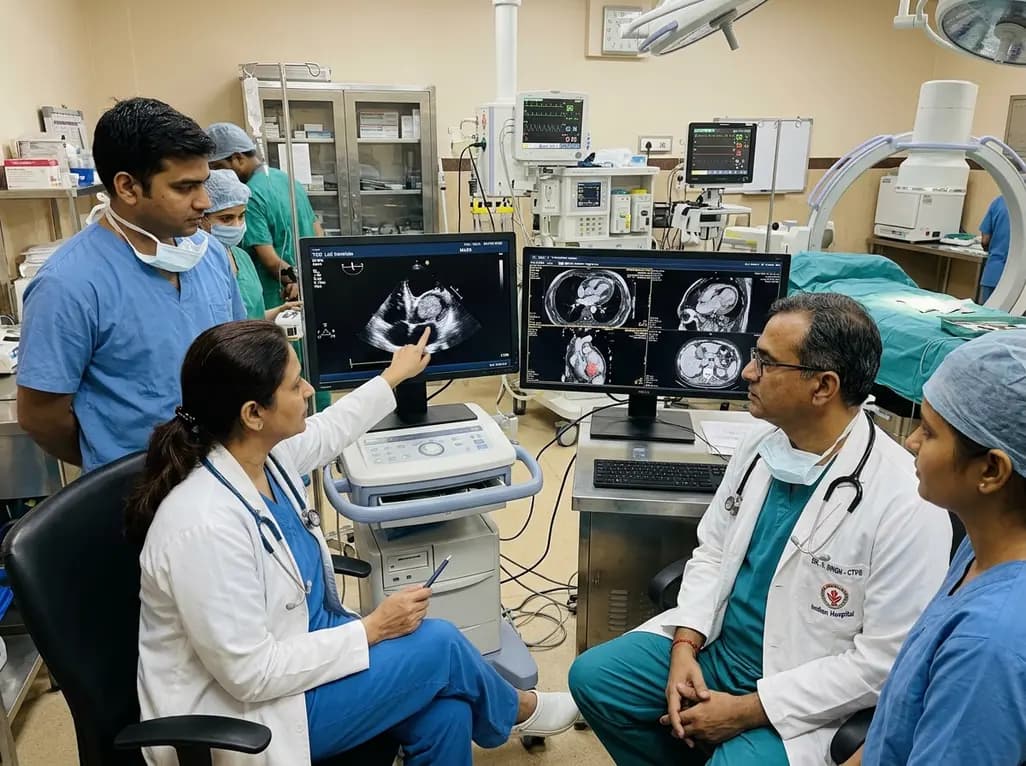
A rare case of an asymptomatic left ventricular hemangioma highlights the vital role of multimodal imaging in differentiating vascular tumors from thrombus. Complete surgical resection under transesophageal echocardiography guidance prevents thromboembolism and delivers optimal outcomes.
Today
A landmark study evaluates long-term quality of life in adolescents and adults with brachial plexus birth injury. Severe functional limitation and limited access to care significantly worsen outcomes, underscoring the urgent need for persistent, multidisciplinary management across adult healthcare transitions.
Today
An analysis of 1,000 posts by macro- and mega-influencers on Instagram and TikTok revealed that 78.5% contained nutrition misinformation, while only 24% of creators held valid credentials. This article examines the clinical risks of viral dietary fads and provides actionable guidance for healthcare professionals.
Today
