

Loading, please wait...
Loading, please wait...

A severe brachial plexus birth injury represents one of the most complex neonatal nerve injuries encountered in clinical practice. Although spontaneous reinnervation occurs in many infants, a significant proportion endure lifelong motor and sensory deficits. Historically, surgeons and pediatric specialists concentrated almost exclusively on physical range of motion, muscle strength, and reconstructive nerve procedures during early childhood. However, clinicians now recognize that health-related quality of life extends far beyond anatomical recovery. Adolescent and adult survivors face persistent psychosocial, functional, and occupational hurdles that demand structured clinical attention across their entire lifespan.
A brachial plexus birth injury originates from excessive lateral traction on the fetal head and neck during difficult deliveries. Consequently, mechanical stretching or root avulsion damages the delicate C5 through T1 nerve roots. While early surgical interventions such as nerve transfers and tendon rebalancing restore meaningful upper limb mobility, residual deficits frequently persist into adulthood. Therefore, mature patients often present with glenohumeral deformities, limb length discrepancies, contractures, and compensatory musculoskeletal strains. Furthermore, secondary shoulder dysplasia frequently impairs shoulder abduction and external rotation. These mechanical impairments limit essential activities of daily living, such as bimanual coordination, personal hygiene, and independent driving. In addition, growing adolescents encounter unique psychological stressors during developmental transitions. Social interactions and perceived body image frequently suffer when peers notice chronic arm asymmetry. Clinicians must understand that physical examinations alone cannot capture these complex daily struggles. Thus, holistic outcome tracking requires dedicated tools that measure emotional, social, and physical dimensions simultaneously.
Recent investigative findings provide critical quantitative insight into the health-related quality of life of mature individuals living with neonatal traction injuries. Specifically, investigators administered the World Health Organization Quality of Life Scale-Brief Version (WHOQOL-BREF) to adult cohorts. The adult cohort demonstrated an overall mean quality of life score of 63.1. When researchers evaluated upper extremity domains through the Impact of a Brachial Plexus Injury Questionnaire (Mancuso scale), they uncovered distinct patterns. In this cohort, symptom scores averaged 45.8, physical limitation scores averaged 35.2, and emotional subscale scores reached 43.6. These findings demonstrate that chronic physical limitations deeply erode daily independence and self-efficacy. Moreover, statistical analyses revealed that severe functional disability and poor access to specialized clinical care significantly correlate with lower overall scores. Consequently, patients who lack specialized multidisciplinary support suffer compounding emotional distress. Adults frequently experience secondary degenerative changes, overuse pain in the contralateral arm, and chronic fatigue, which directly impair vocational stability and long-term psychological wellbeing.
Interestingly, the quality of life profile of patients with congenital traction damage differs considerably from those who sustain high-energy traumatic brachial plexus injuries. Traumatic nerve injuries typically strike healthy young adults following high-speed motor vehicle accidents or direct industrial trauma. In published literature, traumatic brachial plexus injury cohorts display markedly higher Mancuso scores across symptom and limitation subscales, averaging 66.0 and 48.2 respectively. In contrast, adults with birth-related injuries report lower symptom and limitation scores, yet their emotional domain scores average 43.6 compared to 39.5 in traumatic cohorts. This notable discrepancy occurs because adults with congenital lesions develop adaptive movement strategies from infancy. Therefore, they normalize certain physical limitations while experiencing chronic developmental challenges. Conversely, sudden traumatic injury strips away established physical capability, inducing acute grief, devastating occupational disruption, and debilitating deafferentation pain. Recognizing these fundamental distinctions enables reconstructive surgeons and physiatrists to tailor expectations, psychological interventions, and rehabilitation protocols specifically for each unique patient population.
Assessing functional outcomes in pediatric and adolescent cohorts presents unique psychometric challenges. While clinicians historically relied on generic instruments like the Pediatric Quality of Life Inventory (PedsQL), condition-specific questionnaires offer greater clinical precision. In recent validation work, adolescent participants recorded an overall PedsQL score of 63.7. Concurrently, their Mancuso subscale scores demonstrated distinct trends, yielding 31.7 for symptoms, 29.8 for physical limitations, and 39.7 for emotional well-being. Furthermore, statistical correlation between the Mancuso questionnaire and established global health inventories confirms robust construct validity for neonatal traction populations. This validation marks a major diagnostic advance. The Mancuso scale was originally constructed and validated for adult traumatic nerve trauma. Demonstrating its psychometric validity in congenital nerve cohorts allows hand surgeons, physiatrists, and occupational therapists to measure patient-reported outcomes with unmatched granular clarity. Consequently, clinical teams can track therapeutic progress, measure post-surgical adaptation, and identify unaddressed psychological barriers throughout adolescence.
One of the most concerning findings in modern neuromuscular literature involves the widespread lack of structured transition programs for adult survivors. During infancy and early childhood, patients receive comprehensive multidisciplinary care at specialized academic tertiary centers. However, once pediatric discharge occurs, mature patients abruptly lose access to experienced nerve specialists, specialized hand therapists, and supportive community networks. Consequently, many adults navigate chronic musculoskeletal pain, secondary neuropathic discomfort, and compensatory degenerative joint disease in total isolation. Furthermore, general practitioners frequently lack specific training regarding the late mechanical complications of neonatal nerve lesions. Therefore, healthcare health systems must establish dedicated adult transitional clinics that connect pediatric nerve centers with adult orthopedic, neurological, and physical medicine programs. In addition, routine evaluations should screen for chronic neuropathic pain, ergonomic strain in the uninjured limb, and secondary mood disorders. Expanding access to continuous rehabilitation services and psychological counseling directly elevates long-term quality of life.
Adult survivors frequently experience chronic musculoskeletal fatigue, progressive glenohumeral stiffness, secondary overuse pain in the contralateral limb, and restricted vocational choices. In addition, persistent physical asymmetry and functional limitations can trigger long-term psychological distress, social anxiety, and reduced self-esteem. Consequently, these cumulative physical and emotional challenges lead to lower overall quality of life scores when individuals do not receive sustained multidisciplinary care.
The Mancuso questionnaire provides validated, condition-specific granularity that generic health tools cannot offer. Specifically, it separately quantifies symptoms, physical limitations, and emotional health tailored to brachial plexus pathology. Because recent studies confirmed its construct validity in congenital populations, clinicians can now accurately evaluate treatment efficacy, track functional decline, and benchmark interventions against standard quality of life measures throughout long-term clinical follow-up.
Optimizing adult outcomes requires active access to dedicated multidisciplinary rehabilitation teams, including physiatrists, hand surgeons, and occupational therapists. In addition, targeted physical therapy preserves joint motion, while ergonomic workplace adjustments prevent compensatory strain in the unaffected limb. Furthermore, cognitive behavioral therapy and structured peer support networks mitigate the emotional burden, directly addressing the social isolation frequently reported by mature individuals.
Disclaimer: This content is for informational and educational purposes only and should not be considered medical advice. Always consult a qualified healthcare professional regarding any medical condition or treatment. Refer to the latest local and national guidelines for clinical practice.
References
Ajayi OO et al. Assessing quality of life during adolescence and adulthood following brachial plexus birth injuries. J Neurosurg Pediatr. 2026 Nov 20. doi: 10.3171/2026.6.PEDS25677. PMID: 43063484.
Cornwall R et al. Children's Health-Related Quality of Life After Brachial Plexus Birth Injury. JAMA Netw Open. 2026;9(5):e268950.
Mancuso CA et al. Development of a Questionnaire to Measure Impact and Outcomes of Brachial Plexus Injury. J Bone Joint Surg Am. 2018;100(3):e14.

Read summarized clinical updates, watch expert medical content, and earn CME certifications right from your smartphone.
Open your smartphone camera to scan and install.





A landmark study evaluates long-term quality of life in adolescents and adults with brachial plexus birth injury. Severe functional limitation and limited access to care significantly worsen outcomes, underscoring the urgent need for persistent, multidisciplinary management across adult healthcare transitions.
Today
A national cross-sectional survey reveals marked disparities in infectious disease diagnostic capacity across hospital tiers, underscoring the urgent need for integrated referral networks and enhanced point-of-care testing to improve outbreak detection and patient outcomes.
Today

The GESS-AEEM consensus establishes a clear clinical implementation framework for testosterone therapy in postmenopausal women with hypoactive sexual desire disorder, focusing on transdermal dosing, precise laboratory monitoring, and safety communication.
Yesterday
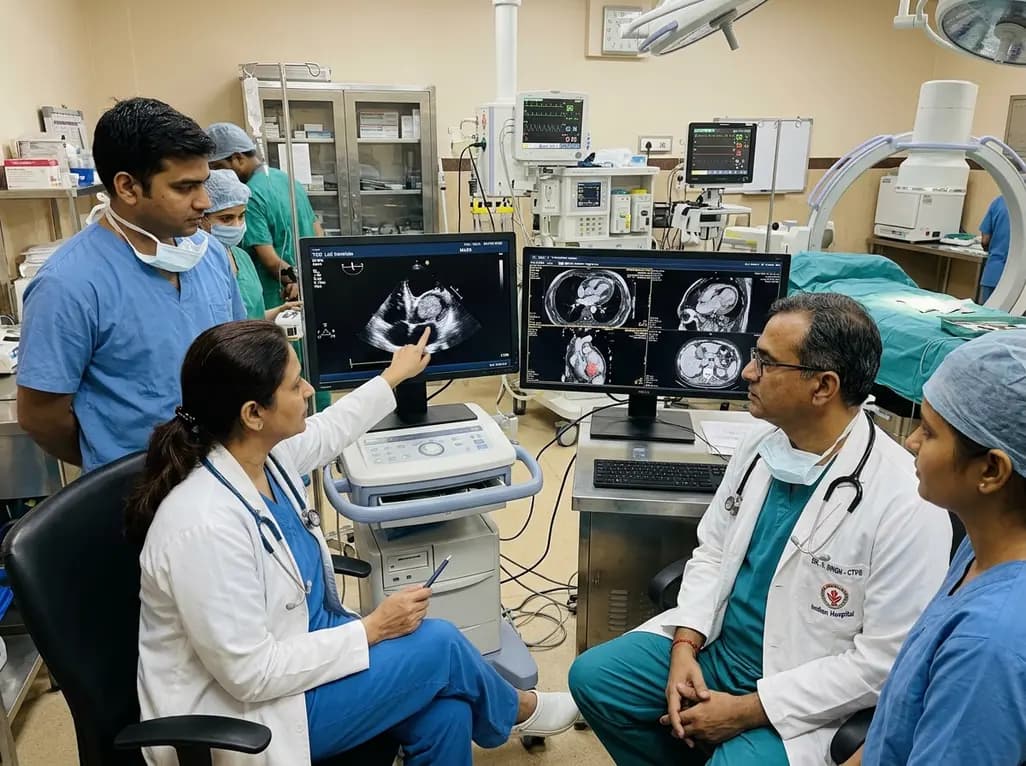
A rare case of an asymptomatic left ventricular hemangioma highlights the vital role of multimodal imaging in differentiating vascular tumors from thrombus. Complete surgical resection under transesophageal echocardiography guidance prevents thromboembolism and delivers optimal outcomes.
Today
An analysis of 1,000 posts by macro- and mega-influencers on Instagram and TikTok revealed that 78.5% contained nutrition misinformation, while only 24% of creators held valid credentials. This article examines the clinical risks of viral dietary fads and provides actionable guidance for healthcare professionals.
Today
