

Loading, please wait...
Loading, please wait...

Hypoactive sexual desire disorder remains a frequent yet underdiagnosed concern among postmenopausal individuals globally. To bridge the gap between global recommendations and practical bedside implementation, the Spanish Sexology Society and the Spanish Menopause Society issued a comprehensive consensus. This landmark framework establishes clear clinical boundaries for prescribing testosterone therapy in women experiencing distressing sexual desire deficits. Clinicians frequently encounter therapeutic uncertainty regarding off-label androgens, formulation safety, and laboratory diagnostics. Therefore, this operational consensus translates multidisciplinary evidence into clear practical guidance for routine clinical practice.
Before initiating any hormonal intervention, physicians must recognize that hypoactive sexual desire disorder represents a complex multidimensional condition. Therefore, clinicians must conduct a thorough biopsychosocial assessment rather than attributing sexual distress solely to endocrine fluctuations. Relationship dynamics, emotional stressors, chronic medical conditions, and concurrent medications like antidepressants frequently suppress sexual interest. Consequently, practitioners should identify and address these modifiable lifestyle and psychological factors before prescribing pharmacotherapy. The expert panel emphasizes that the only evidence-based indication for androgen supplementation remains hypoactive sexual desire disorder in postmenopausal women. In contrast, existing literature does not support prescribing androgens for premenopausal low desire, bone density loss, depression, or general fatigue. Furthermore, clinicians must ensure that the patient experiences persistent, distressing reductions in sexual motivation that impair her personal well-being. By conducting a validated psychosexual interview, healthcare professionals can accurately delineate primary desire dysfunction from secondary sexual challenges. Additionally, ruling out active pelvic floor pain syndromes or systemic illness prevents inappropriate hormonal exposure. Hence, a structured clinical evaluation ensures that only appropriately selected individuals receive systemic hormonal treatment.
When healthcare providers elect to initiate treatment, selecting the correct pharmaceutical delivery system is paramount. Specifically, the consensus strictly endorses physiological-dose transdermal formulations, such as licensed cutaneous gels or patches. Transdermal administration bypasses first-pass hepatic metabolism, thereby preserving physiological lipid profiles and minimizing coagulation cascade alterations. Conversely, clinicians must strictly avoid oral androgens, intramuscular injections, and subcutaneous pellet implants. Oral agents alter circulating lipid fractions and burden liver function, while subcutaneous pellets frequently deliver erratic, supraphysiological androgen surges that produce irreversible virilization. Because pharmaceutical companies manufacture very few dedicated female androgen products worldwide, practitioners frequently adapt male formulations off-label. Therefore, physicians must provide clear, explicit application instructions to prevent accidental overexposure. Typically, female therapeutic dosages approximate one-tenth of standard adult male replacement regimens. Patients must apply the transdermal gel to clean, dry, non-hairy skin, usually across the lower abdomen or outer thighs. Moreover, women should wash their hands thoroughly immediately after application to prevent unintentional secondary transfer to partners or children. By establishing precise transdermal dosing protocols, clinicians achieve safe premenopausal circulating levels while eliminating accidental toxicity.
A frequent clinical misconception involves using circulating androgen levels as a primary diagnostic tool. However, the consensus explicitly clarifies that baseline serum androgen levels cannot diagnose hypoactive sexual desire disorder. Circulating androgen concentrations in postmenopausal women with low desire often overlap entirely with concentrations in asymptomatic peers. Consequently, low baseline laboratory values never validate a diagnosis, and high normal values do not preclude desire deficits. Nevertheless, mandatory baseline biochemical testing remains vital for patient safety. Specifically, baseline testing identifies individuals with unrecognized androgen excess and provides a benchmark for monitoring future therapeutic exposure. Clinicians must ideally utilize liquid chromatography-tandem mass spectrometry because standard direct automated immunoassays lack precision at low female physiological ranges. Furthermore, physicians should maintain assay continuity throughout the treatment course by utilizing identical laboratory platforms for serial measurements. Follow-up testing detects accidental accumulation before clinical signs of hyperandrogenism emerge. Therefore, laboratory testing serves exclusively as a crucial pharmacological safety guardrail rather than an indicator of clinical efficacy. Through methodical biochemical monitoring, healthcare professionals safeguard their patients against accidental supraphysiological exposure.
Patient education and safety communication form the backbone of successful endocrine management in midlife women. Because clinicians prescribe these medications off-label across most international jurisdictions, transparent informed consent is essential. Practitioners must discuss regulatory nuances, anticipated clinical benefits, and potential side effects openly during the initial consultation. Fortunately, extensive clinical trial data indicate that physiological transdermal dosing produces minimal adverse events. The most frequent clinical side effects involve mild, localized skin reactions, mild hirsutism, or manageable acne vulgaris. Severe virilizing manifestations, such as irreversible voice deepening, clitoromegaly, or extensive androgenic alopecia, occur almost exclusively when circulating levels exceed physiological limits. Therefore, regular clinical surveillance every three to six months allows physicians to identify emerging androgenic signs promptly. During each follow-up encounter, clinicians should assess subjective improvements in sexual satisfaction while screening for physical signs of androgen excess. Additionally, practitioners should verify that the patient adheres to prescribed application volumes without unauthorized dose escalation. Through transparent communication and rigorous surveillance, clinicians create a secure treatment environment that optimizes therapeutic outcomes while maintaining excellent long-term safety profiles.
Hormonal therapy must never become an indefinite, unmonitored prescription in clinical practice. The consensus framework establishes unambiguous guidance regarding treatment timelines, clinical efficacy benchmarks, and structured cessation protocols. Generally, meaningful clinical improvements in sexual desire, sexual responsiveness, and distressing personal concerns manifest within eight to twelve weeks of treatment initiation. However, if a patient reports no discernible improvement in sexual satisfaction after six months of compliant therapy, clinicians should formally discontinue the medication. Continuing therapy beyond six months in non-responders provides no physiological advantage and exposes the individual to unnecessary potential risks. Conversely, when patients achieve satisfactory clinical improvement, clinicians should reassess ongoing need and overall safety at least annually. If the patient develops persistently elevated serum androgen levels or displays overt physical virilization, immediate treatment interruption is mandatory. Furthermore, physicians should consider trial interruptions after two to three years of stable therapy to determine whether desire remains preserved without continued supplementation. By maintaining decisive discontinuation criteria, clinicians protect patients from protracted, non-beneficial exposure and ensure evidence-based, goal-directed endocrine care.
Current clinical consensus does not support prescribing testosterone for systemic fatigue, depressed mood, cognitive changes, or bone density enhancement in women. Available evidence confirms therapeutic efficacy exclusively for postmenopausal hypoactive sexual desire disorder following a rigorous biopsychosocial assessment. Clinicians should thoroughly evaluate and treat alternative etiologies for chronic exhaustion, such as thyroid dysfunction, anemia, mood disorders, or sleep apnea, rather than administering unproven androgen therapy.
Oral formulations undergo extensive first-pass hepatic metabolism, which adversely alters lipid profiles, increases cardiovascular risk markers, and potentially impairs hepatic function. Conversely, intramuscular injections and subcutaneous pellet implants frequently produce unpredictable, supraphysiological spikes in circulating hormone concentrations. These dramatic hormonal surges significantly elevate the risk of irreversible virilizing complications, including clitoromegaly and permanent voice deepening. Therefore, clinical guidelines strictly recommend low-dose transdermal formulations to maintain physiological concentrations.
Clinicians should obtain a baseline serum total testosterone measurement prior to starting therapy to detect baseline hyperandrogenism. Following treatment initiation, practitioners should recheck serum levels between three and six weeks to confirm that circulating levels remain within the physiological range. Once a stable therapeutic dose is established, ongoing monitoring every six to twelve months suffices. If serum levels exceed normal premenopausal reference values, clinicians must adjust or temporarily discontinue therapy.
Disclaimer: This content is for informational and educational purposes only and is not intended as medical advice. Healthcare professionals should exercise their independent clinical judgment. Refer to the latest local and national guidelines for clinical practice.
References

Read summarized clinical updates, watch expert medical content, and earn CME certifications right from your smartphone.
Open your smartphone camera to scan and install.





The GESS-AEEM consensus establishes a clear clinical implementation framework for testosterone therapy in postmenopausal women with hypoactive sexual desire disorder, focusing on transdermal dosing, precise laboratory monitoring, and safety communication.
Today

A landmark AIIMS Patna study highlights that microbiological cure in pulmonary tuberculosis does not equal functional recovery. Clinicians must actively evaluate patients for structural damage, persistent airflow limitation, and comorbid psychological distress to deliver comprehensive post-cure respiratory rehabilitation.
Today
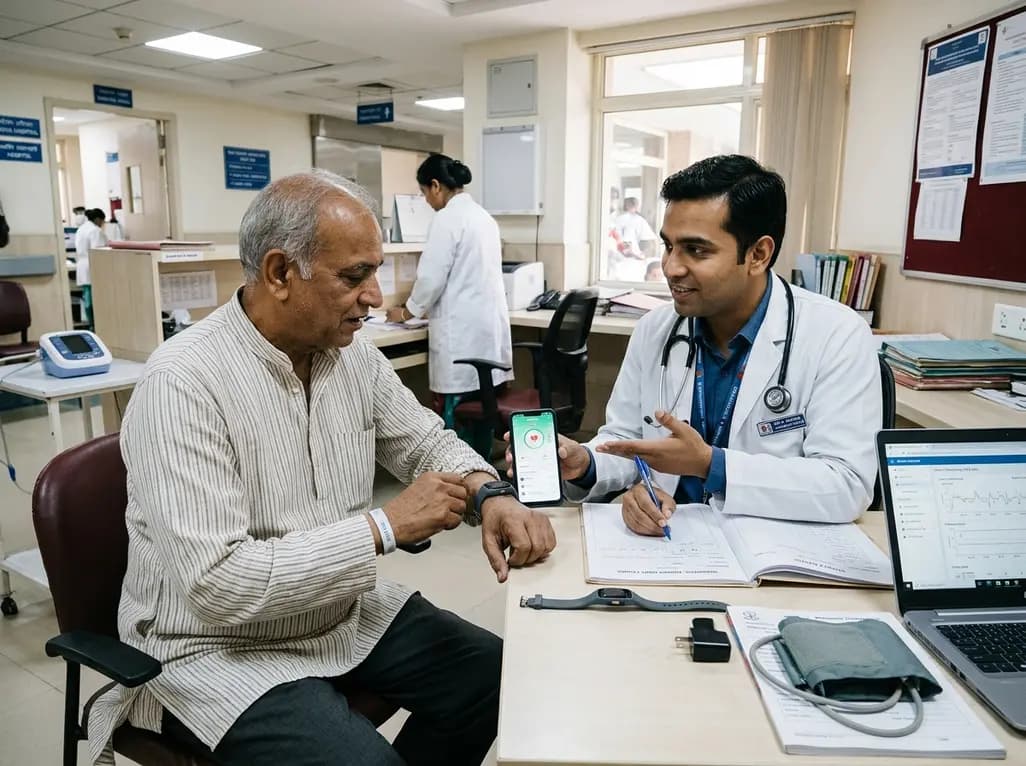
A multicenter observational study evaluated an 8-week digital health monitoring platform using wearable sensors in ambulatory heart failure. While participants achieved high daily wear-time of 11.7 hours and 80% completion, initial recruitment revealed significant technology-related onboarding barriers.
Today

A paired cadaveric study compared triple and quintuple percutaneous Achilles tendon lengthening. While quintuple hemisection showed numerically greater elongation, differences were not statistically significant.
Yesterday

A clinical decision-support framework using health checkup data from 231,683 adults predicts incident obesity with high discrimination (AUROC 0.918). The system integrates temporal survival analysis and risk-factor explanations to prioritize individualized preventive interventions.
Today
