

Loading, please wait...
Loading, please wait...

Modern public health surveillance and clinical decision-making fundamentally depend on laboratory infrastructure. Evaluating infectious disease diagnostic capacity across healthcare tiers reveals crucial gaps in outbreak detection, antimicrobial stewardship, and patient management. Clinicians in frontline facilities often experience delays in confirming acute pathogen exposure, which impairs timely triage and therapeutic interventions.
A recent national survey encompassing 2,689 facilities demonstrated that hospital classification strongly dictates laboratory capabilities. Median in-house diagnostic coverage stood at only 11.6% in primary hospitals, whereas secondary hospitals achieved 27.9% and tertiary centers reached 39.5%. Even when facilities utilized external send-out options, overall coverage rose modestly to 14.0% at the primary tier and 44.2% at the tertiary level. Consequently, general practitioners working in rural or suburban clinics must frequently navigate diagnostic uncertainty without rapid laboratory confirmation.
Furthermore, this disparity highlights the profound divide between first-contact care and tertiary referral institutions. Primary care physicians manage diverse community presentations, yet they lack testing panels for common febrile illnesses. Meanwhile, secondary hospitals serve as intermediate hubs but encounter significant resource caps that restrict comprehensive microbiological evaluation. Therefore, clinicians must routinely transfer unstable patients or rely on empirical regimens. Establishing standardized testing menus across all tiers remains vital for equitable patient care.
Intriguingly, laboratory readiness does not always mirror real-world disease incidence or mortality rates. High-volume illnesses frequently lack adequate diagnostic support at lower institutional tiers. For instance, pulmonary tuberculosis testing was available in only 21% of primary facilities compared to 83.7% of tertiary hospitals. Because primary centers identify presumptive tuberculosis cases first, this deficit substantially delays diagnosis and promotes community transmission.
Similarly, widespread pediatric and gastrointestinal conditions encounter low institutional diagnostic coverage. Hand, foot, and mouth disease testing existed in merely 35% of tertiary hospitals despite its substantial annual case count. Infectious diarrheal disease diagnostics remained accessible in only 42% of tertiary centers. Additionally, high-consequence zoonotic and hemorrhagic infections showed minimal domestic capacity. Tertiary facilities offered testing for hemorrhagic fever with renal syndrome in just 13.9% of centers and rabies in only 4.0%. As a result, critical clinical decisions rely heavily on syndromic assumptions rather than pathogen confirmation.
Beyond basic test availability, the technical sophistication of diagnostic platforms differs sharply across hospital grades. Advanced molecular assays remain heavily concentrated in tertiary academic centers. For example, hepatitis B virus surface antigen testing showed wide availability across primary, secondary, and tertiary tiers at 82.3%, 98.0%, and 99.3%, respectively. In contrast, quantitative viral load testing, such as hepatitis B DNA quantification, dropped steeply from 61.1% in tertiary hospitals to just 8.1% in primary clinics.
Moreover, the choice of respiratory pathogen diagnostics reflects structural equipment constraints. Primary facilities relied predominantly on rapid antigen detection for acute viral infections like SARS-CoV-2, reporting 46.0% antigen availability versus 21.8% nucleic acid testing. Tertiary hospitals, however, consistently maintain high-throughput polymerase chain reaction platforms. This technical divide limits the ability of primary clinicians to assess chronic viral activity, detect emergent genomic variants, or monitor antiviral therapeutic response. Consequently, healthcare systems must decentralize molecular technology through accessible point-of-care instruments.
Healthcare facilities report distinct institutional obstacles depending on their operational tier. Lower-tier hospitals predominantly battle severe workforce deficits and physical laboratory infrastructure bottlenecks. Primary clinics frequently lack certified clinical microbiologists, biosafety level facilities, and automated analyzers. Therefore, technicians struggle to maintain consistent quality assurance protocols while managing demanding clinical workloads. Inadequate local funding further impedes instrument maintenance and continuous reagent procurement.
Conversely, tertiary medical centers confront sophisticated regulatory and administrative obstacles. Academic institutions rarely cite basic equipment shortfalls; instead, they struggle with stringent reagent licensing procedures and outdated fee-schedule limitations. Restrictive billing frameworks prevent hospitals from adopting multiplex syndromic panels and innovative assays. Additionally, regional disparities amplify these challenges, as hospital networks in remote areas face fragile supply chains. Addressing these divergent structural hurdles requires targeted policy interventions that align regulatory approvals with frontline operational demands.
Solving diagnostic fragmentation requires a transition from isolated laboratory departments to interconnected health systems. Health authorities must establish tiered, regionally responsive diagnostic networks that bridge community clinics with specialized laboratories. Under this hub-and-spoke model, primary healthcare centers perform standardized point-of-care rapid assays to guide immediate clinical decisions. Meanwhile, courier networks rapidly transport complex specimens to regional secondary or tertiary reference hubs for confirmatory genomic testing.
Furthermore, digital laboratory information systems must link peripheral clinics to central surveillance databases. Real-time digital reporting enables public health authorities to track emerging outbreaks and guides clinicians during empirical prescribing. Physicians also require ongoing training in diagnostic stewardship to select appropriate tests and interpret molecular results accurately. Ultimately, strengthening laboratory networks ensures that every patient receives prompt, pathogen-directed therapy regardless of their initial point of healthcare entry.
Primary care facilities encounter substantial limitations due to constrained budgets, scarce laboratory infrastructure, and shortages of trained laboratory personnel. Most community centers lack certified biosafety equipment and automated molecular analyzers necessary for complex pathogen testing. Consequently, these facilities focus their limited resources on high-volume basic assays. Addressing this bottleneck requires sustained health system funding, decentralized point-of-care platforms, and structured diagnostic training for rural healthcare workers.
Uneven diagnostic coverage delays pathogen identification, leading to inappropriate empirical antimicrobial prescribing and heightened risk of clinical deterioration. When primary clinics cannot confirm infections such as tuberculosis or viral hepatitis, patients face prolonged diagnostic odysseys and disease transmission within their communities. Furthermore, delayed testing increases financial burdens as patients seek tertiary care for routine diagnoses. Integrated testing networks ensure timely, targeted therapies and significantly lower complication rates.
Health systems can deploy hub-and-spoke laboratory networks to bridge diagnostic inequities effectively. Frontline facilities utilize validated point-of-care tests for rapid triaging, while centralized secondary and tertiary laboratories perform advanced molecular assays. Establishing efficient sample transportation, digital health record integration, and clear referral pathways prevents unnecessary duplication. Moreover, revising fee schedules and updating reimbursement policies empowers tertiary hospitals to implement comprehensive syndromic testing panels for difficult cases.
Disclaimer: This content is for informational and educational purposes only. It is not intended to be a substitute for professional medical advice, diagnosis, or treatment. Always seek the advice of your physician or other qualified health provider with any questions you may have regarding a medical condition. Refer to the latest local and national guidelines for clinical practice.
References

Read summarized clinical updates, watch expert medical content, and earn CME certifications right from your smartphone.
Open your smartphone camera to scan and install.





A national cross-sectional survey reveals marked disparities in infectious disease diagnostic capacity across hospital tiers, underscoring the urgent need for integrated referral networks and enhanced point-of-care testing to improve outbreak detection and patient outcomes.
Today

The GESS-AEEM consensus establishes a clear clinical implementation framework for testosterone therapy in postmenopausal women with hypoactive sexual desire disorder, focusing on transdermal dosing, precise laboratory monitoring, and safety communication.
Yesterday
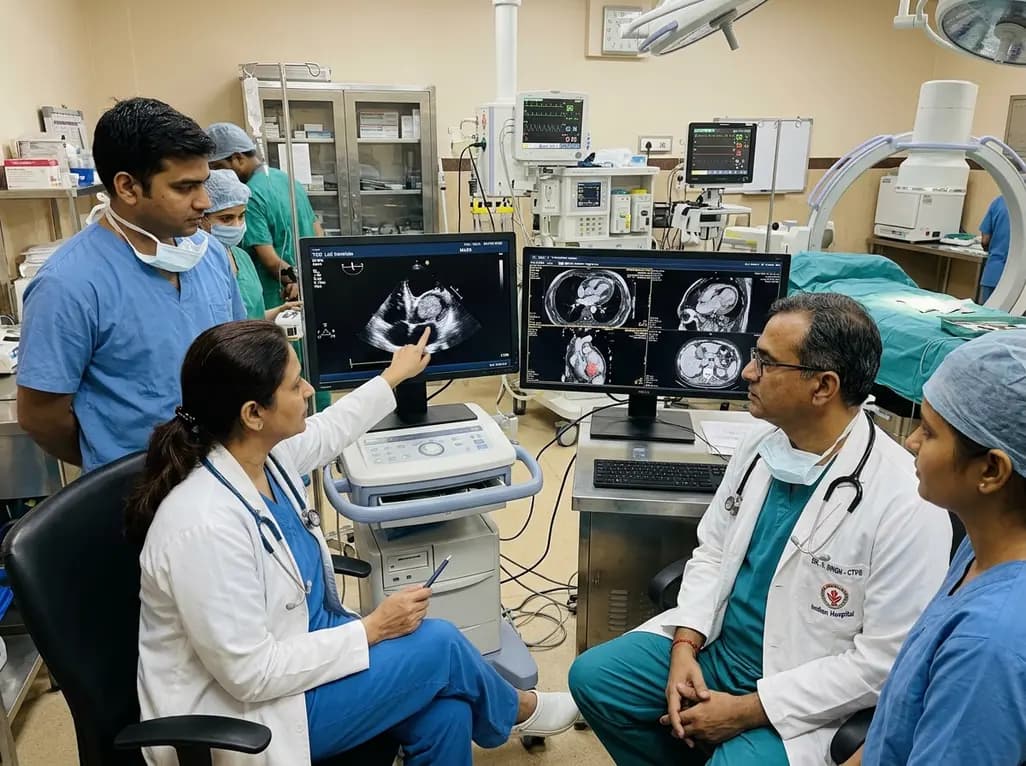
A rare case of an asymptomatic left ventricular hemangioma highlights the vital role of multimodal imaging in differentiating vascular tumors from thrombus. Complete surgical resection under transesophageal echocardiography guidance prevents thromboembolism and delivers optimal outcomes.
Today
A landmark study evaluates long-term quality of life in adolescents and adults with brachial plexus birth injury. Severe functional limitation and limited access to care significantly worsen outcomes, underscoring the urgent need for persistent, multidisciplinary management across adult healthcare transitions.
Today
An analysis of 1,000 posts by macro- and mega-influencers on Instagram and TikTok revealed that 78.5% contained nutrition misinformation, while only 24% of creators held valid credentials. This article examines the clinical risks of viral dietary fads and provides actionable guidance for healthcare professionals.
Today
