

Loading, please wait...
Loading, please wait...

Modern neuroimaging has dramatically transformed preventative health examinations across the world. In routine clinical practice, screening programs frequently identify unruptured cerebral aneurysms before acute neurological deficits emerge. Historically, epidemiological models assumed that the underlying prevalence of these vascular abnormalities remained stationary over time. However, national healthcare registries in Japan noted that the estimated annual rupture rate of unruptured lesions dropped substantially between 2003 and 2018. Consequently, investigators wondered whether this downward shift reflected changing biological characteristics or alterations in screening detection patterns. To address this clinical question, a multicenter collaboration evaluated real-world detection metrics across voluntary health screening participants over a ten-year span. Understanding whether incidental identification is rising or declining provides indispensable context for neurosurgeons and physicians managing cerebrovascular risk. Because subarachnoid hemorrhage carries catastrophic morbidity, evaluating incidental vascular detection remains vital for rational health resource allocation. Furthermore, clarifying these longitudinal patterns assists medical teams in counseling patients who discover silent intracranial anomalies unexpectedly. Therefore, clinicians must re-examine historical screening data alongside contemporary epidemiological shifts to refine intervention thresholds and ensure appropriate patient management across diverse diagnostic environments. Such vigilance preserves clinical resources effectively.
The multicenter repeated cross-sectional study analyzed records from 57,313 first-time screening examinees between 2013 and 2022. Six specialized Japanese brain checkup programs contributed clinical data to establish comprehensive population-level estimates. To avoid diagnostic inflation, the researchers strictly excluded repeat examinations and vascular lesions categorized as merely suspected. Across the entire cohort, clinicians detected unruptured cerebral aneurysms in 1,015 individuals, representing an overall detection prevalence of 1.77%. Notably, individual facility rates exhibited noticeable variability, ranging from 1.19% to 4.25% across the five primary clinical programs. When examining institutional trends, the within-center odds ratio stood at 1.048 per year. Consequently, this estimate reflected a 52.3% cumulative increase in detection odds over the nine-year evaluation period. However, sensitivity analyses revealed that institutional heterogeneity strongly influenced this statistical signal. Specifically, when investigators excluded Hokuto Hospital from the model, the yearly odds ratio fell to 1.004. Furthermore, the random-effects mean across all six centers reached 1.014. Thus, while aggregate data suggested rising discovery odds, institutional protocol variations largely explain the observed trend. These findings emphasize that local diagnostic criteria profoundly shape epidemiological detection statistics across regional neurovascular centers.
The rapid expansion of high-resolution diagnostic modalities has substantially altered neurovascular screening sensitivity over recent decades. Magnetic resonance angiography now reliably reveals minute vascular irregularities that earlier imaging protocols frequently missed. Consequently, radiologic advancements often detect small intracranial outpouchings measuring less than three millimeters. While heightened diagnostic precision prevents missed vascular pathology, it simultaneously introduces complex clinical management dilemmas. For instance, high-resolution scans often identify minor wall bulges and infundibular dilations that carry negligible lifetime rupture danger. Moreover, institutional variances in scanner field strength, slice thickness, and vessel reconstruction software cause substantial detection discrepancy across health systems. The Japanese multicenter data clearly demonstrated this variation between individual medical centers. When one facility changed its screening resolution, observed prevalence rose noticeably, whereas stable centers recorded steady detection rates. Therefore, physicians must interpret rising detection rates as a byproduct of technological refinement rather than a true biological surge in disease. Clinicians must recognize that enhanced technical visualization does not automatically translate into heightened therapeutic urgency. Understanding these imaging factors helps prevent unwarranted patient distress during routine health evaluations, fostering rational clinical management.
Diagnosing asymptomatic vascular anomalies creates significant therapeutic challenges for practicing neurologists and neurosurgeons. Historically, large-scale prospective registries established that small unruptured cerebral aneurysms carry relatively modest annual rupture probabilities. Specifically, anterior circulation aneurysms measuring under five millimeters rarely rupture without secondary anatomical risk factors. However, discovering an incidental lesion often causes marked psychological anxiety for otherwise healthy individuals. In addition, preventive surgical clipping and endovascular coiling carry defined procedural risks, including ischemic stroke and arterial dissection. Therefore, clinicians must carefully weigh theoretical lifelong rupture prevention against tangible periprocedural morbidity. Recent nationwide Japanese data confirmed that population-level rupture rates have steadily dropped over the past two decades. This decline likely stems from aggressive hypertension management and reduced smoking prevalence across the general population. Because lifestyle optimization and systemic blood pressure control mitigate rupture hazards, conservative surveillance often represents the safest initial management pathway. Clinicians must thoroughly counsel patients regarding modifiable vascular risk factors instead of immediately defaulting to invasive operations. A nuanced, individualized risk assessment ensures optimal patient protection while avoiding aggressive overtreatment in fragile elderly individuals.
Managing incidentally detected cerebrovascular outpouchings requires a structured, multidisciplinary approach grounded in evidence-based guidelines. When clinicians identify unruptured cerebral aneurysms on screening scans, they should first obtain detailed anatomical characterization. High-resolution vascular imaging clarifies aneurysm geometry, neck configuration, and daughter sac formation. In addition, medical teams must assess patient-specific risk profiles, including family history of subarachnoid hemorrhage, smoking status, and uncontrolled hypertension. For low-risk lesions under five millimeters, longitudinal surveillance with serial magnetic resonance angiography provides a safe and effective strategy. Furthermore, strict blood pressure targets reduce chronic arterial wall stress, significantly lowering rupture probability over time. Conversely, intervention becomes appropriate when sequential surveillance demonstrates definitive lesion enlargement or when irregular morphology increases rupture vulnerability. Collaborative consultations between neurologists, interventional neuroradiologists, and neurosurgeons ensure comprehensive risk-benefit evaluations before initiating any invasive therapy. Physicians practicing across multidisciplinary stroke units must balance vigilant monitoring against procedural hazards. Ultimately, delivering clear empathetic education alleviates emotional distress, enhances patient compliance, and preserves long-term cerebrovascular health.
The multicenter Japanese study detected unruptured cerebral aneurysms in 1.77% of first-time screening participants, encompassing 1,015 individuals out of 57,313 examinees. Detection rates varied between 1.19% and 4.25% across participating clinical programs. This demonstrates how local imaging capabilities and institutional evaluation criteria significantly influence baseline aneurysm identification in asymptomatic populations.
No, the overall increase in detection odds was driven primarily by a single high-volume facility. While the aggregate cohort showed an annual odds ratio of 1.048, excluding Hokuto Hospital reduced the yearly odds ratio to 1.004. This finding confirms that detection frequencies remained largely stable across the majority of screening institutions.
These findings reinforce conservative management for small, incidental aneurysms because stable detection rates and falling nationwide rupture rates indicate low natural history risks. Rather than immediate surgical clipping or coiling, physicians prioritize longitudinal magnetic resonance surveillance, smoking cessation, and stringent blood pressure control to protect long-term neurovascular health without exposing patients to procedural complications.
Disclaimer: This content is for informational and educational purposes only... Refer to the latest local and national guidelines for clinical practice.
References

Read summarized clinical updates, watch expert medical content, and earn CME certifications right from your smartphone.
Open your smartphone camera to scan and install.





A 10-year multicenter study of 57,313 individuals in Japan evaluates detection trends in unruptured cerebral aneurysms, revealing a 1.77% prevalence and highlighting how institutional factors and imaging modalities shape diagnostic rates.
Today

A 2026 cohort study in Turku University Hospital reveals that specialist palliative care for end-stage liver disease dramatically reduces emergency department visits in the final month of life (48.8% vs 74.1%) and prevents deaths in acute tertiary wards, supporting early integration in decompensated cirrhosis.
Today

A recent survey reveals significant gaps in antenatal providers' adherence to pregnancy oral health guidelines despite positive attitudes. Integrating regular oral screenings, clinician education, and interprofessional dental referrals during prenatal care is crucial to prevent adverse pregnancy outcomes.
Today

A cross-sectional study in Bangladesh demonstrates that an explainable stacking ensemble machine learning model achieves 98.37% accuracy in cardiovascular disease detection. Using local clinical and behavioral data, the model highlights cholesterol, rhythm abnormalities, and blood pressure as leading predictors.
Today
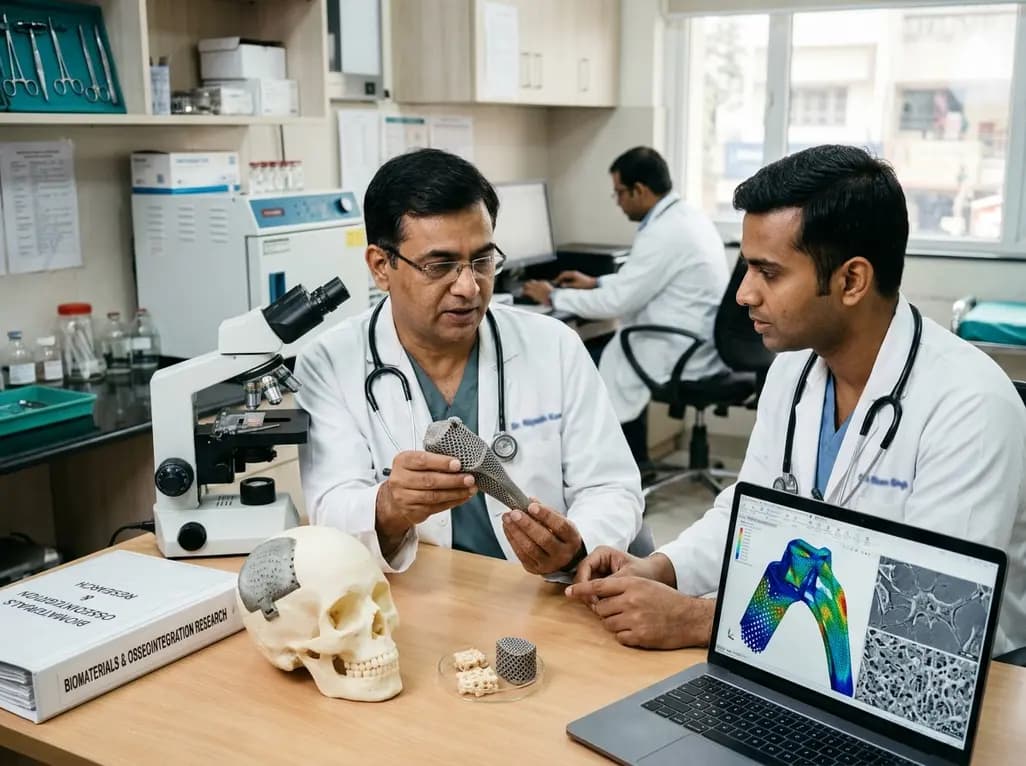
Laser-based powder bed fusion of Ti6Al4V enables custom orthopedic implants. Recent research reveals that heat treatment modulates ductility and wettability, while surface powder morphology drives mesenchymal cell attachment, highlighting crucial design factors for long-term osseointegration.
Today

A multicenter study evaluated the CL-2600i immunochemistry analyzer across 640 serum samples, testing endocrinology, infectious disease serology, sepsis markers, and fertility panels. The system demonstrated high analytical trueness, repeatable results with CVs under 5%, and strong correlation with routine platforms.
Today
