

Loading, please wait...
Loading, please wait...

Additive manufacturing has revolutionized surgical reconstruction by enabling patient-specific joint prostheses and structural scaffolds. Among modern metallic biomaterials, Ti6Al4V orthopedic implants represent the clinical gold standard due to exceptional biocompatibility, corrosion resistance, and structural strength. As the demand for complex revision arthroplasty accelerates globally, orthopedic surgeons rely increasingly on laser-based powder bed fusion (PBF-LB) technology. This advanced manufacturing approach fabricates intricate titanium devices layer by layer from metal powder. However, thermal dynamics during fabrication introduce residual stresses and distinct anisotropic microstructures. Consequently, orthopedic surgeons and biomedical engineers must evaluate how fabrication parameters affect mechanical performance and cellular interactions. A recent investigation by Avery and colleagues provides critical biomechanical and cellular insights into optimizing these patient-specific devices.
Laser-based powder bed fusion rapidly melts metal powders using concentrated thermal beams. This rapid heating and cooling cycle yields an as-built microstructure dominated by acicular alpha-prime martensite. Although this martensitic matrix delivers remarkable yield strength, it concurrently limits overall material ductility. Therefore, post-fabrication thermal processing becomes essential to relieve internal stress and optimize mechanical toughness. When technicians subject PBF-LB constructs to progressive heat treatments approaching 1000 °C, the crystal architecture transforms profoundly. Specifically, the metastable martensite progressively decomposes into a stable, dual-phase alpha plus beta lamellar morphology. This metallurgical transition directly modulates structural flexibility, reducing tensile yield strength while substantially increasing plastic elongation. Furthermore, higher annealing temperatures soften the metallic matrix, thereby preventing catastrophic brittle fatigue failures under physiological loading. Orthopedic devices must endure millions of cyclic stresses within the musculoskeletal system. Consequently, balancing fatigue endurance and tensile strength remains imperative for long-term clinical survival.
Additive manufacturing processes inevitably introduce directional dependency into metallic constructs. Because the laser sweeps horizontally layer upon layer along a vertical axis, columnar grain growth exhibits distinct vertical alignment. Consequently, mechanical performance varies significantly depending on whether technicians orient specimens horizontally, diagonally, or vertically. Mechanical testing demonstrates that build orientation generates pronounced anisotropy across tensile yield strength and ultimate elongation thresholds. Vertically oriented specimens frequently display different shear resistance and elastic moduli compared to horizontally printed components. Moreover, thermal annealing alone cannot completely eliminate this directional mechanical variance. Even after undergoing high-temperature heat treatment at 1000 °C, the material retains measurable anisotropic differences. This persistent anisotropy carries critical implications for joint reconstruction and spinal fusion implants. Orthopedic implants routinely experience complex multiaxial dynamic loading in vivo. Therefore, design engineers must deliberately align the print trajectory with the primary physiological stress vectors in the host bone to avoid premature loosening.
Thermal post-processing protocols alter more than just internal bulk mechanical properties. Interestingly, these high-temperature treatments also induce substantial alterations in surface thermodynamics. As the crystal structure shifts from needle-like martensite to lamellar alpha plus beta phases, the surface energy drops noticeably. Consequently, the surface wettability shifts from a hydrophilic state to a distinctly hydrophobic profile. Standard surface profilometry confirms that this wetting transition occurs without any measurable change in macroscopic roughness. Nevertheless, altered surface thermodynamics directly dictate how biological fluids interact with metallic implants during surgery. Host water molecules and plasma proteins instantly adsorb onto prosthetic surfaces, creating a provisional matrix for migrating cells. Typically, hydrophilic biomaterials promote rapid protein adsorption and accelerate osteoblast spreading. However, titanium surfaces spontaneously form an amorphous passivation oxide layer upon environmental exposure. Therefore, the resulting wettability shift reflects subtle changes in surface oxidation states, hydroxyl density, and lattice strain without modifying physical topography.
Biological osseointegration relies on the prompt recruitment of bone marrow-derived mesenchymal stromal cells. These regenerative progenitor cells actively drive osteogenic differentiation and peri-implant bone regeneration. In experimental assessments, researchers discovered that variations in bulk alloy microstructure did not directly influence initial mesenchymal cell attachment. Instead, early cellular adhesion correlated strongly with localized surface morphology. Additively manufactured titanium devices naturally retain partially melted spherical powder granules across their boundaries. These partially fused particles create complex micro-scale topographies that serve as physical anchorage niches for attaching stromal cells. Mesenchymal cells extend cytoplasmic filopodia across these spherical contours, establishing robust focal adhesion contacts. Furthermore, early metabolic assays confirmed that stromal cells maintain consistent cellular vitality regardless of microstructural transformations or wettability shifts. Thus, semi-sintered surface granules exert a much stronger initial tactile cue for cell anchoring than internal crystal configurations. However, partially melted granules also raise mechanical concerns regarding particle shedding under dynamic joint articulation.
The intricate relationship between metallurgical parameters and cellular responses offers crucial guidance for clinical orthopedic device development. Surgeons increasingly utilize custom 3D-printed titanium implants for complex oncological reconstructions, pelvic trauma repairs, and revision arthroplasties. However, achieving lasting clinical success requires balancing bulk fatigue strength, elastic modulus matching, and osteoconductive surface textures. While high-temperature annealing enhances structural ductility and prevents sudden fracture, it concurrently reduces surface wettability. Similarly, leaving partially melted powders on the implant exterior provides attachment niches for mesenchymal cells but risks wear debris generation. Therefore, post-processing protocols must strike a deliberate, engineered balance. Manufacturers often apply controlled secondary treatments, such as chemical etching or ultrasonic washing, to remove loose particles while preserving helpful microtopography. Moreover, computational design software can optimize porous lattice architectures, mitigating stress shielding while preserving biomechanical stability along critical load vectors. Ultimately, clinicians and biomedical engineers must collaborate closely to ensure that additive manufacturing workflows deliver both structural longevity and rapid biological fixation.
Thermal heat treatment significantly enhances structural ductility by transforming the brittle α'-martensitic crystalline phase into a balanced α + β lamellar microstructure. As processing temperatures reach 1000 °C, internal thermal residual stresses dissipate, while plastic elongation improves substantially. Although this metallurgical transition slightly reduces tensile yield strength, it provides the essential mechanical compliance and fracture toughness required to prevent sudden implant failure under repetitive physiological musculoskeletal loading conditions.
Mesenchymal stromal cells respond primarily to localized physical and topographical cues rather than deeper metallurgical crystallographic arrangements. On laser powder bed fusion surfaces, partially melted titanium powder granules create micro-rough niches that facilitate filopodial extension and focal adhesion plaque formation. Consequently, while crystalline phase shifts alter bulk mechanical properties and wettability, cell attachment dynamics depend heavily on these superficial geometric features, providing mechanical anchorage during the critical initial phases of biological integration.
Additive manufacturing inherently induces mechanical anisotropy because horizontal laser melting creates directional grain growth along the vertical build axis. Consequently, tensile strength, fatigue endurance, and elastic modulus vary depending on the device's spatial orientation within the build chamber. Because post-fabrication annealing cannot fully eliminate this directional variance, biomedical engineers must carefully align the primary physiological joint loading vectors with the strongest print orientation to prevent localized structural failure or accelerated fatigue degradation.
Disclaimer: This content is for informational and educational purposes only. It is not intended to be a substitute for professional medical advice, diagnosis, or treatment. Always seek the advice of your physician or other qualified health provider with any questions you may have regarding a medical condition. Refer to the latest local and national guidelines for clinical practice.
References

Read summarized clinical updates, watch expert medical content, and earn CME certifications right from your smartphone.
Open your smartphone camera to scan and install.





Laser-based powder bed fusion of Ti6Al4V enables custom orthopedic implants. Recent research reveals that heat treatment modulates ductility and wettability, while surface powder morphology drives mesenchymal cell attachment, highlighting crucial design factors for long-term osseointegration.
Today
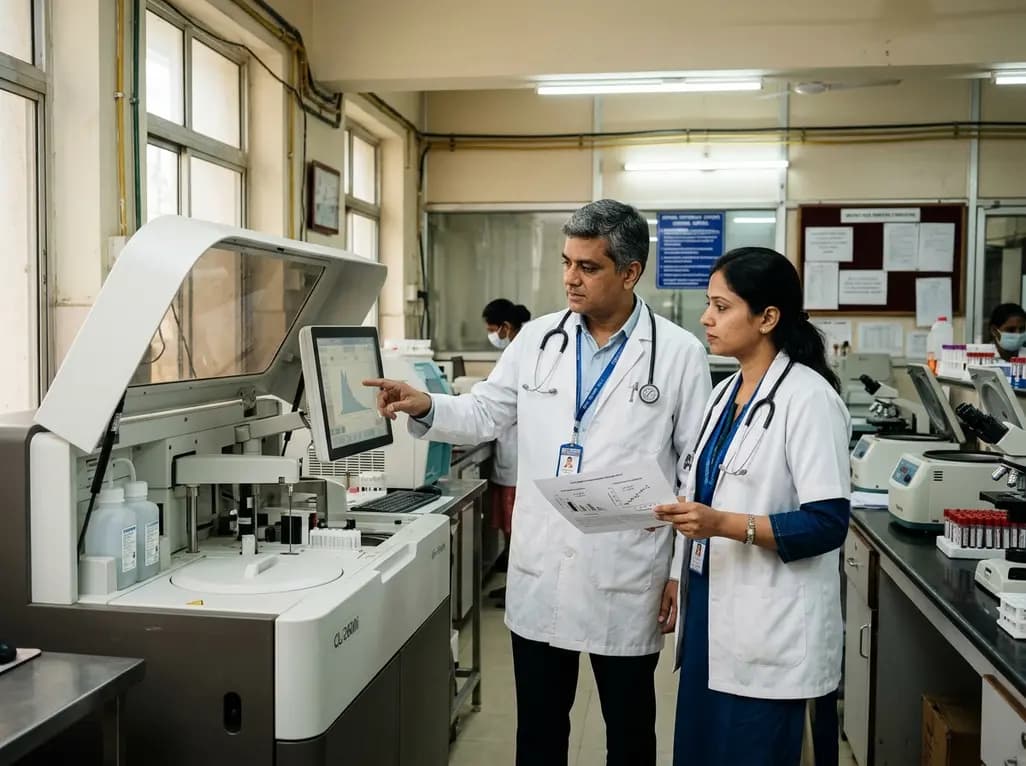
A multicenter study evaluated the CL-2600i immunochemistry analyzer across 640 serum samples, testing endocrinology, infectious disease serology, sepsis markers, and fertility panels. The system demonstrated high analytical trueness, repeatable results with CVs under 5%, and strong correlation with routine platforms.
Today

A recent survey reveals significant gaps in antenatal providers' adherence to pregnancy oral health guidelines despite positive attitudes. Integrating regular oral screenings, clinician education, and interprofessional dental referrals during prenatal care is crucial to prevent adverse pregnancy outcomes.
Today
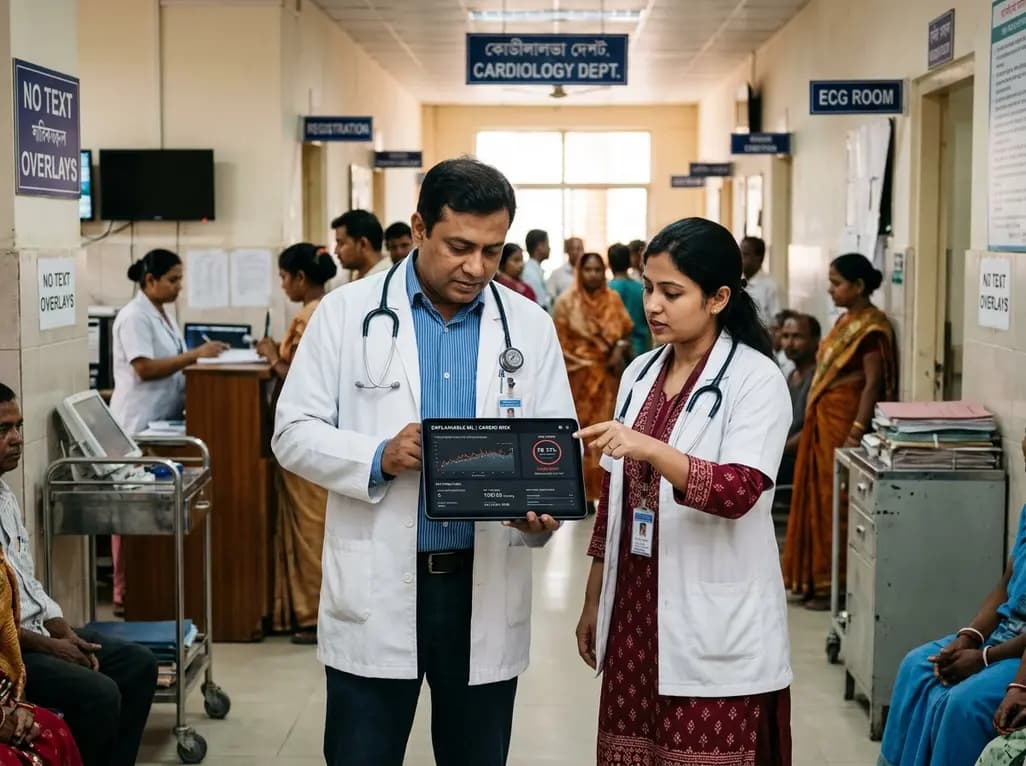
A cross-sectional study in Bangladesh demonstrates that an explainable stacking ensemble machine learning model achieves 98.37% accuracy in cardiovascular disease detection. Using local clinical and behavioral data, the model highlights cholesterol, rhythm abnormalities, and blood pressure as leading predictors.
Today

Recent physiological findings demonstrate that myoglobin acts beyond oxygen transport, significantly regulating skeletal muscle glucose metabolism and mitochondrial bioenergetics. Understanding these intracellular metabolic shifts offers fresh insights into metabolic health and exercise physiology.
Yesterday
