

Loading, please wait...
Loading, please wait...

Cardiovascular disorders represent an escalating public health crisis across South Asia. Clinicians frequently encounter diagnostic dilemmas due to centralized tertiary facilities and delayed patient presentations. Modern digital health tools now offer transformative potential. Specifically, robust cardiovascular disease risk prediction models help clinicians detect occult vascular pathology before irreversible cardiac events occur.
South Asian populations carry an exceptionally heavy burden of premature coronary artery disease. Genetic predispositions, rapid urbanization, adverse dietary habits, and high tobacco exposure significantly heighten vascular vulnerability. Consequently, individuals frequently develop acute coronary syndromes a decade earlier than Western cohorts. Despite this rising clinical crisis, specialized diagnostic resources remain concentrated within metropolitan tertiary centers. Rural primary care centers frequently lack advanced cardiac imaging, invasive catheterization facilities, and continuous specialist coverage. Therefore, primary physicians often rely exclusively on routine physical findings and baseline laboratory examinations. Conventional cardiovascular risk scores frequently misestimate risk because researchers calibrated them on Caucasian populations. Hence, developing context-specific screening instruments remains essential for timely triage. Clinicians urgently require diagnostic decision support systems that integrate regional socioeconomic nuances, lifestyle habits, and readily accessible clinical parameters. By bridging this infrastructure divide, healthcare practitioners can accurately stratify ambulatory patients, thereby facilitating timely cardiovascular interventions and reducing hospitalizations.
To address regional diagnostic inequities, investigators developed a comprehensive cross-sectional evaluation across five major medical centers in Bangladesh. The research team analyzed data from 1222 adult patients aged 17 years and above. Specifically, they synthesized 571 primary hospital records collected between May and November 2024 with 651 validated national survey entries. Investigators initially assembled thirty diverse clinical, behavioral, and demographic variables. Subsequently, they applied recursive feature elimination to identify nineteen highly informative predictors. The analytical pipeline partitioned the cohort into an eighty-twenty training and testing split. Additionally, researchers handled class imbalance by applying synthetic minority oversampling exclusively to the training subset. They subsequently trained five conventional algorithmic classifiers alongside an advanced stacking ensemble framework. Through rigorous hyperparameter optimization and five-fold cross-validation, the ensemble systematically combined base predictions. Consequently, this layered architectural design captured complex non-linear interactions across multifaceted clinical profiles, establishing a robust computational pipeline for regional risk assessment.
The resulting data analysis revealed extraordinary diagnostic precision across the evaluated cohorts. Among the 1222 enrolled individuals, 806 patients had diagnosed cardiovascular conditions, and 70 percent were men. Remarkably, every evaluated classifier surpassed ninety-five percent diagnostic accuracy. However, the stacking ensemble demonstrated superior discriminative power across all core statistical metrics. Specifically, the ensemble achieved an overall accuracy of 98.37 percent and an area under the receiver operating characteristic curve of 0.997. Furthermore, the model recorded an exceptional sensitivity of 99.38 percent and a specificity of 96.39 percent. Its overall precision reached 98.17 percent, producing an F1-score of 98.77 percent. Five-fold cross-validation further confirmed exceptional stability, maintaining an average accuracy of 96.35 percent. Beyond simple discriminatory power, clinical adoption requires reliable probability calibration. Notably, the ensemble achieved an outstanding Brier score of 0.013, closely trailing the deep neural network score of 0.012. These figures demonstrate that the model calculates authentic disease probabilities rather than overconfident classifications.
A frequent barrier to clinical artificial intelligence adoption involves the opaque black-box nature of deep algorithms. Clinicians must understand underlying diagnostic rationales before acting on automated recommendations. Therefore, researchers incorporated SHapley Additive exPlanations and Local Interpretable Model-agnostic Explanations to rank key variable contributions transparently. Notably, the explainability analyses identified serum cholesterol, irregular heart rhythm, and baseline blood pressure as the three most decisive variables driving predictions. Furthermore, obstructive sleep apnea and established hypertension exerted major predictive weight across the cohort. In contrast, variables such as reported salt intake, active smoking, and baseline anemia contributed minimally to final classifications. This lower apparent weighting likely reflects self-reporting inaccuracies, uniform dietary exposure across populations, or collinearity with existing hypertension. Consequently, the explainable framework reassures attending physicians because the underlying algorithmic logic aligns directly with established pathophysiological principles, transforming abstract machine calculations into actionable clinical intelligence.
The socioeconomic and clinical landscape of Bangladesh closely mirrors healthcare delivery environments across India. Both nations grapple with overloaded outpatient clinics, significant rural-urban healthcare disparities, and premature atherosclerotic vascular illness. Consequently, validated machine learning frameworks hold great promise for empowering general practitioners and community health officers. By inputting routine vital signs and basic blood chemistries into digital triage tools, primary physicians can rapidly identify individuals requiring urgent cardiology referrals. However, several critical methodological limitations warrant careful consideration. The current study utilized a retrospective cross-sectional hospital dataset without independent external cohort validation. Tertiary hospital samples naturally exhibit selection bias and higher pre-test disease probabilities than community screening populations. Therefore, premature commercial deployment without prospective multi-center validation in ambulatory primary care settings remains inadvisable. Clinicians must view these algorithmic tools as diagnostic adjuncts rather than replacements for comprehensive clinical judgment. Moving forward, rigorous validation across diverse Indian patient registries will prove essential before widespread implementation.
The stacking ensemble model combines multiple diverse machine learning algorithms into a unified predictive architecture. By synthesizing predictions from individual base classifiers, the ensemble captures complex non-linear relationships among clinical and behavioral variables. Consequently, it achieves superior discriminative performance, delivering 98.37 percent accuracy and an area under the curve of 0.997. This layered approach minimizes algorithmic bias and variance, thereby providing clinicians with highly reliable risk estimates during routine outpatient triage.
Conventional machine learning algorithms often operate as opaque black boxes, preventing clinicians from understanding how models generate diagnostic predictions. In contrast, explainable artificial intelligence techniques like SHAP and LIME clearly quantify individual feature contributions. This transparency allows physicians to verify whether algorithmic recommendations reflect sound pathophysiological mechanisms, such as elevated cholesterol and abnormal cardiac rhythms. Therefore, explainable tools build necessary clinical trust and help practitioners make safe, transparent therapeutic decisions for complex patients.
Clinicians cannot immediately deploy this algorithm in daily practice because it currently lacks external prospective validation. The initial study analyzed cross-sectional data collected from tertiary hospital facilities, which naturally carry higher pre-test disease prevalence. Consequently, researchers must first validate the architecture across diverse, unselected community cohorts in India. Until multi-center trials confirm real-world efficacy, physicians should continue applying established clinical guidelines while utilizing artificial intelligence models strictly as investigational clinical decision support tools.
Disclaimer: This content is for informational and educational purposes only and is not intended as medical advice or as a substitute for professional clinical judgment. Consult qualified healthcare providers for medical diagnosis and treatment decisions. Refer to the latest local and national guidelines for clinical practice.
References

Read summarized clinical updates, watch expert medical content, and earn CME certifications right from your smartphone.
Open your smartphone camera to scan and install.





A cross-sectional study in Bangladesh demonstrates that an explainable stacking ensemble machine learning model achieves 98.37% accuracy in cardiovascular disease detection. Using local clinical and behavioral data, the model highlights cholesterol, rhythm abnormalities, and blood pressure as leading predictors.
Today

A recent survey reveals significant gaps in antenatal providers' adherence to pregnancy oral health guidelines despite positive attitudes. Integrating regular oral screenings, clinician education, and interprofessional dental referrals during prenatal care is crucial to prevent adverse pregnancy outcomes.
Today

Recent discoveries reveal that cardiomyocyte subpopulations produce autonomic signalling molecules like catecholamines and acetylcholine. This intrinsic paracrine machinery coordinates cardiac conduction and rhythm, offering innovative therapeutic avenues for arrhythmias and progressive heart failure.
Today
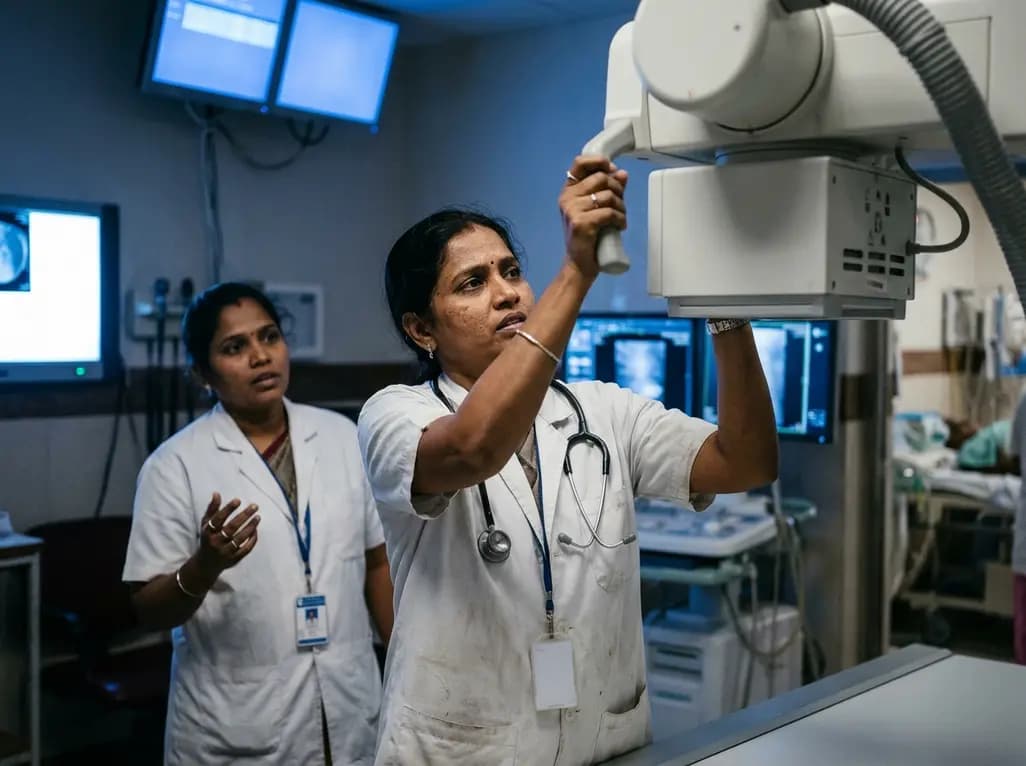
A systematic review and meta-analysis reveals that 67% of radiographers experience work-related musculoskeletal disorders. Key drivers include unassisted patient repositioning and repetitive equipment manipulation. Departments must prioritize proactive ergonomic interventions and safe handling protocols.
Today

Recent physiological findings demonstrate that myoglobin acts beyond oxygen transport, significantly regulating skeletal muscle glucose metabolism and mitochondrial bioenergetics. Understanding these intracellular metabolic shifts offers fresh insights into metabolic health and exercise physiology.
Today
