.webp&w=384&q=75)

Loading, please wait...
Loading, please wait...
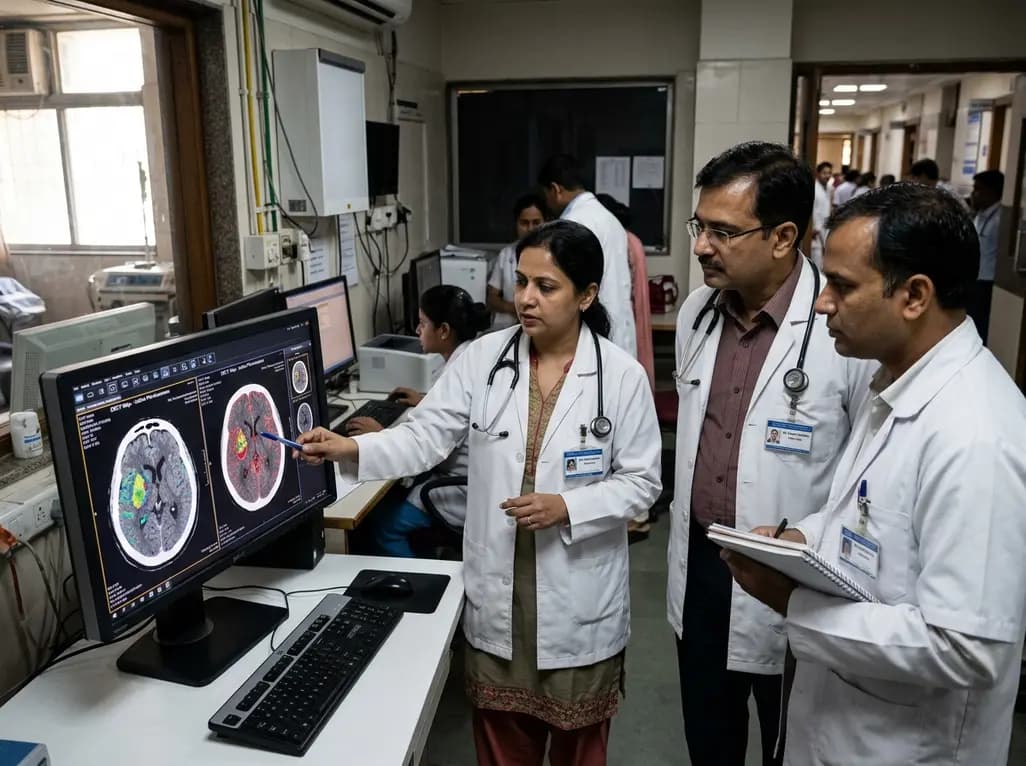
Acute ischaemic stroke management has evolved rapidly with the widespread adoption of endovascular thrombectomy. However, successful arterial recanalisation and subsequent functional recovery vary considerably among patients. Emerging neuroimaging paradigms focus heavily on preoperative clot composition to forecast procedural efficacy. Evaluating thrombus iodine-based perviousness using advanced imaging represents a substantial leap forward in this domain. Clot perviousness reflects the internal porosity and permeability of an occlusive thrombus, which facilitates the penetration of contrast agents and endogenous fibrinolytic proteins. Traditional imaging modalities often struggle to quantify this permeability accurately due to technical limitations in standard single-energy computed tomography. Consequently, neurointerventionalists have sought more objective imaging biomarkers to stratify procedural risks and tailor revascularisation strategies. By measuring contrast permeation within the clot matrix before intervention, clinicians can better predict how readily a thrombus will respond to mechanical retrieval or aspiration. This predictive ability holds immense clinical value, as rapid and complete reperfusion remains the primary determinant of favourable neurological recovery in acute large vessel occlusion.
Dual-energy computed tomography provides unprecedented material decomposition capabilities that surpass conventional computed tomography angiography. By acquiring datasets simultaneously at two distinct photon energy levels, dual-energy platforms accurately separate iodine from surrounding soft tissues, bone, and calcium. Therefore, clinicians can measure exact iodine concentration within an occluded arterial segment rather than relying solely on attenuation shifts measured in Hounsfield units. In standard practice, thrombus attenuation increase is calculated by subtracting non-contrast values from post-contrast scans. Nevertheless, this traditional method remains vulnerable to patient motion, beam-hardening artefacts, and variable vascular contrast arrival times. In contrast, dual-energy derived quantitative parameters, particularly absolute iodine concentration and normalised iodine concentration, eliminate these confounding factors. Normalising the clot iodine concentration against the unaffected contralateral arterial system provides a standardised, patient-specific metric of contrast penetration. Consequently, this quantitative mapping offers an objective and highly reproducible assessment of intrathrombus microchannels, setting a new diagnostic standard for neurovascular imaging.
Recent clinical investigations demonstrate that thrombus iodine-based perviousness directly correlates with endovascular revascularisation success. In clinical cohort evaluations of acute ischaemic stroke patients with middle cerebral artery occlusions, elevated normalised iodine concentration strongly predicted complete arterial recanalisation. Multivariable logistic regression analyses consistently show that higher perviousness values correspond to superior arterial occlusive lesion scale scores post-procedure. Furthermore, patients displaying porous clots with robust contrast penetration achieve significantly better ninety-day functional outcomes on the modified Rankin Scale. Conversely, dense, impermeable thrombi correlate with higher procedural failure rates, longer reperfusion times, and poor functional independence. Additionally, quantifying thrombus iodine-based perviousness outperforms conventional thrombus attenuation increase measurements in predicting both mechanical recanalisation and early neurological improvement. These robust clinical correlations highlight the diagnostic superiority of dual-energy material decomposition. Ultimately, assessing iodine permeation equips clinical teams with indispensable prognostic information before initiating invasive catheterisation.
The radiological manifestation of clot perviousness directly reflects underlying histopathological architecture. Thrombi exhibiting high perviousness typically contain loose fibrin meshworks rich in trapped red blood cells, interspersed with microvascular channels that permit contrast fluid ingress. Because these red blood cell-rich clots demonstrate lower mechanical friction and higher deformability, stent retrievers and aspiration catheters capture and extract them more effectively. In contrast, impervious thrombi generally feature dense, highly compacted fibrin networks, abundant platelet aggregates, and extracellular DNA traps. These structural elements create a rigid, cohesive matrix that resists contrast penetration and mechanical disruption. Furthermore, compact fibrin-rich clots exhibit elevated frictional resistance against vascular endothelia, leading to frequent device slippage, clot fragmentation, and distal embolisation. Therefore, dual-energy iodine mapping serves as a non-invasive histological probe. By understanding the cellular and structural composition of the occlusive material preoperatively, interventionalists can anticipate device-thrombus interactions with greater precision.
Integrating quantitative perviousness assessment into emergency triage protocols provides practical guidance for neurointerventional teams. When pre-procedural imaging reveals high thrombus permeability, interventionalists can anticipate high first-pass recanalisation rates using standard aspiration or combined stent-retriever techniques. However, when dual-energy imaging demonstrates an impervious, compact thrombus, clinicians can proactively adapt their operational strategy. For example, teams may elect immediate combined aspiration-retriever approaches, deploy larger-bore aspiration catheters, or prepare for adjunctive intra-arterial pharmacological agents. Additionally, porous thrombi may benefit more profoundly from bridging intravenous thrombolysis, as fluid permeation accelerates tissue plasminogen activator delivery into the clot core. Conversely, impervious clots show minimal response to standard systemic fibrinolytics, reinforcing the necessity for prompt mechanical intervention without unnecessary delays. Thus, preoperative perviousness quantification transforms thrombectomy from an empirical procedure into a personalised, precision-guided intervention.
The clinical implementation of spectral imaging continues to expand across comprehensive stroke centres globally. Future workflows will likely integrate automated dual-energy post-processing algorithms and artificial intelligence into emergency picture archiving and communication systems. Such automated pipelines can rapidly calculate normalised iodine concentrations and deliver instant risk profiles to stroke teams within minutes of patient arrival. Moreover, large prospective clinical trials will further clarify how quantitative thrombus profiling should guide frontline device selection. Evaluating perviousness across diverse vascular territories, including the posterior circulation and distal intracranial branches, will also broaden clinical utility. Combining iodine perviousness with collateral circulation grading and perfusion-derived core-penumbra mismatches will establish comprehensive multidimensional decision models. Ultimately, these technological innovations will enhance procedural safety, reduce reperfusion times, and substantially improve long-term functional recovery for acute ischaemic stroke patients worldwide.
Thrombus perviousness measures the porosity and permeability of a blood clot occluding a cerebral artery. High perviousness allows contrast and fibrinolytics to penetrate the thrombus matrix. Consequently, porous clots respond more favourably to mechanical thrombectomy, leading to higher recanalisation rates, shorter procedure durations, and improved neurological recovery.
Dual-energy CT captures images at two different X-ray energy spectra, enabling material decomposition analysis. This technology cleanly isolates iodine from soft tissue, calcium, and red blood cells. Therefore, it precisely quantifies absolute and normalised iodine concentrations within the thrombus, delivering an objective and reproducible measurement of internal clot permeability.
Preoperative perviousness assessment helps neurointerventionalists anticipate procedural complexity. Pervious, erythrocyte-rich clots are typically retrieved easily with standard aspiration or stent retrievers. Conversely, dense, impervious thrombi often require aggressive multi-device strategies, such as combined aspiration and stent-retriever techniques or adjunctive intra-arterial pharmacotherapy, to achieve complete revascularisation.
Disclaimer: This content is for informational and educational purposes only and does not constitute medical advice, diagnosis, or treatment. Healthcare professionals should rely on their clinical judgment and verify information independently. Refer to the latest local and national guidelines for clinical practice.
References

Read summarized clinical updates, watch expert medical content, and earn CME certifications right from your smartphone.
Open your smartphone camera to scan and install.





Dual-energy CT evaluation of thrombus iodine-based perviousness demonstrates a strong predictive correlation with successful recanalisation and improved 90-day functional outcomes in acute ischaemic stroke patients undergoing endovascular thrombectomy.
4 weeks back

A bioengineered oral nanozyme microsupplement converts pathological ROS into a protective polydopamine hydrogel shield. By curbing neutrophil extracellular traps and balancing T cells, this platform outperforms standard 5-ASA in preclinical colitis models, opening new paths for sustained remission.
Today
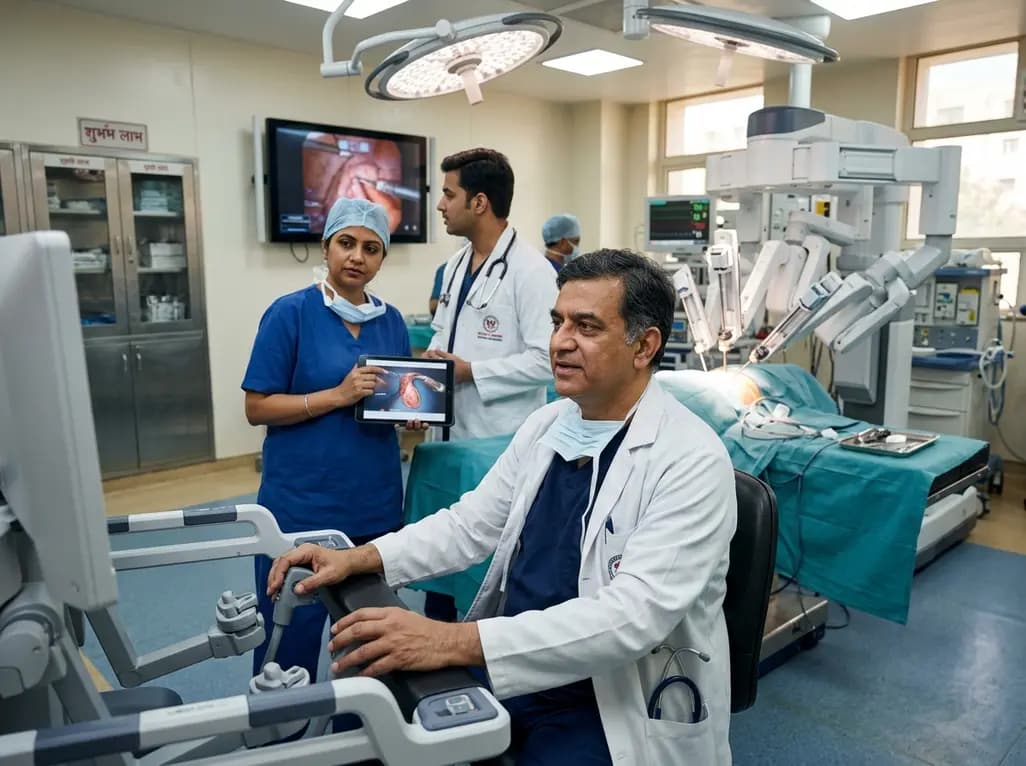
India experiences an exponential rise in robotic-assisted procedures, with Delhi NCR leading system installations and clinical volume. Discover how multidisciplinary surgical adoption, remote telesurgery breakthroughs, and standardized international consensus guidelines are shaping surgical care nationwide.
Today
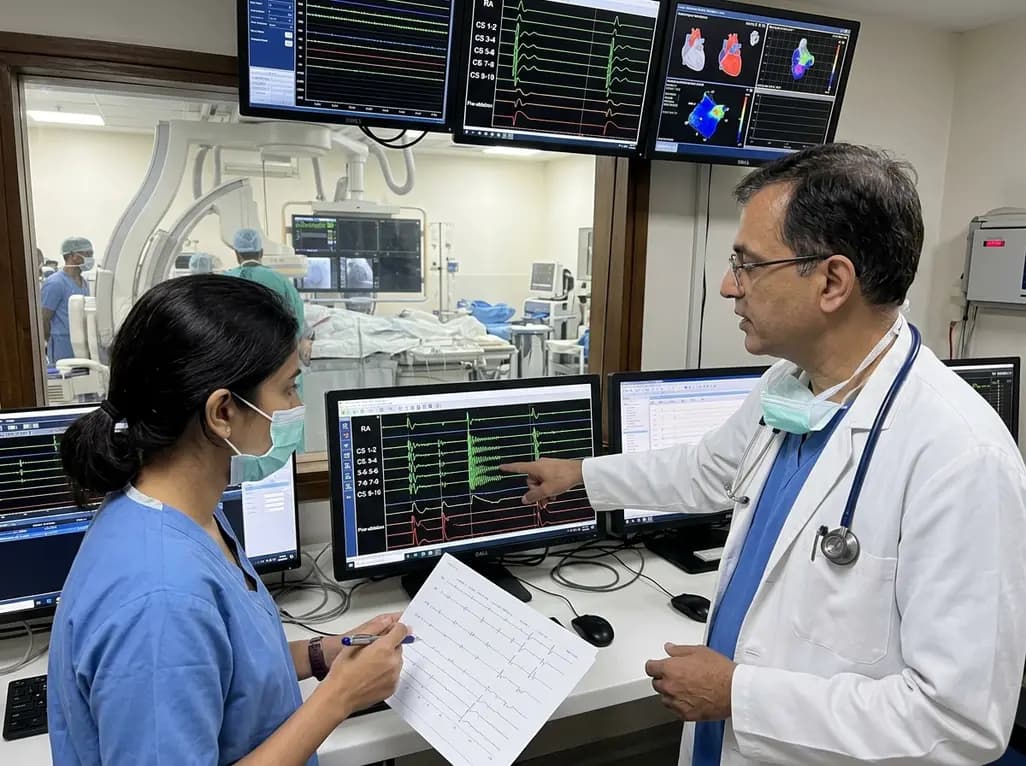
Radiofrequency catheter ablation of the cavotricuspid isthmus successfully terminates typical atrial flutter. This article reviews the mechanisms driving coronary sinus electrogram changes, wavefront activation pathways, and clinical criteria to verify bidirectional block during electrophysiology studies.
Today

A study comparing four knee flexion strength tests after ACL reconstruction using hamstring tendon autografts reveals marked variability in limb symmetry indices. Clinicians must recognize that different strength testing modalities yield divergent return-to-sport clearance rates.
Today
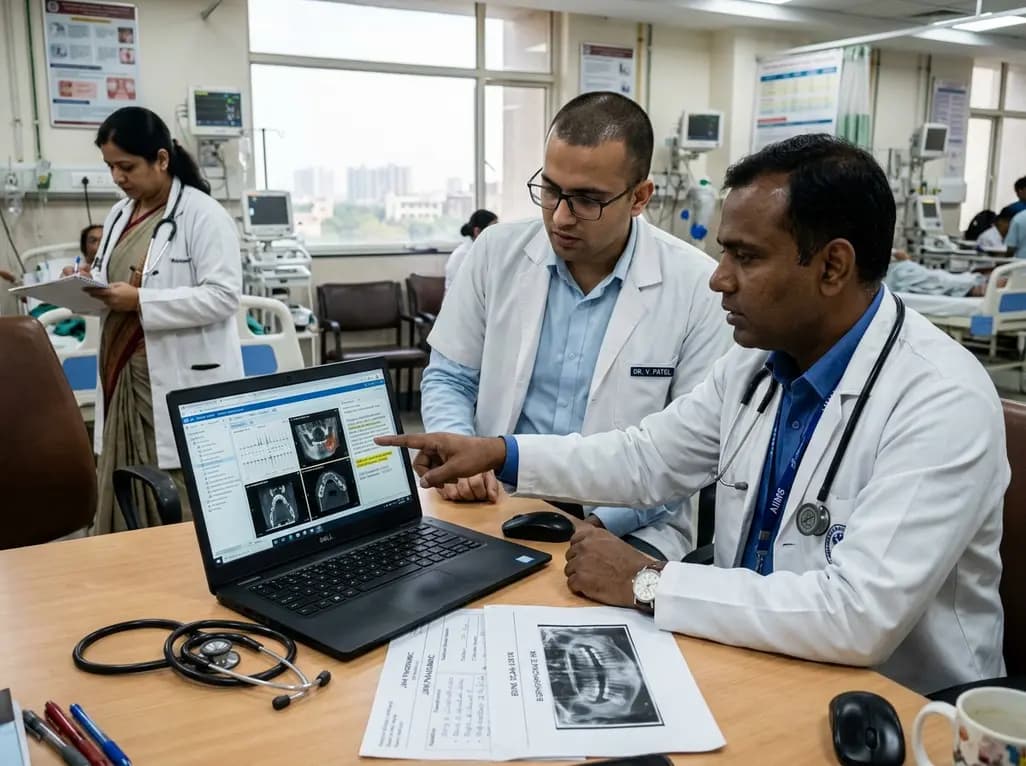
A breakthrough study leverages natural language processing to accurately identify incident medication-related osteonecrosis of the jaw and track antiresorptive drug holidays from clinical narratives in electronic health records, advancing osteoporosis pharmacovigilance and dental safety.
Yesterday
