.webp&w=384&q=75)

Loading, please wait...
Loading, please wait...

Cutaneous fibrosis represents a challenging clinical entity characterized by progressive structural distortion across distinct anatomical layers. Skin diseases exhibit hierarchical pathological remodeling spanning the epidermis, dermis, and deeper subcutaneous adipose compartments. Consequently, conventional topical therapies and systemic treatments often fail to deliver therapeutic payloads to precise pathological depths. To solve this limitation, scientists have engineered an innovative threaded microneedle platform for stratified drug delivery. Dermal fibroblasts undergo accelerated senescence during fibrotic disease, which drives uncontrolled deposition of extracellular matrix. Simultaneously, adjacent subcutaneous adipocytes lose their specialized physiological identity and transition into collagen-producing myofibroblasts. Therefore, successful antifibrotic therapy requires independent interventions at both dermal and subcutaneous depths. Traditional intradermal needles cannot achieve such stratified, differential dosing without causing localized tissue trauma. Furthermore, standard transdermal patches fail to bypass the dense fibrotic barrier of the stratum corneum. In contrast, this modular engineering strategy combines spatial transcriptomic data with rational microfluidic fabrication. As a result, clinicians now glimpse a future where localized interventions address compartmentalized fibrotic disease with surgical precision.
The novel delivery device utilizes a threaded architectural design that integrates two distinct biomaterial matrices. Specifically, the outer superficial layer features a fast-dissolving hydrogel engineered to release active compounds directly into the upper dermis. Meanwhile, helical grooves etched along the needle shaft carry specialized lipid nanoparticles into the deeper subcutaneous adipose layer. During insertion, rotational mechanics allow the needle threads to anchor securely and deposit therapeutic agents without shearing fragile biologics. Thus, rotational penetration optimizes delivery efficiency while minimizing patient discomfort and structural mechanical failure. Furthermore, lipid nanoparticles provide superior encapsulation efficiency and protect fragile messenger RNA from enzymatic degradation within extracellular spaces. The superficial hydrogel dissolves within minutes of skin application, immediately bathing senescent fibroblasts in therapeutic molecules. Concurrently, the threaded grooves release lipid nanoparticles directly into the underlying adipose depot through controlled microfluidic channels. This compartmentalized architecture prevents premature cross-layer drug diffusion and systemic off-target leakage. Accordingly, the device achieves synchronized, dual-compartment pharmacology through a single, minimally invasive clinical maneuver.
Spatial transcriptomics identified critical therapeutic targets operating within discrete cutaneous layers during active fibrotic remodeling. In the dermis, researchers identified widespread fibroblast senescence as a major driver of chronic tissue stiffness and inflammation. To combat this process, the superficial hydrogel delivers a potent SIRT1 agonist directly to dermal fibroblasts. SIRT1 activation restores mitochondrial function, dampens profibrotic signaling pathways, and prevents excessive collagen deposition. In addition, spatial mapping revealed profound metabolic exhaustion within the subcutaneous adipose tissue beneath the fibrotic dermis. Fibrotic injury causes adipocytes to lose peroxisome proliferator-activated receptor gamma coactivator 1-alpha, commonly known as PGC1α. Therefore, researchers loaded the helical microneedle grooves with lipid nanoparticles encapsulating functional PGC1α mRNA. Following rotational delivery, subcutaneous cells internalize the lipid nanoparticles and initiate robust in situ translation of PGC1α protein. Consequently, this restored metabolic coactivator halts the transdifferentiation of adipocytes into pathological myofibroblasts. Ultimately, restoring metabolic vigor to both fibroblasts and adipocytes tackles skin fibrosis at its mechanistic roots.
The therapeutic platform underwent rigorous preclinical validation using an established bleomycin-induced murine model of cutaneous fibrosis. Bleomycin administration induces profound dermal thickening, massive extracellular matrix accumulation, and severe loss of subcutaneous adipose tissue. In untreated control animals, histological staining revealed dense collagen bundles replacing normal dermal architecture and obliterating adipocyte clusters. Conversely, animals treated with the dual-action microneedle system demonstrated remarkable structural and biochemical tissue recovery. The superficial hydrogel successfully reduced markers of cellular senescence, including senescence-associated beta-galactosidase activity in the dermis. Furthermore, localized translation of PGC1α mRNA in the subcutaneous compartment preserved adipocyte morphology and prevented fibrotic replacement. Quantitative histomorphometry confirmed significant reductions in dermal thickness and total skin hydroxyproline content. In addition, immunofluorescence analysis verified reduced expression of alpha-smooth muscle actin, a classic hallmark of activated myofibroblasts. Biomechanical testing also demonstrated restored skin elasticity and reduced tissue stiffness compared to control groups. Consequently, these preclinical outcomes establish that stratified interventions achieve therapeutic efficacy far superior to single-target approaches.
These preclinical findings carry substantial implications for dermatologists and rheumatologists treating human fibrotic disorders like systemic sclerosis. Current therapeutic options rely on broad immunosuppressive drugs or intralesional steroid injections that trigger significant systemic toxicities and localized dermal atrophy. In contrast, modular microneedles provide localized, organ-sparing intervention with minimal systemic biodistribution. Moreover, this stratified approach restores intradermal fat depots, which clinical studies link to halted myofibroblast differentiation. In addition, localized mRNA delivery avoids genomic integration risks, ensuring an exceptional safety profile. However, translating this nanotechnology into widespread clinical practice requires resolving specific manufacturing and storage hurdles. First, engineers must optimize needle lengths to accommodate anatomical variations in human skin thickness across diverse patient demographics. Second, developing room-temperature formulations through advanced lyoprotectants will eliminate stringent cold-chain logistics in outpatient settings. Ultimately, this modular platform establishes a versatile paradigm capable of expanding to other stratified skin conditions, including hypertrophic scars and alopecia. Furthermore, clinicians anticipate that combining layer-specific delivery with point-of-care spatial diagnostics will inaugurate a highly personalized treatment era for complex dermatologic disorders.
The device separates therapeutic agents into two distinct spatial zones across its mechanical structure. A fast-dissolving superficial hydrogel encapsulates a SIRT1 agonist that releases immediately upon contact with the viable dermis. Simultaneously, microscopic helical grooves carved into the needle shaft carry PGC1α mRNA encapsulated in lipid nanoparticles. During rotational insertion, these helical channels directionally deposit the mRNA payloads into subcutaneous adipose tissue, ensuring segregated, depth-dependent pharmacotherapy without cross-layer contamination.
Subcutaneous adipocytes play a vital, active regulatory role in maintaining normal dermal architecture and skin elasticity. Under chronic inflammatory conditions or fibrotic insults, mature adipocytes undergo pathological dedifferentiation, losing their lipid stores and converting directly into matrix-producing myofibroblasts. Consequently, delivering PGC1α mRNA specifically to subcutaneous adipose tissue restores cellular mitochondrial respiration and metabolic homeostasis. This targeted intervention halts adipocyte myofibroblastic transdifferentiation, preserves normal fat architecture, and suppresses excessive dermal collagen synthesis.
Conventional therapies for cutaneous fibrosis rely on systemic immunosuppressants or intralesional steroid injections, which frequently trigger adverse toxicities and localized dermal atrophy. In contrast, modular microneedles provide minimally invasive, virtually painless transdermal delivery that directly circumvents the stratum corneum barrier. Furthermore, mRNA-loaded lipid nanoparticles prompt transient, high-efficiency protein translation without genomic integration risks. This localized bioengineering platform maximizes target-tissue bioactivity, eliminates systemic drug exposure, and provides superior anatomical control over layered tissue remodeling.
Disclaimer: This content is for informational and educational purposes only and should not be taken as medical advice. Always consult a qualified healthcare professional regarding any medical condition or treatment. Refer to the latest local and national guidelines for clinical practice.
References

Read summarized clinical updates, watch expert medical content, and earn CME certifications right from your smartphone.
Open your smartphone camera to scan and install.





A breakthrough modular threaded microneedle platform enables stratified transdermal delivery of mRNA-LNPs and small molecules. By targeting dermal senescence and restoring subcutaneous adipose tissue, this innovative system provides a targeted therapeutic strategy for complex fibrotic skin disorders.
Today

The Indian Government has approved the Biovigilance Programme of India, empowering the IPC to track adverse events in organ and tissue transplant procedures. This nationwide initiative unifies donor and recipient surveillance with established drug and medical device safety mechanisms to elevate clinical standards.
Today
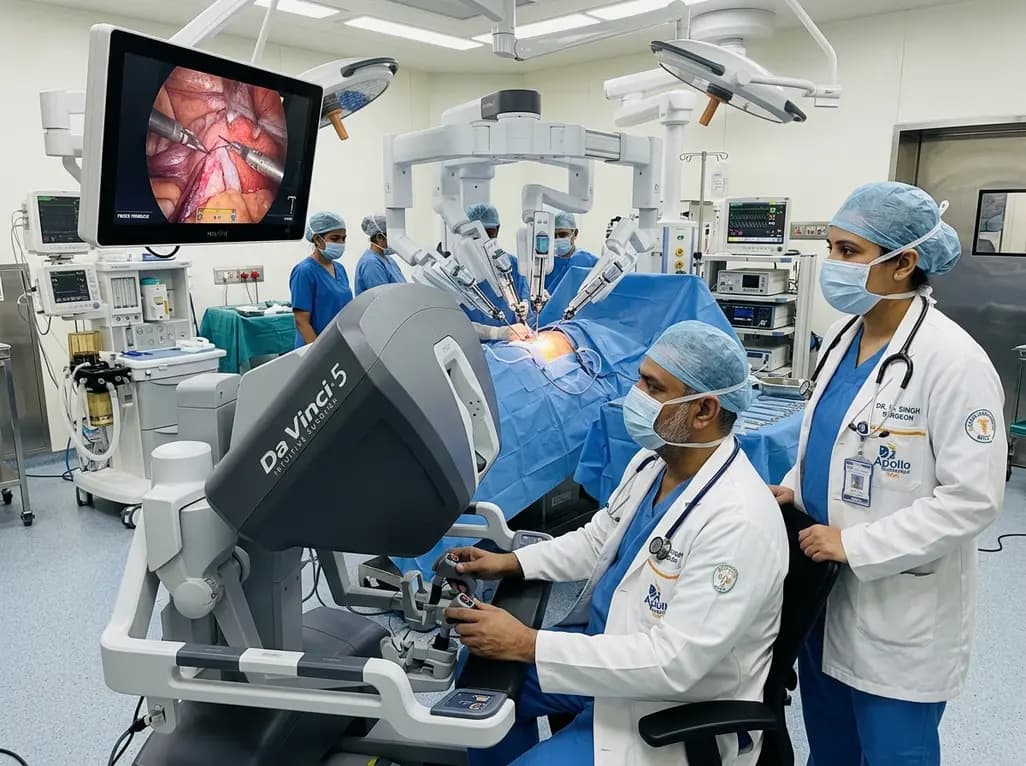
India expands its minimally invasive surgical landscape as Intuitive unveils its fifth-generation robotic platform. Equipped with real-time force feedback and immense computing performance, this innovation assists clinical specialists across urology, gynecology, and general surgery in optimizing operative care.
Today

Large-scale biobank research demonstrates that low-grade systemic inflammation quietly remodels ventricular architecture years before cardiovascular symptoms appear. Learn how emerging biomarkers like GlycA and targeted anti-inflammatory pathways could reshape preventive cardiovascular screening and clinical risk evaluation.
Today

Systematic review comparing labral repair and reconstruction in primary hip arthroscopy shows comparable short- to mid-term patient-reported outcomes, with lower THA conversion after repair but superior outcomes for reconstruction in patients aged 40 and older.
Today
Diabetic peripheral neuropathy involves chronic neuroinflammation and blood-nerve barrier dysfunction. This review discusses advanced nanomedicine formulations, including nanoparticles and hydrogels, designed to overcome pharmacokinetic barriers and modulate the peripheral neuroimmune axis.
Today
