.webp&w=384&q=75)

Loading, please wait...
Loading, please wait...

Diabetic peripheral neuropathy represents one of the most debilitating chronic microvascular complications in modern diabetes care. Historically, medical practitioners viewed this condition strictly as a metabolic disorder driven by persistent hyperglycemia. However, emerging scientific discoveries indicate that chronic neuroinflammation plays an equally decisive role in driving axonal degeneration. In diabetic patients, persistent metabolic stress stimulates resident immune cells and damages peripheral nerve tissues. Consequently, pro-inflammatory signaling pathways activate within endoneurial compartments, dorsal root ganglia, and surrounding microvessels. These immune interactions establish a destructive, self-sustaining inflammatory cycle that damages peripheral nerves over time. Currently, available clinical therapies focus almost exclusively on symptomatic pain control using gabapentinoids, serotonin-norepinephrine reuptake inhibitors, and tricyclic antidepressants. While these agents reduce subjective pain severity, they fail to halt or reverse underlying structural nerve injury. Therefore, patients frequently experience progressive sensory loss, persistent neuropathic pain, and an elevated risk of diabetic foot complications. Overcoming this therapeutic bottleneck requires targeting the underlying neuroimmune axis directly. By dampening chronic inflammatory responses in peripheral nerves, clinicians can protect endoneurial microenvironments and promote neural survival.
The progression of diabetic nerve damage involves intricate cellular interactions within the peripheral nerve parenchyma. Persistent hyperglycemia leads to accelerated accumulation of advanced glycation end products and reactive oxygen species. Consequently, resident and circulating macrophages infiltrate endoneurial spaces and undergo polarization toward a pro-inflammatory phenotype. These polarized macrophages secrete elevated levels of tumor necrosis factor-alpha, interleukin-1 beta, and interleukin-6. Furthermore, chronic metabolic stress impairs the physiological function of Schwann cells. Healthy Schwann cells synthesize essential neurotrophic factors that support axonal integrity and maintain myelination. In contrast, dysfunctional Schwann cells downregulate vital trophic signals and release harmful inflammatory cytokines. In addition, recent investigations highlight the critical role of NLRP3 inflammasome hyperactivation in sustaining chronic tissue damage. When intracellular sensors detect metabolic danger signals, they assemble the NLRP3 complex, triggering caspase-1 activation and cytokine maturation. As a result, adjacent peripheral axons suffer continuous oxidative and proteolytic injury. Over time, these combined processes cause progressive demyelination, reduced nerve conduction velocities, and irreversible axonal degeneration throughout the peripheral nervous system.
Delivering therapeutic agents directly to injured peripheral nerves poses substantial pharmacological challenges. The blood-nerve barrier normally maintains a strictly regulated endoneurial microenvironment by excluding neurotoxic solutes and systemic pathogens. Specialized non-fenestrated endothelial cells, surrounding pericytes, and tight junction proteins form this robust biological boundary. However, chronic diabetes induces profound microvascular changes that compromise barrier integrity. Sustained hyperglycemia and inflammatory cytokines cause tight junction disassembly, endothelial swelling, and increased vascular permeability. Nevertheless, despite this structural barrier disruption, systemic drug delivery remains remarkably inefficient. Small-molecule drugs and macromolecular biologics often suffer from rapid hepatic clearance, high plasma protein binding, and poor neural selectivity. Furthermore, diabetic microangiopathy produces elevated endoneurial fluid pressure and altered capillary perfusion, severely impeding passive drug extravasation. Consequently, standard therapeutic agents cannot attain sufficient concentrations within ischemic nerve fascicles. Preclinical pharmacokinetic findings confirm that inadequate endoneurial drug exposure is a primary barrier to achieving disease modification. Overcoming this strict pharmacokinetic obstacle demands sophisticated delivery formulations engineered specifically for peripheral neurovascular targeting.
To overcome physiological barriers, bioengineers are developing advanced nanocarriers tailored for targeted peripheral drug delivery. Peripheral-targeted nanomedicine offers compelling advantages over traditional systemic administration by maximizing local bioactivity and minimizing systemic toxicity. For instance, lipid nanoparticles and polymeric nanocarriers can encapsulate labile anti-inflammatory compounds, protecting them against enzymatic degradation and extending circulatory half-lives. Moreover, investigators modify nanoparticle surfaces with specific targeting ligands that bind to receptors overexpressed on inflamed endoneurial endothelium or activated macrophages. In addition to synthetic vehicles, biological nanoemulsions and stem-cell-derived exosomes exhibit superior biocompatibility and low immunogenic profiles. These natural vesicles transfer therapeutic small RNAs and neuroprotective proteins directly into damaged Schwann cells. Furthermore, localized delivery systems such as injectable hydrogels and dissolving microneedles show outstanding preclinical efficacy. Clinicians can administer hydrogels near inflamed nerve bundles to sustain controlled, zero-order drug release. Similarly, transdermal microneedle patches deliver neuroprotective payloads directly into intraepidermal nerve endings. Consequently, these innovative formulation strategies improve endoneurial drug accumulation, providing potent local anti-inflammatory action.
Moving advanced nanomedicines from experimental discovery into everyday clinical practice requires addressing significant translational hurdles. Currently, most preclinical studies evaluate neuroprotective compounds in rodent models induced by streptozotocin or monogenic mutations. Although these animal models provide valuable mechanistic insights, they fail to replicate the complex metabolic and vascular comorbidities seen in diabetic patients. Furthermore, investigators have frequently ignored sex-specific differences in neuroimmune signaling and pain perception. Recent scientific data confirm that male and female rodents display distinct immune cell pathways during neuropathic pain development. Therefore, future translational investigations must incorporate balanced, sex-stratified preclinical cohorts to ensure therapeutic validity. In addition, clinical translation demands validated non-invasive biomarkers to assess barrier integrity and treatment responses objectively. Useful clinical tools include corneal confocal microscopy, high-frequency peripheral nerve ultrasound, and intraepidermal nerve fiber density quantification. Moreover, manufacturers must establish scalable, reproducible synthesis methods for nanocarriers that comply with stringent regulatory standards. Ultimately, robust preclinical modeling and biomarker-driven clinical trial designs will prove indispensable for translating targeted nanomedicines into disease-modifying therapies.
Chronic hyperglycemia stimulates persistent oxidative stress and metabolic imbalance within peripheral nerves. In response, resident macrophages and Schwann cells activate pro-inflammatory signaling pathways, including the NLRP3 inflammasome. These activated cells release damaging cytokines such as tumor necrosis factor-alpha and interleukin-1 beta into the endoneurial space. Consequently, sustained neuroinflammation damages the myelin sheath, disrupts axonal energy transport, and impairs microvascular blood flow, accelerating progressive peripheral nerve injury.
Standard systemic medications primarily provide symptomatic pain relief without correcting underlying neuroinflammatory drivers. Furthermore, the blood-nerve barrier limits the entry of many circulating pharmacological agents into the endoneurial microenvironment. Rapid systemic clearance and low tissue selectivity further reduce the concentration of active drug reaching damaged axons. Consequently, therapeutic levels remain sub-therapeutic within ischemic nerve tissue, preventing meaningful cellular repair and allowing peripheral neuropathy to progress despite symptomatic therapy.
Engineered nanocarriers protect therapeutic compounds from metabolic degradation and substantially prolong plasma circulation time. Furthermore, scientists can decorate nanoparticle surfaces with specific targeting ligands that bind to endothelial receptors overexpressed during inflammation. This functionalization facilitates receptor-mediated transcytosis across the compromised blood-nerve barrier. Additionally, sustained-release platforms like hydrogels and microneedles maintain high local concentrations of anti-inflammatory payloads directly at affected peripheral nerve sites while preventing adverse systemic effects.
Disclaimer: This content is for informational and educational purposes only. It is not intended to be a substitute for professional medical advice, diagnosis, or treatment. Always seek the advice of your physician or other qualified health provider with any questions you may have regarding a medical condition. Never disregard professional medical advice or delay in seeking it because of something you have read on this website. Refer to the latest local and national guidelines for clinical practice.
References

Read summarized clinical updates, watch expert medical content, and earn CME certifications right from your smartphone.
Open your smartphone camera to scan and install.





Diabetic peripheral neuropathy involves chronic neuroinflammation and blood-nerve barrier dysfunction. This review discusses advanced nanomedicine formulations, including nanoparticles and hydrogels, designed to overcome pharmacokinetic barriers and modulate the peripheral neuroimmune axis.
Today

The Indian Government has approved the Biovigilance Programme of India, empowering the IPC to track adverse events in organ and tissue transplant procedures. This nationwide initiative unifies donor and recipient surveillance with established drug and medical device safety mechanisms to elevate clinical standards.
Today
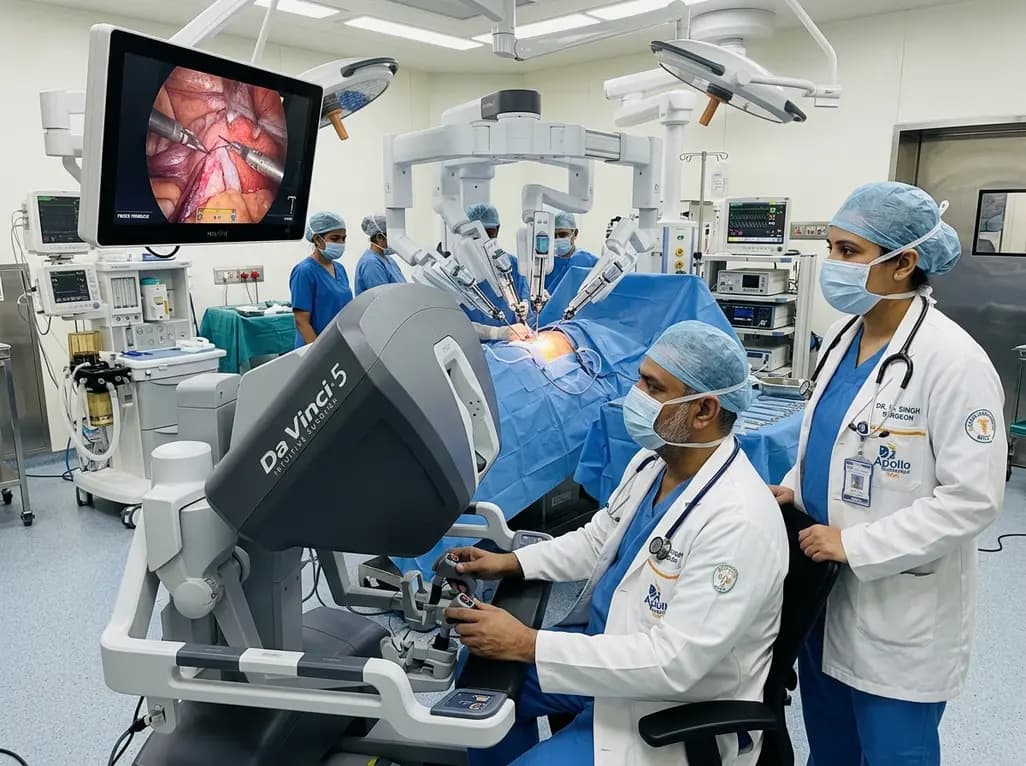
India expands its minimally invasive surgical landscape as Intuitive unveils its fifth-generation robotic platform. Equipped with real-time force feedback and immense computing performance, this innovation assists clinical specialists across urology, gynecology, and general surgery in optimizing operative care.
Today

Large-scale biobank research demonstrates that low-grade systemic inflammation quietly remodels ventricular architecture years before cardiovascular symptoms appear. Learn how emerging biomarkers like GlycA and targeted anti-inflammatory pathways could reshape preventive cardiovascular screening and clinical risk evaluation.
Today

Systematic review comparing labral repair and reconstruction in primary hip arthroscopy shows comparable short- to mid-term patient-reported outcomes, with lower THA conversion after repair but superior outcomes for reconstruction in patients aged 40 and older.
Today
