

Loading, please wait...
Loading, please wait...

Physical and social deconditioning represents a profound clinical challenge that accelerates functional decline among vulnerable seniors. Delivering evidence-based telehealth for older adults offers a transformative pathway to sustain functional independence and reduce avoidable hospital admissions. However, poorly conceived digital interfaces often alienate elderly patients who struggle with age-related sensory and motor deficits. Consequently, healthcare technology requires deliberate, human-centered adaptation to achieve meaningful clinical engagement. The PromoSanté digital platform exemplifies how collaborative development bridges the usability divide in modern telerehabilitation.
Prolonged sedentary behavior and chronic social isolation rapidly trigger progressive muscular atrophy, balance impairments, and severe frailty in aging individuals. Moreover, these physical detriments frequently intertwine with psychological distress, worsening cognitive stagnation and depressive symptoms. When community mobility decreases, older adults face elevated risks of falls, institutionalization, and systemic morbidity. Therefore, clinicians must implement proactive, multimodal restorative interventions before irreversible functional losses occur.
Traditional outpatient rehabilitation models often impose severe logistical hurdles on frail seniors who lack independent transportation or family caregiver support. Fortunately, home-based telerehabilitation eliminates geographic friction and delivers structured exercise directly into domestic environments. In addition, synchronous virtual encounters provide vital social touchpoints that counteract domestic isolation. Clinicians can simultaneously assess living environments, monitor kinetic performance, and guide therapeutic movements safely. As a result, comprehensive virtual rehabilitation successfully targets both musculoskeletal robustness and psychosocial well-being, effectively halting the downward spiral of geriatric deconditioning.
Digital health platforms frequently fail because developers construct software around arbitrary commercial frameworks rather than patient capabilities. In contrast, the PromoSanté project employed a rigorous two-phase convergent mixed-methods methodology to optimize system usability. During the initial four-week pilot phase, five older adults engaged in structured virtual navigation scenarios. Researchers evaluated participant interactions using the System Usability Scale alongside direct observational recordings and qualitative focus groups.
Remarkably, the platform achieved an outstanding baseline median System Usability Scale score of 82.5, demonstrating exceptional conceptual acceptance. Nevertheless, observational findings revealed subtle user frustrations that demanded immediate design revisions. For instance, developers systematically enlarged interactive touch buttons and simplified navigational breadcrumbs to assist individuals with diminished fine motor control. Furthermore, investigators introduced essential ergonomic equipment, including stable tablet tripods and tactile styluses for seniors, while supplying wireless headsets to healthcare providers. Consequently, these iterative technical adaptations directly resolved hardware limitations and drastically reduced cognitive friction for participants.
Designing effective telehealth for older adults requires an intimate appreciation of age-related physiological alterations. For example, normal senescence predictably degrades visual acuity, contrast sensitivity, high-frequency auditory perception, and tactile precision. When software interfaces present dense textual paragraphs or tiny navigation icons, elderly individuals quickly experience overwhelming fatigue and tech-induced anxiety. Therefore, medical developers must adopt age-responsive architectural principles that prioritize legible typography, high visual contrast, and intuitive workflows.
Furthermore, the PromoSanté architecture cleverly integrated synchronous high-definition video consultations with asynchronous interactive modules and multimedia exercises. This dual-track approach allowed participants to review educational content at their preferred pace without therapeutic pressure. Hence, older learners steadily reinforced physical exercise techniques and occupational safety habits within their personal capacity. In addition, providing responsive visual feedback empowered seniors to navigate modules independently without continuous caregiver assistance. Ultimately, human-centered software architectures dismantle intimidating digital barriers, transforming vulnerable seniors into confident, self-reliant digital health participants.
The second investigative phase confirmed the real-world viability of the refined digital ecosystem across an intensive 16-week intervention. Notably, thirty community-dwelling older adults completed multimodal regimens comprising physical reconditioning, preventive occupational therapy, and emotional well-being workshops. The cohort achieved stellar adherence rates, recording 85.4% participation in synchronous sessions and 83.3% engagement in asynchronous activities. Such remarkable compliance figures strongly exceed conventional adherence averages observed in remote clinical trials.
Moreover, formal theoretical assessments utilizing the unified theory of acceptance and use of technology highlighted universally favorable ratings. Specifically, participants reported profound satisfaction regarding effort expectancy, performance expectancy, facilitating conditions, and hedonic motivation. Qualitative focus group interviews corroborated these metrics, revealing that participants deeply cherished the newfound flexibility and daily independence. Thus, structured digital programs do not merely deliver therapeutic exercises into living rooms. They cultivate personal confidence, revitalize routine physical mobility, and foster vibrant social connectivity among previously homebound individuals.
The successful validation of this age-tailored platform delivers critical operational insights for clinicians practicing within India. Currently, India faces an unprecedented demographic transition, with the geriatric cohort projected to reach nearly 347 million by mid-century. Many elderly citizens experience chronic multimorbidity, sarcopenia, and acute social isolation in nuclearizing urban households and underserved rural belts. Fortunately, the expanding digital infrastructure under the Ayushman Bharat Digital Mission offers fertile ground for structured geriatric telerehabilitation.
However, Indian clinicians cannot expect elderly patients to navigate complicated commercial portals without organized assistance. Instead, healthcare organizations must incorporate community health workers and family members into digital onboarding workflows. Furthermore, teleconsultation platforms must incorporate multilingual regional voice prompts, large touch targets, and low-bandwidth video compression. In addition, general practitioners and geriatricians can bundle remote physiotherapeutic coaching with routine hypertension and diabetes reviews. By championing accessible user interfaces and structured home protocols, Indian physicians can protect physical vitality and preserve autonomy across our aging population.
Older adults frequently encounter interface barriers stemming from age-related sensory and motor declines. Small interactive buttons, low screen contrast, and intricate nested menus generate severe cognitive overload and navigation confusion. Furthermore, sensory deficits like presbyopia and reduced tactile sensitivity hinder rapid screen navigation. When telehealth platforms incorporate age-adapted designs with large touch targets, simplified layouts, and intuitive video interfaces, older patients achieve outstanding digital proficiency and sustained therapeutic engagement.
Physical deconditioning induces rapid loss of skeletal muscle mass, diminished aerobic capacity, and impaired postural reflexes, drastically escalating fall risks. Simultaneously, social disengagement triggers severe psychological distress, depressive symptoms, and accelerated cognitive decline. This multidimensional deterioration compromises functional independence, leaving vulnerable seniors unable to complete essential activities of daily living. Consequently, elderly patients experience recurrent hospitalizations, institutionalization, and elevated mortality, underscoring the urgent need for timely, multidisciplinary restorative interventions.
Co-design actively engages older adults throughout the iterative software development lifecycle, ensuring technological solutions match actual geriatric capabilities and expectations. Rather than relying on theoretical developer assumptions, direct observation identifies subtle usability flaws like illegible fonts, unmanageable hardware, and complicated login procedures. Subsequent adjustments—such as distributing tablet styluses and enlarging interactive icons—dramatically reduce user frustration. Ultimately, participatory co-design fosters intrinsic motivation, builds technical self-confidence, and guarantees robust long-term clinical compliance.
Disclaimer: This content is for informational and educational purposes only and should not be taken as professional medical advice. Always consult a qualified healthcare provider for personal health concerns or diagnosis. Refer to the latest local and national guidelines for clinical practice.
References

Read summarized clinical updates, watch expert medical content, and earn CME certifications right from your smartphone.
Open your smartphone camera to scan and install.





A new mixed-methods study highlights the PromoSanté digital platform, showing how age-adapted usability design and multidisciplinary telehealth effectively mitigate physical and social deconditioning in older adults, achieving over 83% adherence across 16 weeks.
Today

A cross-sectional study of 948 police officers reveals an active-but-sedentary pattern. While 84.4% met WHO activity guidelines, 31.9% sat for ≥6 hours daily. Operational roles had lower sedentary odds, whereas desk assignments heightened sitting risks, emphasizing role-specific occupational health interventions.
Today
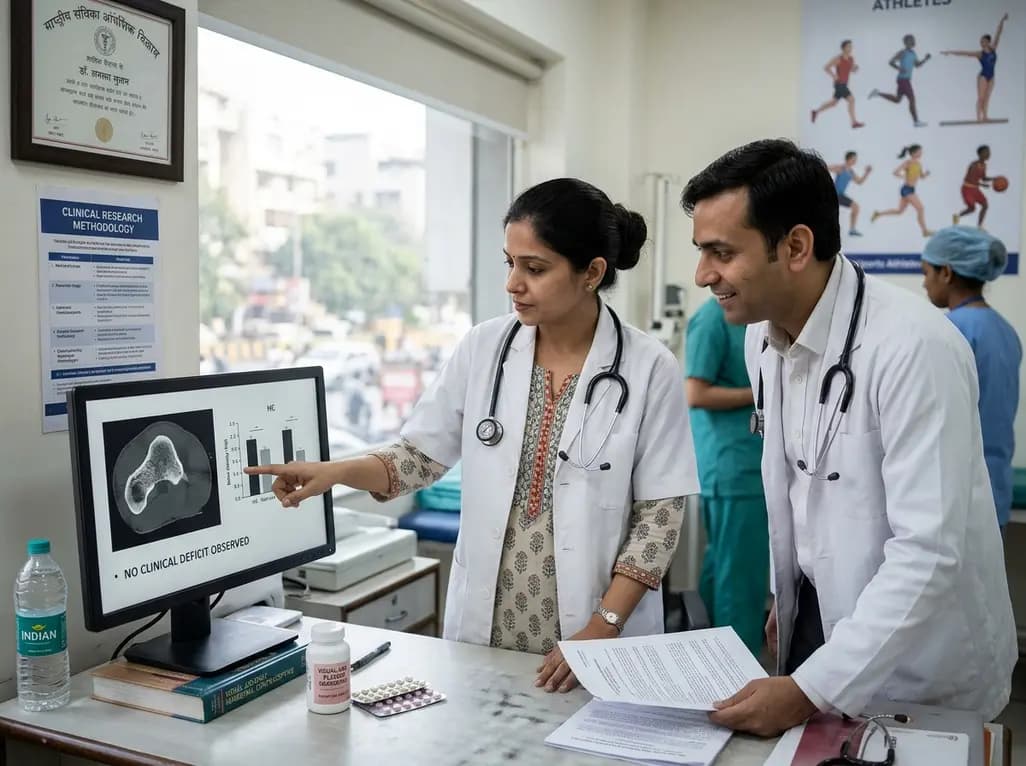
A recent Canadian study evaluates the relationship between hormonal contraceptive use, sport discipline, and volumetric bone density in elite female athletes. Using HR-pQCT, researchers found no clinically meaningful deficits, offering reassuring evidence for sports medicine and gynecology clinicians.
Today
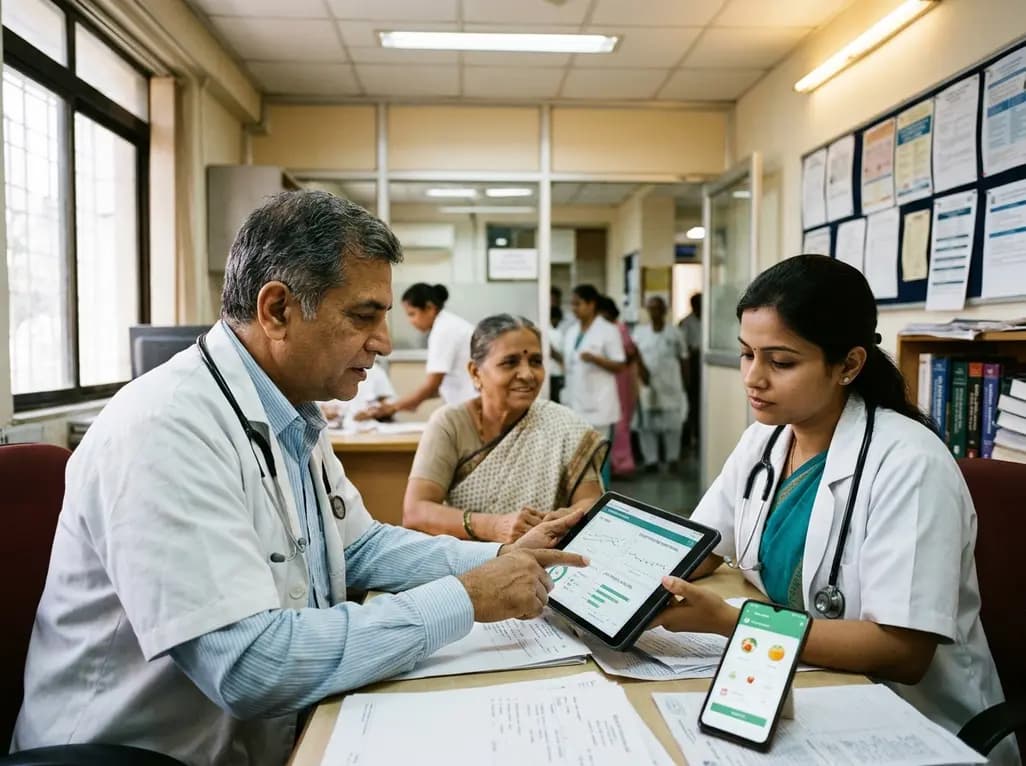
A real-world panel study reveals that an automated diet management app significantly improves BMI, blood pressure, and lipid profiles in employees. Frequent meal self-monitoring yielded distinct sex- and age-specific cardiometabolic benefits, highlighting the clinical potential of digital lifestyle interventions.
Today

A comparative study demonstrates that simple and complex labral tears achieve comparable functional outcomes and low recurrence rates following arthroscopic stabilization for anterior shoulder instability, despite differing clinical presentations and dislocation histories.
Today
A validation study evaluates the consumer-grade InBody Dial H30 bioelectrical impedance device against a 3-compartment criterion in recreationally active adults, revealing a slight overestimation in body fat percentage and underestimation in fat-free mass alongside notable individual limits of agreement.
Today
