

Loading, please wait...
Loading, please wait...

Modern occupational health evaluations uncover complex physical activity paradoxes across law enforcement agencies. Recent research analyzing sedentary behavior in police forces reveals that satisfying broad fitness targets does not negate the metabolic risks of prolonged sitting. While police officers often project physical resilience, daily operational demands fluctuate widely between field and desk duties. Consequently, physical exertion and sedentary immobility frequently co-exist within the same worker. Understanding these distinct occupational dynamics helps clinicians detect cardiometabolic risks early. Therefore, healthcare providers must evaluate occupational sitting alongside leisure workouts.
The active-couch-potato concept represents a major clinical challenge. Specifically, individuals may fulfill recommended physical activity goals yet still sustain metabolic injury from unbroken occupational sitting. In a cross-sectional study evaluating 948 Spanish National Police officers, researchers observed this exact scenario. Overall, 84.4% of surveyed personnel met World Health Organization recommendations, and 62.2% reported high overall activity. However, almost 32% logged excessive sedentary time, sitting for six or more hours daily. This finding underscores an underappreciated physiological reality. Unbroken muscular disuse suppresses lipoprotein lipase activity and impairs glucose clearance regardless of subsequent workouts. Consequently, high leisure training cannot fully counteract continuous workplace immobility. Medical providers often assume uniform personnel maintain strong cardiovascular protection due to standard fitness tests. Nevertheless, prolonged sitting independently drives dyslipidemia and arterial hypertension. Therefore, clinical risk stratification must evaluate occupational sitting and leisure fitness together.
Job assignments strongly dictate physical activity profiles and daily sitting patterns within police forces. In particular, active operational roles demonstrate substantially better activity metrics than administrative posts. Operational officers showed more than sixfold higher odds of fulfilling international exercise recommendations. Furthermore, frontline officers exhibited an 82% lower likelihood of accumulating severe daily sitting time. In sharp contrast, administrative personnel experienced marked occupational physical constraints. Desk-bound officers faced an 85% higher probability of logging six or more sedentary hours daily. In addition, administrative duties correlated with a 71% reduction in the odds of completing comprehensive structured training. Consequently, desk personnel accumulate prolonged muscular inactivity and seated vascular compression. These findings demonstrate that law enforcement cannot be viewed as a monolithic physical career. While public perceptions emphasize energetic patrol operations, desk officers face the sedentary risks typical of corporate environments. As a result, physicians must distinguish between operational assignments and desk duties during patient evaluations. Tailored interventions must specifically address the immobility inherent to administrative roles.
Although broad activity numbers seemed favorable, the survey exposed notable gaps in structured training. Specifically, only 34.9% of officers completed all three structured training pillars, which combine cardiovascular conditioning, resistance training, and functional mobility. Many personnel rely on unstructured recreation rather than deliberate conditioning routines. Moreover, multivariable analysis showed that career seniority inversely correlates with guideline adherence. As officers advance in service tenure, adherence to physical activity standards declines significantly. Cumulative occupational stress, shift work, and shifting responsibilities gradually erode conditioning habits over time. In addition, irregular schedules disrupt recovery and sleep patterns, accelerating physical exhaustion. Consequently, senior officers often curtail workouts right as their metabolic and cardiovascular vulnerabilities escalate. This drop in activity promotes visceral adiposity and systemic arterial stiffness. Therefore, clinicians working with veteran officers must advocate targeted conditioning regimens. Incorporating periodized resistance exercise and mobility protocols preserves operational performance and prevents premature cardiometabolic decline across advancing career stages.
These international insights hold profound relevance for healthcare professionals managing police health across India. Indian police forces navigate intense work schedules, chronic sleep deprivation, and irregular dining habits under demanding conditions. Epidemiological assessments in Indian police cadres repeatedly demonstrate severe burdens of hypertension, central obesity, and early coronary disease. Furthermore, career transitions from strenuous patrol duty to administrative desk roles often trigger rapid metabolic dysregulation. In departmental stations across India, desk officers remain seated for extended shifts while handling paperwork. Consequently, Indian physicians must evaluate uniform personnel for hidden sedentary behaviors during periodic checkups. In addition, doctors should remember that past physical conditioning during recruit training does not protect senior personnel from current sedentary hazards. Clinicians must actively evaluate daily sitting time, shift rotation patterns, and structured training habits during clinical reviews. Moreover, occupational wellness divisions can partner with police departments to introduce ergonomic workstations and movement intervals. Addressing these occupational realities allows practitioners to lower the elevated cardiometabolic burden confronting Indian service personnel.
Addressing occupational sedentarism requires coordinated workplace interventions guided by preventive medicine specialists. First, clinicians should prescribe multi-modal exercise regimens that integrate aerobic fitness, progressive resistance training, and functional mobility. Generic recommendations to walk more fail to address the strength requirements and physical surges of policing. Furthermore, healthcare teams must encourage frequent movement intervals during administrative desk shifts. For instance, standing desks, brief walking intervals, and active posture adjustments restore muscular glucose uptake and improve peripheral circulation. In addition, police departments should maintain accessible exercise rooms that facilitate supervised strength conditioning before or after shifts. Occupational medical teams must also introduce tailored conditioning programs for senior officers to counteract functional decline. Consequently, structured exercise prescriptions can mitigate musculoskeletal pain and prevent sudden cardiovascular events during acute operational stress. Moreover, routine metabolic profiling, including glycated hemoglobin and lipid screening, enables early identification of asymptomatic cardiometabolic conditions. Therefore, integrating targeted physical training and sedentarism reduction into departmental policies establishes durable cardiovascular protection across police organizations.
The active-but-sedentary pattern describes individuals who satisfy standard physical activity targets, such as accumulating 150 minutes of weekly aerobic exercise, but concurrently sit for prolonged durations exceeding six hours daily. Even high-intensity workouts cannot completely undo the vascular damage, impaired insulin sensitivity, and reduced lipid metabolism induced by uninterrupted occupational sitting. Consequently, these individuals maintain elevated baseline risks for cardiometabolic disorders despite their regular physical training routines.
Administrative officers spend extended shifts performing stationary computer documentation and desk work without frequent posture changes. Unlike field personnel who engage in intermittent walking, vehicle exits, and variable tactical movements, administrative workers experience persistent muscular inactivity and venous stasis. Furthermore, administrative roles show significantly lower adherence to structured strength and mobility training. This combination of prolonged immobility and reduced training frequency accelerates endothelial dysfunction and systemic metabolic decline.
Physicians must not assume that veteran officers maintain adequate fitness levels simply because of their military or police background. Clinical counseling should prioritize periodized, multi-component exercise routines that explicitly combine progressive resistance loading, aerobic conditioning, and joint mobility preservation. Furthermore, doctors should counsel senior officers to break up uninterrupted desk hours with brief active intervals. Prescribing structured, low-impact exercise minimizes chronic orthopedic injuries while preserving cardiorespiratory fitness.
Disclaimer: This content is for informational and educational purposes only and should not be construed as clinical or legal advice. Refer to the latest local and national guidelines for clinical practice.
References

Read summarized clinical updates, watch expert medical content, and earn CME certifications right from your smartphone.
Open your smartphone camera to scan and install.





A cross-sectional study of 948 police officers reveals an active-but-sedentary pattern. While 84.4% met WHO activity guidelines, 31.9% sat for ≥6 hours daily. Operational roles had lower sedentary odds, whereas desk assignments heightened sitting risks, emphasizing role-specific occupational health interventions.
Today
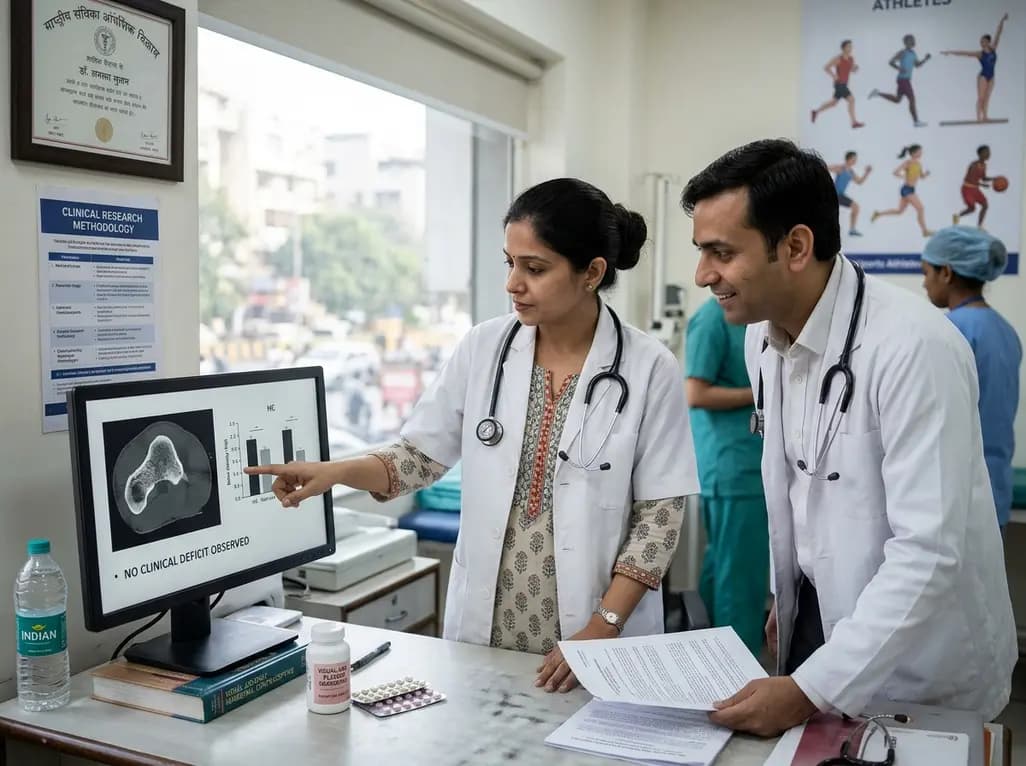
A recent Canadian study evaluates the relationship between hormonal contraceptive use, sport discipline, and volumetric bone density in elite female athletes. Using HR-pQCT, researchers found no clinically meaningful deficits, offering reassuring evidence for sports medicine and gynecology clinicians.
Today
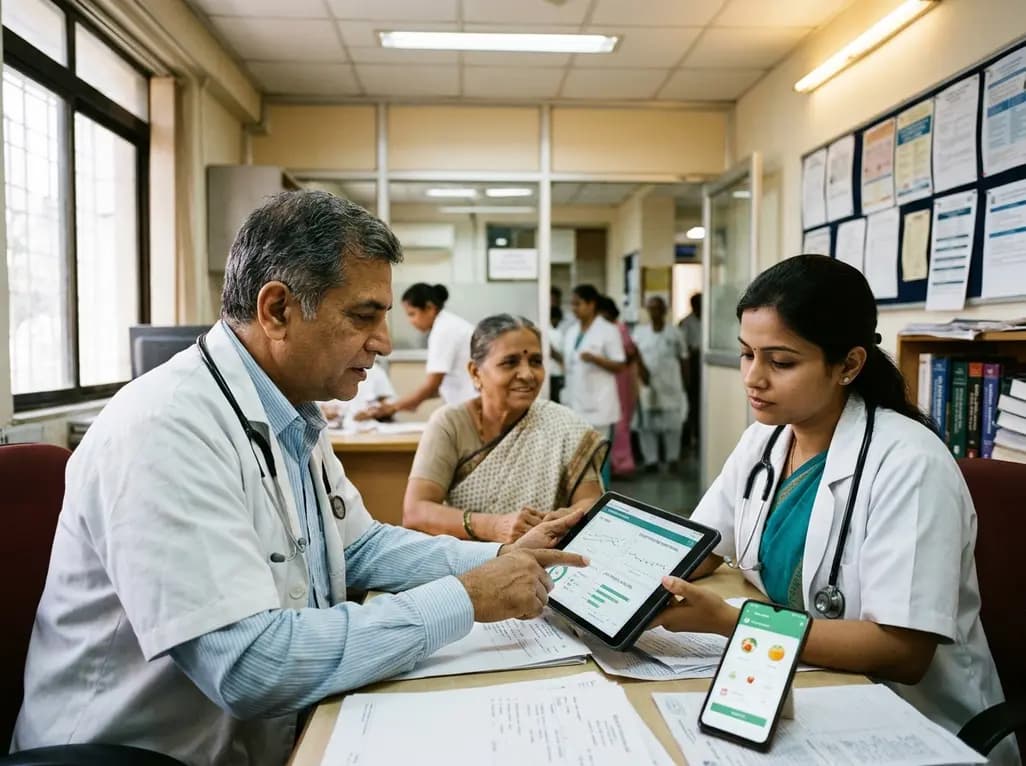
A real-world panel study reveals that an automated diet management app significantly improves BMI, blood pressure, and lipid profiles in employees. Frequent meal self-monitoring yielded distinct sex- and age-specific cardiometabolic benefits, highlighting the clinical potential of digital lifestyle interventions.
Today

A comparative study demonstrates that simple and complex labral tears achieve comparable functional outcomes and low recurrence rates following arthroscopic stabilization for anterior shoulder instability, despite differing clinical presentations and dislocation histories.
Today
A validation study evaluates the consumer-grade InBody Dial H30 bioelectrical impedance device against a 3-compartment criterion in recreationally active adults, revealing a slight overestimation in body fat percentage and underestimation in fat-free mass alongside notable individual limits of agreement.
Today
