

Loading, please wait...
Loading, please wait...

Accurate body composition assessment remains a cornerstone in modern preventive medicine, sports cardiology, and metabolic health management. While clinicians traditionally rely on body mass index to gauge metabolic risk, this metric fails to distinguish fat mass from muscle mass. Consequently, multi-frequency bioelectrical impedance devices have gained immense popularity among health-conscious individuals and outpatients.
Researchers frequently rely on multi-compartment models to evaluate commercial measurement tools with gold-standard precision. Standard two-compartment techniques divide total body weight exclusively into fat mass and fat-free mass. However, these basic equations assume a fixed chemical composition and uniform hydration across all individuals. Therefore, physiological variations in bone mineral density or fluid distribution introduce systematic estimation errors. To overcome these constraints, multi-compartment strategies separate the body into total water, mineral content, and fat components. Specifically, a three-compartment model incorporates body mass, air displacement plethysmography, and multi-frequency bioimpedance to calculate body volume and total body water. By directly measuring biological fluid variations, this model enhances analytical precision. Nevertheless, multi-compartment testing demands costly laboratory equipment and specialized operators. Because clinical practices cannot routinely deploy full-scale plethysmography chambers, commercial manufacturers engineered consumer-grade impedance analyzers. Devices like the InBody Dial H30 promise rapid tracking through multi-frequency segmental currents. However, clinicians must establish whether these accessible devices achieve acceptable concordance with multi-compartment benchmarks before integrating patient-generated metrics into therapeutic protocols.
To evaluate consumer device performance, investigators recently conducted a rigorous comparative validation trial in fifty-five recreationally active adults. The cohort comprised twenty-nine men and twenty-six women with a mean age of twenty-two years and average body mass index of 24.2. To minimize physiological confounding, researchers enforced strict pre-test protocols prior to morning assessments. Specifically, every subject completed an overnight fast and abstained from caffeine for twelve hours. Furthermore, participants avoided strenuous physical exercise and alcohol consumption for twenty-four hours before testing. During laboratory evaluations, participants wore standardized compression clothing to guarantee measurement fidelity. Each individual underwent comprehensive testing on a consumer multi-frequency bioelectrical impedance device alongside criterion three-compartment evaluations. The criterion framework paired air displacement plethysmography via the BodPod with laboratory-grade multi-frequency impedance to quantify volume and hydration. Additionally, investigators employed Wilcoxon signed-rank tests alongside Bland-Altman regression analysis to quantify bias and limits of agreement. Consequently, the investigation established a highly robust baseline to determine whether consumer-grade hardware matches research-grade laboratory accuracy.
The investigation revealed statistically significant differences between the consumer-grade analyzer and the criterion three-compartment model. Overall, the consumer device demonstrated a clear tendency to overestimate adiposity across the active adult cohort. Specifically, the consumer device yielded a mean body fat percentage of 21.7% compared to 19.9% from the criterion model. Similarly, measured fat mass reached 15.3 kilograms on the consumer scale versus 14.0 kilograms using the laboratory standard. In contrast, the consumer monitor systematically underestimated fat-free mass, recording 55.5 kilograms against the criterion value of 56.7 kilograms. Bland-Altman analysis demonstrated an average positive bias of 1.9% for body fat percentage and 1.3 kilograms for fat mass. Conversely, fat-free mass exhibited a negative mean bias of 1.2 kilograms. While these average discrepancies appear modest on a population level, the 95% limits of agreement were notably wide. For body fat percentage, individual agreement limits spanned from minus 4.0% to positive 7.7%. Furthermore, individual fat mass discrepancies ranged from minus 2.7 kilograms to positive 5.3 kilograms. Therefore, while group averages track reasonably well, individual readings carry considerable margin for error.
These empirical discrepancies carry important ramifications for clinical screening, sports conditioning, and therapeutic monitoring. In medical consultations, patients frequently bring consumer bioimpedance logs to discuss weight loss or muscle building progress. Because the consumer device overestimates body fat percentage, individuals may experience unwarranted anxiety regarding their metabolic risk profile. Conversely, the underestimation of fat-free mass might cause athletic patients to pursue unnecessary dietary interventions or excessive protein supplementation. Furthermore, wide individual limits of agreement complicate the detection of genuine tissue changes over time. When a patient shows a two-kilogram shift in fat mass, clinicians cannot easily distinguish true physiological adaptation from hardware variability. In geriatric medicine, this measurement noise presents diagnostic hurdles for identifying sarcopenia or muscle wasting syndromes. Physicians must recognize that single readings on home scales cannot replace clinical imaging or validated laboratory assessments. However, these consumer monitors can still offer meaningful clinical utility when patients prioritize longitudinal trends over absolute numerical values. Clinicians should educate individuals that consistent measurement conditions matter far more than single daily measurements.
In the Indian healthcare landscape, assessing body composition has become increasingly vital for combating cardio-metabolic diseases. South Asian populations notoriously exhibit the thin-fat phenotype, characterized by high visceral adiposity despite normal body mass index. Consequently, Indian clinicians routinely emphasize adiposity reduction and lean muscle preservation to prevent type 2 diabetes and dyslipidemia. However, physicians must exercise caution when patients present data derived exclusively from consumer-grade smart scales. Clinicians should advise patients to standardize all home measurements by stepping onto scales under identical morning fasting conditions. Moreover, healthcare providers should discourage daily weighing, which often reflects fluid shifts rather than true cellular changes. Instead, physicians should monitor multi-week moving averages alongside biochemical markers, waist circumference, and functional strength tests. When assessing high-risk diabetic patients or elite athletes, clinicians must rely on medical-grade multi-frequency analyzers or dual-energy absorptiometry. By contextualizing consumer metrics within comprehensive clinical evaluations, Indian doctors can harness patient enthusiasm for digital health while avoiding misleading diagnostic conclusions. Ultimately, consumer devices serve best as behavioral motivators rather than definitive diagnostic instruments.
The consumer-grade InBody Dial H30 exhibits acceptable group-level correlation but reveals statistically significant systematic bias when compared to a 3-compartment model. Specifically, the device overestimates body fat percentage by an average of 1.9% and fat mass by 1.3 kilograms. Conversely, it underestimates fat-free mass by 1.2 kilograms. Furthermore, wide 95% limits of agreement demonstrate that individual readings may fluctuate considerably, making isolated consumer measurements unsuitable for precise diagnostic evaluations.
Consumer impedance scales use generalized prediction algorithms that assume uniform tissue hydration and standardized electrical conductivity. When physically active individuals possess denser musculature or differing fluid distributions, these mathematical equations frequently misclassify lean mass resistance as adipose tissue. Consequently, the device calculates higher body fat percentages and lower fat-free mass values than multi-compartment benchmarks. Hydration shifts, food intake, and recent strenuous exercise can further exaggerate these algorithmic overestimations in home settings.
Clinicians should interpret consumer bioelectrical impedance data as longitudinal trend indicators rather than definitive diagnostic measurements. Because individual limits of agreement are wide, physicians should advise patients to track multi-week trajectory patterns under standardized fasting conditions. Furthermore, practitioners must corroborate these home metrics with clinical parameters, including waist circumference, grip strength, and laboratory metabolic panels. When precise tissue assessment is clinically necessary, doctors should refer patients for medical-grade multi-frequency bioimpedance or dual-energy absorptiometry.
Disclaimer: This content is for informational and educational purposes only and does not constitute medical advice, diagnosis, or treatment. Healthcare professionals should exercise independent clinical judgment. Refer to the latest local and national guidelines for clinical practice.
References

Read summarized clinical updates, watch expert medical content, and earn CME certifications right from your smartphone.
Open your smartphone camera to scan and install.





A validation study evaluates the consumer-grade InBody Dial H30 bioelectrical impedance device against a 3-compartment criterion in recreationally active adults, revealing a slight overestimation in body fat percentage and underestimation in fat-free mass alongside notable individual limits of agreement.
Today

A nationwide survey reveals substantial knowledge gaps among general practitioners regarding fetal pathology and autopsy. Enhanced training and interdisciplinary communication are vital to guide stillbirth evaluation, clarify autopsy consent, and improve preconception counseling for bereaved parents.
Today
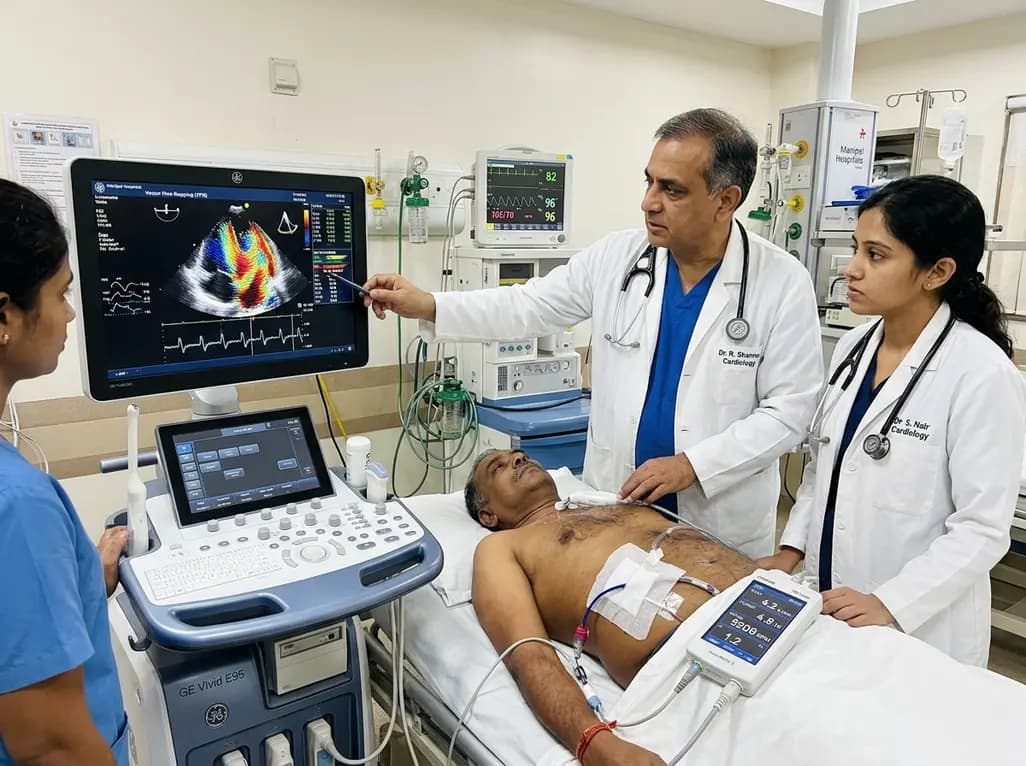
A pilot study shows that transesophageal echocardiography with vector flow mapping measures intraventricular energy loss in HeartMate 3 LVAD recipients. Energy loss significantly correlates with controller-displayed pump flow, offering clinicians deeper insights into ventricular unloading and intracardiac fluid mechanics.
Today

A comparative study demonstrates that simple and complex labral tears achieve comparable functional outcomes and low recurrence rates following arthroscopic stabilization for anterior shoulder instability, despite differing clinical presentations and dislocation histories.
Today

A nationwide analysis shows that inpatient lifestyle counseling for type 2 diabetes remains remarkably underutilized despite modest gains. Clinicians must bridge persistent demographic disparities and integrate structured dietary and exercise counseling into routine hospital discharge workflows.
Today
