

Loading, please wait...
Loading, please wait...

Female athletes frequently balance reproductive health choices with rigorous training demands. Understanding how various interventions influence skeletal integrity remains essential for clinicians worldwide. A pivotal investigation has evaluated the association between hormonal contraceptives bone health and microarchitectural parameters among elite Canadian competitors. Previously, clinicians expressed valid concerns regarding whether exogenous hormones might impair peak bone mass accrual or compromise cortical geometry. However, recent evidence provides meaningful clarity for sports physicians and gynecologists managing high-performance competitors. By exploring high-resolution imaging data across sports disciplines, healthcare providers can advise female athletes on contraceptive safety.
High-performance athletes utilize contraception not only for family planning but also for menstrual regulation and symptom mitigation. In this cohort of sixty-one elite athletes with a mean age of twenty-four years, contraceptive prevalence reached sixty-nine percent. Remarkably, twenty-nine of the forty-two users relied on progestin-only intrauterine devices. This finding highlights a clear shift away from traditional combined oral contraceptive pills toward long-acting reversible options. Athletes often choose levonorgestrel-releasing devices because they decrease menstrual blood loss and alleviate painful cramping during intense competitions. Additionally, intrauterine delivery minimizes systemic hormonal exposure compared to oral alternatives. Consequently, this localized endocrine action may spare hepatic metabolic pathways and avoid systemic suppression of endogenous growth factors. Therefore, modern sports practitioners must recognize that athlete contraceptive choices differ significantly from general population norms. Clinicians should proactively evaluate how these specific hormonal profiles influence musculoskeletal adaptation. Routine health reviews should always capture exact contraceptive formulations, duration of use, and personal training volumes.
To evaluate skeletal integrity, researchers acquired high-resolution peripheral quantitative computed tomography scans of the distal radius and tibia. This advanced modality measures volumetric bone mineral density, cortical thickness, and trabecular microarchitecture far beyond standard dual-energy x-ray absorptiometry. In this detailed analysis, investigators examined how hormonal contraceptives bone health relationships manifested across elite training cohorts. Importantly, the study found no evidence of detrimental skeletal effects resulting from hormonal contraceptive use. Although raw comparisons revealed subtle morphological differences between users and non-users, these discrepancies vanished after robust multiple-comparison adjustments. Consequently, current hormonal contraceptive use does not appear to induce clinically meaningful reductions in bone strength or microarchitecture. These results provide significant reassurance for athletes and clinicians who fear premature bone loss from contraceptive use. Nevertheless, researchers emphasize that statistical equivalence does not eliminate the necessity for long-term vigilance. Because cross-sectional scans capture only a single snapshot in time, prospective studies must track these cohorts across full competitive careers.
Mechanical loading strongly dictates bone remodeling and structural geometry. To account for varying mechanical stimuli, the researchers stratified participants into endurance and non-endurance categories. The endurance cohort included long-track speed skaters, cross-country skiers, and biathletes. In contrast, the non-endurance group comprised ski cross racers, figure skaters, luge athletes, ski jumpers, and combat sports athletes. High-impact and multi-directional loading in non-endurance disciplines stimulate substantial osteogenic remodeling. Conversely, repetitive cyclical endurance disciplines may not deliver equivalent multi-axial mechanical strain. A two-way analysis of variance examined interactions between sport type and contraceptive status. Interestingly, no significant interaction effects survived statistical correction. This indicates that contraceptive use did not exert a differentially adverse impact on endurance competitors compared to impact-trained athletes. However, clinicians must remember that mechanical loading can occasionally mask underlying hormonal deficits. For instance, high ground-reaction forces might preserve tibial geometry even when systemic endocrine support remains suboptimal. Therefore, sports medicine teams must carefully consider sport-specific loading patterns whenever they interpret peripheral skeletal scans.
These findings offer practical clinical takeaways for gynecologists, sports medicine physicians, and primary care providers. First, clinicians can confidently reassure athletes that progestin-only intrauterine devices do not appear to degrade volumetric bone density. Because unwanted pregnancy or debilitating dysmenorrhea can severely disrupt an athlete’s career, accessible and safe contraception remains vital. Furthermore, local intrauterine progestin release provides dependable cycle management without compromising high-load skeletal structures. However, physicians should avoid complacency. Prescribing hormonal contraception must never serve as a substitute for diagnosing underlying menstrual irregularities. When an athlete develops secondary amenorrhea or oligomenorrhea, clinicians must thoroughly investigate nutritional and metabolic drivers before initiating hormonal treatments. Masking amenorrhea with withdrawal bleeds obscures hypothalamic hypogonadism, which severely harms lifelong bone accumulation. Therefore, practitioners should perform thorough endocrine assessments, analyze dietary adequacy, and discuss contraceptive risks openly. Interdisciplinary collaboration between gynecologists, nutritionists, and sports doctors ensures optimal holistic care for competitive women.
Low energy availability remains the primary threat to bone health in exercising women. When dietary caloric intake fails to match energy expenditure, the hypothalamic-pituitary-ovarian axis suppresses estrogen production. As a result, athletes suffer accelerated bone resorption, reduced bone mineral density, and elevated stress injury risks. Although hormonal contraceptives maintain peripheral hormone levels, exogenous hormones cannot reverse metabolic starvation or resolve underlying energetic deficits. Consequently, clinicians managing female athletes must distinguish between simple contraceptive choice and relative energy deficiency in sport. If an athlete exhibits recurrent stress fractures or declining physical performance, healthcare teams must evaluate overall energy balance immediately. Nutritional rehabilitation, training volume adjustments, and endocrine stabilization form the bedrock of skeletal recovery. Furthermore, long-acting reversible contraceptives should accompany comprehensive nutritional support rather than replace it. In addition, routine monitoring of bone density through advanced peripheral or axial imaging helps detect subclinical architectural decay early. By combining robust nutritional habits, tailored training, and evidence-based contraceptive guidance, healthcare providers protect athletic longevity.
Current clinical research indicates that progestin-only intrauterine devices do not harm bone mineral density, microarchitecture, or structural strength in female athletes. Because these devices release levonorgestrel locally within the uterine cavity, systemic hormone levels remain comparatively low. Consequently, athletes maintain endogenous ovarian estrogen production, which preserves trabecular and cortical bone compartments. Clinicians can confidently support the use of intrauterine devices for active women needing dependable contraception.
Oral contraceptives are not recommended as the primary treatment for exercise-related amenorrhea or bone loss. Although combined pills create regular withdrawal bleeding, they do not restore natural ovulatory cycles or reverse systemic energy deficits. In fact, oral ethinyl estradiol can suppress hepatic production of insulin-like growth factor one, potentially impairing bone formation. Therefore, clinicians must focus on restoring energy availability through proper nutrition rather than relying on pills.
Sport discipline strongly affects bone remodeling through mechanical loading patterns. Non-endurance sports featuring high-impact jumping and rapid multidirectional movements provide potent osteogenic stimuli that enhance cortical thickness and bone geometry. In contrast, repetitive endurance sports like long-distance running or skating deliver less diverse skeletal strains. Fortunately, evidence indicates that hormonal contraceptives do not diminish these mechanical adaptations, allowing athletes across all sports disciplines to maintain structural bone integrity effectively.
Disclaimer: This content is for informational and educational purposes only and should not be considered as medical advice. Healthcare professionals should make decisions based on each patient's individual clinical situation. Refer to the latest local and national guidelines for clinical practice.
References

Read summarized clinical updates, watch expert medical content, and earn CME certifications right from your smartphone.
Open your smartphone camera to scan and install.





A recent Canadian study evaluates the relationship between hormonal contraceptive use, sport discipline, and volumetric bone density in elite female athletes. Using HR-pQCT, researchers found no clinically meaningful deficits, offering reassuring evidence for sports medicine and gynecology clinicians.
Today
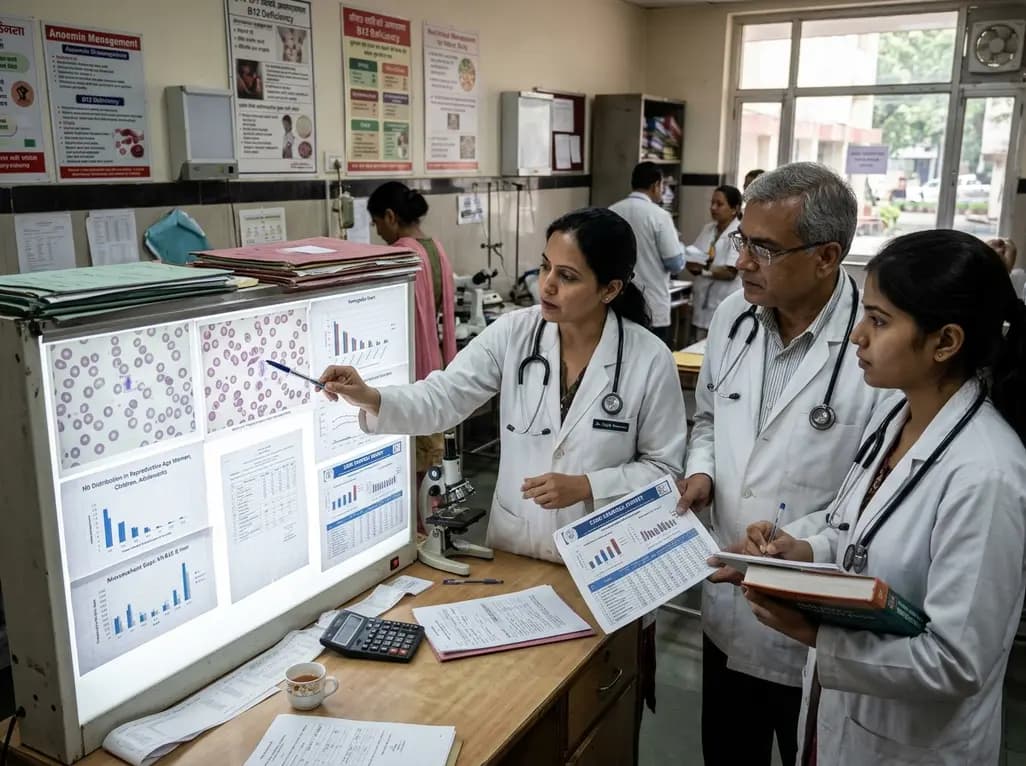
The ICMR-NIN SAMPADA survey reveals that over 50% of reproductive-age women and over 40% of young children suffer from anaemia, while nearly two-thirds of adolescents lack vitamin B12. Clinicians must look beyond routine iron therapy to address multifactorial causes, hemoglobinopathies, and micronutrient gaps.
Today

A real-world panel study reveals that an automated diet management app significantly improves BMI, blood pressure, and lipid profiles in employees. Frequent meal self-monitoring yielded distinct sex- and age-specific cardiometabolic benefits, highlighting the clinical potential of digital lifestyle interventions.
Today

A comparative study demonstrates that simple and complex labral tears achieve comparable functional outcomes and low recurrence rates following arthroscopic stabilization for anterior shoulder instability, despite differing clinical presentations and dislocation histories.
Today
A validation study evaluates the consumer-grade InBody Dial H30 bioelectrical impedance device against a 3-compartment criterion in recreationally active adults, revealing a slight overestimation in body fat percentage and underestimation in fat-free mass alongside notable individual limits of agreement.
Today
