.webp&w=384&q=75)

Loading, please wait...
Loading, please wait...

The mission for TB Eradication in India has reached a critical juncture according to recent medical reports. Although the World Health Organization notes a significant decline in incidence, the burden remains substantial. Doctors now advocate for a holistic approach that addresses the systemic effects of the infection. Specifically, they highlight how the disease extends far beyond the respiratory system.
Clinicians report that genital tuberculosis serves as a silent thief of reproductive health. In India, approximately 25-30% of women seeking infertility treatment suffer from this extrapulmonary form. Moreover, studies suggest that up to 50% of female patients undergoing IVF may have underlying genital TB. This condition often remains asymptomatic for years. Consequently, it damages the uterine lining and blocks fallopian tubes before a diagnosis occurs. Early detection within the framework of TB eradication in India could prevent permanent reproductive damage.
Furthermore, men are not exempt from these complications. The bacteria can reach the testicles, leading to inflammation and reduced vitality. This significantly impacts sperm count and motility. Therefore, physicians must maintain a high index of suspicion when treating young adults with unexplained infertility.
The emergence of drug-resistant TB presents a formidable challenge to elimination goals. However, the introduction of shorter, all-oral regimens has improved success rates significantly. Additionally, the National TB Elimination Programme has shifted its focus towards community engagement. The 'Nikshay Mitra' initiative has already linked millions of patients to nutritional support. Nevertheless, clinicians warn that missing cases continue to fuel the transmission cycle. Thus, sustained government funding and grassroots awareness remain essential for total eradication.
Q1: What are the primary symptoms of genital tuberculosis in women?
Genital TB is often asymptomatic. However, some women may experience pelvic pain, irregular menstrual cycles, or persistent vaginal discharge. Most cases are discovered only during infertility evaluations.
Q2: How does tuberculosis affect male reproductive health?
In men, the bacteria can cause inflammation in the testicles. Consequently, this can lead to reduced sperm count and motility, impacting overall fertility and sex drive.
Disclaimer: This content is for informational and educational purposes only. It does not constitute medical advice or replace professional judgment. Refer to the latest local and national guidelines for clinical practice.
References

Read summarized clinical updates, watch expert medical content, and earn CME certifications right from your smartphone.
Open your smartphone camera to scan and install.





Doctors urge sustained TB eradication efforts in India, highlighting the disease's silent impact on fertility and the success of new drug-resistant treatmen...
7 months ago

Failing to account for competing events like mortality in longitudinal geriatric studies produces biased risk estimates and misleading inferences. This review highlights key methodological principles, insights from the Precipitating Events Project, and practical approaches for clinical research appraisal.
Today

A study in JAMIA Open shows lightweight open-source reasoning LLMs achieve up to 95% sensitivity and accelerate evidence synthesis screening by nearly twentyfold, presenting a cost-effective, scalable AI solution for biomedical research and systematic reviews.
Today
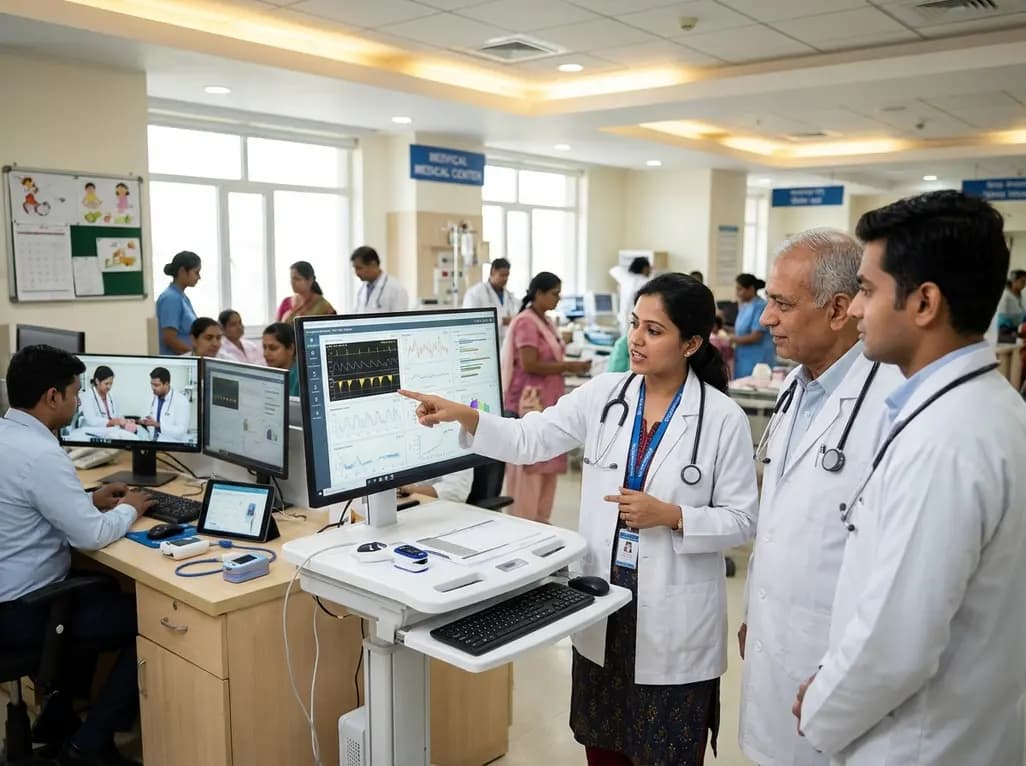
A landmark study details how an enterprise pediatric remote patient management model expanded from a single cardiology pilot to 16 diverse specialty programs by combining centralized digital operations with specialty clinical leadership.
Today

A comparative review of tension band wiring and intramedullary screw fixation in thumb metacarpophalangeal arthrodesis, evaluating union rates, hardware complications, and clinical outcomes.
Yesterday
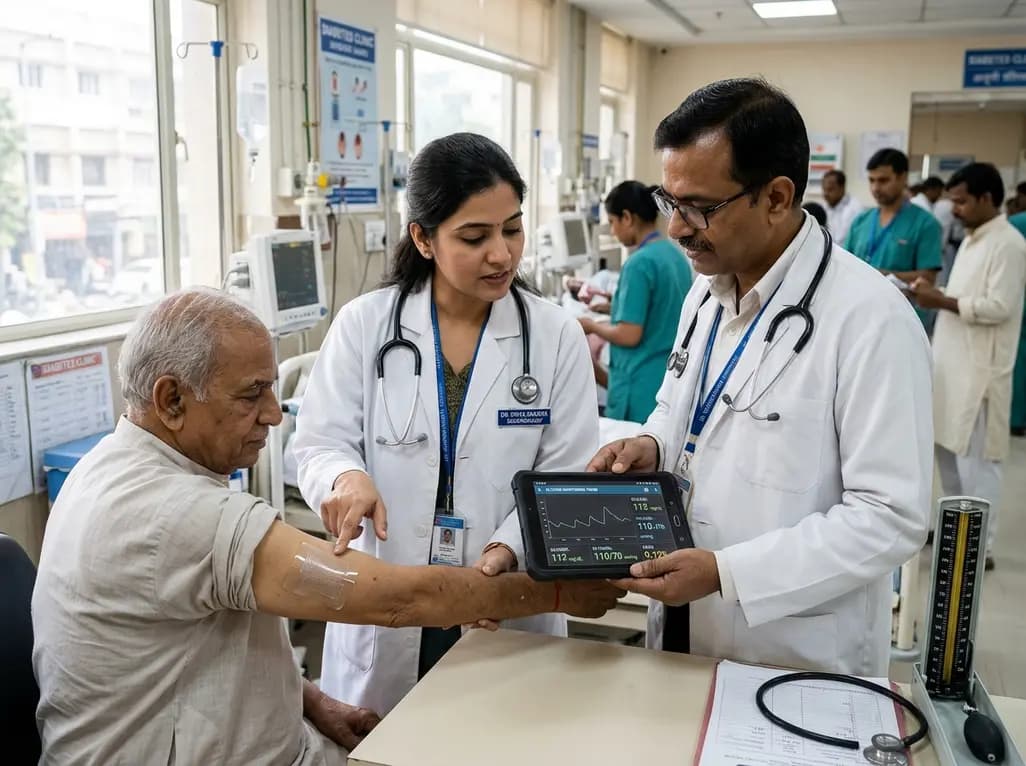
A breakthrough ultrathin multimodal sensor decouples physical hemodynamic monitoring from disposable electrochemical calibration, achieving long-term wearable glucose prediction with 81.36% accuracy and a 9.12% MARD. This offers a robust, drift-free solution for outpatient metabolic surveillance.
Today
