

Loading, please wait...
Loading, please wait...
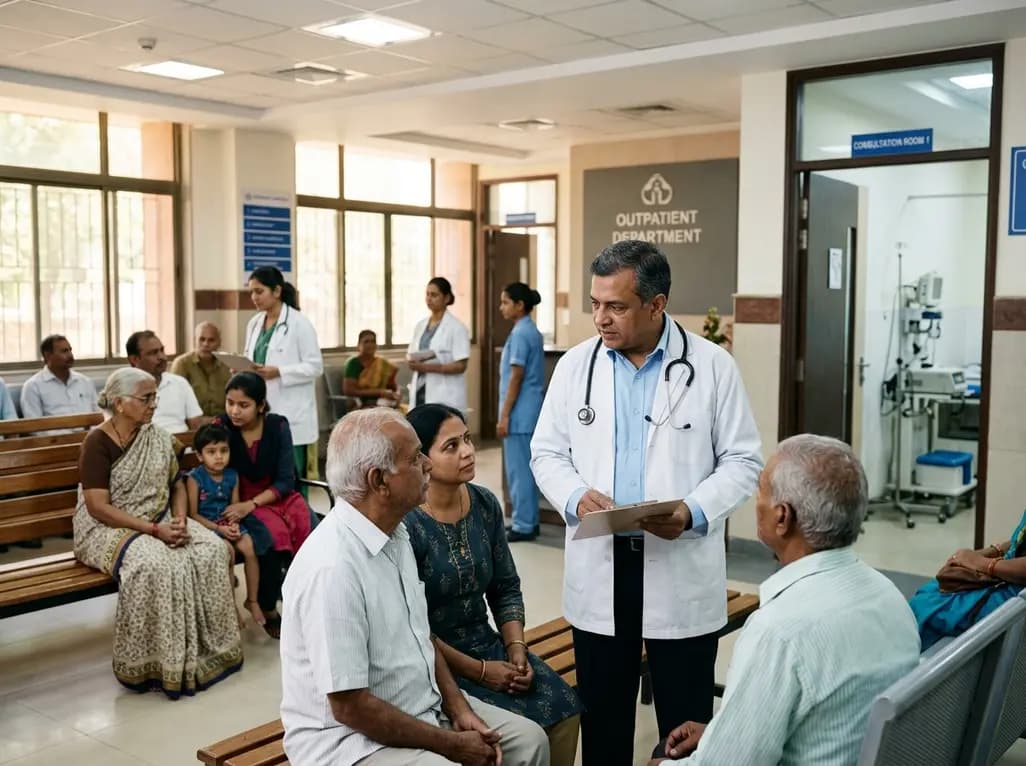
Tata Trusts has unveiled an ambitious strategy to establish 40 to 50 not-for-profit hospitals across India. Chairman Noel Tata emphasized building enduring public healthcare institutions with measurable impact. Consequently, this initiative addresses acute regional infrastructure deficits. Furthermore, it introduces a sustainable cross-subsidy economic model.
The ambitious plan to develop not-for-profit hospitals reflects a profound shift in Indian healthcare philanthropy. Noel Tata highlighted that social investments must create enduring public assets with measurable clinical outcomes. Therefore, the Trusts prioritize institutional permanence over short-term relief efforts. Historically, charitable healthcare interventions in India often faced operational constraints in Tier-2 and Tier-3 geographies. However, this nationwide network aims to establish standardized general hospitals capable of handling acute medical emergencies and elective interventions. In addition, these facilities will bridge substantial infrastructure deficits across underserved districts.
Clinicians frequently encounter severe referral bottlenecks when managing complex medical presentations in rural centers. Thus, expanding secondary hospital infrastructure relieves pressure on overburdened state tertiary centers. The upcoming institutions will provide comprehensive inpatient care, diagnostic pathology, imaging, and advanced operating theaters. Furthermore, local medical teams will manage emergency trauma, routine maternal deliveries, and critical pediatric conditions on site. Moreover, the leadership stresses that clinical excellence must precede rapid expansion to avoid compromising standards. Ultimately, establishing 40 to 50 modern community hospitals will create reliable regional referral pathways for millions of vulnerable citizens. In addition, this network strengthens district healthcare systems.
A sustainable economic architecture forms the bedrock of this large-scale hospital expansion. Noel Tata outlined a progressive cross-subsidy financial mechanism for the proposed medical network. Specifically, payments from affluent patients will directly underwrite diagnostic and surgical care for economically weaker sections. This framework mirrors successful institutional models like the Aravind Eye Care System and Tata Memorial Hospital. Consequently, paying patients receive premium private amenities while clinical therapies remain identical across all economic strata. Furthermore, the network plans to integrate deeply with government-sponsored insurance programs, such as Ayushman Bharat PM-JAY.
Tata Trusts reported total disbursals of Rs 1,556.31 crore during FY26, demonstrating substantial philanthropic capacity. Out of this expenditure, institutional grants and direct projects received Rs 1,353.32 crore. Additionally, direct individual medical assistance absorbed Rs 143.30 crore during the same period. Hence, institutionalizing these subsidies within permanent hospitals creates long-term fiscal efficiency. Private capital and operational revenues will gradually stabilize recurring facility expenditures. In effect, the self-sustaining design prevents chronic operational dependency on external donations. Moreover, transparent internal accounting guarantees that subsidized patient volumes remain robust across diverse hospital departments. Thus, clinical equity thrives.
The hospital initiative aligns directly with the comprehensive five-year healthcare strategy of Tata Trusts spanning 2026 to 2031. This strategy targets 25 lakh individuals across 75 administrative blocks in core states. Moreover, the roadmap focuses on strengthening more than 100 public health facilities across 35 high-priority districts. In particular, the plan extends specialized primary care services to 10 lakh elderly citizens. India experiences a rapid demographic shift with an expanding geriatric population in semi-urban communities. However, existing primary health centers frequently lack targeted geriatric screening tools and palliative resources.
Therefore, the Trusts seek to close these glaring gaps through integrated community outreach. Primary care teams will detect age-related debilities, cognitive decline, sensory impairments, and musculoskeletal disorders early. Simultaneously, institutional teams will coordinate longitudinal follow-up for chronic age-related morbidities. Consequently, older adults will receive structured medical oversight without traveling exhausting distances to distant cities. Clinicians recognize that early geriatric intervention prevents acute physical decompensation and hospital admissions. Ultimately, reinforcing primary networks protects vulnerable elderly patients from catastrophic personal out-of-pocket medical expenditure. In addition, localized care preserves patient dignity within familiar home environments. Thus, families experience profound relief.
Non-communicable diseases present an escalating epidemiological crisis throughout the Indian subcontinent. Accordingly, the five-year strategy emphasizes early clinical screening and aggressive management of hypertension and diabetes mellitus. Frontline teams will identify metabolic disorders before end-organ cardiovascular or renal damage occurs. In parallel, the Trusts continue to expand their distributed cancer care infrastructure across several states. During FY26, their dedicated cancer programmes completed 1,06,626 outpatient consultations and 24,874 chemotherapy cycles. Furthermore, surgical oncology teams performed 2,879 complex operative procedures within regional facilities.
Previously, cancer patients traveled thousands of kilometers to metropolitan apex institutes for basic chemotherapy regimens. However, the distributed four-tier model delivers diagnostics and day-care chemotherapy directly to district hospitals. Consequently, patient compliance improves markedly while treatment dropout rates decrease significantly. The planned general hospital network will reinforce this tiered oncology ecosystem through localized surgical beds. Additionally, uniform treatment protocols aligned with the National Cancer Grid will govern diagnostic quality. Thus, decentralized specialty delivery democratizes access to life-saving cancer and metabolic therapies. Ultimately, this clinical integration spares families devastating economic and physical strain. Moreover, survival rates improve substantially. In addition, care quality rises.
Physical healthcare infrastructure requires skilled clinical manpower to produce lasting community health gains. Therefore, the strategic roadmap commits to training and upskilling over 20,000 frontline healthcare workers. These workers include Accredited Social Health Activists, auxiliary nurse midwives, and community health officers. In addition, the Trusts will develop standardized capacity-building modules for nursing and technical paramedical cadres. Noel Tata noted that talented professionals often migrate because regional healthcare ecosystems lack adequate professional opportunities. Accordingly, establishing modern multi-specialty community hospitals generates fulfilling domestic career pathways for medical practitioners.
Moreover, regional centers will partner with national academic bodies to offer accredited oncology and family medicine fellowships. Continuous medical education initiatives will upgrade frontline diagnostic competencies for infectious diseases and pediatric emergencies. For example, child health programs will target reducing under-five mortality from 32 to 25 per 1,000 live births. Consequently, upgraded frontline capabilities directly enhance public health resilience in underserved geographies. Ultimately, uniting robust hospital infrastructure with empowering workforce education creates a self-sustaining paradigm for Indian healthcare. In addition, continuous mentorship empowers local healthcare teams across every district. Thus, clinical governance achieves lasting excellence. Furthermore, institutional trust strengthens nationally.
Q1: What is the core operating model behind the proposed hospital network?
The proposed network operates on an equitable cross-subsidy financial framework to deliver universal care. Under this structure, payments from financially capable patients seeking private amenities help fund treatment for economically underprivileged individuals. Furthermore, the facilities will integrate with state and national insurance schemes like Ayushman Bharat to secure public funding. Consequently, this sustainable model delivers identical, evidence-based clinical treatments across all patient groups regardless of socioeconomic background.
Q2: How does the Tata Trusts healthcare roadmap address chronic disease management?
The five-year roadmap prioritizes decentralized screening and standardized protocol-driven treatment for hypertension and diabetes across 75 administrative blocks. Additionally, it strengthens secondary hospital infrastructure to intercept complications before end-organ damage occurs. Frontline health teams will receive specialized diagnostic equipment and training to maintain longitudinal registries. Therefore, rural and semi-urban patients gain continuous access to vital therapies, reducing emergency room visits and significantly mitigating long-term cardiovascular morbidity.
Q3: How will the expansion of not-for-profit hospitals impact medical training and workforce retention?
Establishing regional secondary hospitals creates accredited training environments and viable clinical career opportunities outside saturated metropolitan cities. Furthermore, the initiative plans to train over 20,000 frontline health workers, elevating community triage standards. By partnering with national academic institutions, these hospitals will provide structured medical fellowships and continuous professional education. Consequently, local clinical talent will find compelling incentives to serve domestic communities, slowing professional brain drain while strengthening district healthcare capacity.
Disclaimer: This content is for informational and educational purposes only. It does not constitute medical advice or replace professional judgment. Refer to the latest local and national guidelines for clinical practice.
References

Read summarized clinical updates, watch expert medical content, and earn CME certifications right from your smartphone.
Open your smartphone camera to scan and install.





Tata Trusts has unveiled an ambitious healthcare roadmap to establish up to 50 cross-subsidised medical centres across India. The strategic initiative targets non-communicable diseases, geriatric primary care, and frontline workforce upskilling to enhance equitable clinical access in underserved rural districts.
Today
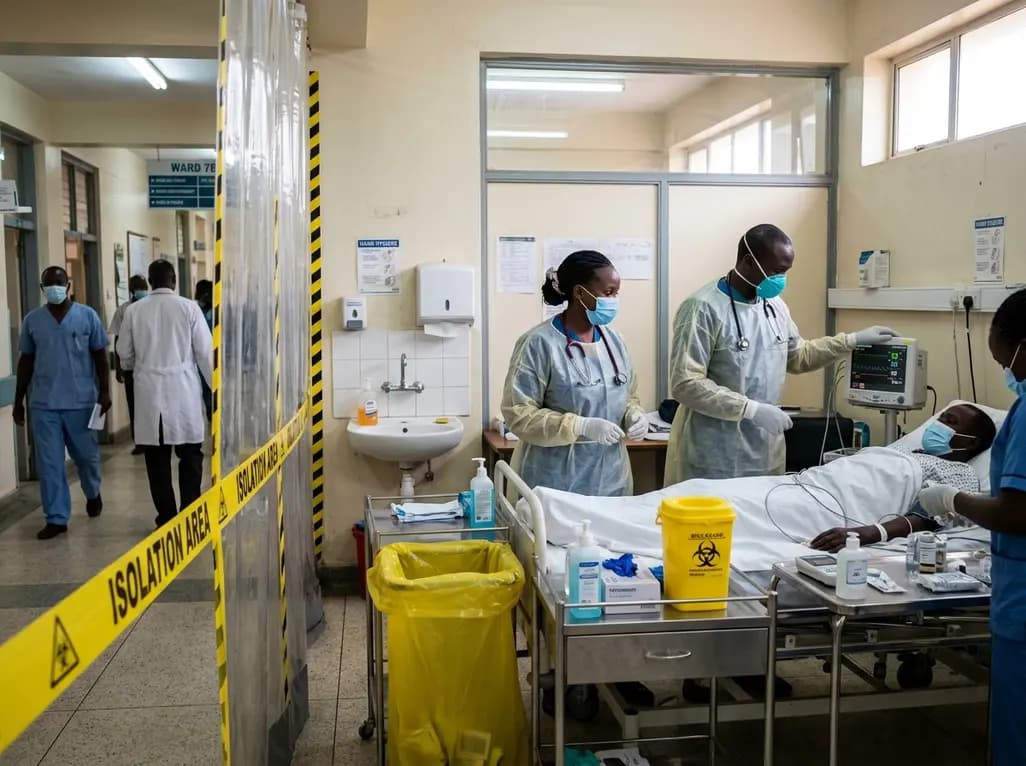
Kenya's confirmation of its eighth Ebola infection highlights the acute risk of secondary transmission in hospital environments. Clinicians must maintain high vigilance, enforce strict infection prevention protocols, and implement rapid triage mechanisms for viral hemorrhagic fevers across healthcare settings.
Today
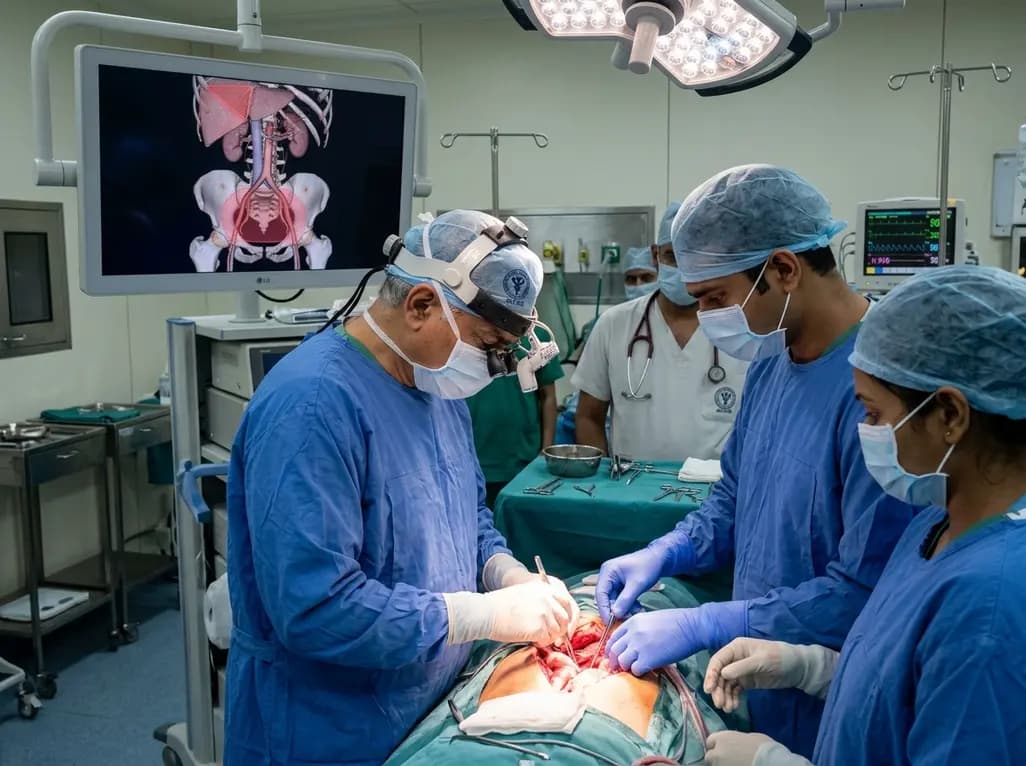
Surgical oncologists at AIIMS Delhi have mapped two critical anatomical landmarks: Ray's Zone in the deep pelvis and Ray's Hepatocaval Triangle near the liver. These predefined hazard boundaries guide dissection, dramatically reduce severe intraoperative bleeding, and preserve vital nerves and visceral organs.
Today
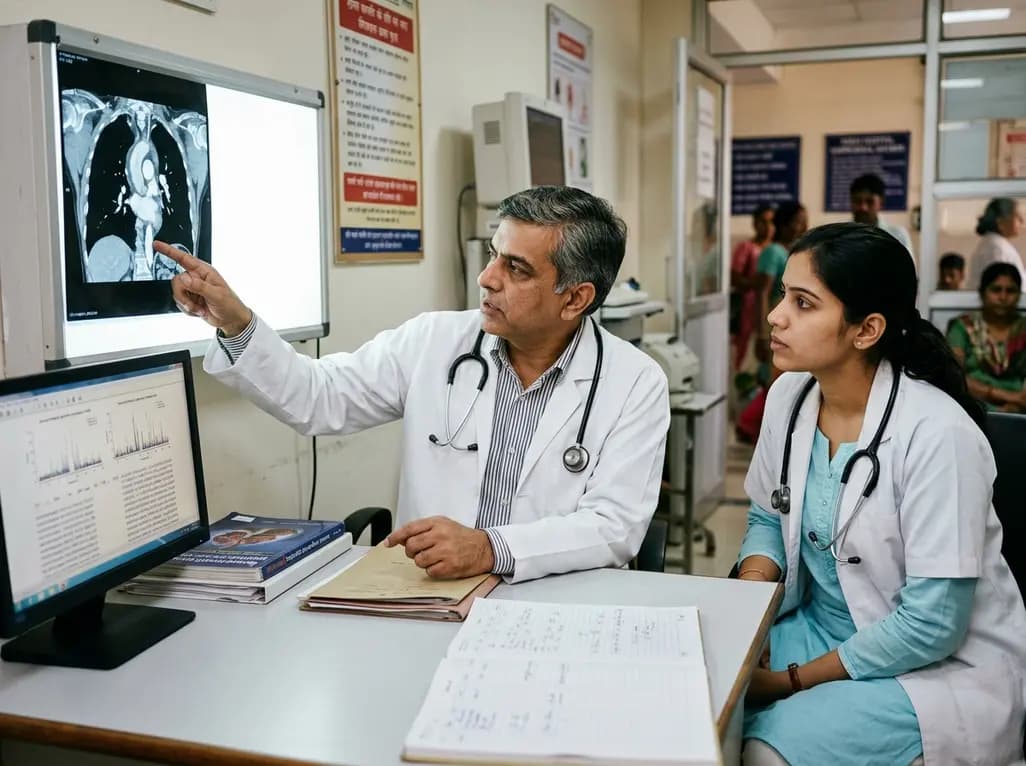
A study reveals that the MYLK c.4079G>A, p.(Gly1360Asp) variant is linked to high-penetrance heritable thoracic aortic disease and early-onset aortic dissection, showing a founder effect in Finnish cohorts. Findings emphasize early cascade screening and vigilant surveillance.
Today
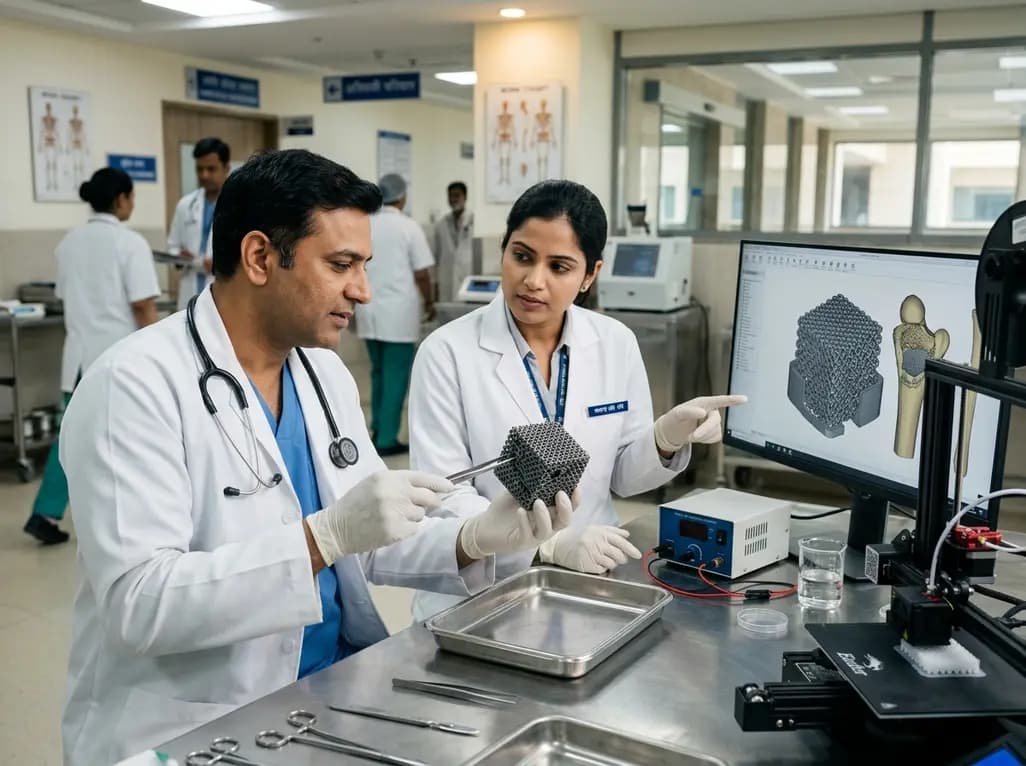
A novel sacrificial-template technique combines FDM polymer 3D printing and micro-arc oxidation to fabricate orientation-controlled porous titanium scaffolds. These bioactive constructs offer tailored stiffness, exceptional multidirectional load resistance, and robust osseointegration for bone defect repair.
Today

A novel label-free electrochemical biosensor utilizing magnetic nanocomposites enables ultrasensitive TERT C228T mutation detection (LOD: 0.67 pM) for rapid risk stratification in papillary thyroid cancer, offering promising point-of-care utility for endocrine oncology.
Today
