.webp&w=384&q=75)

Loading, please wait...
Loading, please wait...

Thoracic aortic aneurysms and acute dissections represent catastrophic cardiovascular emergencies. Recent genomic discoveries demonstrate that heritable thoracic aortic disease causes a substantial proportion of these premature events. Specifically, a newly published investigation evaluated the pathogenic MYLK c.4079G>A, p.(Gly1360Asp) variant. This landmark study reveals high penetrance, substantial early-onset dissection risk, and an evident founder effect across Finnish kindreds.
The aortic media relies directly on vascular smooth muscle cells to sustain structural integrity against continuous pulsatile hemodynamic strain. Specifically, the MYLK gene encodes smooth muscle myosin light chain kinase. This critical enzyme phosphorylates the regulatory light chain of myosin, which triggers smooth muscle contraction. Consequently, when pathogenic missense variants alter this enzymatic apparatus, vascular smooth muscle cells lose normal contractile mechanics. Furthermore, impaired contractility disrupts cytoskeletal force transmission across extracellular matrix scaffolding. Over time, progressive cellular apoptosis and elastic fiber fragmentation weaken the arterial wall. Notably, unlike classical connective tissue disorders such as Marfan syndrome or Loeys-Dietz syndrome, patients with MYLK variants do not present with obvious syndromic skeletal or facial anomalies. Therefore, clinicians frequently miss early warnings before sudden vascular catastrophes emerge. In addition, experimental models show that defective myosin phosphorylation impairs homeostatic remodeling under normal hemodynamic pressure. Thus, severe medial degeneration occurs quietly, leaving the ascending aorta susceptible to spontaneous intramural tearing and catastrophic failure.
The Finnish cohort study demonstrated remarkably high penetrance among patients carrying the heterozygous MYLK c.4079G>A, p.(Gly1360Asp) variant. Notably, thoracic aortic dilatation or aneurysm occurred in seventy-five percent of evaluated carriers. The mean age at clinical diagnosis was forty-five years, with patients presenting between thirty-four and sixty-seven years of age. Furthermore, ascending aortic diameters ranged from twenty-six to fifty-nine millimeters, concentrating primarily at the aortic root. However, the most critical observation involved the occurrence of acute aortic dissection. Specifically, half of all variant carriers suffered an acute aortic dissection at a mean age of forty-six years. Three of these catastrophic dissections occurred in early adulthood. Moreover, extrathoracic arterial disease manifested in one individual who developed internal carotid artery involvement. This finding supports growing evidence that hereditary contractile vasculopathies can extend beyond the thoracic aorta. Therefore, clinicians must recognize that this specific missense alteration confers substantial morbidity and life-threatening complications in young adult carriers.
Conventional clinical guidelines historically relied upon specific aortic diameter thresholds to guide prophylactic surgical intervention. However, relying strictly on maximal diameter triggers significant risk in patients harboring pathogenic MYLK mutations. In this clinical cohort, acute dissections occurred across widely variable dimensions, frequently below traditional surgical cutoffs. Consequently, clinicians cannot assume that a mildly dilated aorta remains safe from imminent rupture. Furthermore, smooth muscle contractile deficiencies impair the vascular wall's capacity to absorb acute blood pressure spikes. As a result, sudden elevations in wall tension can cause rapid intimal tearing without antecedent severe aneurysmal ballooning. In addition, physiological stressors such as isometric resistance exertion or untreated systemic hypertension dramatically compound mechanical wall stress. Therefore, cardiologists and cardiothoracic surgeons must adjust clinical surveillance protocols for this high-risk population. Specifically, clinicians must maintain high suspicion for dissection whenever a variant carrier reports sudden back, chest, or abdominal pain.
The research study identified the identical MYLK c.4079G>A variant across four unrelated Finnish families, indicating a clear founder effect. Epidemiological databases corroborate significant enrichment of this variant in Finnish populations due to historical population bottlenecks. However, expanding international mobility means that healthcare teams globally encounter patients who carry regional founder variants. Consequently, diagnosing a proband with early-onset dissection must immediately trigger systematic cascade genetic testing. Cardiologists and genetic counselors should evaluate all first-degree relatives to identify asymptomatic carriers early. In addition, medical teams should compile detailed multi-generational pedigrees that document sudden cardiac deaths or unexplained vascular events. When cascade testing identifies silent carriers, clinicians can implement protective cardiovascular regimens before fatal events develop. Furthermore, negative genetic results in unaffected family members relieve substantial psychosocial distress and eliminate unnecessary long-term imaging protocols. Therefore, family-based cascade screening provides immense preventive value for hereditary thoracic aortopathies.
Managing individuals with heritable aortopathy requires coordinated multidisciplinary care among cardiologists, cardiovascular surgeons, and clinical geneticists. First, physicians must enforce strict blood pressure regulation to reduce wall shear stress throughout the arterial tree. Specifically, clinicians prescribe beta-blockers or angiotensin receptor blockers to blunt aortic pulse wave velocity. Furthermore, medical teams advise patients to avoid competitive athletics and heavy weightlifting. In addition, clinicians schedule regular vascular monitoring using transthoracic echocardiography and magnetic resonance angiography. Because acute dissections occur at smaller calibers in MYLK cohorts, cardiothoracic surgeons often recommend prophylactic aortic replacement at lower thresholds between forty-five and fifty millimeters. Moreover, surgeons consider even earlier intervention if the patient demonstrates rapid diameter expansion or a strong family history of dissection. Consequently, personalized genotype-informed strategies replace generic dimensional criteria, substantially reducing sudden cardiovascular mortality. Through vigilant lifelong surveillance, clinical teams protect vulnerable patients from devastating aortic catastrophes.
Pathogenic variants in the MYLK gene disrupt the catalytic activity of myosin light chain kinase. Consequently, vascular smooth muscle cells lose adequate contractile tone and mechanical stress tolerance within the medial layer of the aortic wall. This structural vulnerability predisposes aortic tissue to acute intramural delamination under normal physiological pressures. Therefore, fatal tears and acute dissections frequently develop before clinicians detect marked luminal dilation or aneurysm formation during standard echocardiography.
Cardiologists recommend comprehensive genetic testing for patients who present with thoracic aortic aneurysms or dissections before age sixty. In addition, any patient with unexplained early-onset vascular catastrophes or a family history of sudden cardiovascular death requires genetic screening. Diagnostic gene panels analyze smooth muscle contractile genes and connective tissue pathways. Consequently, identifying a pathogenic variant confirms an underlying hereditary aortopathy, directs surgical timing, and provides critical predictive insight for biological relatives.
Clinicians must evaluate all genotype-positive family members through baseline multimodal vascular imaging including echocardiography and magnetic resonance angiography. Furthermore, physicians should enforce strict blood pressure control using beta-blockers or angiotensin receptor blockers to reduce aortic wall shear stress. Regular annual or biennial cardiovascular surveillance tracks progressive aortic root enlargement. Moreover, medical teams must counsel asymptomatic carriers to avoid high-intensity isometric resistance training, competitive contact sports, and strenuous physical exertion.
Disclaimer: This content is for informational and educational purposes only... Refer to the latest local and national guidelines for clinical practice.
References

Read summarized clinical updates, watch expert medical content, and earn CME certifications right from your smartphone.
Open your smartphone camera to scan and install.





A study reveals that the MYLK c.4079G>A, p.(Gly1360Asp) variant is linked to high-penetrance heritable thoracic aortic disease and early-onset aortic dissection, showing a founder effect in Finnish cohorts. Findings emphasize early cascade screening and vigilant surveillance.
Today

A retrospective study of over 96,000 hospitalized adults reveals that early dietitian-led nutrition intervention within 72 hours lowers the odds of unplanned ICU transfer, major GI events, and systemic inflammation in patients at nutritional risk, highlighting an urgent need to close the inpatient implementation gap.
Today
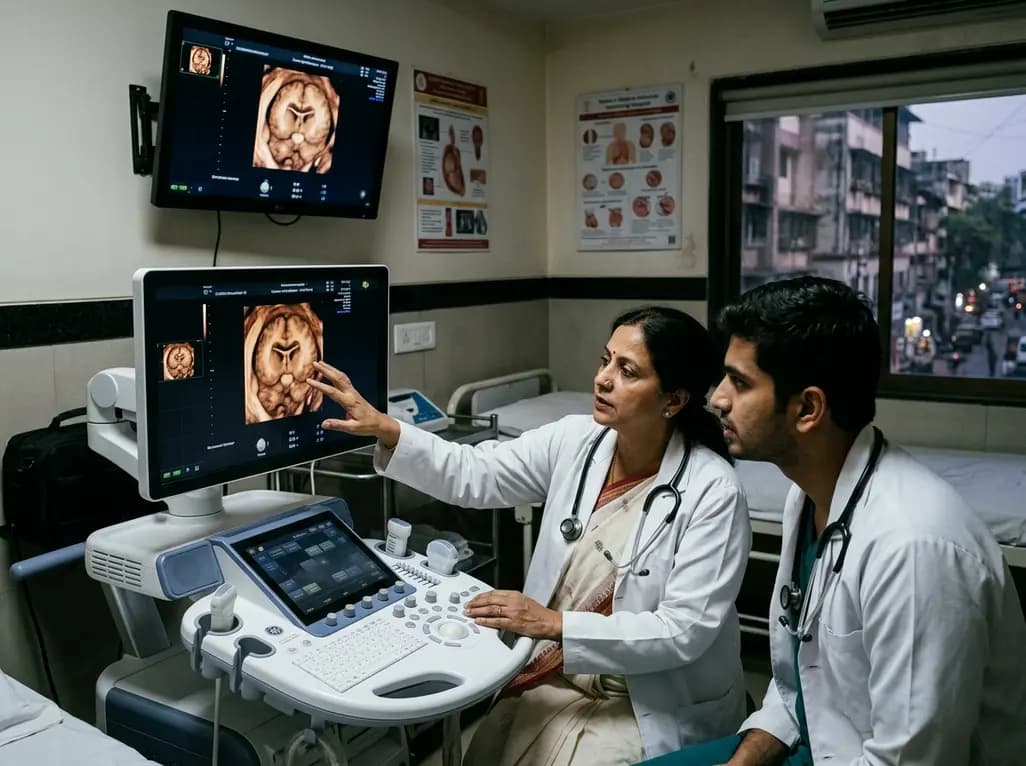
A 3D transvaginal neurosonography study shows the fetal cavum septi pellucidi develops fluid cavitation around 19 weeks and a corpus callosal length of 11.25 mm. These insights help clinicians prevent premature false-positive diagnoses of absent septum pellucidum during second-trimester anomaly scans.
Today

An 8-week integrative neuromuscular training protocol significantly improves unilateral jump symmetry, balance, and squat strength in adolescent female sprinters. By correcting lower-extremity asymmetry, this evidence-based intervention reduces injury risk while optimizing athletic sprint performance.
Today

A higher Life's Crucial 9 score substantially reduces MAFLD risk, with every 10-point gain lowering odds by 49%. An exploratory mediation analysis highlights the CALLY index as a vital immunometabolic pathway, offering practical insights for cardiovascular and liver health management in clinical practice.
Today
