

Loading, please wait...
Loading, please wait...

Precise TERT C228T mutation detection has become a vital priority in endocrine oncology and thyroid cancer management. Papillary thyroid carcinoma represents the most common endocrine cancer globally and within India. Although most cases exhibit an indolent clinical trajectory, a subset of patients suffers aggressive recurrences, rapid invasion, and radioiodine refractoriness. Recent clinical evidence demonstrates that telomerase reverse transcriptase promoter point mutations drive this aggressive behavior. Consequently, early genomic identification directly informs surgical margins and surveillance intensity. Conventional sequencing platforms remain too slow and costly for routine bedside deployment. Fortunately, novel electrochemical biosensors offer an ultrasensitive and affordable alternative, transforming diagnostic oncology.
Papillary thyroid cancer presents increasing epidemiological challenges across Indian clinical centers. While fine-needle aspiration cytology effectively detects benign and malignant cytological features, it cannot reliably forecast tumor virulence. Telomerase reactivation plays a crucial role in enabling neoplastic cells to achieve replicative immortality. Among somatic alterations, the C228T promoter mutation creates de novo binding motifs for ETS family transcription factors. As a direct result, this alteration significantly upregulates telomerase transcription. Clinical studies consistently link C228T mutations with advanced patient age, extrathyroidal extension, lymph node involvement, and distant metastasis. Moreover, when C228T co-exists with BRAF V600E mutations, patient recurrence risk and mortality surge dramatically. Because standard genomic sequencing requires expensive equipment and centralized referral laboratories, Indian clinicians rarely obtain timely mutational profiles before initial surgery. Therefore, establishing rapid, decentralized detection methods addresses a critical clinical gap. Such cutting-edge diagnostic tools allow surgeons to individualize operative planning before entering the operating room, optimizing clinical outcomes.
To overcome conventional analytical barriers, researchers recently engineered a label-free electrochemical biosensor utilizing magnetic nanocomposites. Specifically, the biosensing platform employs iron oxide nanocomposites coated with a protective gold shell layer. This design merges strong magnetic responsiveness with the outstanding electrical conductivity of noble metals. Thiolated DNA aptamers that bind the mutant C228T target sequence immobilize onto the gold shell through stable gold-sulfur bonds. Furthermore, bovine serum albumin molecules block unreacted surface binding sites. Consequently, this blocking step prevents non-specific biological fouling and preserves target fidelity. An external magnetic field then induces the spontaneous self-assembly of these nanocomplexes directly onto the working electrode surface. This magnetically guided approach eliminates labor-intensive surface modification protocols and dramatically improves sensor reproducibility. In addition, the durable nanostructure ensures excellent probe orientation and high chemical stability across consecutive diagnostic assays. Thus, the engineered bio-interface provides a highly robust and reliable foundation for direct nucleic acid interrogation in decentralized settings.
The biosensor operates via an ingenious signal-off electrochemical transduction mechanism. In the absence of target DNA, the aptamer-modified electrode allows unimpeded interfacial electron transfer with electroactive ferricyanide ions. Consequently, differential pulse voltammetry registers a strong, sharp baseline current peak. However, when target nucleic acids containing the C228T mutation enter the testing chamber, they hybridize specifically with the immobilized capture aptamers. This binding event converts flexible aptamers into rigid, double-stranded DNA duplexes along the electrode interface. As a consequence, the rigid double helices generate substantial steric hindrance. Additionally, the dense negatively charged phosphate backbones electrostatically repel the anionic ferricyanide redox probes. This dual barrier suppresses electron transfer to the conductive gold surface. Electrochemical impedance spectroscopy validates this inhibition by demonstrating a marked rise in charge transfer resistance. Ultimately, the resulting decrease in current correlates inversely with target concentration. This label-free strategy eliminates fluorescent dyes and enzymatic tags, streamlining operational workflows while accelerating turnaround times for clinical decisions.
Extensive laboratory evaluations verified that the electrochemical biosensor delivers remarkable analytical accuracy. The platform demonstrated a wide linear detection range extending from 10 picomolar to 10 micromolar. Furthermore, the system achieved a limit of detection of 0.67 picomolar. This degree of sensitivity allows the detection of sparse mutant DNA fragments within complex biological backgrounds. Selectivity assays demonstrated that the aptamers easily discriminate single-nucleotide C228T mismatches from wild-type sequences, ensuring high diagnostic specificity. In addition, the biosensor showed exceptional reproducibility, yielding a relative standard deviation of only 1.84% across repeated trials. Stability assessments confirmed that the fabricated sensors retained over 95% of their initial signal response after 10 days of storage. Crucially, tests in diluted human serum yielded recovery rates between 98.1% and 107.3%. Therefore, physiological proteins and electrolytes do not impair electrochemical readout or hybridization kinetics. These results confirm that the biosensor possesses the analytical robustness and sensitivity necessary for real-world oncologic diagnostics in hospital settings.
Introducing decentralized TERT biosensors offers profound clinical advantages for surgical decision-making. Preoperatively, cytologic evaluation of thyroid nodules frequently yields indeterminate Bethesda classifications. Detecting a C228T mutation promptly resolves diagnostic ambiguity, directing the endocrine surgeon toward total thyroidectomy and prophylactic lymph node clearance rather than conservative hemithyroidectomy. Furthermore, establishing mutational status early spares patients from stressful completion thyroidectomies. Postoperatively, TERT-positive disease alerts clinicians to heightened radioiodine resistance and aggressive recurrence risks. Consequently, oncologists can calibrate radioiodine ablation doses and shorten surveillance intervals. In India, regional hospitals often cannot maintain high-throughput sequencing facilities due to prohibitive capital costs and technical hurdles. Fortunately, this electrochemical platform requires only compact, battery-operated potentiostats and minimal technical expertise. Regional pathology laboratories could run rapid assays on fine-needle aspirates or liquid biopsy samples within hours. Thus, point-of-care electrochemical biosensors can bridge the diagnostic divide, delivering equitable precision oncology to diverse patient demographics across Indian healthcare institutions.
The TERT promoter C228T mutation reactivates telomerase expression, granting neoplastic follicular cells replicative immortality. Clinically, this somatic mutation correlates strongly with aggressive tumor biology, distant metastasis, radioiodine refractoriness, and increased disease-specific mortality. When co-occurring with BRAF V600E, it generates a synergistic high-risk molecular genotype. Identifying C228T enables surgical oncologists to perform comprehensive initial resections and guides post-surgical risk stratification, ensuring clinicians deliver appropriately intensified surveillance and timely systemic therapies.
Standard molecular diagnostic methods, including Sanger sequencing and next-generation sequencing, demand costly reagents, complex laboratory infrastructure, and lengthy turnaround times spanning days or weeks. In contrast, this label-free electrochemical biosensor delivers rapid, ultrasensitive detection with a limit of detection down to 0.67 picomolar. Its magnetically induced self-assembly simplifies electrode preparation, lowers operational costs, and minimizes manual handling. Consequently, this platform provides an ideal, decentralized solution for point-of-care molecular diagnostics.
Yes, rigorous testing demonstrated that the biosensor performs reliably in diluted human serum matrices, achieving recovery rates between 98.1% and 107.3%. The thiolated aptamers maintain high selectivity, readily discriminating single-base C228T mutations from excess wild-type genomic backgrounds without non-specific interference. Bovine serum albumin effectively blocks non-specific surface binding sites. Therefore, the device holds tremendous translational potential for analyzing patient fine-needle aspiration rinses and liquid biopsy specimens directly in clinical laboratories.
Disclaimer: This content is for informational and educational purposes only... Refer to the latest local and national guidelines for clinical practice.
References

Read summarized clinical updates, watch expert medical content, and earn CME certifications right from your smartphone.
Open your smartphone camera to scan and install.





A novel label-free electrochemical biosensor utilizing magnetic nanocomposites enables ultrasensitive TERT C228T mutation detection (LOD: 0.67 pM) for rapid risk stratification in papillary thyroid cancer, offering promising point-of-care utility for endocrine oncology.
Today

Kenya's confirmation of its eighth Ebola infection highlights the acute risk of secondary transmission in hospital environments. Clinicians must maintain high vigilance, enforce strict infection prevention protocols, and implement rapid triage mechanisms for viral hemorrhagic fevers across healthcare settings.
Today
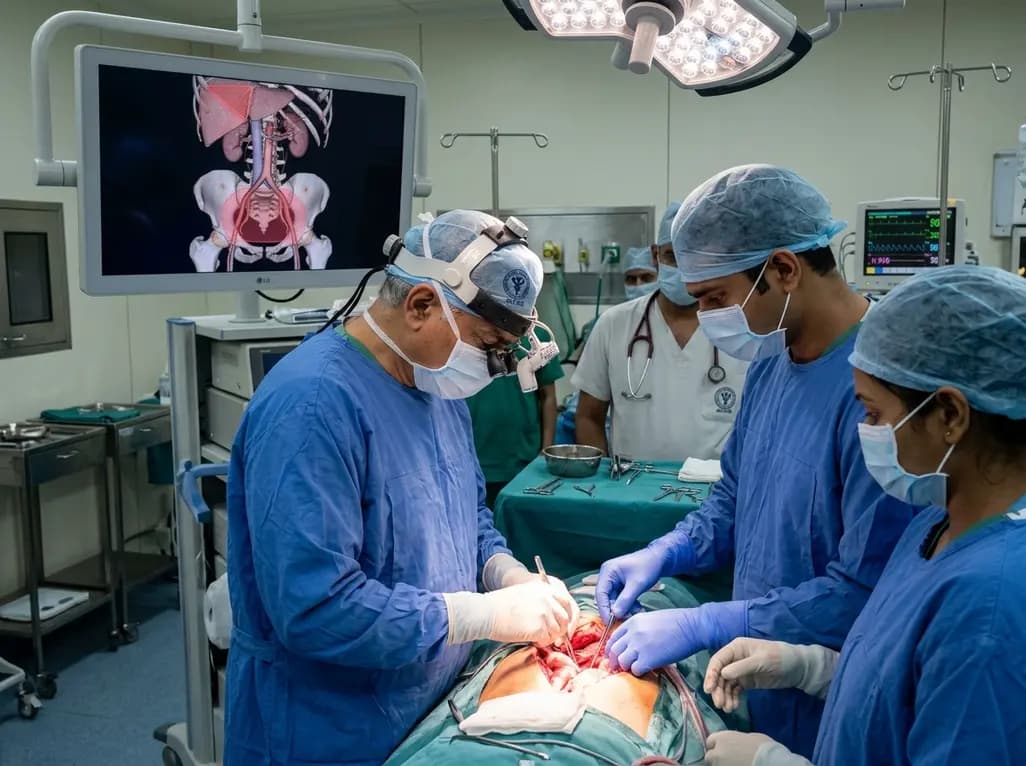
Surgical oncologists at AIIMS Delhi have mapped two critical anatomical landmarks: Ray's Zone in the deep pelvis and Ray's Hepatocaval Triangle near the liver. These predefined hazard boundaries guide dissection, dramatically reduce severe intraoperative bleeding, and preserve vital nerves and visceral organs.
Today

A study reveals that the MYLK c.4079G>A, p.(Gly1360Asp) variant is linked to high-penetrance heritable thoracic aortic disease and early-onset aortic dissection, showing a founder effect in Finnish cohorts. Findings emphasize early cascade screening and vigilant surveillance.
Today

A novel sacrificial-template technique combines FDM polymer 3D printing and micro-arc oxidation to fabricate orientation-controlled porous titanium scaffolds. These bioactive constructs offer tailored stiffness, exceptional multidirectional load resistance, and robust osseointegration for bone defect repair.
Today
