.webp&w=384&q=75)

Loading, please wait...
Loading, please wait...

A recent retrospective study published in June 2026 evaluates the clinical efficacy and safety of SPLT-Orchiopexy for undescended testes in children. Researchers investigated single-port transscrotal laparoscopic orchiopexy combined with a hernia needle as a minimally invasive alternative to conventional methods. The study focused on patients with palpable middle- and low-position undescended testes, comparing 80 children in the SPLT-Orchiopexy group with 120 children who underwent conventional laparoscopic surgery (CLS).
The findings indicate that the SPLT-Orchiopexy group experienced significantly shorter operative times and less intraoperative blood loss. Furthermore, these patients achieved earlier ambulation and had a shorter length of hospital stay compared to the CLS group. Notably, postoperative pain scores, assessed using the Face, Legs, Activity, Cry, and Consolability (FLACC) scale, were lower in children treated with the single-port technique. Cosmetic satisfaction was also higher, as scar outcomes at 6 months postoperatively showed better results on the Observer Scar Assessment Scale (OSAS) and the Patient Scar Assessment Scale (PSAS).
Regarding surgical success, both techniques demonstrated high efficacy. The surgical success rates were 96.2% for SPLT-Orchiopexy and 97.5% for CLS, with no statistically significant difference between the two. Moreover, the incidence of postoperative complications remained similar across both groups. Consequently, the researchers performed a logistic regression analysis which identified that age and the preoperative location of the testis were independent factors associated with postoperative complications. Therefore, younger age and higher testicular position may require more cautious management regardless of the surgical technique used.
In summary, SPLT-Orchiopexy combined with a hernia needle is an efficient and safe procedure for managing palpable undescended testes in the pediatric population. It provides significant advantages in terms of perioperative recovery and aesthetic outcomes without compromising surgical success. Surgeons should consider this approach to improve patient comfort and parental satisfaction.
The procedure significantly reduces operative time and intraoperative blood loss while providing superior cosmetic results and lower postoperative pain compared to conventional laparoscopic methods.
Yes, clinical data shows that the surgical success rate for SPLT-Orchiopexy (approximately 96.2%) is statistically similar to conventional laparoscopic surgery (97.5%).
According to multivariate analysis, the patient's age and the initial location of the undescended testis are the primary independent factors affecting the likelihood of postoperative complications.
Disclaimer: This content is for informational and educational purposes only. It is not intended to be a substitute for professional medical advice, diagnosis, or treatment. Always seek the advice of your physician or other qualified health provider with any questions you may have regarding a medical condition. Refer to the latest local and national guidelines for clinical practice.
References
Lin Q et al. Clinical efficacy of single-port transscrotal laparoscopic orchiopexy combined with hernia needle for palpable undescended testes in children. BMC Pediatr. 2026 Jun 04. doi: 10.1186/s12887-026-07036-6. PMID: 42243819.
Li S et al. Advantages of single-site laparoscopic orchiopexy for palpable undescended testes in children: a prospective comparison study. World J Pediatr. 2024 Jan;20(1):66-72. doi: 10.1007/s00383-023-05630-8.
Ministry of Health and Family Welfare, Government of India. Standard Treatment Guidelines: Undescended testis in children. 2018.

Read summarized clinical updates, watch expert medical content, and earn CME certifications right from your smartphone.
Open your smartphone camera to scan and install.





A comparative study shows SPLT-Orchiopexy offers better surgical efficiency and aesthetic outcomes for children with palpable undescended testes....
4 months ago
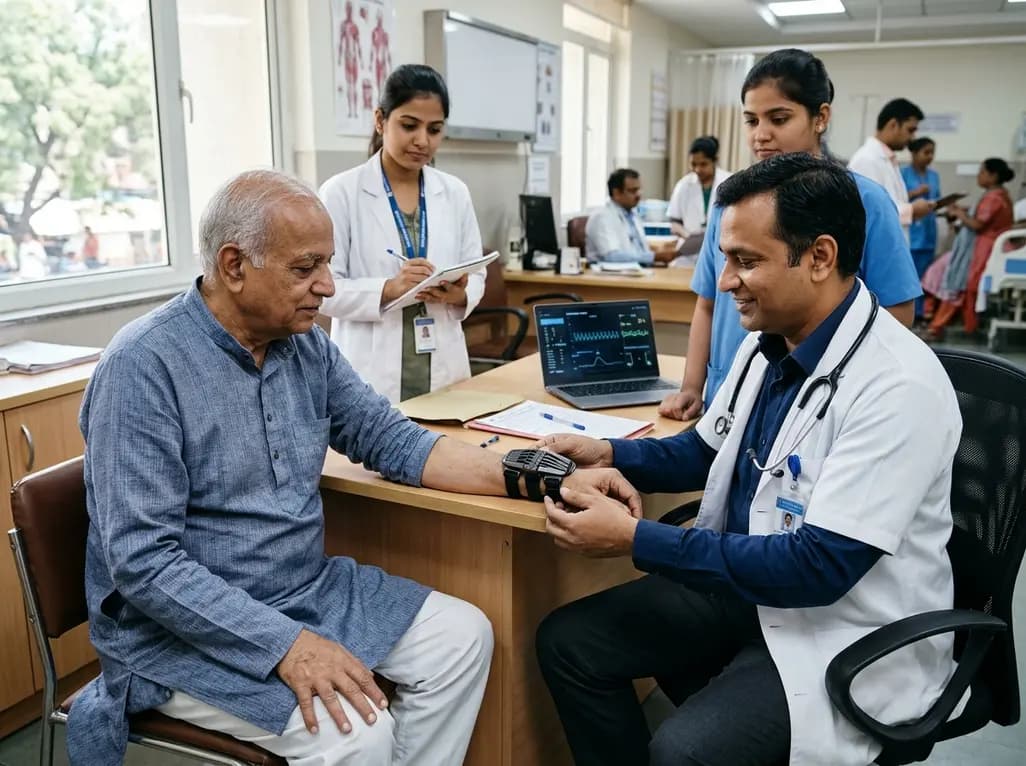
The TREM-AB open-label pilot study evaluated a wearable passive nonlinear vibration absorber for essential tremor. The Nonlinear Energy Sink bracelet reduced clinical Fahn-Tolosa-Marin tremor scores by 32.1% and electrophysiological tremor power by 49.2% with no adverse effects reported.
Today

A study in JAMIA Open shows lightweight open-source reasoning LLMs achieve up to 95% sensitivity and accelerate evidence synthesis screening by nearly twentyfold, presenting a cost-effective, scalable AI solution for biomedical research and systematic reviews.
Today
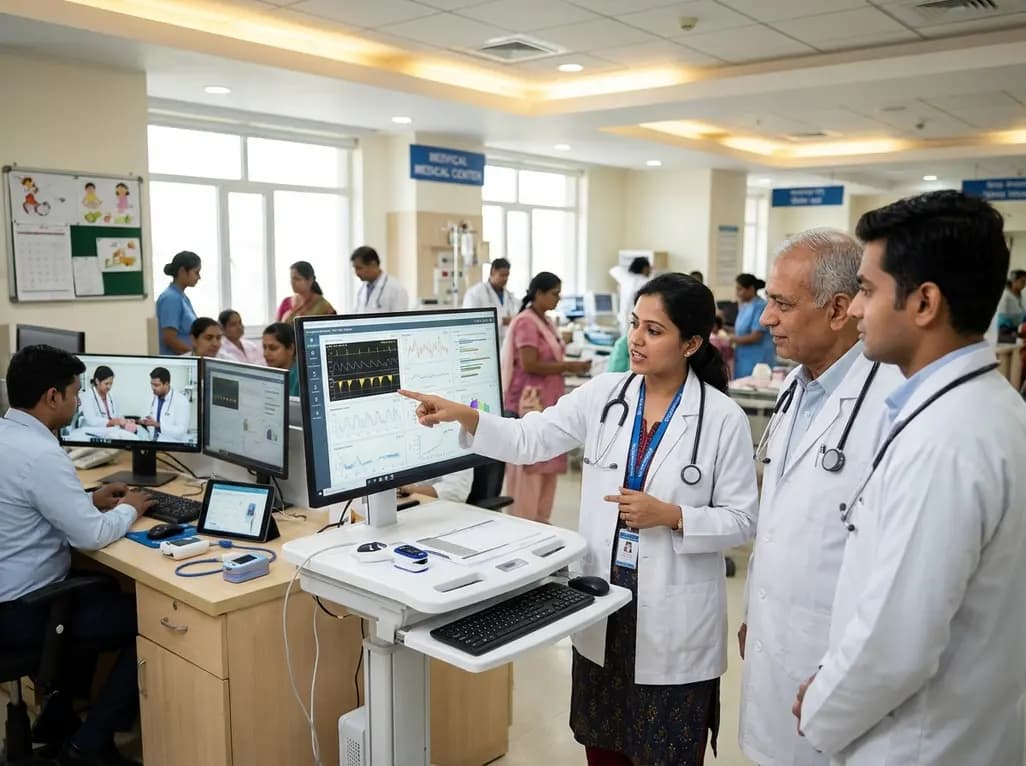
A landmark study details how an enterprise pediatric remote patient management model expanded from a single cardiology pilot to 16 diverse specialty programs by combining centralized digital operations with specialty clinical leadership.
Today

A comparative review of tension band wiring and intramedullary screw fixation in thumb metacarpophalangeal arthrodesis, evaluating union rates, hardware complications, and clinical outcomes.
Today
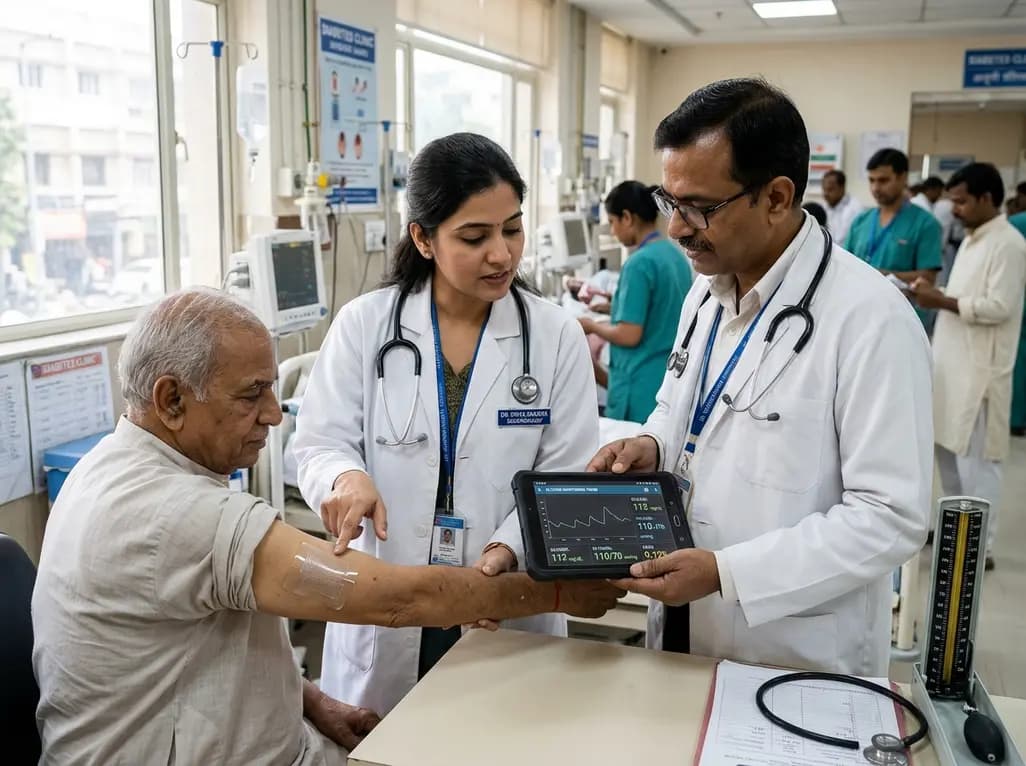
A breakthrough ultrathin multimodal sensor decouples physical hemodynamic monitoring from disposable electrochemical calibration, achieving long-term wearable glucose prediction with 81.36% accuracy and a 9.12% MARD. This offers a robust, drift-free solution for outpatient metabolic surveillance.
Today
