.webp&w=384&q=75)

Loading, please wait...
Loading, please wait...
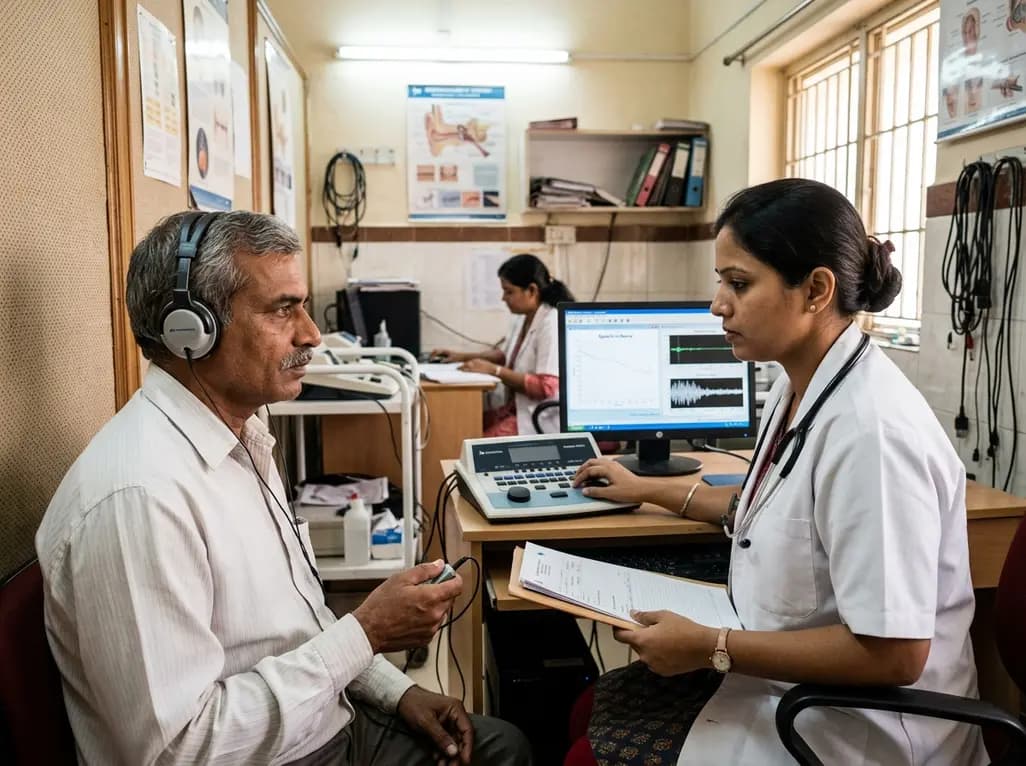
Clinicians widely recognize that speech-in-noise testing provides critical insights into functional hearing capacity that pure-tone audiometry cannot deliver. Standard pure-tone evaluations measure sound detection thresholds in quiet test booths. However, adult patients most frequently complain about communication breakdowns in noisy social and occupational settings. Consequently, speech-in-noise testing evaluates how effectively a listener segregates target human speech from background acoustic competition. A nationwide survey examined how licensed audiologists utilize these specialized diagnostic tools in adult clinical populations. The researchers gathered data from 275 practicing clinicians to assess professional attitudes, routine protocols, facilitators, and persistent procedural barriers. Most practitioners expressed strong confidence in their ability to select, administer, and interpret these sophisticated measures. Furthermore, clinicians affirmed the immense clinical usefulness of these evaluations for identifying real-world auditory deficits. While traditional assessments identify peripheral hearing loss, background noise challenges expose central auditory processing and suprathreshold discrimination deficits. Therefore, integrating speech perception measurements in competing noise represents an indispensable component of comprehensive hearing healthcare. As hearing healthcare shifts toward patient-centered outcomes, functional suprathreshold testing bridges the gap between laboratory results and daily communication.
The survey revealed an encouraging picture regarding clinician self-efficacy, yet it also illuminated notable variations in clinical adoption. Overall, a substantial majority of surveyed audiologists reported high confidence when performing speech-in-noise testing and analyzing resulting metrics. Moreover, statistical analyses demonstrated that high clinician confidence strongly correlated with the perceived clinical usefulness of these procedures. Approximately half of the participating audiologists reported frequent utilization of these evaluations in daily clinical workflows. However, actual testing frequency depended substantially on the specific workplace setting and institutional structure. Audiologists working in academic medical centers reported higher implementation rates than those in fast-paced retail dispensing environments. When clinicians performed these assessments, their primary motivation was validating subjective patient reports of difficulty understanding speech in crowds. Thus, the test functions as an objective diagnostic bridge between patient symptom descriptions and formal audiometric findings. In addition, measuring signal-to-noise ratio loss provides quantifiable evidence that validates patient frustration and guides appropriate intervention. Consequently, routine administration allows clinicians to address patient concerns with objective, personalized diagnostic data.
Although clinicians frequently utilize speech perception measures during initial evaluations, survey findings highlighted an intriguing clinical discrepancy. Specifically, audiologists administer speech-in-noise assessments far more frequently for upfront diagnostic assessment than for ongoing treatment management. Clinicians routinely leverage these tests to document baseline suprathreshold speech deficits and justify auditory rehabilitation. In contrast, practitioners rarely repeat these measures to verify post-fitting outcomes or quantify benefit following hearing aid amplification. This gap is clinically significant because modern hearing aids feature advanced directional microphones and noise-reduction algorithms. Without standardized post-fitting objective assessments, clinicians cannot reliably demonstrate how effectively amplification reduces listening effort in noisy environments. Furthermore, objective post-fitting metrics help clinicians adjust digital signal processing parameters to optimize speech intelligibility. When clinicians omit follow-up speech-in-noise testing, they miss a vital opportunity to reinforce patient counseling and establish realistic performance expectations. Therefore, expanding the clinical application of these evaluations into rehabilitative verification could substantially elevate long-term hearing aid user satisfaction and device compliance.
Despite broad professional agreement on the necessity of these measures, clinicians face major obstacles that hinder universal adoption. Above all, lack of clinical time emerged as the most formidable barrier preventing routine speech-in-noise testing. Audiologists often navigate demanding schedules that allow only thirty to forty-five minutes for a comprehensive diagnostic test battery. Consequently, many providers reluctantly omit speech-in-noise measures to ensure adequate time for mandatory pure-tone audiometry and immittance testing. In addition, existing reimbursement structures frequently fail to incentivize specialized suprathreshold testing, which discourages high-volume practices from extending appointment slots. Some clinical facilities also lack standardized protocols or calibrated multi-channel sound equipment necessary for complex acoustic simulations. To overcome these entrenched hurdles, clinical institutions must adopt streamlined, validated assessment protocols such as shortened sentence-in-noise tests. Modern shortened protocols require less than five minutes while providing highly reliable signal-to-noise ratio thresholds. By systematically modernizing workflow designs and adopting rapid diagnostic algorithms, busy audiology centers can eliminate time constraints without sacrificing clinical diagnostic precision.
The clinical implications of these audiological findings extend directly to otolaryngology and primary care practices. In everyday consultations, general physicians and otolaryngologists regularly encounter adult patients who describe normal hearing in quiet rooms but severe communication breakdown in noisy environments. Such symptoms frequently indicate early presbycusis, hidden hearing loss, or cochlear synaptopathy that standard pure-tone audiograms completely miss. Therefore, understanding audiological practice patterns empowers referring physicians to request targeted suprathreshold assessments rather than simple screening tests. In diverse healthcare settings, high ambient noise levels in urban environments substantially amplify everyday listening challenges. Untreated speech understanding deficits correlate strongly with social isolation, accelerated cognitive decline, and depressive symptoms among aging adults. By identifying speech-in-noise deficits early, primary care doctors and otolaryngologists can recommend timely auditory rehabilitation before severe functional decline occurs. Furthermore, collaborative care pathways between referring physicians and audiologists ensure that patients receive comprehensive functional evaluations. Ultimately, incorporating functional speech metrics elevates diagnostic precision, optimizes hearing aid fittings, and improves patient quality of life.
Pure-tone audiometry measures the quietest sounds an individual detects across discrete frequencies in quiet conditions. However, it fails to capture functional auditory performance in everyday multi-talker environments. Speech-in-noise testing evaluates the complex interaction between peripheral cochlear integrity, temporal processing, and central cognitive function. Consequently, it uncovers hidden hearing loss and suprathreshold processing deficits that pure-tone thresholds cannot detect, providing an accurate, clinically meaningful representation of a patient's daily communication difficulties.
The most pervasive barrier reported by practicing clinicians is severe lack of clinical appointment time. Standard audiological test batteries already require substantial time to measure air and bone conduction thresholds, speech recognition, and tympanometry. Because scheduled slots are frequently limited to thirty or forty-five minutes, audiologists often omit speech-in-noise measures. Additionally, unsupportive reimbursement models and inadequate acoustic equipment in busy facilities discourage clinicians from extending appointment lengths for specialized suprathreshold testing.
Speech-in-noise testing quantifies a patient's signal-to-noise ratio loss, indicating how much louder speech must be compared to ambient noise. This metric allows clinicians to prescribe hearing aids with suitable directional microphones, advanced digital noise reduction, or remote microphone accessories. Furthermore, conducting aided post-fitting testing confirms whether amplification enhances speech understanding in background noise. This objective verification establishes realistic listening expectations, optimizes fine-tuning adjustments, and significantly improves long-term patient satisfaction with amplification devices.
Disclaimer: This content is for informational and educational purposes only... Refer to the latest local and national guidelines for clinical practice.
References

Read summarized clinical updates, watch expert medical content, and earn CME certifications right from your smartphone.
Open your smartphone camera to scan and install.





A recent survey reveals high clinical confidence but variable utilization of speech-in-noise testing among audiologists. While essential for validating adult auditory complaints, time constraints remain a major barrier, highlighting the need for efficient protocols in clinical hearing assessment.
Today

A crossover study demonstrates that locally deployed large language models with exact-match knowledge augmentation significantly elevate outpatient prescription review accuracy to 97.2%, curbing hallucinations and securing patient data without requiring complex cloud infrastructure.
Today
A new scoping review protocol systematically maps global evidence on how climatic shifts, ambient heat, and pollution impact human fertility. Discover key physiological mechanisms, clinical preconception strategies, and critical public health alignments under Sustainable Development Goals 3 and 13.
Today
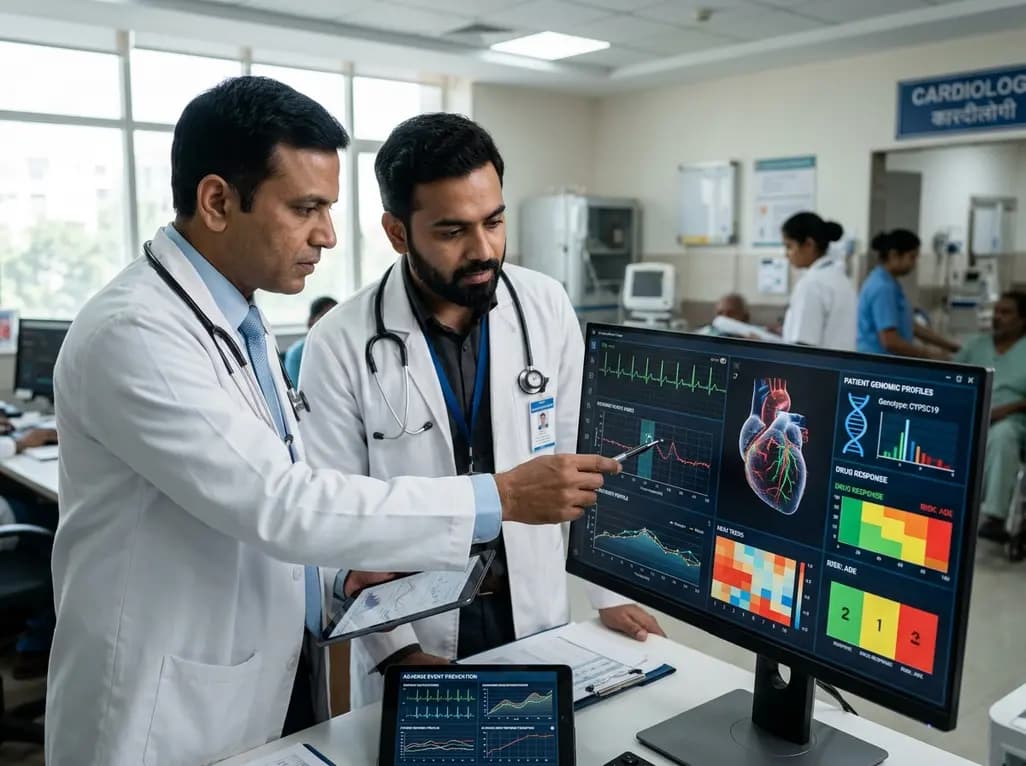
Pharmacogenomics and artificial intelligence are revolutionizing cardiology by tailoring therapies to individual genetic profiles and clinical data, reducing adverse drug events, and improving cardiovascular patient outcomes.
Today
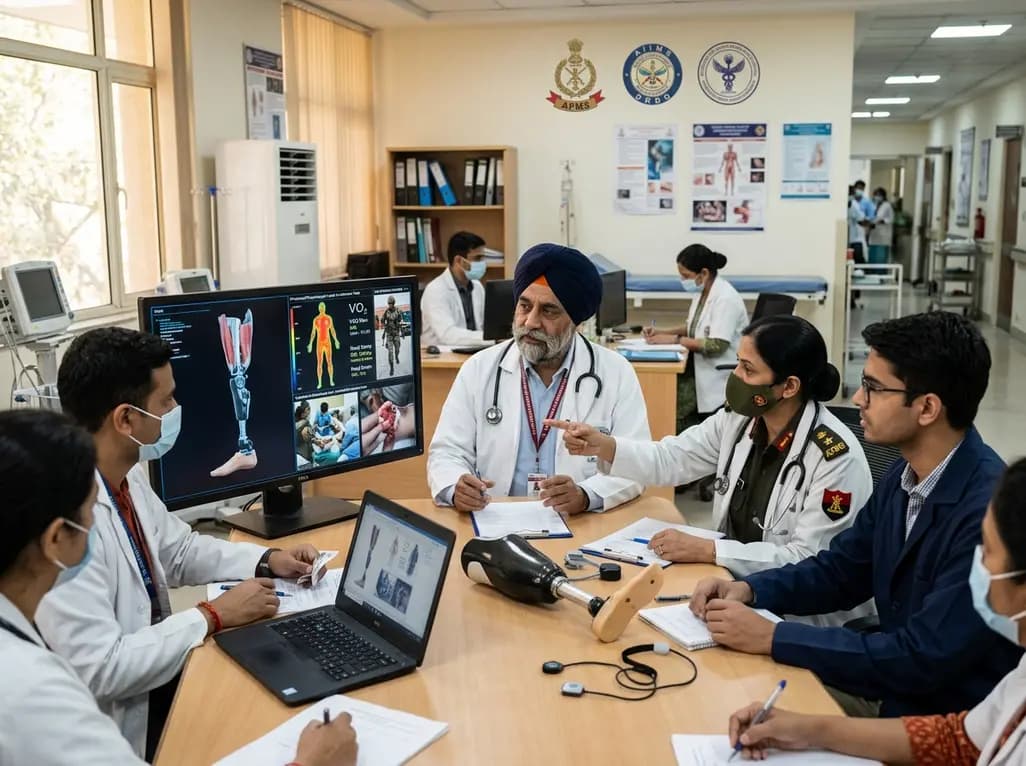
India's premier scientific bodies have joined the Armed Forces Medical Services to solve unique physiological and operational challenges faced by soldiers. The national collaboration covers combat casualty care, artificial intelligence diagnostics, bionic prosthetics, and extreme-environment physiological resilience.
Today
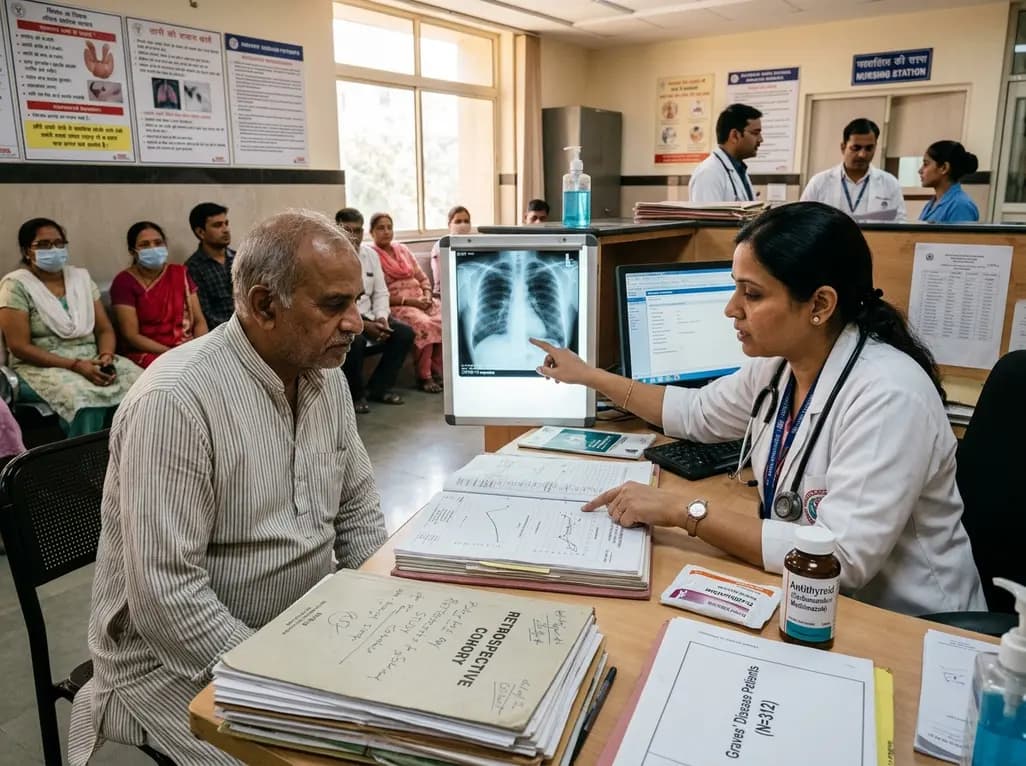
A retrospective cohort study evaluates the short- and long-term impacts of SARS-CoV-2 infection on patients with Graves' disease receiving antithyroid drug therapy, highlighting thyroid status destabilization, clinical symptom exacerbations, and post-viral sequelae.
Today
