.webp&w=384&q=75)

Loading, please wait...
Loading, please wait...

Modern ambulatory clinics handle immense patient volumes daily. Consequently, pharmacists and prescribing physicians face unprecedented cognitive pressure during routine prescription screening. Effective outpatient prescription review serves as the primary barrier preventing adverse drug events, inappropriate dosing, and lethal drug interactions. However, clinicians often have only seconds to evaluate complex medication regimens against expanding hospital formularies. Therefore, overworked staff frequently encounter elevated risks of medication oversight. In busy tertiary hospitals across India and globally, high patient footfalls exacerbate this operational strain. Outpatient pharmacy departments must balance rapid dispensing speeds with rigorous clinical verification. Manual audits often miss nuanced contraindications, particularly in elderly patients experiencing severe polypharmacy. While artificial intelligence offers promising support, integrating complex automated tools into rapid ambulatory workflows presents real challenges. Clinicians need dependable systems that accelerate safety checks without introducing diagnostic confusion or administrative delays. Moreover, prescription errors carry massive economic burdens and cause preventable hospital readmissions. Thus, healthcare organizations urgently require practical decision support that safeguards patient well-being while optimizing clinical efficiency.
Most commercial artificial intelligence solutions rely heavily on third-party cloud infrastructure. However, transmitting sensitive patient identifiers and clinical records across external servers creates immense privacy liabilities. Under stringent regulatory frameworks, such as India's Digital Personal Data Protection Act, unauthorized data exposure triggers severe penalties. Furthermore, enterprise health networks hesitate to entrust proprietary medical records to public cloud vendors. Beyond data privacy, traditional retrieval-augmented generation pipelines present substantial operational hurdles. These conventional systems require complex text vectorization, embedding models, and dedicated vector databases. Unfortunately, many community clinics and public hospitals lack the specialized engineering teams needed to maintain such sophisticated software. Consequently, resource-constrained medical centers struggle to implement advanced machine learning tools safely. In contrast, on-premise solutions eliminate external data leakage by keeping all computational queries within local hospital firewalls. This local processing architecture guarantees complete data ownership and operational independence. Additionally, on-site hosting shields institutions from external network disruptions during peak outpatient hours. Therefore, healthcare facilities can confidently modernize clinical workflows without compromising patient confidentiality or overstretching limited administrative budgets.
To address these technical barriers, investigators introduced a pragmatic, local deployment framework. Specifically, the study team implemented the open-source Qwen3-14B model directly on an internal hospital intranet server using Ollama. This approach avoided external internet transmission entirely. Furthermore, instead of building a cumbersome vector database, the researchers engineered a lightweight knowledge augmentation mechanism. They extracted structured clinical information directly from official drug package inserts. The system then utilized exact-match text injection to insert verified dosing, contraindication, and interaction rules directly into the query prompt. Consequently, the local model retrieved authoritative pharmacological facts without expensive computational indexing. This streamlined pipeline drastically reduced server hardware requirements while providing reliable clinical references. Moreover, exact-match grounding eliminated complex vector drift and search retrieval failures. Pharmacists could readily update medication guidelines by adjusting the underlying text files without retraining neural networks. Similarly, system administrators avoided costly subscription fees associated with commercial cloud platforms. Therefore, this streamlined intranet framework demonstrates that secondary and tertiary hospitals can deploy robust artificial intelligence tools using existing computing hardware.
The investigators rigorously evaluated their system using a two-period crossover trial analyzing 213 real-world outpatient prescriptions. Paired comparisons revealed striking performance improvements under human-machine collaboration. Specifically, overall review accuracy reached 97.2% in the collaborative condition, whereas unaided pharmacists achieved only 82.6%. This marked difference demonstrated statistical significance and robust clinical relevance. Additionally, the knowledge-augmented system dramatically curbed large language model hallucinations. Unassisted baseline models frequently fabricate plausible yet dangerous clinical assertions. In contrast, exact-match knowledge augmentation grounded the model's responses in authorized drug labeling. Furthermore, the collaborative workflow achieved high sensitivity and specificity when identifying genuine prescribing errors. Importantly, review time remained manageable during collaborative sessions, ensuring practical utility in fast-paced clinics. Expert supervising pharmacists adjudicated all disputed decisions to maintain rigorous gold-standard benchmarking. Moreover, the trial confirmed that the algorithmic co-pilot caught subtle drug-drug interactions that human reviewers missed during high-volume screening. Therefore, the crossover findings confirm that pairing human clinical expertise with locally grounded algorithms creates an exceptionally dependable safety net for outpatient care.
The success of locally deployed algorithms provides vital lessons for medical institutions across India. Notably, government medical colleges and high-volume private hospitals process thousands of outpatients every single morning. Medical officers and hospital pharmacists rarely have adequate time to dissect intricate multi-drug prescriptions. Consequently, preventable adverse drug reactions and dosing miscalculations remain persistent public health concerns nationwide. Implementing costly cloud-based software or overseas subscriptions often proves financially unviable for public sector health networks. However, running open-source models on local intranet servers provides an affordable, highly scalable alternative. Furthermore, this approach aligns seamlessly with Indian digital privacy mandates and institutional ethics requirements. Pharmacists retain ultimate supervisory control, acting as indispensable clinical evaluators rather than passive observers. As a result, the collaborative technology strengthens diagnostic vigilance without diminishing professional clinical autonomy. Additionally, expanding this framework to district hospitals can standardize prescription audits across resource-constrained regions. Ultimately, adopting lightweight, locally hosted artificial intelligence can democratize medication safety, protecting diverse patient populations across urban and rural healthcare settings alike.
Local deployment hosts the large language model directly on secure institutional servers within the hospital intranet. Consequently, protected health information, including patient identifiers and clinical histories, never leaves the facility firewall. This on-premise architecture eliminates unauthorized data exposure and satisfies stringent regulatory standards like India's Digital Personal Data Protection Act. Furthermore, hospital administrators maintain total custody of clinical logs, ensuring complete compliance with international health data confidentiality protocols.
Exact-match knowledge augmentation extracts verified pharmaceutical facts directly from official manufacturer package inserts. The system then injects these definitive rules straight into the query prompt when analyzing medications. In contrast to complex vector databases, this lightweight method prevents mathematical retrieval failures and eliminates contextual vector drift. Additionally, exact-match grounding provides the model with unambiguous dosing parameters and contraindications, substantially suppressing factual hallucinations while demanding far fewer institutional information technology resources.
Human-AI collaboration pairs computational breadth with seasoned clinical judgment. Stand-alone models occasionally overlook nuanced clinical contexts or generate spurious safety alerts that cause clinician alert fatigue. Conversely, unaided pharmacists often struggle under heavy outpatient case volumes and fatigue. Combining algorithmic screening with expert pharmacist oversight achieved 97.2% diagnostic accuracy in clinical trials. Pharmacists efficiently review model suggestions, catch subtle therapeutic discrepancies, and retain ultimate clinical authority over every outpatient dispensing decision.
Disclaimer: This content is for informational and educational purposes only and does not substitute professional clinical judgment, diagnosis, or treatment. Medical knowledge evolves rapidly, and clinical presentations vary. Healthcare providers must exercise independent clinical evaluation and verify all diagnostic criteria, pharmaceutical dosages, adverse drug profiles, and therapeutic decisions. The mention of specific medications, formulations, brand names, or operational protocols does not represent endorsement or clinical recommendation. Refer to the latest local and national guidelines for clinical practice.
References

Read summarized clinical updates, watch expert medical content, and earn CME certifications right from your smartphone.
Open your smartphone camera to scan and install.





A crossover study demonstrates that locally deployed large language models with exact-match knowledge augmentation significantly elevate outpatient prescription review accuracy to 97.2%, curbing hallucinations and securing patient data without requiring complex cloud infrastructure.
Today
A new scoping review protocol systematically maps global evidence on how climatic shifts, ambient heat, and pollution impact human fertility. Discover key physiological mechanisms, clinical preconception strategies, and critical public health alignments under Sustainable Development Goals 3 and 13.
Today
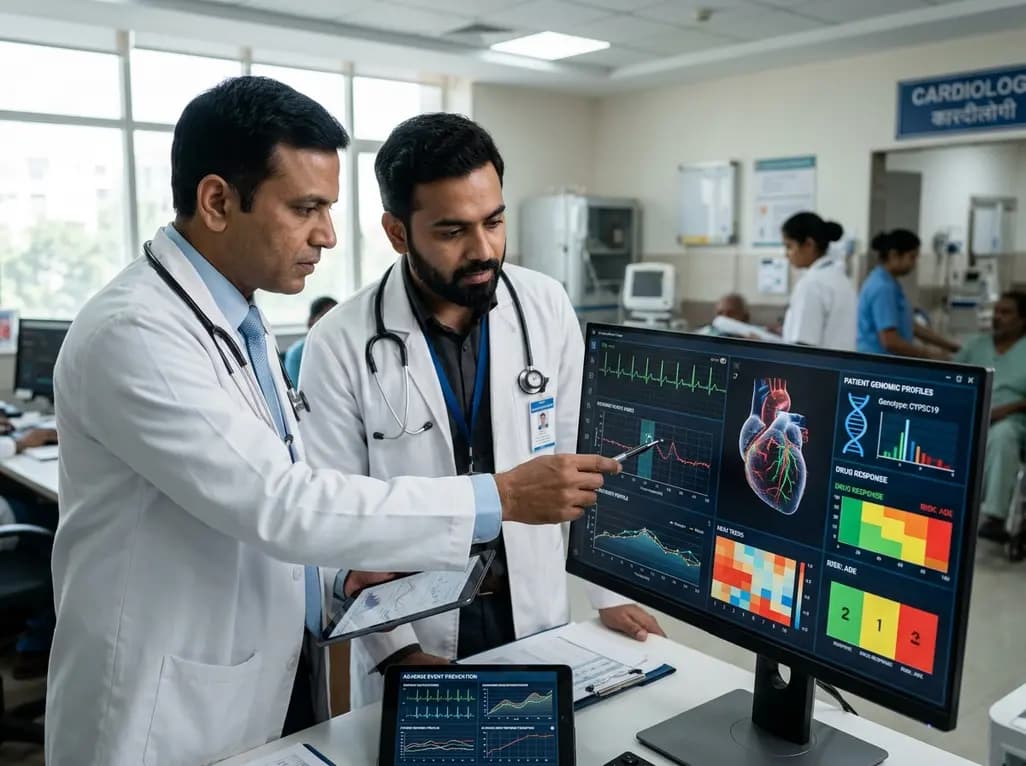
Pharmacogenomics and artificial intelligence are revolutionizing cardiology by tailoring therapies to individual genetic profiles and clinical data, reducing adverse drug events, and improving cardiovascular patient outcomes.
Today
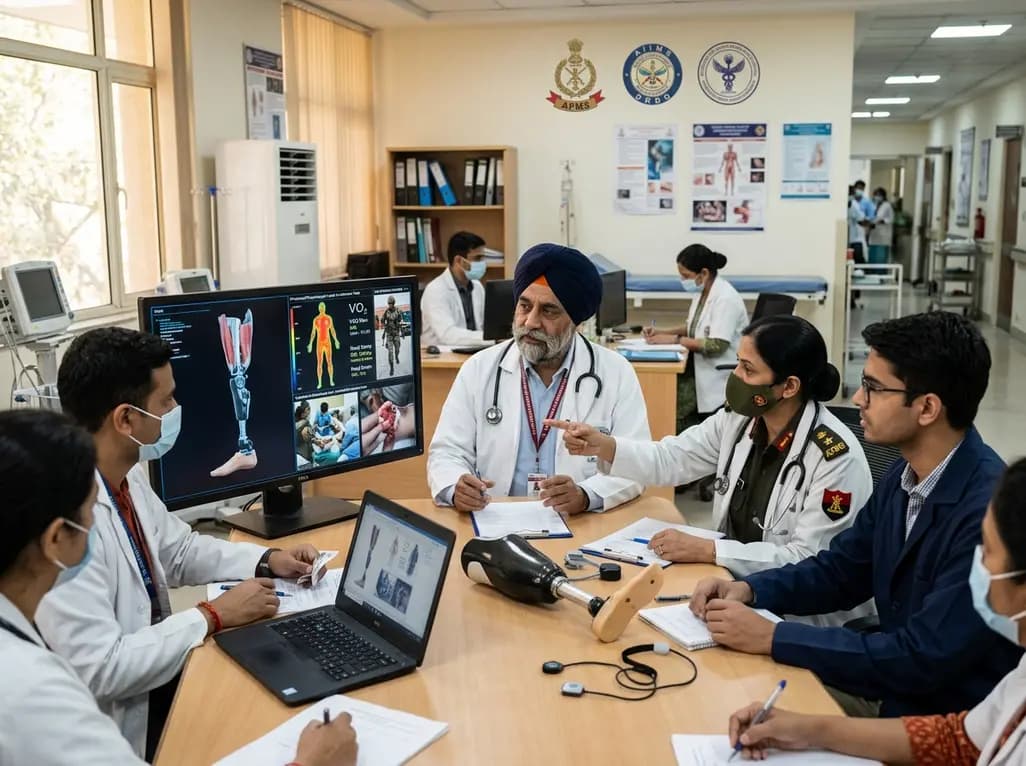
India's premier scientific bodies have joined the Armed Forces Medical Services to solve unique physiological and operational challenges faced by soldiers. The national collaboration covers combat casualty care, artificial intelligence diagnostics, bionic prosthetics, and extreme-environment physiological resilience.
Today
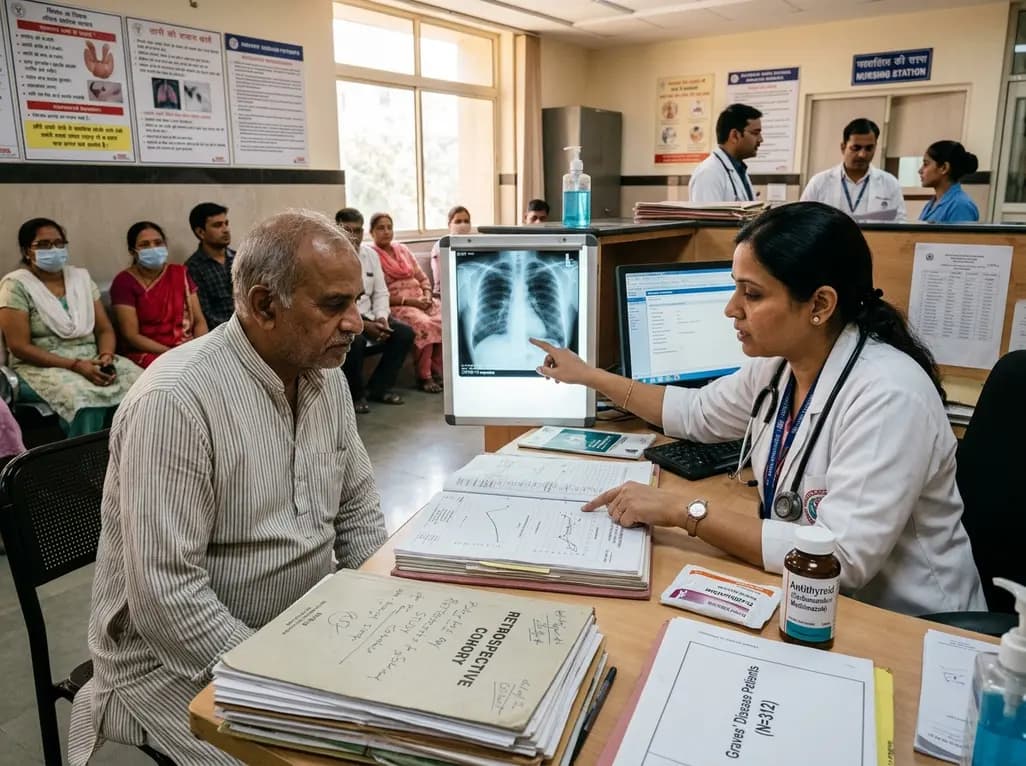
A retrospective cohort study evaluates the short- and long-term impacts of SARS-CoV-2 infection on patients with Graves' disease receiving antithyroid drug therapy, highlighting thyroid status destabilization, clinical symptom exacerbations, and post-viral sequelae.
Today
