.webp&w=384&q=75)

Loading, please wait...
Loading, please wait...

Cardiovascular disease remains the leading cause of morbidity and global mortality. Traditional cardiology models often rely on standard, one-size-fits-all therapeutic regimens. However, these conventional approaches frequently overlook substantial individual genetic variations and distinct metabolic profiles. Consequently, cardiovascular precision medicine is rapidly emerging as a transformative clinical standard. This paradigm shifts medical care from reactive disease intervention toward tailored, proactive treatment strategies. By evaluating unique human molecular data, clinicians can now prescribe targeted therapies with superior efficacy. Furthermore, precision healthcare acknowledges that two patients presenting with identical ischemic symptoms may exhibit markedly distinct physiological responses to pharmacotherapy. Therefore, moving away from empirical dosing protects patients from unintended therapeutic failures and preventable drug toxicities. In addition, early stratification helps identify high-risk cardiovascular phenotypes before irreversible myocardial injury develops. As scientific evidence accumulates, modern clinical protocols increasingly integrate molecular diagnostics into daily cardiology practice. Modern healthcare systems recognize that incorporating personal genetic profiles optimizes long-term survival. Ultimately, tailoring therapy to the patient's individual biology redefines the standards of modern cardiac care.
Pharmacogenetics provides critical mechanistic insights into how specific genetic variations govern individual pharmacokinetics and pharmacodynamics. In cardiovascular care, antiplatelet and anticoagulant medications demonstrate profound variability in patient responsiveness. For instance, clopidogrel requires biotransformation through hepatic cytochrome P450 enzymes to produce its active antiplatelet metabolite. However, patients carrying loss-of-function CYP2C19 alleles experience impaired enzymatic bioactivation. Consequently, these individuals face significantly higher risks of stent thrombosis and recurrent ischemic complications following percutaneous coronary intervention. Clinicians can identify these genetic risks promptly and adjust therapy by prescribing alternative agents like ticagrelor or prasugrel. Similarly, genetic polymorphism analysis plays an indispensable role in warfarin dosing. Allelic variations in CYP2C9 and VKORC1 influence clearance rates and target receptor sensitivity. Therefore, genotype-guided dosing algorithms accurately predict individualized warfarin maintenance doses while decreasing major hemorrhagic episodes. In addition, researchers link SLCO1B1 transporter variants to increased systemic statin exposure. This genetic predisposition directly elevates the likelihood of statin-induced myopathy and severe rhabdomyolysis. Thus, routine pre-prescription pharmacogenetic screening preserves medication adherence, enhances drug efficacy, and protects vulnerable patients from life-threatening toxicities.
Artificial intelligence is fundamentally revolutionizing diagnostic accuracy and prognostic evaluation across modern cardiology. Machine learning architectures can rapidly analyze high-dimensional clinical parameters, continuous hemodynamic telemetry, and complex electronic health records. Furthermore, deep learning algorithms process raw cardiovascular imaging data, including echocardiograms and cardiac magnetic resonance scans, with remarkable efficiency. These computational systems identify subtle structural abnormalities and subclinical functional impairments that human clinicians often miss during standard evaluations. For example, neural networks can calculate coronary calcium progression, estimate ejection fractions, and predict occult arrhythmias from routine electrocardiograms. Consequently, clinicians gain access to precise, automated risk scores that outperform conventional risk assessment calculators. Moreover, unsupervised clustering algorithms successfully classify heterogeneous syndromes, such as heart failure with preserved ejection fraction, into distinct pathophysiological subgroups. This refined phenotypic classification empowers physicians to tailor specialized therapeutic regimens for specific patient cohorts. Accordingly, predictive artificial intelligence tools enhance preventive strategies by detecting disease trajectory changes long before adverse clinical symptoms appear. Medical centers thereby optimize critical resource allocation while improving overall patient outcomes through rapid diagnostic support.
The true power of modern cardiovascular care emerges when clinicians combine pharmacogenomic profiling directly with artificial intelligence. Genomic sequencing provides granular molecular blueprints, while artificial intelligence offers the computational capacity required to synthesize this vast information. For instance, machine learning algorithms can integrate multigenic single nucleotide polymorphisms with renal clearance rates, liver function panels, and concomitant prescription drugs. Consequently, computational models generate dynamic, real-time dosing suggestions that evolve as a patient's physiological status changes. Moreover, artificial intelligence detects subtle nonlinear interactions between minor genetic alleles and environmental lifestyle factors. These complex interactions often evade conventional linear pharmacogenomic guidelines. Furthermore, predictive algorithms accurately anticipate multi-drug interactions in elderly patients who require polypharmacy for heart failure, hypertension, and coronary artery disease. As a result, healthcare teams can prevent adverse drug reactions before dispensing medication. Machine learning frameworks also accelerate early discovery pipelines by identifying novel pharmacogenomic targets for cardiometabolic disorders. Therefore, integrating genomic data with algorithmic intelligence converts static genetic readouts into continuous, actionable clinical decision support. This multidisciplinary synergy bridges clinical pharmacology with frontline medical practice seamlessly.
Despite exceptional technological progress, widespread clinical translation faces significant structural and operational hurdles. Many current machine learning models operate as opaque systems, creating justified hesitancy among practicing cardiologists. Consequently, clinicians demand explainable artificial intelligence architectures that elucidate the underlying pathophysiological reasoning behind diagnostic predictions. Furthermore, researchers developed many predictive algorithms using datasets derived from homogeneous populations. As a result, these computational models may exhibit algorithmic bias, performing poorly when applied to diverse demographic cohorts. In addition, data privacy and secure storage remain paramount concerns when handling sensitive genomic and clinical data. Healthcare institutions must establish robust cybersecurity firewalls to protect confidential genetic information from illicit extraction. To bridge these gaps, hospital networks are embedding automated clinical decision support alerts directly into prescription software. For example, point-of-care rapid genotyping kits provide actionable results within an hour during emergency catheterizations. Moreover, international consortia regularly publish updated dosing guidelines, simplifying interpretation for general practitioners and cardiologists alike. Therefore, overcoming these logistical and ethical barriers requires coordinated collaboration among biomedical scientists, computational engineers, regulatory bodies, and frontline clinicians.
CYP2C19 genotyping identifies poor metabolizers who cannot effectively convert clopidogrel into its active antiplatelet form. When clinicians identify these loss-of-function variants early, they can immediately prescribe alternative P2Y12 inhibitors such as ticagrelor or prasugrel. Consequently, this targeted strategy significantly reduces major adverse cardiovascular events, including stent thrombosis and recurrent myocardial infarction. Furthermore, genotype-guided antiplatelet therapy minimizes unnecessary bleeding risks by reserving expensive or potent antiplatelet agents specifically for patients who genuinely require them.
Artificial intelligence algorithms analyze high-dimensional genomic, transcriptomic, and proteomic data alongside clinical records. Traditional statistical tools struggle with such complex datasets, whereas deep learning models detect nonlinear molecular interactions and subtle clinical phenotypes effortlessly. As a result, machine learning identifies novel disease pathways, predicts individual drug responses, and discovers patient-specific biomarkers. Consequently, these algorithmic platforms streamline risk stratification and help cardiologists design personalized therapeutic regimens that improve long-term clinical prognosis.
Primary barriers include high testing costs, inadequate hospital infrastructure, and delayed turnaround times for genetic sequencing. Furthermore, many commercial electronic health record systems lack automated clinical decision support modules to alert physicians during prescribing. Clinicians also cite insufficient genomic training and ambiguous insurance reimbursement policies as major obstacles. Overcoming these limitations requires standardized regulatory guidelines, accessible point-of-care testing devices, and comprehensive clinical education across cardiovascular training programs worldwide.
Disclaimer: This content is for informational and educational purposes only and should not be considered medical advice. Always consult a qualified healthcare provider for diagnosis and treatment decisions. Refer to the latest local and national guidelines for clinical practice.
References
Azarkan SY et al. Pharmacogenomics and artificial intelligence in cardiovascular disease: emerging tools for precision medicine. Pharmacogenomics. 2026 Sep 14. doi: 10.1080/14622416.2026.2732154. PMID: 42734633.
Pereira NL, Farkouh ME, So D, et al. Effect of Genotype-Guided Oral P2Y12 Inhibitor Selection vs Conventional Therapy on Ischemic Outcomes After PCI: The TAILOR-PCI Randomized Clinical Trial. JAMA. 2020;324(8):761-771.
Johnson JA, Cavallari LH. Pharmacogenetics and cardiovascular disease—opportunities and challenges. Nat Rev Cardiol. 2021;18(5):309-323.
Aikawa M, et al. Omics, Artificial Intelligence, and Systems Biology in Precision Cardiovascular Medicine. Front Sci. 2025;3:1049281.

Read summarized clinical updates, watch expert medical content, and earn CME certifications right from your smartphone.
Open your smartphone camera to scan and install.





Pharmacogenomics and artificial intelligence are revolutionizing cardiology by tailoring therapies to individual genetic profiles and clinical data, reducing adverse drug events, and improving cardiovascular patient outcomes.
Today

A comprehensive meta-analysis of over 278,000 women demonstrates that maternal atopic dermatitis significantly increases risks of premature rupture of membranes and low birth weight. Discover essential clinical insights on disease mechanisms, serial antenatal growth monitoring, and safe therapeutic interventions.
Today

Over 60 international public health researchers have advised FSSAI to mandate front-of-pack warning labels for any packaged product high in even one critical nutrient: sugar, saturated fat, or sodium. This reform counters phased rollouts to accelerate consumer protection and address India's chronic disease burden.
Today
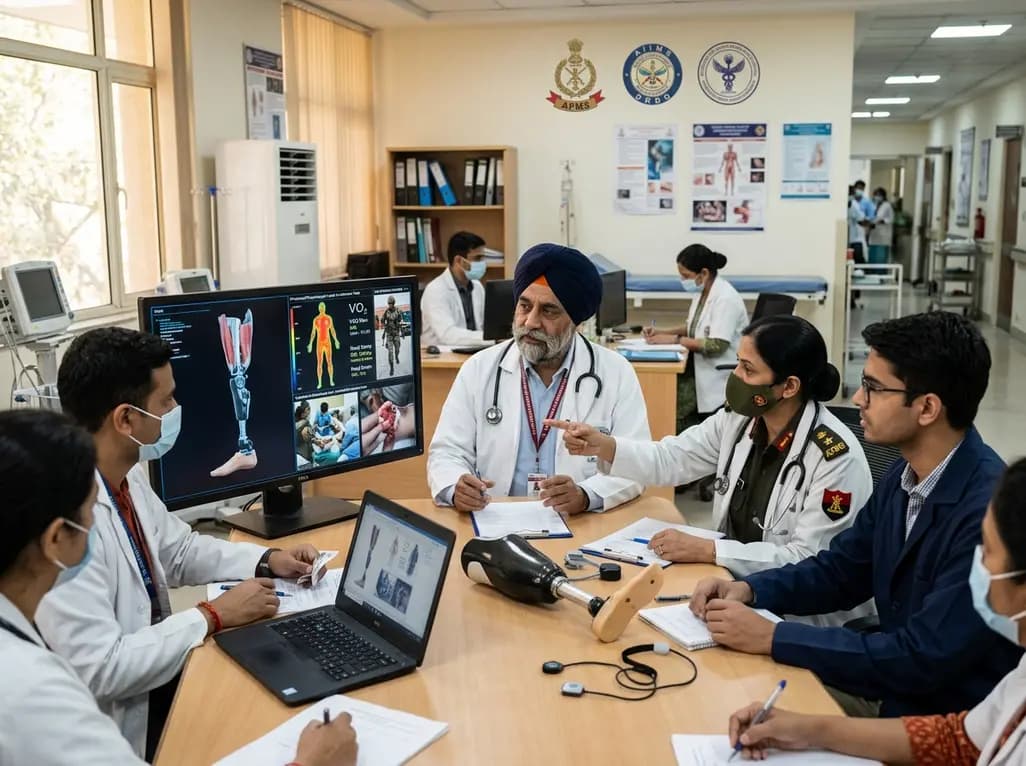
India's premier scientific bodies have joined the Armed Forces Medical Services to solve unique physiological and operational challenges faced by soldiers. The national collaboration covers combat casualty care, artificial intelligence diagnostics, bionic prosthetics, and extreme-environment physiological resilience.
Today

A cross-sectional study reveals that elevated METS-IR is independently associated with higher myopia odds in adolescents, showing biological synergy with obesity and highlighting the need for metabolic screening in pediatric eye care.
Yesterday
