.webp&w=384&q=75)

Loading, please wait...
Loading, please wait...

Accurate prediction of recurrence risk is vital for personalized treatment in soft tissue sarcoma (STS) cases. Consequently, researchers have developed a powerful soft tissue sarcoma recurrence AI framework to improve prognostic precision. This multimodal deep learning system integrates clinical data, preoperative MRI radiology signatures, and digital pathology images. Furthermore, the multicenter study validates that combining these diverse data sources yields superior results compared to using clinical features alone.
Specifically, the researchers developed the model using data from 323 patients across two major hospitals. The framework utilized the ShuffleNetV2 network to create pathology-level signatures from whole slide images. Additionally, a convolutional neural network with spatial and channel attention mechanisms analyzed the preoperative MRI scans. Therefore, the combined model achieved an impressive C-index of 0.857 in the validation set. In addition, the time-dependent area under the curve reached 0.959, demonstrating exceptional predictive accuracy.
Moreover, the study utilized class activation maps to visualize the regions influencing the AI's decisions. These maps help clinicians monitor suspected tumor areas and understand the underlying logic of the risk stratification. Because the system effectively splits patients into low- and high-risk cohorts, physicians can adjust post-operative surveillance and adjuvant therapy more effectively. This technological leap represents a significant advancement in the digital oncology landscape for musculoskeletal tumors.
In practice, implementing soft tissue sarcoma recurrence AI could streamline multidisciplinary tumor board decisions. Because the model identifies high-risk individuals early, clinicians can prioritize them for intensive follow-up. Furthermore, the integration of radiomics and pathomics addresses the inherent heterogeneity of soft tissue sarcomas. Ultimately, this framework supports the transition toward precision oncology by providing data-driven insights into patient outcomes.
The model uses a multimodal approach, combining clinical patient features, radiological features from MRI scans, and histopathological signatures from whole slide images.
In the validation cohort, the system achieved a C-index of 0.857 and a time-dependent AUC of 0.959, indicating very high predictive reliability.
Class activation maps highlight the specific regions in the medical images that the AI identifies as high-risk, allowing doctors to visually verify suspicious areas.
Disclaimer: This content is for informational and educational purposes only. It does not constitute medical advice or a professional diagnosis. Always seek the advice of your physician or other qualified health provider with any questions you may have regarding a medical condition. Refer to the latest local and national guidelines for clinical practice.
References
Wang T et al. Multimodal deep learning framework for recurrence risk stratification in soft tissue sarcoma: a multicenter study. NPJ Precis Oncol. 2026 May 11. doi: 10.1038/s41698-026-01472-4. PMID: 42115754.
Wang R et al. Predicting the Postoperative Recurrence Risk in Soft-Tissue Sarcomas of the Extremities and Trunk Using MRI-Based Nomogram. Acad Radiol. 2026 Mar 12. doi: 10.1016/j.acra.2026.02.015.

Read summarized clinical updates, watch expert medical content, and earn CME certifications right from your smartphone.
Open your smartphone camera to scan and install.





A multicenter study introduces a multimodal AI model integrating MRI and pathology data to accurately predict recurrence in soft tissue sarcoma patients....
5 months ago

Failing to account for competing events like mortality in longitudinal geriatric studies produces biased risk estimates and misleading inferences. This review highlights key methodological principles, insights from the Precipitating Events Project, and practical approaches for clinical research appraisal.
Today

A study in JAMIA Open shows lightweight open-source reasoning LLMs achieve up to 95% sensitivity and accelerate evidence synthesis screening by nearly twentyfold, presenting a cost-effective, scalable AI solution for biomedical research and systematic reviews.
Today
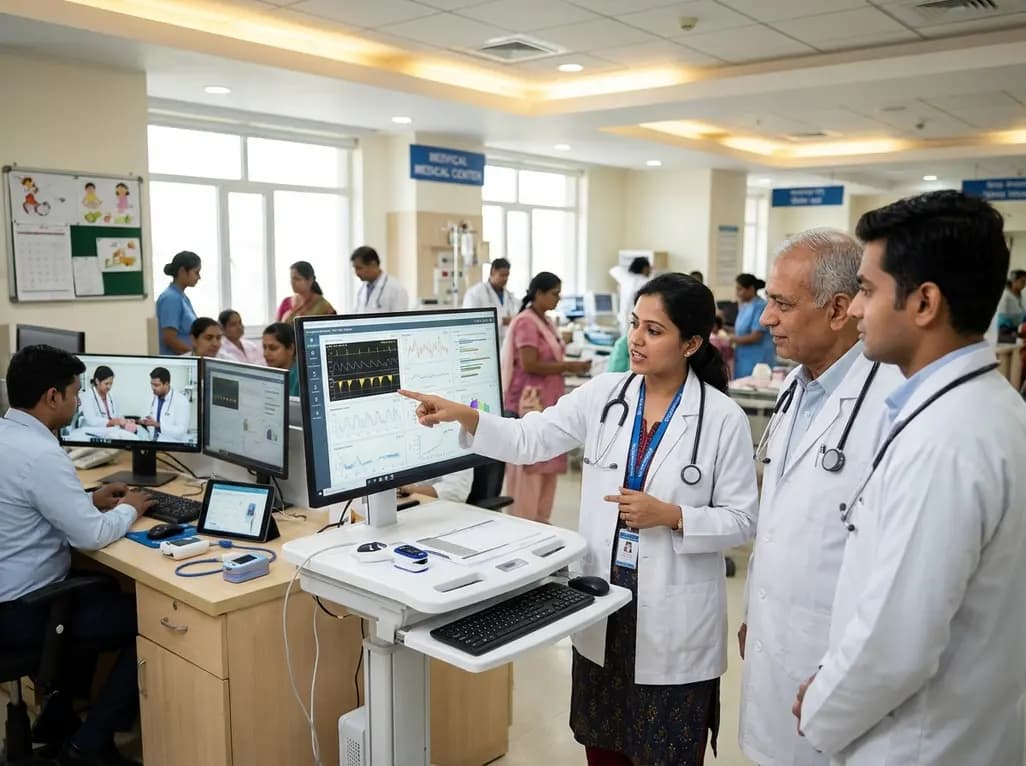
A landmark study details how an enterprise pediatric remote patient management model expanded from a single cardiology pilot to 16 diverse specialty programs by combining centralized digital operations with specialty clinical leadership.
Today

A comparative review of tension band wiring and intramedullary screw fixation in thumb metacarpophalangeal arthrodesis, evaluating union rates, hardware complications, and clinical outcomes.
Yesterday
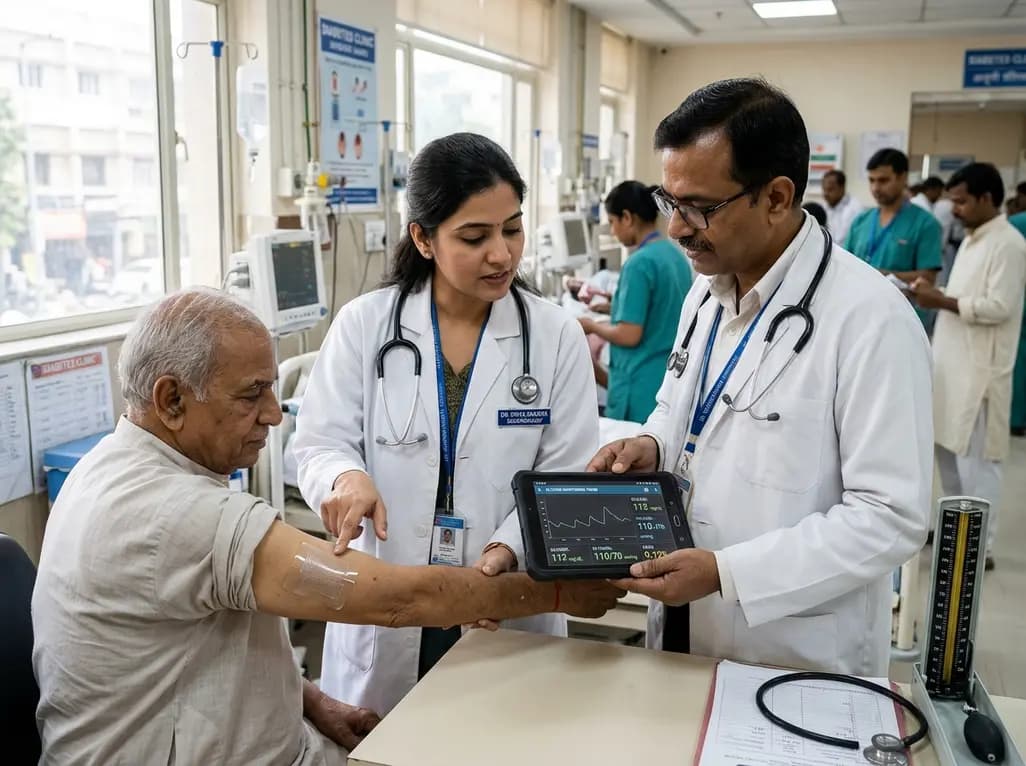
A breakthrough ultrathin multimodal sensor decouples physical hemodynamic monitoring from disposable electrochemical calibration, achieving long-term wearable glucose prediction with 81.36% accuracy and a 9.12% MARD. This offers a robust, drift-free solution for outpatient metabolic surveillance.
Today
