

Loading, please wait...
Loading, please wait...

Soaps are foundational to health and personal care globally. Moreover, their chemistry involves complex salts of fatty acids. These salts create a multiscale landscape of self-assembly. Consequently, this review integrates phase behavior with rheological analysis. This integration shows how distinct microstructures possess unique signatures. Understanding soap rheology and hygiene products is essential for dermatologists because these properties dictate clinical outcomes.
Phase transitions occur from micellar to liquid-crystalline states. Furthermore, these phases often coexist in products like soap bars. This coexistence introduces significant structural complexity. Analysts use linear viscoelastic measures to resolve relaxation hierarchies within these materials. Additionally, yield stress and thixotropic responses are inherent to the brick-and-mortar microstructures. Therefore, constitutive models must incorporate elasticity and plasticity. These models help manufacturers predict how a product will perform during extrusion or stamping.
The physical structure of soap directly impacts cleaning efficacy. For instance, the microstructure influences foam richness and lather dynamics. Similarly, the rinse feel depends on how the soap behaves during dilution in use. Because skin health is a priority, clinicians should understand these physical attributes. Sustainable products also face new challenges in maintaining these sensorial profiles. Finally, the researchers discuss open questions and future directions for developing more sustainable products.
Rheology determines the lather dynamics and rinse feel. It controls how the product spreads and interacts with the skin barrier during use.
Phase behavior creates the "brick-and-mortar" structure. This stable structure ensures the soap remains effective and durable during manufacturing and daily use.
Disclaimer: This content is for informational and educational purposes only. It does not constitute medical advice, diagnosis, or treatment. Always seek the advice of a qualified healthcare provider with any questions regarding a medical condition. Refer to the latest local and national guidelines for clinical practice.
References
Joshi YM et al. Beyond Clean: Unraveling Phase Behavior and Rheology of Soaps. Annu Rev Chem Biomol Eng. 2026 Apr 08. doi: 10.1146/annurev-chembioeng-082223-055237. PMID: 41950531.
Ananthapadmanabhan KP, Moore DJ, Subramanyan K, Misra M. A novel technology in mild and moisturizing cleansing liquids. J Cosmet Dermatol. 2009;8(3):201-11.
Seweryn A. Interactions between surfactants and the skin - Theory and practice. Adv Colloid Interface Sci. 2018;256:242-255.

Read summarized clinical updates, watch expert medical content, and earn CME certifications right from your smartphone.
Open your smartphone camera to scan and install.





A comprehensive review on soap rheology and phase behavior, exploring how microstructure impacts sensorial attributes, cleaning efficacy, and sustainability...
6 months ago

A prospective multicenter trial demonstrates that a 15-day factory-calibrated continuous glucose monitoring system provides high analytical accuracy (MARD ~7.7%) and safety in pregnant women with gestational diabetes mellitus.
Today

Recent research reveals distinct protein secretion profiles and morphometric shifts between euploid and aneuploid human blastocysts cultured in an advanced 3D endometrial platform, opening new avenues for non-invasive embryo assessment.
Today

A landmark study details how an enterprise pediatric remote patient management model expanded from a single cardiology pilot to 16 diverse specialty programs by combining centralized digital operations with specialty clinical leadership.
Yesterday
Peripheral nerve injuries present clinical challenges due to regenerative mismatches between sensory and motor neurons. This review explores cutting-edge tissue-engineered nerve grafts designed as central-peripheral signal relays to overcome denervation atrophy and restore functional motor-sensory recovery.
Today
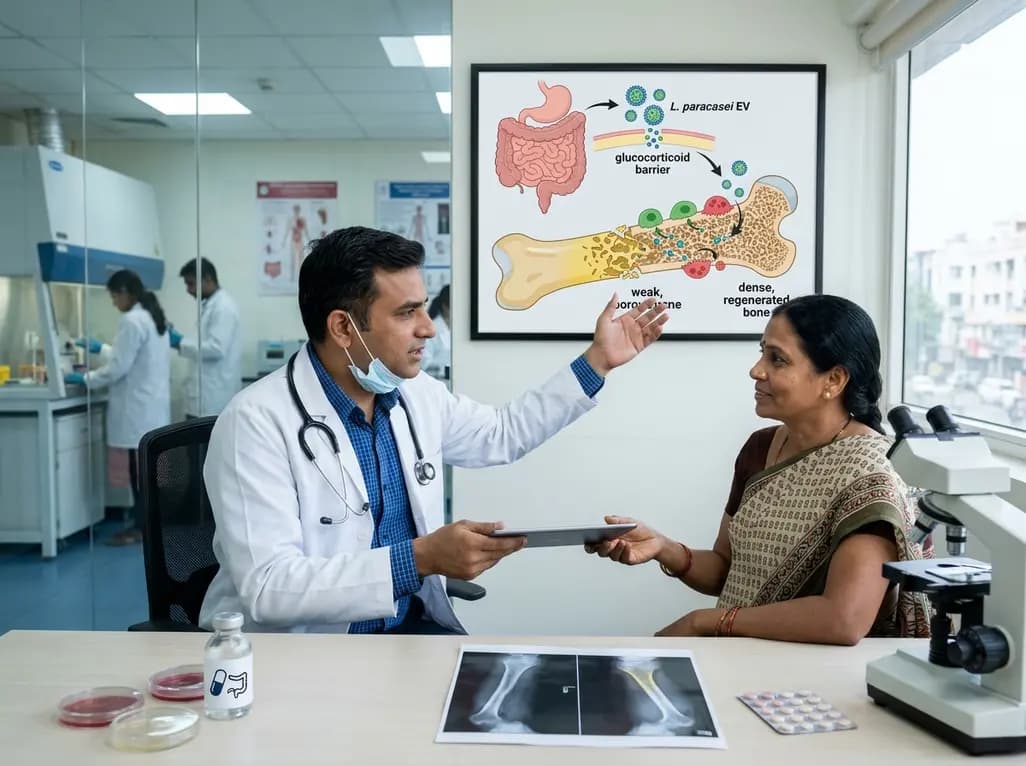
A novel oral nanoplatform using Lacticaseibacillus paracasei-derived extracellular vesicles delivers alendronate, reversing glucocorticoid-induced bone loss and restoring gut-immune-bone homeostasis.
Today
