.webp&w=384&q=75)

Loading, please wait...
Loading, please wait...

Researchers have recently achieved a major milestone in reflective display technology by creating a monolayer RGB cholesteric liquid crystal (CLC) system. Historically, manufacturing these high-precision panels required complex three-layer structures. This traditional process was often slow and technically challenging. However, the new approach integrates photolithography with a chiral molecular precision diffusion strategy. This combination allows for the fabrication of isolated pixels within a single layer. Consequently, the production time is shorter and the architectural design is significantly more efficient.
The study introduces a sophisticated multimode anticounterfeiting model that is highly relevant to the Indian pharmaceutical sector. Counterfeit medications remain a critical concern for public health and regulatory compliance. By leveraging the Bragg selective reflection characteristics of CLC, manufacturers can now embed encrypted matrix patterns directly onto packaging. These patterns display different colors and brightness levels under specific light sources. Therefore, this technology provides an effective method for verifying the authenticity of life-saving drugs and medical devices.
Reflective displays provide a safer alternative to conventional screens that rely on intense backlighting. Because these CLC panels use ambient light, they emit significantly less high-energy blue light. This feature is crucial for preventing digital eye strain and computer vision syndrome. Ophthalmologists frequently recommend reducing screen glare and blue light exposure to maintain long-term visual health. This new monolayer technology adapts naturally to surrounding illumination. As a result, it offers a more comfortable and sustainable viewing experience for patients and healthcare providers.
The CLC system creates unique visual patterns using Bragg reflection that are nearly impossible to duplicate. These encrypted labels allow for rapid verification of genuine products using a simple matrix encoding table.
Unlike standard LCD or OLED screens, this system is reflective and does not require a backlight. It significantly reduces blue light exposure and matches ambient lighting levels, which lessens the burden on the eyes.
Yes, the monolayer-encapsulated design is much thinner than traditional structures. This makes it ideal for integration into smart medical labels, wearable health monitors, and flexible diagnostic tools.
Disclaimer: This content is for informational and educational purposes only. It does not constitute medical advice or endorsement of any specific product. Refer to the latest local and national guidelines for clinical practice.
References
Zhang X et al. Advanced Photolithography-Based Single-Layer RGB Cholesteric Liquid Crystal Display for Next-Generation Anticounterfeiting and Full-Color Reflective Display. ACS Appl Mater Interfaces. 2026 May 11. doi: 10.1021/acsami.6c02304. PMID: 42109207.
Iris Optronics. How ChLCD Works: Full-color applications of cholesteric liquid crystals. 2024.
American Academy of Ophthalmology. Digital Devices and Your Eyes: Reducing Glare and Blue Light. 2025.

Read summarized clinical updates, watch expert medical content, and earn CME certifications right from your smartphone.
Open your smartphone camera to scan and install.





New single-layer RGB CLC display technology offers breakthroughs in pharmaceutical anticounterfeiting and eye-safe reflective screens for medical use....
5 months ago
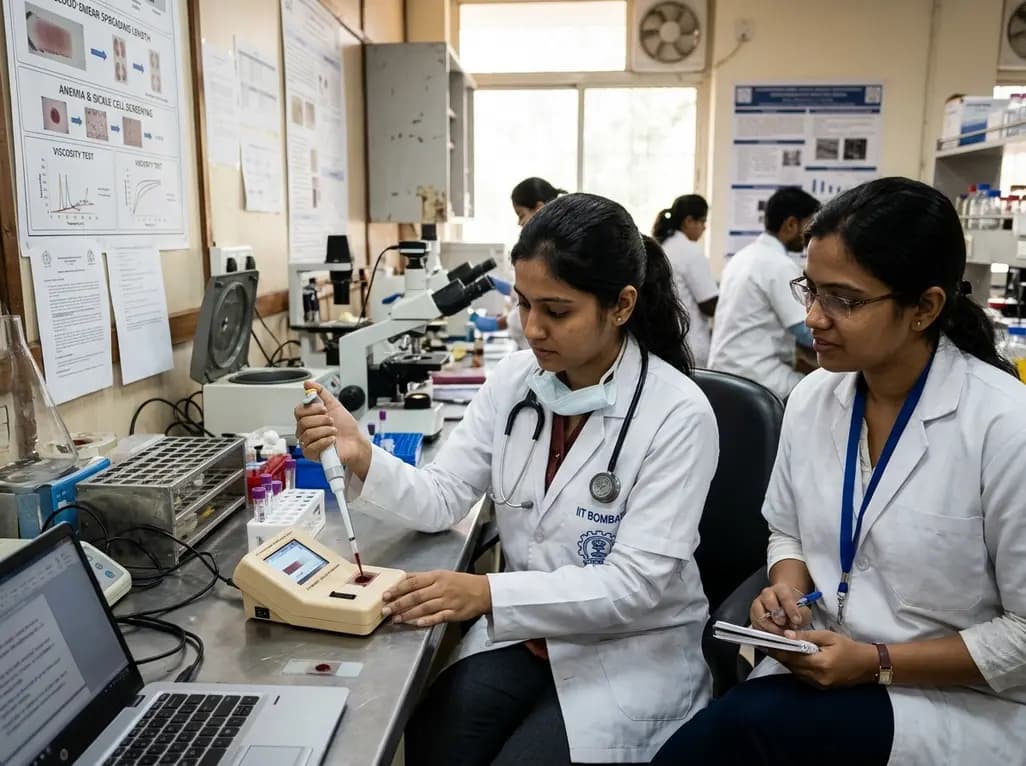
Researchers at IIT Bombay have engineered an automated, cost-effective point-of-care device that diagnoses anaemia and sickle cell disease from a single drop of blood. By measuring blood smear spreading length, this portable tool assesses blood viscosity to offer rapid screening in resource-limited healthcare centers.
Today

A multicenter study evaluates whether standardized simulation training reduces cup detachment during vacuum-assisted vaginal birth. Evidence-based simulation equips obstetricians to improve cup placement, reduce maternal-fetal trauma, and optimize clinical decision-making during operative deliveries.
Today
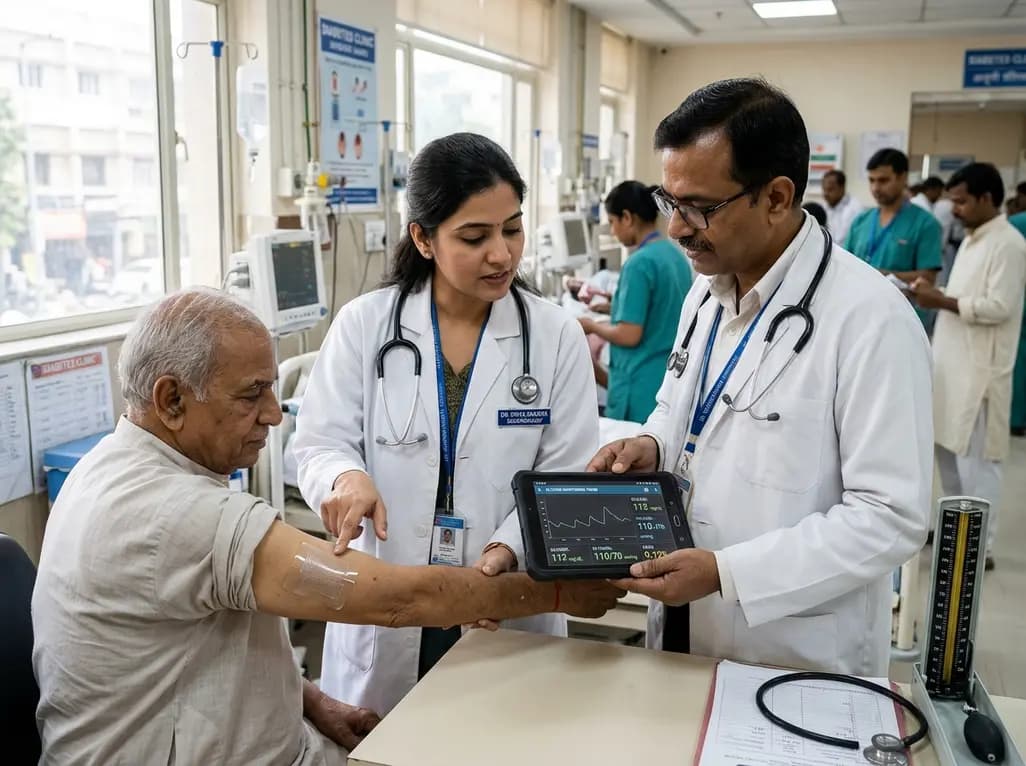
A breakthrough ultrathin multimodal sensor decouples physical hemodynamic monitoring from disposable electrochemical calibration, achieving long-term wearable glucose prediction with 81.36% accuracy and a 9.12% MARD. This offers a robust, drift-free solution for outpatient metabolic surveillance.
Today

A comparative review of tension band wiring and intramedullary screw fixation in thumb metacarpophalangeal arthrodesis, evaluating union rates, hardware complications, and clinical outcomes.
Today

Following regulatory scrutiny from FSSAI regarding promotional representations and lean muscle preservation claims, Dr. Reddy's Laboratories and Nestlé Health Science are currently reviewing the branding and marketing strategy for their joint nutritional supplement Celevida GLP+.
Today
