

Loading, please wait...
Loading, please wait...
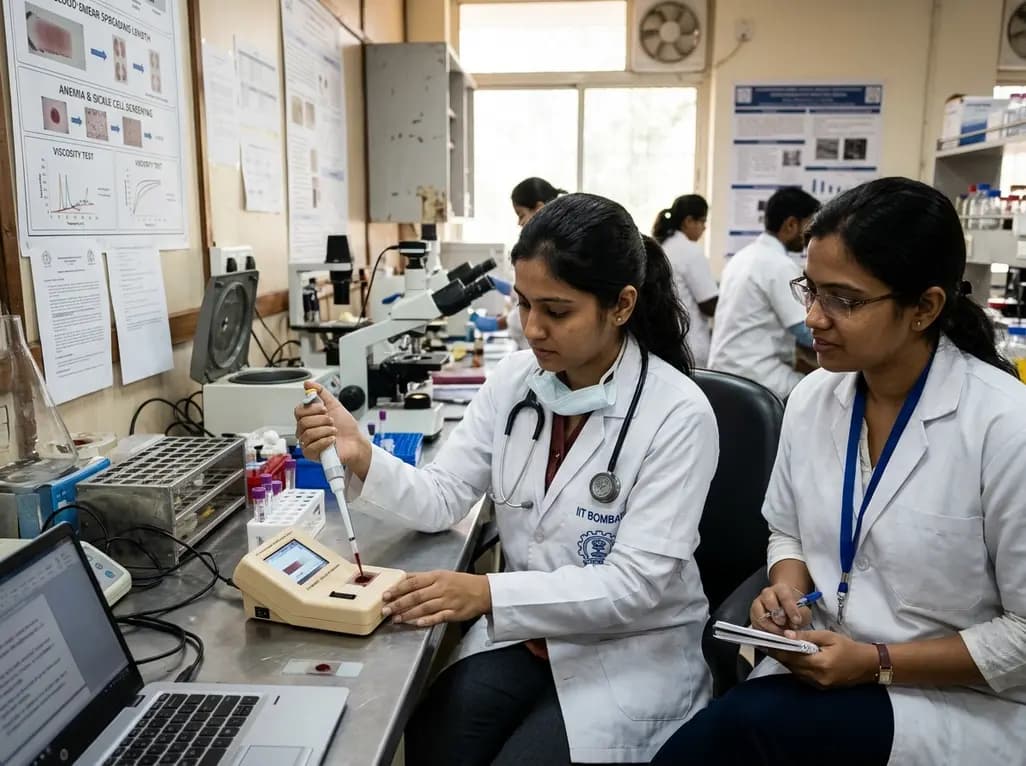
Point-of-care diagnostics offer immense potential for primary healthcare centers across India. Recently, researchers at IIT Bombay introduced a breakthrough tool for sickle cell disease screening and anaemia detection. The technology evaluates dynamic blood viscosity using a single drop of capillary blood. By standardizing blood smear preparation, this automated tool translates smear spreading distances into reliable diagnostic indices. Consequently, rural healthcare workers can identify hematological disorders rapidly without requiring sophisticated laboratory infrastructure.
Standard manual blood smears frequently exhibit high technical variation across different operators. Consequently, film length and thickness fluctuate depending on manual slide angle and push velocity. To eliminate this variation, the IIT Bombay team designed an automated mechanical smearing device. The automated system spreads a single blood drop across a glass slide at a strictly regulated velocity. Under these controlled fluid dynamics, the resulting blood smear length directly reflects bulk fluid viscosity. Professor Mahesh Tirumkudulu and his research team observed that blood rheology dictates droplet movement across smooth glass. More viscous blood resists rapid deformation and therefore generates a shorter, thicker smear. Conversely, blood with low viscosity spreads freely over a significantly greater distance. The underlying physics balances viscous shear resistance against capillary surface tension forces. Therefore, measuring smear length offers an objective surrogate measurement for dynamic hemorheology. This elegant insight converts a routine laboratory artifact into an accurate diagnostic assessment. Furthermore, the automated device removes operator inconsistency entirely. As a result, healthcare workers produce uniform, highly reproducible blood smears in any clinical environment. Consequently, standardized slide preparation establishes a solid foundation for reliable bedside diagnostics.
Sickle cell hemoglobin undergoes pathological polymerisation when local microvascular oxygen levels decline. Consequently, normal flexible red blood cells deform into rigid, crescent-shaped structures. This physical deformation markedly increases whole-blood viscosity and severely impedes microcirculatory flow. The IIT Bombay platform leverages this precise physiological behavior for sickle cell disease screening. During testing, technicians treat a minute blood sample with an inexpensive reducing agent like sodium metabisulfite. Under deoxygenated conditions, erythrocytes containing sickle hemoglobin stiffen rapidly into rigid networks. As a result, the treated blood sample displays a dramatic surge in dynamic fluid viscosity. When the automated mechanism smears this deoxygenated specimen, it produces a markedly shorter smear than oxygenated blood. In contrast, normal red blood cells maintain flexibility and demonstrate minimal length discrepancies. Therefore, clinicians can rapidly distinguish homozygous sickle cell disease from benign sickle cell traits. Moreover, the magnitude of smear reduction correlates with the concentration of abnormal hemoglobin. In addition, hydroxyurea therapy diminishes cellular rigidity over time. Consequently, repeated smear evaluations allow clinicians to track therapeutic efficacy and patient compliance objectively. Thus, frontline providers can modify drug dosages without waiting for distant specialist consultations.
Anaemia remains a pervasive public health challenge across rural India, particularly among expectant mothers and young children. Pathologically, anaemia reduces total erythrocyte mass, hematocrit, and circulating hemoglobin concentration. Because red cells form the primary physical component of blood resistance, lower hematocrit significantly reduces bulk viscosity. The IIT Bombay smearing platform exploits this physiological relationship to identify patients suffering from severe anaemia. When placed on glass slides, blood with reduced viscosity spreads extensively under standardized mechanical force. Thus, specimens yielding abnormally long blood smears immediately alert clinicians to severe hemoglobin deficits. In clinical trials involving over five hundred individuals, this viscosity method identified over ninety-five percent of severe anaemia cases. In addition, the researchers developed a complementary colorimetric technique analyzing dried smear optical density. This combined evaluation provides quantitative hemoglobin estimates alongside rheological data. Therefore, primary care providers obtain reliable diagnostic assessments without sending samples to distant reference laboratories. Furthermore, community health workers can repeat this inexpensive test during routine maternal checkups. As a result, dispensaries can initiate oral or injectable iron therapy before life-threatening complications emerge. Prompt interventions significantly enhance maternal and fetal survival rates across vulnerable populations.
Although this mechanical device offers significant diagnostic promise, clinicians must understand its clinical limitations and potential confounding factors. First, baseline blood viscosity cutoffs vary naturally across different demographic groups. Genetic variations, ambient humidity, and patient hydration status alter blood spreading properties. Furthermore, specific clinical conditions uncouple the standard relationship between low hemoglobin and low blood viscosity. For example, hyperviscosity syndromes associated with multiple myeloma or severe hyperfibrinogenemia elevate plasma protein concentration markedly. In these cases, abnormally dense plasma creates high whole-blood viscosity despite profound anaemia. Consequently, the blood smear spreads poorly and appears falsely short, masking the underlying hemoglobin deficiency. Similarly, acute dehydration elevates hematocrit transiently and reduces smear length. Clinicians must therefore interpret test results alongside thorough physical examinations and patient histories. Moreover, while deoxygenation testing identifies sickle cell hemoglobin, it cannot detect conditions like alpha-thalassemia or enzyme deficiencies. Healthcare providers should view this technology as a decentralized screening tool rather than a comprehensive replacement for hemoglobin electrophoresis. Accordingly, suspicious or discordant results require prompt referral for confirmatory laboratory testing. Establishing robust referral networks ensures comprehensive clinical care and protects vulnerable individuals from misdiagnosis.
Sickle cell disorders disproportionately impact tribal populations across central and western Indian states. Unfortunately, geographical isolation and sparse diagnostic infrastructure frequently delay timely disease confirmation. Conventional diagnostic modalities like high-performance liquid chromatography require expensive capital equipment, stable electricity, and highly trained technicians. In contrast, the IIT Bombay system requires only glass slides, a pipette, inexpensive reagents, and a basic ruler. To accelerate field deployment, IIT Bombay licensed the patented technology to Rheoheme Private Limited. Currently, researchers collaborate with the National Institute for Research in Tribal Health in Jabalpur and AIIMS Nagpur. These partnerships aim to achieve necessary regulatory approvals for nationwide deployment. Integrating this rugged tool into primary health centres advances India's National Sickle Cell Anaemia Elimination Mission. Furthermore, the automated design eliminates human bias, enabling community health workers to conduct mass screenings reliably. Frontline health teams can evaluate entire remote villages within hours, referring affected individuals for prompt clinical management. In addition, early identification prevents debilitating vaso-occlusive crises and reduces premature mortality. Ultimately, this cost-effective innovation empowers underserved communities through decentralized, accessible diagnostic technology. Therefore, expanding diagnostic equity directly improves long-term health outcomes for rural populations.
The physics of thin fluid films offers extensive possibilities beyond routine hemoglobin screening. Professor Tirumkudulu and his multidisciplinary engineering team are currently extending the platform to evaluate additional vital parameters. Specifically, the researchers are investigating how automated smear dynamics can assess blood coagulation cascades. By monitoring changes in spreading velocity during clot formation, the device could measure whole-blood clotting times at the bedside. Such capabilities would prove invaluable for managing trauma patients, emergency surgeries, and anticoagulant monitoring in rural hospitals. In addition, the team is exploring optical sensor integration to measure blood glucose levels from dried blood specimens. Unifying metabolic and hematological assessments into a single affordable platform would dramatically transform rural outpatient care. Furthermore, pairing the system with smartphone imaging applications could eliminate manual slide measurements entirely. Automated algorithmic analysis would generate immediate clinical reports and transmit data directly to regional specialists via telemedicine networks. Moreover, miniaturizing these fluidic mechanisms lowers manufacturing expenses and ensures sustainable production. Thus, decentralized hemorheology tools will significantly strengthen primary care delivery across resource-limited clinical environments. Consequently, point-of-care hemorheology demonstrates that simple physical principles can overcome persistent diagnostic barriers in global healthcare.
Q1: How does smear length differentiate sickle cell disease from sickle cell trait?
The platform differentiates sickle cell disease from sickle cell trait by comparing blood smear lengths before and after chemical deoxygenation. Normal blood maintains consistent viscosity regardless of oxygen tension. In sickle cell trait, mild cell sickling occurs, generating a moderate reduction in smear length. Conversely, blood from patients with homozygous sickle cell disease contains high sickle hemoglobin concentrations, causing severe erythrocyte rigidity, dramatic viscosity spikes, and significantly shortened smears.
Q2: Why can hyperviscosity syndrome cause false-negative results in anaemia screening?
The device detects anaemia because reduced red cell mass normally lowers dynamic blood viscosity, producing longer smears. However, hyperviscosity syndrome elevates blood viscosity independently of hematocrit due to abundant circulating paraproteins or elevated fibrinogen levels. When an anaemic patient suffers from high plasma protein concentrations, the blood remains abnormally viscous. Consequently, the blood drop forms a short smear despite severe hemoglobin deficiency, potentially preventing timely recognition of the underlying anaemia.
Q3: What equipment and training are required to operate this automated screening device?
Operating this point-of-care screening device requires minimal technical training and very basic laboratory supplies. Frontline healthcare workers only need standard glass microscope slides, a precision pipette, chemical deoxygenating reagents, and a simple measuring ruler or smartphone camera. Because the automated spreader regulates blade speed and angle mechanically, operators do not require specialized laboratory skills. Thus, community health workers can reliably conduct screenings in rural clinics and remote tribal outreach camps.
Disclaimer: This content is for informational and educational purposes only. It does not constitute medical advice or replace professional judgment. Refer to the latest local and national guidelines for clinical practice.
References

Read summarized clinical updates, watch expert medical content, and earn CME certifications right from your smartphone.
Open your smartphone camera to scan and install.





Researchers at IIT Bombay have engineered an automated, cost-effective point-of-care device that diagnoses anaemia and sickle cell disease from a single drop of blood. By measuring blood smear spreading length, this portable tool assesses blood viscosity to offer rapid screening in resource-limited healthcare centers.
Today
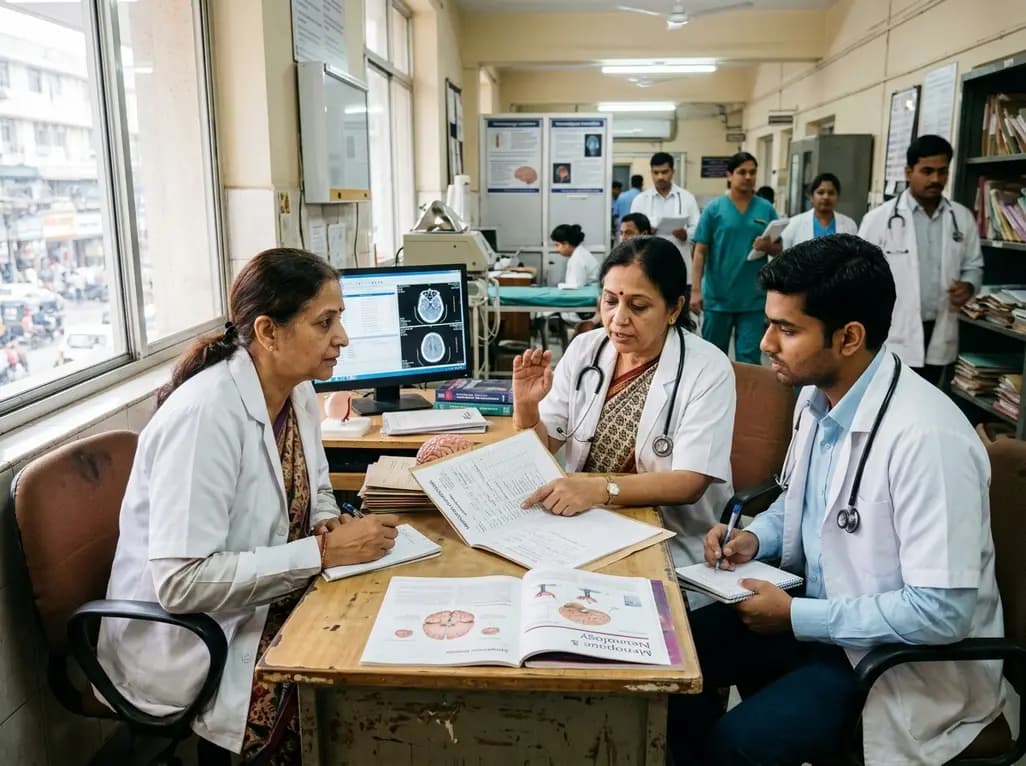
A clinical review of menopause and neurology highlights the neurobiological impacts of midlife hormonal shifts on cognition, epilepsy, migraine, multiple sclerosis, and stroke, emphasizing safe hormone therapy prescribing.
Today

A breakthrough ultrathin multimodal sensor decouples physical hemodynamic monitoring from disposable electrochemical calibration, achieving long-term wearable glucose prediction with 81.36% accuracy and a 9.12% MARD. This offers a robust, drift-free solution for outpatient metabolic surveillance.
Today

A comparative review of tension band wiring and intramedullary screw fixation in thumb metacarpophalangeal arthrodesis, evaluating union rates, hardware complications, and clinical outcomes.
Today
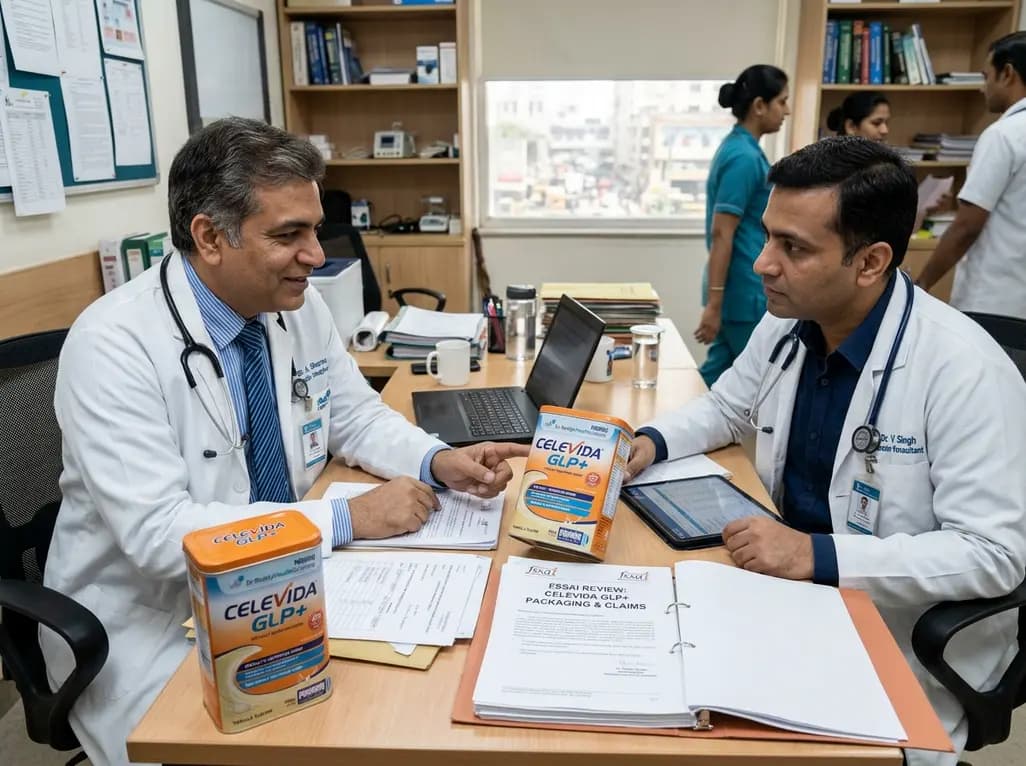
Following regulatory scrutiny from FSSAI regarding promotional representations and lean muscle preservation claims, Dr. Reddy's Laboratories and Nestlé Health Science are currently reviewing the branding and marketing strategy for their joint nutritional supplement Celevida GLP+.
Today
