.webp&w=384&q=75)

Loading, please wait...
Loading, please wait...

Emerging research suggests that SERS machine learning diagnostics are fundamentally changing the landscape of non-invasive medical testing. The surface-enhanced Raman spectroscopy (SERS)-based electronic tongue (E-tongue) mimics human taste to analyze complex liquid samples. Consequently, this technology allows for the rapid identification of biomarkers in blood, saliva, or urine without labels. However, the primary challenge involves extracting meaningful data from highly complex, multi-component spectral mixtures.
The core of this technology lies in its ability to amplify signals using nanostructured arrays. Machine learning (ML) then processes these amplified signals to perform qualitative and quantitative modeling. Specifically, researchers must select appropriate preprocessing methods to remove background noise. Furthermore, feature engineering helps identify the most relevant spectral peaks for disease detection. Therefore, selecting the correct algorithm based on data characteristics is essential for clinical accuracy.
Recent studies demonstrate that this integrated approach accurately identifies conditions such as diabetes and acute leukemia. For instance, ML models like Random Forest and Support Vector Machines (SVM) can distinguish subtle spectral differences between healthy and diseased samples. Notably, these systems offer a cost-effective alternative to traditional diagnostic imaging or invasive biopsies. Ultimately, the transition toward portable, AI-powered SERS devices could significantly improve point-of-care diagnostics in resource-limited settings.
It is a sensing technology that uses an array of SERS substrates to detect various chemical components in liquids. It functions like a digital version of the human tongue for chemical analysis.
Machine learning algorithms can recognize patterns in complex spectral data that are invisible to the human eye. This allows for high-precision classification and quantification of disease biomarkers.
While currently a focus of intense laboratory research, the low cost of silver and gold nanoparticles makes this a promising candidate for future affordable diagnostics in India.
Disclaimer: This content is for informational and educational purposes only. It is not intended as medical advice or a substitute for professional healthcare. Refer to the latest local and national guidelines for clinical practice.
References
Yin P et al. SERS-Based E-Tongue Data Analysis Methods: From Spectrum Preparation to Qualitative and Quantitative Modeling. ACS Sens. 2026 Mar 03. doi: 10.1021/acssensors.5c04835. PMID: 41774458.
Al-Hadi M et al. Clinical diagnosis of diabetes using machine learning and surface-enhanced Raman spectroscopy liquid biopsy: an exploratory study. Nanoscale Adv. 2024.
Wang L et al. SERS and Machine Learning-Enabled Liquid Biopsy: A Promising Tool for Early Detection and Recurrence Prediction in Acute Leukemia. ACS Sens. 2025.

Read summarized clinical updates, watch expert medical content, and earn CME certifications right from your smartphone.
Open your smartphone camera to scan and install.





A review of SERS-based electronic tongue data analysis, highlighting how machine learning facilitates non-invasive diagnostics for various complex diseases....
7 months ago
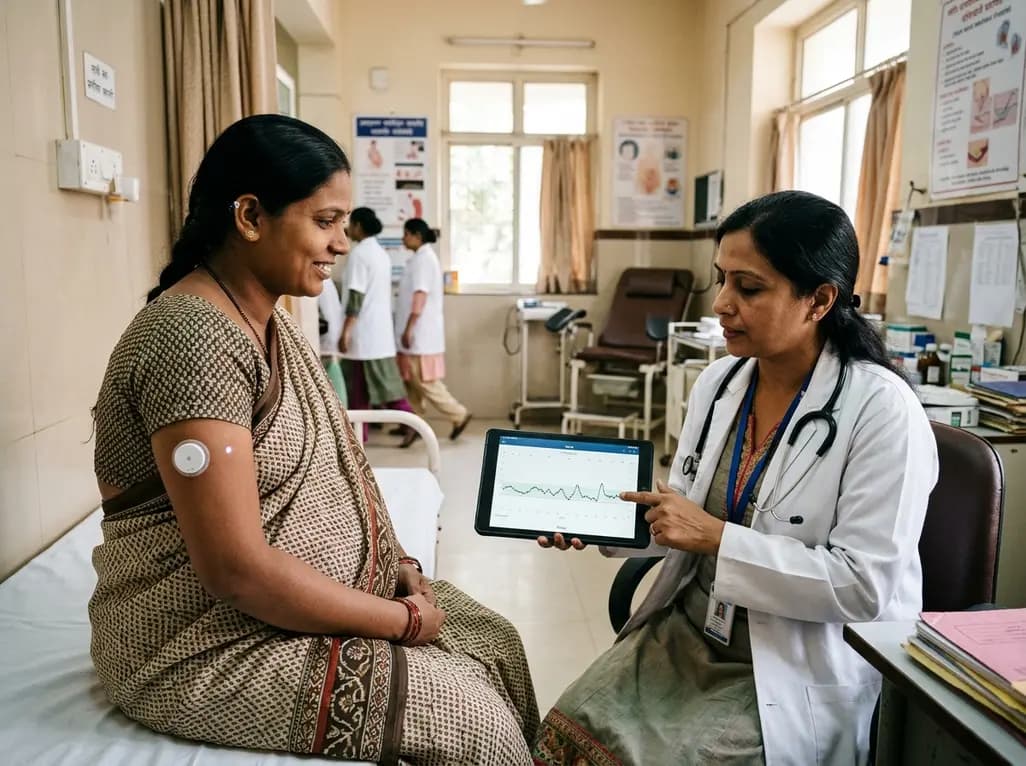
A prospective multicenter trial demonstrates that a 15-day factory-calibrated continuous glucose monitoring system provides high analytical accuracy (MARD ~7.7%) and safety in pregnant women with gestational diabetes mellitus.
Today

Recent research reveals distinct protein secretion profiles and morphometric shifts between euploid and aneuploid human blastocysts cultured in an advanced 3D endometrial platform, opening new avenues for non-invasive embryo assessment.
Today
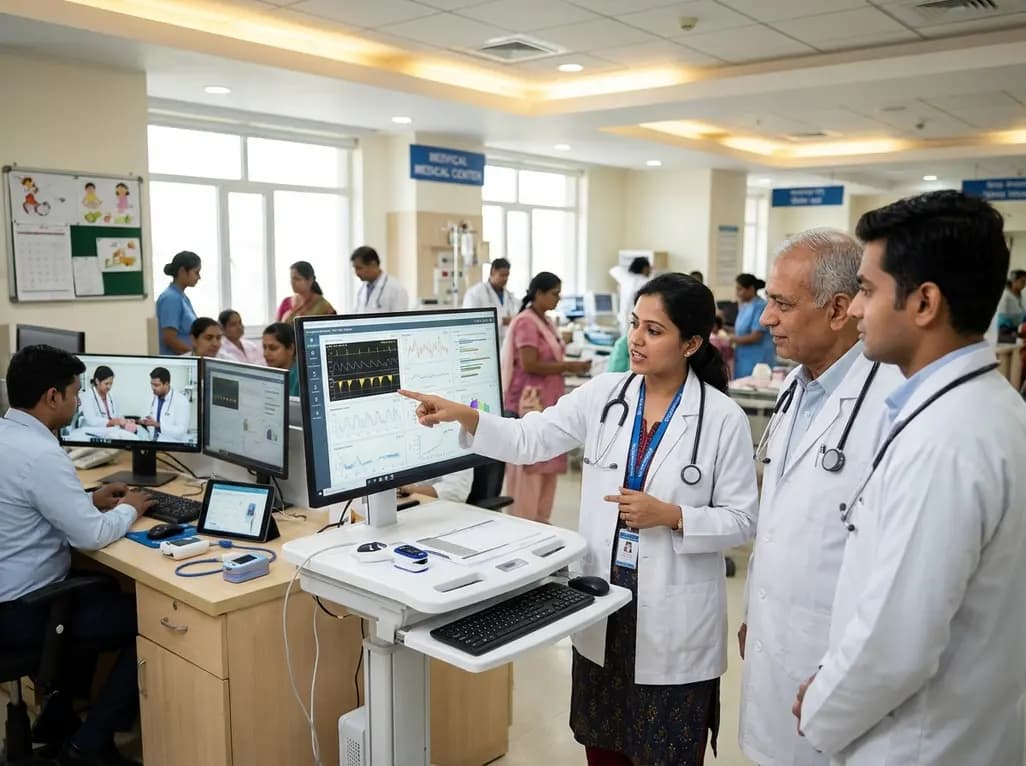
A landmark study details how an enterprise pediatric remote patient management model expanded from a single cardiology pilot to 16 diverse specialty programs by combining centralized digital operations with specialty clinical leadership.
Yesterday
Peripheral nerve injuries present clinical challenges due to regenerative mismatches between sensory and motor neurons. This review explores cutting-edge tissue-engineered nerve grafts designed as central-peripheral signal relays to overcome denervation atrophy and restore functional motor-sensory recovery.
Today
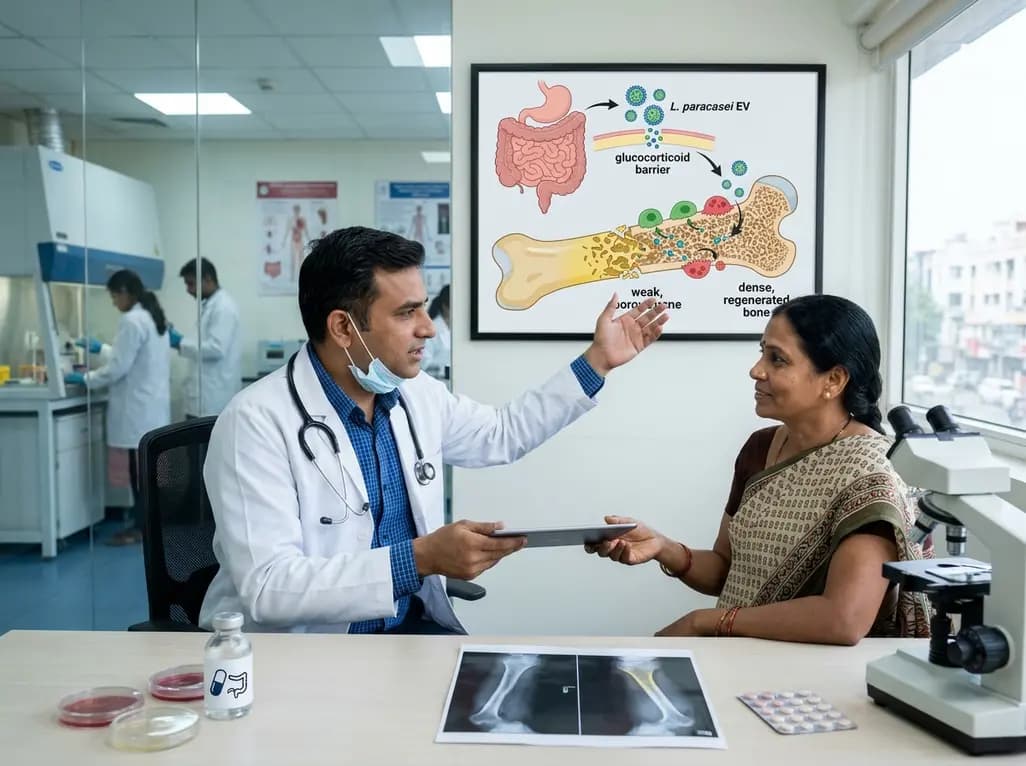
A novel oral nanoplatform using Lacticaseibacillus paracasei-derived extracellular vesicles delivers alendronate, reversing glucocorticoid-induced bone loss and restoring gut-immune-bone homeostasis.
Today
