.webp&w=384&q=75)

Loading, please wait...
Loading, please wait...

Uncontrolled hemorrhage remains a primary cause of preventable trauma mortality globally and across Indian emergency centers. Conventional topical agents often fail when surgeons encounter high-pressure arterial bleeding or irregular, deep wound cavities. Standard gauze packing requires prolonged manual pressure, which delays decisive surgical repair during damage control operations. Furthermore, traditional dry powders can wash away rapidly when arterial blood surges from ruptured vascular structures. These conventional powders lack post-hydration chemical cross-linking, producing fragile barriers that disintegrate under pulsatile blood flow. Consequently, uncontrolled traumatic hemorrhage rapidly accelerates coagulopathy and worsens patient prognosis.
To overcome these persistent limitations, researchers have engineered innovative self-gelling hemostatic powders. These novel biomaterials conform seamlessly to complex anatomical wounds while resisting hydraulic washouts. Upon contact with bleeding tissues, they absorb fluids rapidly, concentrate local coagulation factors, and form a resilient physical barrier. Therefore, trauma specialists need advanced materials that combine convenient powder application with instantaneous in situ matrix cross-linking. Such technologies hold immense clinical potential for managing massive hemorrhage, deep visceral parenchymal tears, and acute vascular trauma.
The innovative composite formulation, designated GOQL, comprises three functional polymers designed for coordinated reactivity. Specifically, the biomaterial integrates dopamine-grafted gelatin, oxidized sodium alginate, and lauric acid-grafted quaternized chitosan. Each polymer contributes a unique functional property to the overall hydrogel network. Gelatin functionalized with dopamine mimics mussel adhesive proteins, ensuring tenacious tissue adherence even in moist surgical fields. In addition, oxidized sodium alginate introduces active aldehyde groups that react readily with amino groups on biological tissues and surrounding polymers. Meanwhile, quaternized chitosan presents positive surface charges that interact electrostatically with cellular membranes, while lauric acid chains supply hydrophobic chain entanglements.
Crucially, this composite remains stable as a dry powder without requiring cold-chain refrigeration. However, when fluid contacts the porous particles, instantaneous rehydration exposes dynamic chemical moieties. The aldehydes of oxidized alginate react spontaneously with available amines on gelatin through Schiff-base chemistry. As a result, this reaction initiates rapid in situ self-gelation without needing external chemical cross-linkers or light sources. Consequently, the powder transforms into an integrated, adhesive hydrogel matrix within seconds of wound contact.
Traditional hemostats act as passive structural plugs, depending largely on slow endogenous clotting cascades to aggregate platelets and form fibrin. In contrast, the GOQL composite actively recruits circulating vascular cells through coordinated surface interactions. Because quaternized chitosan carries dense positive charges, it binds negatively charged red blood cell membranes instantaneously. Furthermore, hydrophobic segments from grafted lauric acid insert into erythrocyte lipid bilayers, securing them within the maturing polymer network. Consequently, the material captures erythrocytes and circulating platelets with exceptional speed directly at the wound site.
Simultaneously, dopamine catechols generate durable hydrogen bonds and covalent links with exposed tissue proteins. This cellular entrapment promotes immediate platelet activation, prompting dense granule discharge and accelerated thrombin generation. Therefore, the forming polymer network does not merely entrap blood cells; rather, it coassembles synergistically with native cellular components into a cohesive bio-composite. As a result, the developing barrier incorporates functional polymers, cellular membranes, and fibrin into a sturdy seal. This reinforced structure withstands significant hemodynamic shearing forces that would dislodge conventional topical powders.
Rigorous animal models demonstrate the superior operational efficacy of this self-gelling technology under extreme hemorrhagic stress. Initially, researchers tested the composite in rat tail amputation and parenchymal liver incision protocols. In both models, the powder achieved prompt hemostasis, outperforming standard surgical control agents and significantly curtailing cumulative blood loss. The porous particles absorbed bleeding fluids swiftly, generating a robust protective hydrogel over broad parenchymal lacerations. Importantly, the newly formed seal maintained stable adherence despite continuous visceral organ movements and respiratory excursions.
Even more impressively, investigators evaluated the formulation in demanding arterial injury models, including femoral artery puncture and complete transection. Under high arterial blood pressure, conventional topical powders wash away rapidly, triggering catastrophic exsanguination. However, the GOQL powder cross-linked within thirty seconds of vascular contact, creating an impervious hydrogel barrier. The resulting seal resisted pulsatile arterial pressure without dislodgement or pseudoaneurysm formation. Thus, the composite confirmed its structural resilience, providing reliable vascular sealing in scenarios where conventional hemostats fail.
Biocompatibility and reliable biodegradation remain indispensable features for any internal surgical material. Standard cytotoxicity evaluations demonstrated that the GOQL powder exhibits excellent cytocompatibility toward endothelial cells and fibroblasts. Furthermore, longitudinal histology revealed minimal acute inflammation without tissue necrosis or foreign body granulomas. Over several weeks, native physiological enzymes progressively degrade the polysaccharide and gelatin components, permitting normal tissue regeneration. Consequently, operating surgeons do not need to perform vigorous post-hemostatic lavage that could disrupt freshly sealed vascular sites.
For surgical teams in India, this dry powder presentation provides vital practical advantages in pre-hospital and combat casualty settings. Its ambient shelf stability eliminates strict cold-chain dependencies during transport across tropical environments. Moreover, clinicians can apply the free-flowing material quickly into irregular puncture wounds, junctional injuries, or deep blast tracts. Because trauma guidelines highlight rapid bleeding control as paramount for preventing mortality, adopting active self-gelling biomaterials represents a major advancement in emergency surgical care.
Traditional powders rely on passive fluid absorption, leaving fragile deposits easily washed away by pulsatile arterial flow. In contrast, self-gelling powders utilize rapid chemical cross-linking via Schiff-base reactions alongside catechol-mediated wet tissue adhesion. When applied to arterial injuries, the powder absorbs plasma immediately, cross-links within thirty seconds, and actively coassembles with captured red blood cells. Consequently, this reaction creates a cohesive hydrogel barrier that adheres firmly to vascular walls and withstands high hemodynamic pressure.
The GOQL composite powder incorporates three functionalized biopolymers: dopamine-grafted gelatin, oxidized sodium alginate, and lauric acid-grafted quaternized chitosan. Dopamine-modified gelatin mimics mussel foot proteins to establish robust wet tissue adhesion. Meanwhile, oxidized sodium alginate supplies abundant aldehyde groups for rapid Schiff-base cross-linking. Furthermore, quaternized chitosan contributes positive charges that bind negatively charged red blood cell membranes, while hydrophobic lauric acid chains promote stable physical entanglements. Together, these polymers create an active, degradable coagulant matrix.
Passive hemostatic dressings simply provide a structural matrix and rely on intrinsic coagulation pathways to slowly aggregate platelets and form fibrin clots. In severe hemorrhage or trauma-induced coagulopathy, physiological clotting factors are often depleted or diluted. In contrast, active blood cell capture utilizes electrostatic attraction and hydrophobic chain insertion to directly immobilize red blood cells and platelets instantly. Therefore, the dressing forms an immediate cellular-polymeric plug, accelerating definitive hemostasis independently of systemic coagulation status.
Disclaimer: This content is for informational and educational purposes only... Refer to the latest local and national guidelines for clinical practice.
References
Liu T et al. Active Blood Cell Capture and Synergistic Coassembly: Self-Gelling Gelatin-Polysaccharide Powders for Rapid Hemostasis. ACS Appl Mater Interfaces. 2026 Oct 06. doi: 10.1021/acsami.6c13350. PMID: 42833993.
Gao H et al. A multifunctional self-gelling hemostatic powder based on synergistic non-covalent interactions for rapid hemostasis and infected wound healing. Acta Biomater. 2025; 188: 245-258.
Huang Y et al. Ultra-fast self-gelling self-expanding self-propelling high-adhesion procoagulant hemostatic powder for non-compressible hemorrhage hemostasis in pigs. Nat Commun. 2024; 15(1): 1024.

Read summarized clinical updates, watch expert medical content, and earn CME certifications right from your smartphone.
Open your smartphone camera to scan and install.





Novel self-gelling gelatin-polysaccharide composite powders (GOQL) enable rapid hemostasis in high-pressure hemorrhage by actively capturing blood cells and forming a robust cross-linked barrier within thirty seconds, offering promising utility for emergency trauma and surgical bleeding.
Today
A landmark study demonstrates that mesenchymal stromal cell therapy halts systemic sclerosis progression by immunometabolically reprogramming type 2 conventional dendritic cells, providing significant clinical relief from cutaneous fibrosis.
Today
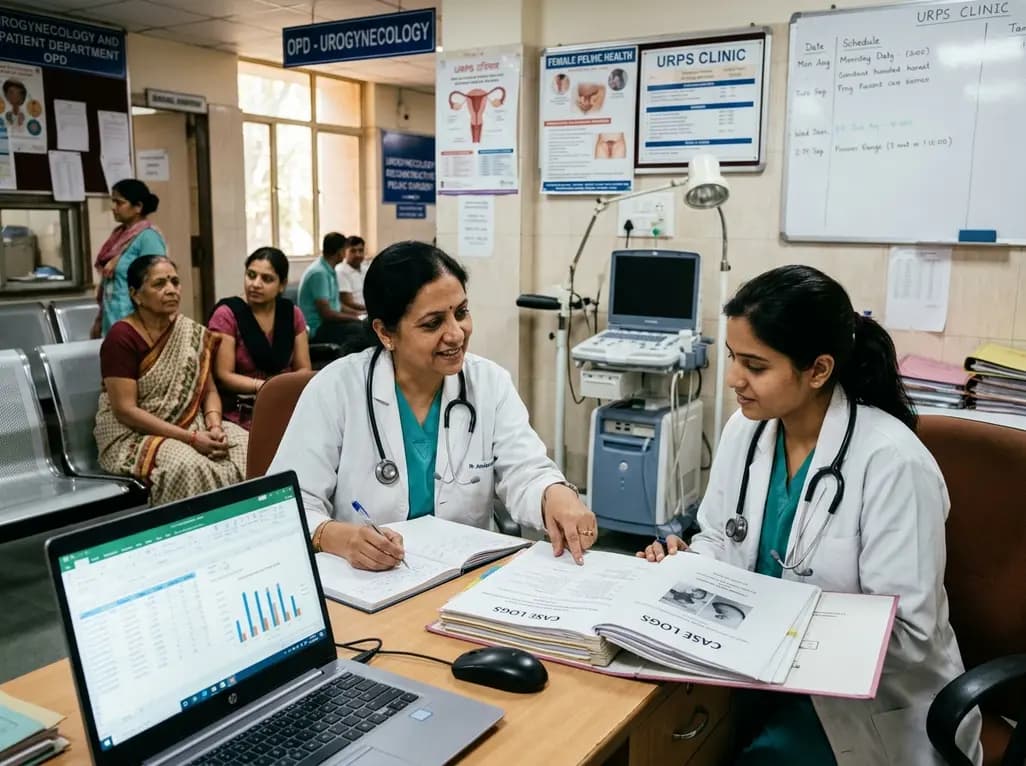
A ten-year cohort study of ABU case logs reveals that URPS fellowship training significantly drives higher annual case volumes, advanced surgical complexity, and increased female representation in pelvic floor reconstruction, underscoring the vital need for structured subspecialty training.
Today
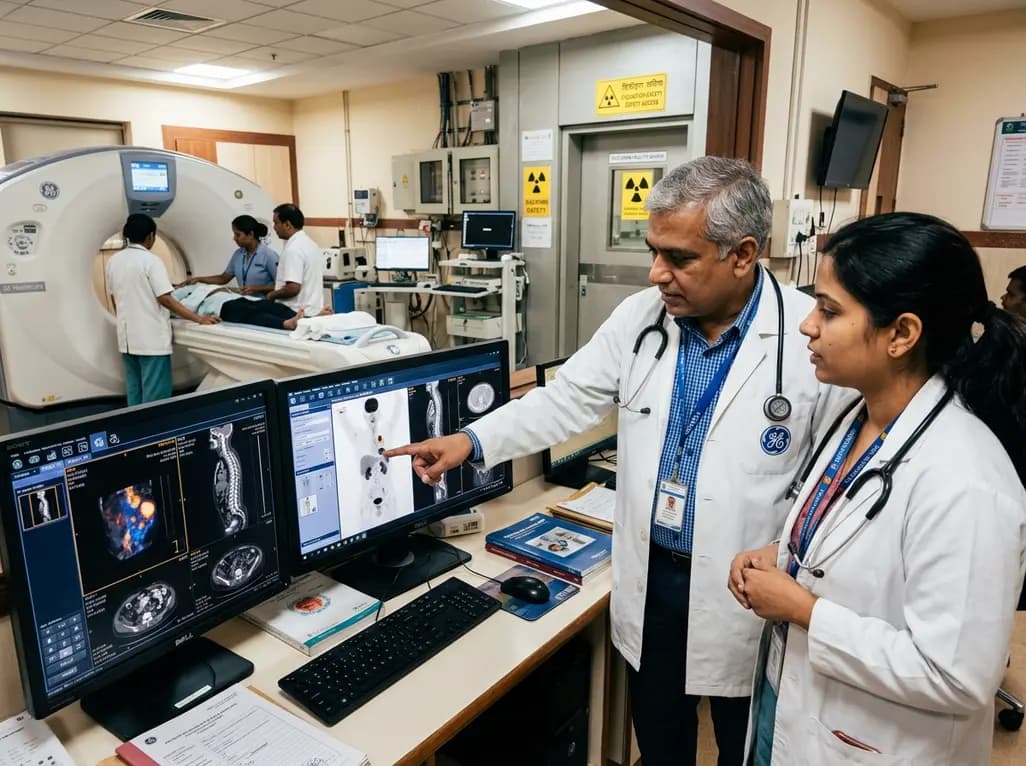
GE HealthCare has agreed to acquire Sofie Biosciences in a 945 million dollar all-cash transaction. The deal secures global rights to the investigational pan-cancer tracer FAPI-74 and expands cyclotron manufacturing infrastructure to accelerate precision theranostics and clinical molecular imaging workflows.
Today
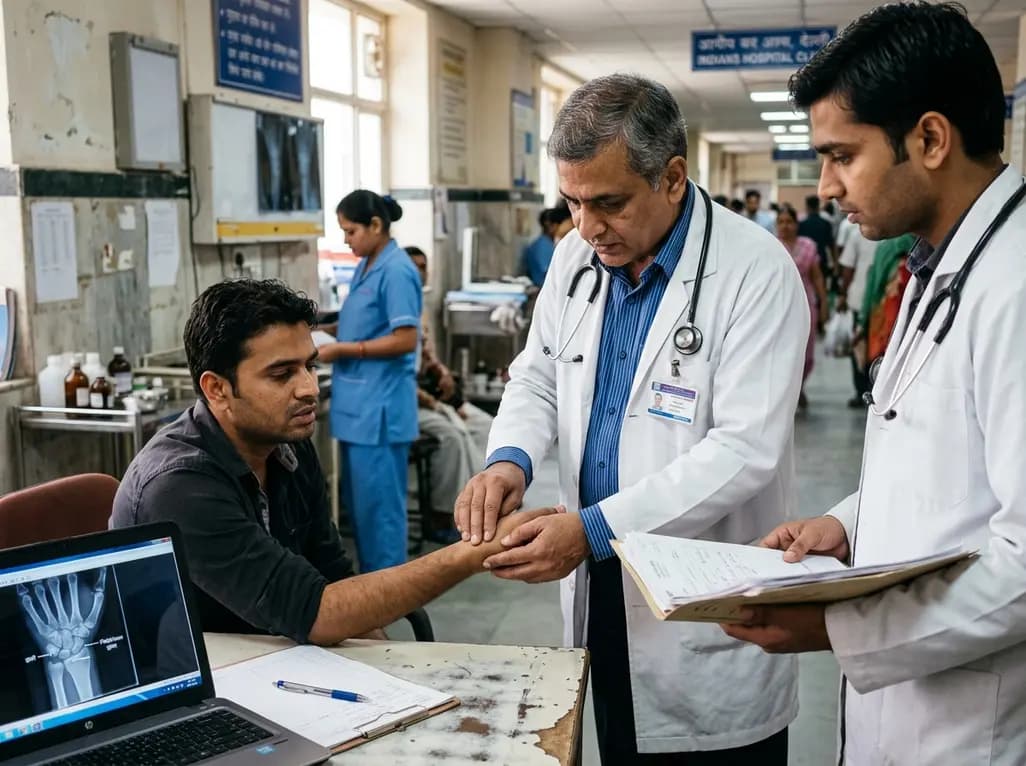
Posttraumatic pisotriquetral instability is a rare wrist injury causing severe hypothenar pain and weakness. Explore clinical examination, imaging, and pisiformectomy.
Today

India's food safety authority has cracked down on high-caffeine beverages sold under stimulant branding, prompting legal challenges from major beverage corporations. This review examines FSSAI regulations, cardiac and metabolic complications, pediatric risks, and actionable counseling strategies for physicians.
Today
