.webp&w=384&q=75)

Loading, please wait...
Loading, please wait...

The management of female pelvic floor disorders requires nuanced surgical precision and sound clinical decision-making. Over the past decade, dedicated URPS fellowship training has markedly influenced how modern urologists approach complex pelvic disorders. Consequently, accreditation programs have standardized operative curricula across major academic centers. As a result, specialized surgeons now acquire advanced mastery in complex vaginal, abdominal, and robotic reconstructive techniques.
Formal accreditation for Urogynecology and Reconstructive Pelvic Surgery began in 2013 to address growing surgical complexities. Before this accreditation, general urologists and gynecologists managed pelvic floor disorders through diverse pathways. However, modern reconstructive techniques require rigorous hands-on training to minimize complications. Therefore, subspecialty accreditation established uniform clinical standards and defined minimum procedural benchmarks.
Fellowship programs provide immersive exposure to challenging cases, including neurogenic bladder dysfunction, refractory incontinence, and severe organ prolapse. Furthermore, trainees master delicate tissue dissection, autonomic nerve preservation, and customized reconstructive techniques. Additionally, hands-on surgical simulation enhances procedural confidence during complex reconstructive steps. In addition, fellowship curricula prioritize thorough pre-operative urodynamic evaluations and multidisciplinary case conferences. Consequently, graduates develop heightened diagnostic acumen and surgical agility.
Recent data demonstrate that formal certification fundamentally changes clinical practice. Although general residency programs teach essential continence procedures, fellowship programs foster exceptional surgical versatility. Thus, accredited programs provide the robust foundation necessary to manage severe anatomical disruptions and recurrent pelvic pathologies.
Analysis of American Board of Urology case logs from 2013 through 2024 reveals pronounced procedural disparities. Specifically, researchers evaluated practice patterns among 5,816 urologists performing pelvic reconstructive operations. Among these clinicians, 393 had completed fellowship training, while 5,423 practiced without formal fellowship credentials.
Overall, fellowship-trained urologists maintained substantially higher annual operative volumes across major pelvic procedures. Because high surgical volume directly correlates with reduced morbidity, this disparity carries meaningful clinical significance. Conversely, non-fellowship surgeons typically logged fewer annual cases per individual practitioner. In fact, many non-fellowship surgeons performed only occasional anti-incontinence procedures each year.
However, non-fellowship urologists still accounted for the vast majority of cumulative surgical volume nationwide. Because non-fellowship surgeons outnumber subspecialists by more than thirteen to one, community access relies heavily on their participation. Nevertheless, fellowship-trained clinicians handled a disproportionate share of complex repairs. Therefore, regional referral networks remain essential to direct high-risk patients toward experienced high-volume reconstructive experts.
Case complexity represents the clearest dividing line between fellowship-trained and non-fellowship practitioners. For instance, general urologists predominantly perform straightforward midurethral synthetic slings or basic transvaginal repairs. In contrast, fellowship-trained surgeons undertake intricate multi-compartment reconstructions, revision procedures, and complex apical suspensions.
Furthermore, subspecialists routinely manage severe apical pelvic organ prolapse utilizing minimally invasive sacrocolpopexy. Similarly, they perform demanding surgical interventions such as native-tissue ligament suspensions, urethral diverticulectomies, and urinary fistula repairs. When mesh complications or refractory stress urinary incontinence occur, fellowship-trained experts frequently perform complex mesh excision or autologous fascial slings.
Consequently, statistical regression models demonstrate that fellowship training independently predicts higher operative volume for advanced pelvic reconstructions. Moreover, these subspecialists show greater adaptability with robotic platforms and complex reconstructive instrumentation. Hence, specialized training equips surgeons to navigate distorted anatomy safely. Therefore, patient stratification according to anatomical severity helps surgical teams allocate complex cases to appropriate subspecialty centers, improving overall clinical outcomes.
The study also reveals fascinating demographic patterns within modern reconstructive urology. Notably, fellowship-trained cohorts demonstrate a significantly higher proportion of female urologists compared to non-fellowship groups. Specifically, female surgeons comprised nearly half of the fellowship-trained cohort, contrasting sharply with only thirteen percent among non-fellowship urologists.
This demographic transition reflects broader cultural and structural changes within surgical specialties. In addition, female patients suffering from intimate pelvic floor disorders often express strong preferences for female care providers. Therefore, increasing gender diversity among fellowship-trained reconstructive surgeons directly aligns with patient preferences and community needs.
Furthermore, early career urologists increasingly pursue structured fellowship pathways right after residency training. As a result, the younger subspecialty workforce brings contemporary operative techniques, including advanced laparoscopy and robotic reconstruction, into routine practice. Thus, evolving demographics and subspecialty credentials together drive modernization across pelvic floor reconstructive surgery.
These international findings provide timely insights for healthcare systems in India. Currently, the burden of pelvic floor dysfunction, obstetric trauma, and pelvic organ prolapse remains substantial across Indian rural and urban centers. Although post-graduate residency programs provide broad surgical training, structured super-specialty training in urogynecology remains limited to select apex institutions.
Consequently, many general urologists and gynecologists must manage complicated pelvic defects without dedicated fellowship exposure. However, establishing accredited fellowship programs under academic bodies like the National Board of Examinations could accelerate surgical competency. Furthermore, collaborative training between urology and gynecology departments can cultivate comprehensive operative proficiency.
In addition, establishing dedicated regional referral centers will improve outcomes for challenging cases. For example, complex vesicovaginal fistulae, recurrent prolapse, and synthetic mesh complications warrant care from high-volume surgeons. Therefore, expanding specialized pelvic reconstructive fellowships across Indian medical colleges will bridge surgical gaps and significantly elevate women's healthcare standards nationwide.
Formal fellowship training exposes surgeons to high-volume reconstructive procedures and rigorous anatomical education. Consequently, fellowship-trained surgeons achieve superior diagnostic accuracy and lower perioperative complication rates during complex pelvic reconstructions. Trainees master both open and minimally invasive robotic techniques, which reduces blood loss, hospital stay, and tissue trauma. In addition, fellowship-trained surgeons handle complex postoperative revisions and mesh-related complications with greater confidence, ensuring safer and more durable clinical outcomes for patients.
Yes, general urologists regularly perform primary anti-incontinence surgeries, such as standard midurethral synthetic slings, with excellent safety profiles. Residency curricula provide adequate foundational exposure to common pelvic floor pathologies. However, practitioners must recognize their individual surgical boundaries when addressing multi-compartment defects or recurrent prolapse. Therefore, clinicians should refer complex pelvic cases, including mesh erosions and severe urinary fistulae, to dedicated subspecialists who maintain high annual caseloads to safeguard patient safety and treatment efficacy.
In India, high parity, chronic physical labor, and delayed obstetric care contribute to substantial pelvic floor morbidity. Consequently, millions of women suffer silently from debilitating prolapse, complex fistulae, and incontinence. Establishing formal subspecialty training equips young urologists and gynecologists with advanced reconstructive techniques, including minimally invasive repairs. Furthermore, accredited programs establish high standard-of-care protocols across tertiary hospitals. Ultimately, widespread subspecialty education enhances patient access to specialized, compassionate reconstructive surgical care throughout diverse Indian healthcare settings.
Disclaimer: This content is for informational and educational purposes only. It is not intended to be a substitute for professional medical advice, diagnosis, or treatment. Always seek the advice of your physician or another qualified health provider with any questions you may have regarding a medical condition or procedure. Refer to the latest local and national guidelines for clinical practice.
References

Read summarized clinical updates, watch expert medical content, and earn CME certifications right from your smartphone.
Open your smartphone camera to scan and install.





A ten-year cohort study of ABU case logs reveals that URPS fellowship training significantly drives higher annual case volumes, advanced surgical complexity, and increased female representation in pelvic floor reconstruction, underscoring the vital need for structured subspecialty training.
Today
The CYMEDSEC study investigates the cybersecurity performance, system resilience, and user behavior of IoMT-enabled remote patient monitoring systems across real-world hospital and home-care settings to safeguard patient care.
Today

Systemic amyloidosis management is undergoing a therapeutic revolution. This clinical review synthesizes updates from the International Society of Amyloidosis, detailing novel plasma cell therapies, TTR stabilizers, silencers, translational models, and artificial intelligence in drug development.
Today
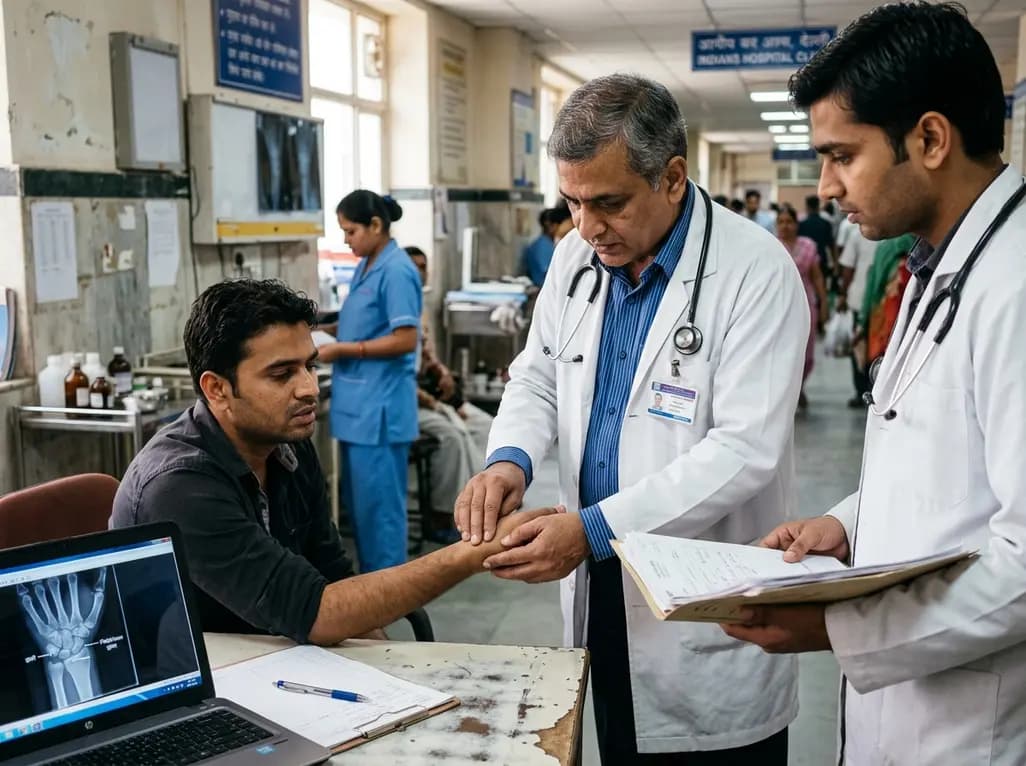
Posttraumatic pisotriquetral instability is a rare wrist injury causing severe hypothenar pain and weakness. Explore clinical examination, imaging, and pisiformectomy.
Today

A comprehensive review analyzes periconceptional GLP-1 receptor agonist exposure, revealing reassuring data on congenital anomalies and adverse perinatal outcomes while emphasizing the need for cautious patient counseling.
Today
