.webp&w=384&q=75)

Loading, please wait...
Loading, please wait...
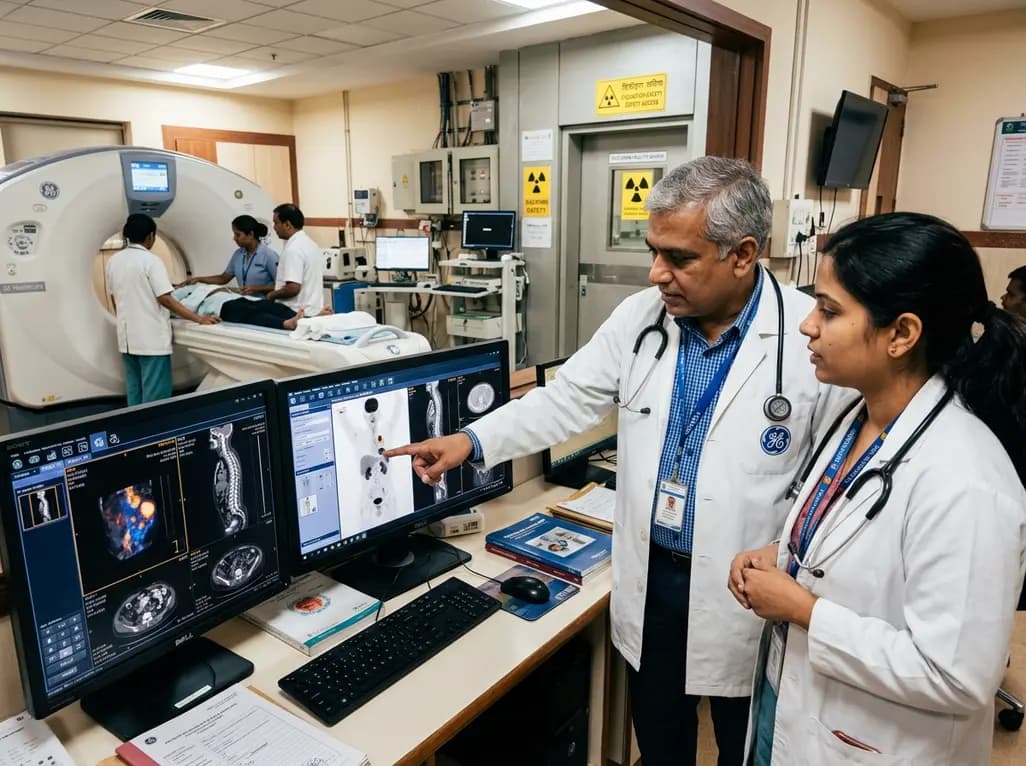
Precision oncology relies increasingly on targeted molecular imaging to detect occult malignancies and guide individualized care. Consequently, modern healthcare systems demand dependable access to next-generation diagnostic tracers. In October 2026, GE HealthCare announced an agreement to purchase Sofie Biosciences for 945 million dollars in cash. This major transaction substantially strengthens the company's global footprint in diagnostic PET radiopharmaceuticals.
The acquisition represents a decisive strategic investment in molecular medicine. Through this acquisition, GE HealthCare gains direct control over extensive manufacturing and distribution capabilities. Specifically, the transaction incorporates 15 contract manufacturing facilities that operate 21 medical cyclotrons across the United States. In addition, the agreement includes a dedicated contract development and manufacturing center that focuses entirely on theranostics. As a result, GE HealthCare establishes immediate operational reach across the time-sensitive final distribution mile. Meanwhile, Sofie Biosciences will maintain its contract manufacturing partnerships with external pharmaceutical developers. This structural continuity ensures that existing clinical trials and commercial supply agreements continue without interruption. Therefore, the broader radiopharmaceutical industry preserves vital manufacturing access while GE HealthCare scales its internal pipeline. Furthermore, this strategic acquisition reflects a broader surge in nuclear medicine consolidation across the healthcare sector. Global pharmaceutical companies are actively deploying billions of dollars to acquire specialized radiochemistry capabilities. Ultimately, the integration positions GE HealthCare as a fully vertically integrated manufacturer capable of supporting rapid clinical adoption.
A primary clinical driver of this transaction is the investigational tracer known as FAPI-74. Through this deal, GE HealthCare secures exclusive domestic commercial rights in the United States. Notably, the company already owned commercialization rights for the molecule across international markets. FAPI-74 functions as an advanced fluorine-18 radiotracer targeting fibroblast activation protein, an enzyme abundantly expressed on cancer-associated fibroblasts. Because reactive fibroblasts populate the stroma of diverse solid malignancies, this agent provides remarkable pan-cancer diagnostic utility. Clinicians are currently evaluating the tracer in Phase 3 multicenter trials for pancreatic ductal adenocarcinoma and gastroesophageal carcinomas. Additionally, earlier clinical trials demonstrated high positive predictive value in detecting metastatic lesions across hepatobiliary and colorectal malignancies. Standard fluorodeoxyglucose imaging frequently shows limited sensitivity in mucinous tumors or regions with elevated physiological background uptake. In contrast, FAPI-74 demonstrates minimal background activity in the gastrointestinal tract, liver, and brain parenchyma. Consequently, nuclear medicine specialists achieve superior lesion-to-background contrast and sharper tumor margin delineation. This diagnostic clarity enables oncologists to stage difficult tumors earlier and optimize surgical resections.
Diagnostic PET imaging faces strict physical constraints due to rapid radionuclide decay. Specifically, fluorine-18 possesses a physical half-life of merely 110 minutes. Therefore, radiopharmacists must synthesize, test, and distribute doses rapidly before radioactivity decays below diagnostic thresholds. Centralized production models often struggle to deliver short-lived tracers to distant regional medical centers. Consequently, geographic bottlenecks frequently restrict patient access to advanced positron emission tomography scans. By acquiring a nationwide network of 21 regional cyclotrons, GE HealthCare directly resolves these distribution barriers. Furthermore, regional production hubs allow radiopharmacists to deliver freshly synthesized doses within narrow clinical delivery windows. This operational scale also directly supports Flyrcado, an approved fluorine-18 agent for assessing myocardial ischemia. Clinicians rely on Flyrcado to evaluate coronary artery disease and acute myocardial infarction with high diagnostic accuracy. In addition, dependable local manufacturing protects medical centers from unplanned transportation disruptions. Thus, establishing robust cyclotron distribution networks transforms regional molecular imaging accessibility for oncologists, cardiologists, and patients alike.
Modern nuclear oncology increasingly embraces the theranostic paradigm, which seamlessly links precise diagnostic imaging directly to radionuclide therapy. In clinical practice, physicians first utilize a diagnostic tracer to verify target expression on malignant tissues. Subsequently, clinicians administer an identical or analogous ligand coupled to a therapeutic beta- or alpha-emitting radioisotope. For example, lutetium-177 and actinium-225 can deliver cytotoxic radiation selectively to tumor sites while sparing surrounding tissues. Because fibroblast activation protein appears prominently across diverse tumor microenvironments, FAPI agents offer extraordinary theranostic potential. Therefore, comprehensive mapping with FAPI-74 PET allows multidisciplinary tumor boards to select ideal candidates for targeted radioisotope infusions. Moreover, post-treatment imaging permits accurate longitudinal monitoring to measure biological response and identify early relapse. Recent therapeutic trials demonstrate promising disease stabilization in refractory sarcomas, breast cancers, and gastrointestinal malignancies. However, successful theranostic programs require absolute coordination between diagnostic availability and radiotherapeutic schedules. GE HealthCare addresses this challenge directly by uniting imaging hardware, cyclotron production, and diagnostic tracers under a single enterprise.
The rapid growth of commercial radiochemistry carries profound implications for global clinical practice. In regions such as India, cancer incidence continues to climb, demanding cost-effective, precise staging tools. Currently, academic institutions and tertiary cancer hospitals across India rely heavily on conventional positron emission tomography agents. Nevertheless, research groups at leading centers actively investigate gallium-68 and fluorine-18 FAPI compounds for complicated gastric and peritoneal malignancies. Global manufacturing investments inevitably streamline synthesis protocols and reduce raw precursor costs worldwide. Furthermore, standardized regulatory dossiers established in late-stage Phase 3 trials accelerate licensing approvals through regional regulatory bodies like the Central Drugs Standard Control Organisation. In addition, the successful industrialization of radioisotope manufacturing encourages domestic Indian firms to expand cyclotron capacity. As private diagnostic networks adopt advanced tracers, clinical staging pathways will become substantially more uniform. Consequently, medical oncologists will detect microscopic metastases earlier, preventing unnecessary radical surgeries and refining systemic therapies. Ultimately, investments in commercial radiopharmaceutical infrastructure will modernize diagnostic pathways for cancer patients across international healthcare systems.
Q1: What is FAPI-74, and how does it differ from conventional FDG tracers?
FAPI-74 is an investigational PET tracer that binds selectively to fibroblast activation protein on cancer-associated fibroblasts. Unlike standard fluorodeoxyglucose, which visualizes glucose metabolism and often accumulates in healthy or inflamed tissues, FAPI-74 directly targets the tumor stroma. Therefore, it exhibits lower physiological background uptake in the liver, brain, and intestines, offering superior imaging contrast for gastrointestinal, pancreatic, and peritoneal cancers.
Q2: Why is cyclotron manufacturing capacity critical for fluorine-18 PET radiopharmaceuticals?
Fluorine-18 has a short radiological half-life of 110 minutes, meaning its radioactivity decreases by half every two hours. Consequently, doses cannot be stored in inventory and must reach clinical imaging suites within hours of synthesis. Having a distributed network of cyclotrons ensures that radiopharmacists produce and deliver diagnostic tracers locally without exceeding logistical time limits.
Q3: How does this acquisition support the broader field of theranostics?
Theranostics combines diagnostic imaging with targeted radionuclide therapy using shared molecular targets. By securing rights to FAPI-74 and expanding specialized production facilities, GE HealthCare strengthens the diagnostic screening arm of this paradigm. Reliable imaging identifies patients whose tumors express fibroblast activation protein, thereby qualifying them for future personalized targeted radioligand therapies.
Disclaimer: This content is for informational and educational purposes only. It does not constitute medical advice or replace professional judgment. Refer to the latest local and national guidelines for clinical practice.
References

Read summarized clinical updates, watch expert medical content, and earn CME certifications right from your smartphone.
Open your smartphone camera to scan and install.





GE HealthCare has agreed to acquire Sofie Biosciences in a 945 million dollar all-cash transaction. The deal secures global rights to the investigational pan-cancer tracer FAPI-74 and expands cyclotron manufacturing infrastructure to accelerate precision theranostics and clinical molecular imaging workflows.
Today

India's food safety authority has cracked down on high-caffeine beverages sold under stimulant branding, prompting legal challenges from major beverage corporations. This review examines FSSAI regulations, cardiac and metabolic complications, pediatric risks, and actionable counseling strategies for physicians.
Today

A ten-year cohort study of ABU case logs reveals that URPS fellowship training significantly drives higher annual case volumes, advanced surgical complexity, and increased female representation in pelvic floor reconstruction, underscoring the vital need for structured subspecialty training.
Today

Posttraumatic pisotriquetral instability is a rare wrist injury causing severe hypothenar pain and weakness. Explore clinical examination, imaging, and pisiformectomy.
Today

Cardiovascular-kidney-metabolic (CKM) syndrome links metabolic, renal, and cardiovascular diseases along a shared continuum. This review examines holistic CKM management, PREVENT risk assessment, multi-organ pharmacotherapies like SGLT2i and GLP-1 RAs, and multidisciplinary care models to improve patient outcomes.
Today
