

Loading, please wait...
Loading, please wait...
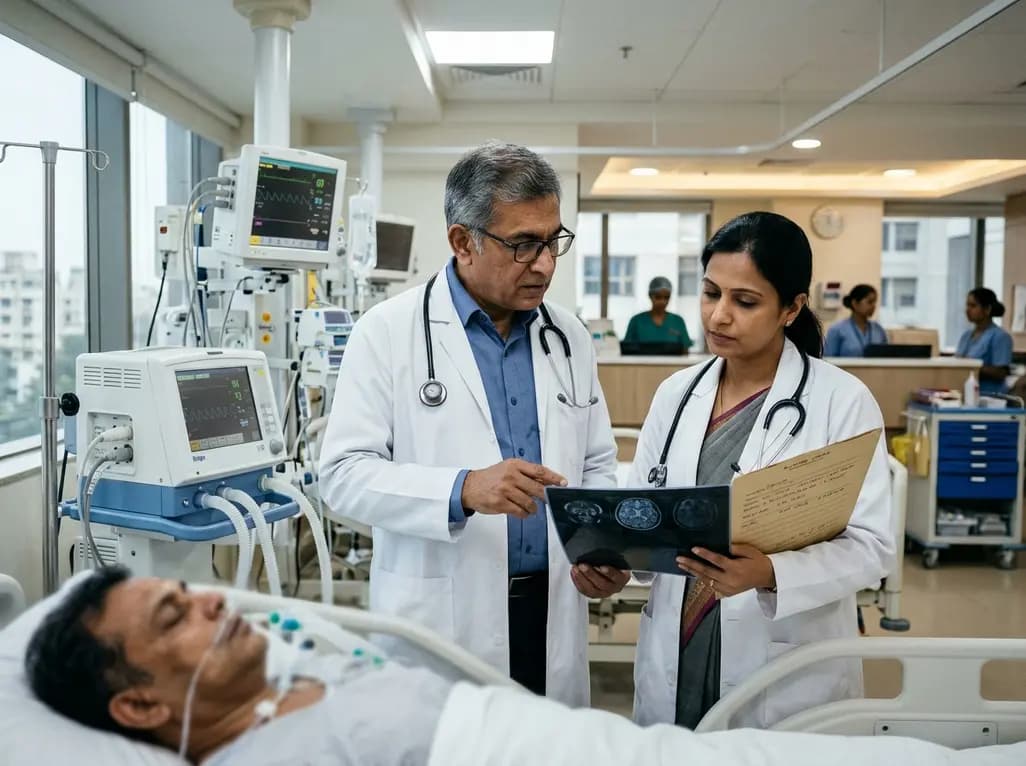
The judicial oversight surrounding brain death declaration has reached a decisive juncture in India. Recently, a three-judge bench of the Supreme Court reserved its judgment on procedural safeguards regarding brain-stem death determination. The petition challenges a 2017 Kerala High Court ruling, questioning whether current hospital practices provide sufficient legal and clinical precision. Consequently, intensive care specialists and transplant teams across the country are closely reviewing their operational protocols. Ensuring clinical transparency remains paramount to preserving public trust in organ retrieval systems.
The dispute originated from a petition filed by Dr S Ganapathy, an experienced medical practitioner. He alleged that critical care teams sometimes declare individuals dead prematurely to facilitate organ harvesting. Furthermore, the petitioner argued before the Supreme Court that current determinations do not consistently satisfy stringent statutory standards. Earlier, the Kerala High Court had closed proceedings after noting affidavits submitted by the central and state authorities. Nevertheless, the apex court observed that the petitioner raised valid concerns that demand structured scientific attention.
To resolve these technical disputes, the bench directed the All India Institute of Medical Sciences to establish an expert committee. This panel evaluated clinical parameters and examined how advancements in modern neurocritical care impact death determination. Moreover, the Additional Solicitor General presented the National Guidelines on Brain Stem Death Certification during the final hearings. The central government maintained that existing frameworks establish thorough checkpoints for registered medical practitioners. However, the court emphasized the absolute necessity of formulating a robust regime to dispel lingering ethical doubts. In particular, judges emphasized that legal definitions must align seamlessly with modern evidence-based clinical practice. Consequently, hospital administrators eagerly await final directives to ensure total institutional compliance. Ultimately, this judicial verdict will influence standard operating procedures in intensive care units nationwide.
In India, the Transplantation of Human Organs and Tissues Act establishes the statutory foundation for brain-stem death certification. Crucially, the legislation requires a multidisciplinary panel of four medical practitioners to conduct two separate clinical examinations. This team comprises the hospital head, an independent physician, a neurologist or neurosurgeon, and the primary treating doctor. Additionally, the medical team must separate each full assessment by an interval of at least six hours. This mandatory interval ensures that any acute, reversible insults do not simulate permanent neurological cessation.
During each evaluation, the clinicians execute a meticulous battery of cranial nerve reflex tests. For example, examiners evaluate pupillary reactivity to light, corneal reflexes, and the oculocephalic reflex. Furthermore, the team checks the vestibulo-ocular response through ice-water caloric stimulation. Clinicians also inspect motor responses to painful stimuli across the cranial nerve distribution. In addition, the panel tests the gag reflex and cough reflex through deep tracheobronchial suctioning. Specifically, the panel records every finding on statutory Form 10 to maintain absolute legal traceability. Hence, multi-observer validation provides a crucial barrier against clinical oversight or procedural haste. Therefore, a valid brain death declaration demands unanimous consensus across all four certified examiners. Without this complete consensus and strict documentation, clinicians cannot initiate organ donation discussions.
Before initiating any neurological examination, clinicians must systematically exclude reversible confounding conditions. Specifically, the medical team must ensure the complete absence of neuromuscular blocking drugs or central depressants. Clinicians also verify that the patient exhibits normal core body temperature, thereby ruling out profound hypothermia. Moreover, physicians stabilize systemic blood pressure and correct severe metabolic, endocrine, or electrolyte imbalances. If any confounding factor persists, doctors must postpone formal testing until the physiology normalizes.
Once the team fulfills all prerequisite conditions, they administer the mandatory apnea test. This critical physiological assessment provides objective proof of absent spontaneous respiratory drive. During the procedure, clinicians disconnect the patient from mechanical ventilation while delivering passive oxygenation. Consequently, arterial carbon dioxide levels rise progressively, stimulating the medullary respiratory centers. Examiners monitor the patient continuously for any respiratory effort over eight to ten minutes. Furthermore, pre-oxygenation with pure oxygen prevents life-threatening hypoxemia during the entire apnea interval. Subsequently, an arterial blood gas analysis must confirm a partial pressure of carbon dioxide above sixty millimeters of mercury. However, if hemodynamic instability develops, clinicians must immediately abort the trial and seek alternative diagnostics. Accordingly, continuous arterial blood pressure monitoring remains mandatory to prevent severe cardiac decompensation.
The petitioner before the Supreme Court strongly advocated for routine confirmatory investigations, including electroencephalography and cerebral angiography. At present, Indian law relies primarily on rigorous clinical examination rather than obligatory instrumental tests. Nevertheless, ancillary diagnostic modalities provide invaluable confirmation when clinical exams remain indeterminate or unsafe. For instance, extensive facial trauma or cervical spine injuries may preclude full cranial reflex assessments. Similarly, severe chronic lung pathology can make the standard apnea test physiologically hazardous.
In such challenging clinical scenarios, specialized ancillary investigations establish definitive cerebral circulatory arrest. Four-vessel cerebral angiography demonstrates the total absence of intracranial blood flow past the carotid siphon. Additionally, radionuclide cerebral scintigraphy reliably illustrates the classic hollow skull sign of absent brain perfusion. Transcranial Doppler ultrasonography also offers a portable bedside option to document reverberating flow or systolic spikes. Meanwhile, electroencephalography can confirm complete electrocerebral silence across all recording channels. Therefore, incorporating standardized ancillary testing protocols elevates diagnostic precision in complicated intensive care presentations. Modern neurocritical care societies increasingly recommend these objective tools to resolve difficult diagnostic ambiguities. Consequently, establishing clear criteria for ancillary testing will strengthen clinical objectivity without causing unwarranted organ procurement delays.
Maintaining strict ethical boundaries between intensive care management and organ procurement remains vital. Foremost, the treating clinical team must focus entirely on patient resuscitation without any transplant team influence. Under Indian statute, transplant surgeons cannot participate in death certification panels. Furthermore, healthcare facilities must ensure that organ donation discussions occur only after completing all formal certification steps. Separating these clinical processes prevents any perceived conflict of interest during critical decision-making phases.
Additionally, hospitals must prioritize transparent, empathetic communication with grieving family members throughout the admission. Clinicians should explain the biological finality of brain-stem death using simple, unambiguous terminology. Visual demonstrations of absent brainstem reflexes frequently help families understand that mechanical ventilation merely sustains somatic perfusion. Moreover, video recording the certification process has emerged as a successful safeguard in select states like Kerala. Standardizing such procedural documentation nationally could substantially deter malpractice allegations. Thus, transparent protocols reassure the public that medical teams always prioritize patient welfare above all else. Ultimately, upholding uncompromising clinical standards protects vulnerable patients while fostering broader societal confidence in deceased organ donation programs.
Q1: What are the primary legal requirements for certifying brain-stem death in India?
Under the Transplantation of Human Organs and Tissues Act, a panel of four registered medical practitioners must certify brain-stem death. This panel includes the hospital superintendent, an independent specialist, a neurologist or neurosurgeon, and the treating physician. Furthermore, the team must complete two distinct clinical examinations separated by at least six hours. All four members must unanimously agree and sign Form 10 to validate the final certification.
Q2: Why is the apnea test an essential component of brain death determination?
The apnea test serves as an indispensable clinical assessment because it objectively evaluates medullary respiratory center function. During this test, clinicians disconnect mechanical ventilation while supplying passive oxygenation to let arterial carbon dioxide accumulate. If the arterial carbon dioxide rises above sixty millimeters of mercury without triggering spontaneous breaths, respiratory arrest is established. Therefore, this assessment confirms the permanent and irreversible loss of central respiratory drive.
Q3: When should clinicians consider ancillary tests like cerebral angiography or EEG?
Clinicians utilize ancillary tests whenever severe trauma, metabolic instability, or hemodynamic collapse precludes comprehensive clinical reflex assessment or completion of the apnea test. For instance, four-vessel cerebral angiography or radionuclide scintigraphy demonstrates the complete cessation of intracranial blood flow. Similarly, electroencephalography documents electrocerebral silence. Consequently, these instrumental tests provide crucial objective validation, ensuring diagnostic certainty and eliminating any ambiguity before final death certification.
Disclaimer: This content is for informational and educational purposes only. It does not constitute medical advice or replace professional judgment. Refer to the latest local and national guidelines for clinical practice.
References

Read summarized clinical updates, watch expert medical content, and earn CME certifications right from your smartphone.
Open your smartphone camera to scan and install.





The Supreme Court of India is examining clinical standards for certifying brain stem death under national transplantation laws. With inputs from an AIIMS expert committee, the impending ruling seeks to balance diagnostic accuracy, public confidence, and ethical safeguards across critical care units in the country.
Today

A Stony Brook University study published in npj Digital Medicine shows physicians preferred AI-generated discharge summaries over human drafts in 95% of complex cases. While large language models enhance accuracy, readability, and completeness, expert clinician verification remains crucial to catch documentation errors.
Today

Delhi is undergoing a major healthcare overhaul with enhanced Ayushman Bharat insurance up to ₹10 lakh, increased MBBS and PG medical training seats, expanded primary network mandirs, new tertiary neuro-ICUs, and public-private reproductive technology initiatives to build a resilient, preventative healthcare model.
Today
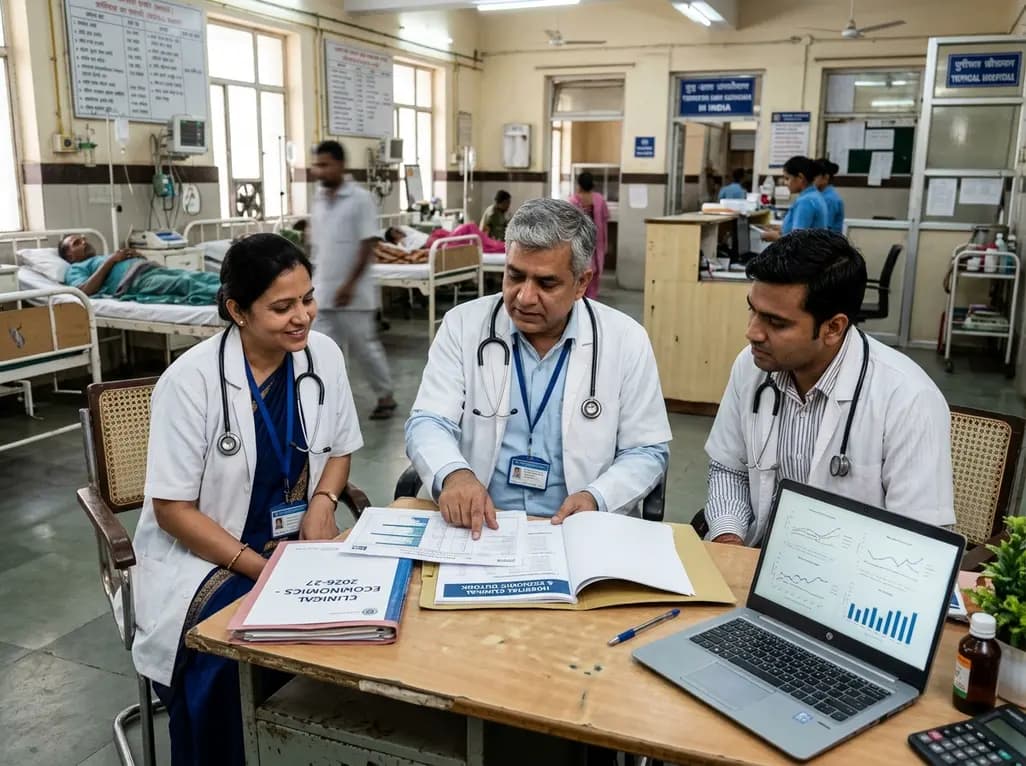
Aon forecasts India's healthcare inflation will ease to 10.1% in 2027 from 11.5% in 2026. Despite moderation, healthcare expenses continue to outpace general inflation, propelled by non-communicable diseases, advanced medical therapeutics, and expanding utilization patterns across diverse patient populations.
Today

Non-union fractures occur in 2-5% of cases, causing significant disability and cost. Conservative modalities such as LIPUS, PEMF, and focused ESWT offer non-surgical healing options for defects up to 5-10 mm when adequate mechanical stability exists without infection.
Today

Explore how novel oxygen-releasing PVA hydrogels prevent early post-transplant hypoxic damage in pancreatic beta cells, sustaining viability and insulin secretory function.
Today
