

Loading, please wait...
Loading, please wait...
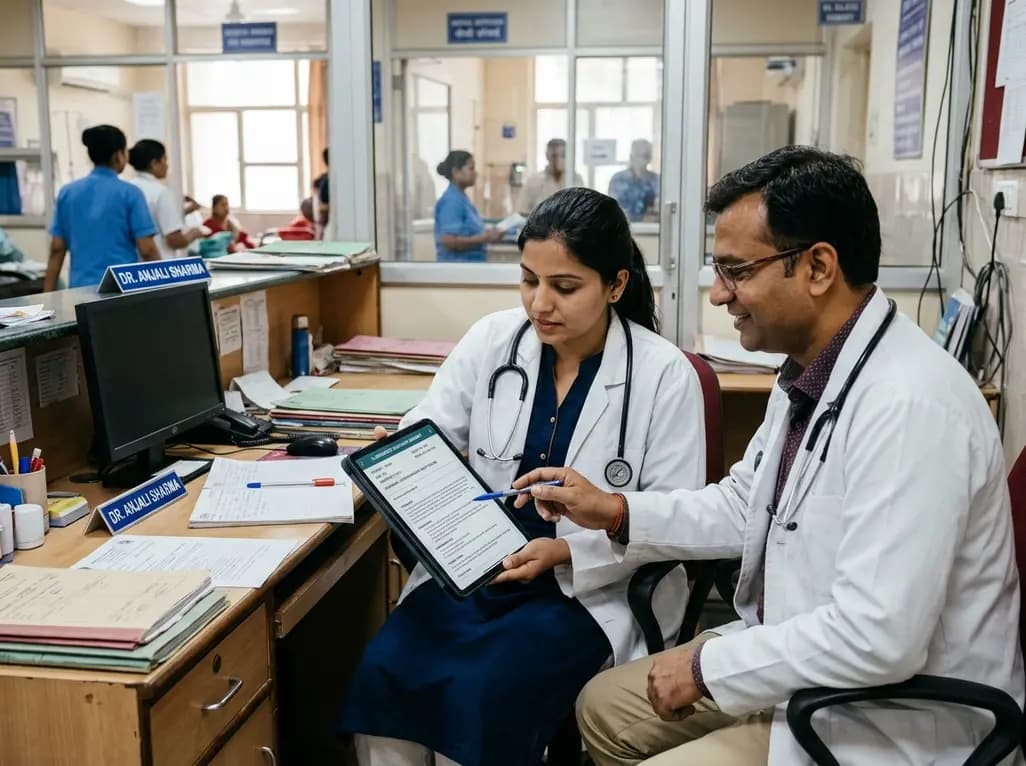
Inpatient hospital documentation presents an escalating operational challenge for healthcare systems worldwide. Clinicians often spend substantial hours compiling complex inpatient records during transition periods. However, innovative research indicates that modern AI discharge summaries can significantly streamline this demanding workflow. Furthermore, a recent investigation from Stony Brook University demonstrates that artificial intelligence can draft comprehensive transition records rapidly. Consequently, this technological shift promises to reduce physician burnout while safeguarding critical communication between inpatient teams and outpatient clinicians.
Hospital discharge summaries serve as the definitive clinical bridge between inpatient care and outpatient management. These vital documents summarize essential diagnostic evaluations, therapeutic interventions, medication modifications, and unresolved medical issues. Additionally, they outline detailed instructions for post-discharge monitoring and subsequent specialist consultations. Primary care practitioners rely heavily on these summaries to maintain uninterrupted therapeutic trajectories.
Nevertheless, drafting these comprehensive summaries demands substantial cognitive effort and clinical time from busy hospitalists. When patient hospitalizations extend between seven and twenty-one days, clinical records swell with multidisciplinary progress notes. As a result, compiling this massive volume of fragmented data becomes exceptionally exhausting for overburdened medical residents.
Consequently, documentation fatigue frequently leads to delayed summaries and unintended omissions of vital clinical details. Clinicians must balance rigorous patient examinations with extensive electronic health record data entry. Therefore, communication gaps often emerge during handoffs, which directly increases the risk of preventable post-discharge adverse events. Moreover, timely documentation ensures that family physicians can promptly reconcile medications during the first post-discharge consultation. Without clear handover records, clinicians frequently repeat diagnostic tests inappropriately. Thus, streamlining transition documentation remains an essential priority for hospital leadership.
To explore automated documentation solutions, researchers at Stony Brook University conducted an innovative study published in npj Digital Medicine. The investigative team focused specifically on complex internal medicine admissions with lengths of stay ranging from seven to twenty-one days. Such prolonged admissions generate extensive medical documentation, making manual summarization remarkably difficult and error-prone.
The investigators engineered a sophisticated pipeline utilizing a large language model to synthesize inpatient electronic health records. Clinicians actively participated in designing the model architecture, ensuring the artificial intelligence prioritized information that outpatient physicians truly require. Because large hospital charts often exceed model processing limits, the researchers divided patient records into manageable data segments. Consequently, the computational system processed diverse clinical notes and generated cohesive discharge summaries within minutes.
To rigorously assess performance, the authors conducted paired evaluations comparing artificial intelligence drafts directly against human-authored summaries across sixty hospitalizations. Twelve independent physicians, including six experienced hospitalists and six community primary care doctors, reviewed each case. Furthermore, the reviewers examined documentation fidelity, structural coherence, and overall clinical utility. As a result, this rigorous methodology provided unprecedented clarity regarding how automated tools handle intricate multi-disease hospital courses.
The study results demonstrated an overwhelming clinical preference for algorithmic documentation. Remarkably, physician reviewers preferred the artificial intelligence summaries in ninety-five percent of the evaluated hospital encounters. Reviewers awarded the machine-generated documents significantly higher average scores for overall narrative quality, factual clarity, and clinical completeness.
Specifically, the model scored 4.71 on a five-point quality scale, whereas human-written summaries achieved an average score of only 3.16. In addition, the automated summaries exhibited fewer physician-flagged errors per case compared to human notes. Most notably, the model drastically reduced omissions of critical clinical details, which historically plague manual documentation.
Moreover, outpatient primary care physicians praised the machine drafts for superior clarity and pragmatic organization. These community practitioners reported that the automated summaries were much easier to comprehend during time-pressured appointments. Furthermore, outpatient doctors noted that the structured summaries helped them explain complex hospital events to patients and families effectively.
Interestingly, the artificial intelligence pipeline demonstrated remarkable competence in identifying incidental imaging findings. The model flagged thirty-one incidental radiological abnormalities, and clinical reviewers validated ninety-three percent of those observations as factually accurate. Therefore, automated tools can reliably extract secondary medical issues that busy clinicians might inadvertently overlook during hectic discharges.
Despite these encouraging evaluation metrics, artificial intelligence tools do not completely eliminate clinical documentation inaccuracies. The Stony Brook investigators discovered that both algorithmic drafts and human-authored summaries contained measurable errors. However, statistical analysis revealed no significant difference between the two groups regarding potential error severity or likelihood of patient harm.
Nevertheless, this finding underscores that machine learning models cannot operate autonomously in active clinical settings. Large language models occasionally introduce subtle hallucinations, misinterpret complex timelines, or misattribute specific drug changes. Therefore, senior clinicians must meticulously verify every machine-generated document before committing it to a patient’s permanent medical record.
Furthermore, medical ethics and clinical governance mandate clear lines of professional accountability. When an artificial intelligence platform generates a clinical narrative, the signing physician remains legally and professionally responsible for its contents. Consequently, hospital systems must integrate these technological tools as collaborative cognitive assistants rather than autonomous replacements for clinical judgment.
In practice, doctors should treat algorithmic drafts as comprehensive baseline templates. Clinicians can rapidly proofread the narrative, adjust subtle contextual nuances, and confirm treatment courses before formal sign-off. Thus, combining artificial intelligence computational speed with human clinical oversight establishes the safest and most efficient documentation workflow.
The implementation of automated documentation holds profound implications for healthcare delivery across diverse global environments. In resource-constrained settings, such as overburdened public and private hospitals in India, physicians manage immense inpatient volumes daily. Under these demanding conditions, clinical teams frequently struggle to produce exhaustive discharge summaries before beds must be turned over.
Consequently, automated summary tools could offer immense relief to Indian medical officers, postgraduates, and consultants. By compiling laboratory findings, medication charts, and specialty consultation notes automatically, algorithms can save clinicians precious hours each week. Furthermore, reducing administrative burdens enables doctors to dedicate more focus to direct bedside care and patient counseling.
Additionally, standardizing discharge records significantly improves continuity of care across fragmented health systems. In India, patients often transition between tertiary medical colleges, private diagnostic facilities, and local neighborhood clinics. Clear, structured discharge summaries help general practitioners understand prior therapeutic decisions and prevent duplicate investigations.
Ultimately, healthcare organizations must establish secure, privacy-compliant infrastructure before deploying large language models widely. Implementing robust institutional data protections ensures sensitive health records remain fully confidential while enabling rapid clinical synthesis. As healthcare digitalizes rapidly, clinician-supervised artificial intelligence will become an indispensable asset for elevating clinical communication standards globally.
Q1: Why did physician reviewers prefer AI-generated discharge summaries over human notes?
Physicians preferred the algorithmic drafts in ninety-five percent of cases because the model produced clearer, more structured narratives with significantly fewer clinical omissions. Furthermore, the artificial intelligence synthesized complex, multi-week hospitalization records into coherent summaries within minutes. Primary care physicians particularly appreciated the enhanced readability, which enabled them to understand post-discharge care roadmaps and explain crucial treatment plans to patients much more effectively.
Q2: Did the study find that AI discharge summaries are completely error-free?
No, the investigation revealed that both artificial intelligence summaries and human-authored documents contained documentation errors. However, reviewers identified no statistically significant difference between the two groups regarding potential error severity or likelihood of patient harm. Because large language models can occasionally misinterpret nuances or omit contextual details, researchers emphasize that qualified physicians must thoroughly review, verify, and edit every automated draft before final medical approval.
Q3: How can hospitalists safely implement large language models for discharge documentation?
Hospitalists should implement artificial intelligence strictly as an assistive drafting tool rather than an autonomous decision-maker. Clinical teams must utilize HIPAA-compliant, privacy-protected computational pipelines integrated directly within their electronic medical records. Furthermore, institutions should establish standardized review protocols where attending physicians systematically verify medication dosages, confirmed diagnoses, and outpatient follow-up orders before signing the final discharge document and sharing it with community doctors.
Disclaimer: This content is for informational and educational purposes only. It does not constitute medical advice or replace professional judgment. Refer to the latest local and national guidelines for clinical practice.
References

Read summarized clinical updates, watch expert medical content, and earn CME certifications right from your smartphone.
Open your smartphone camera to scan and install.





A Stony Brook University study published in npj Digital Medicine shows physicians preferred AI-generated discharge summaries over human drafts in 95% of complex cases. While large language models enhance accuracy, readability, and completeness, expert clinician verification remains crucial to catch documentation errors.
Today

Delhi is undergoing a major healthcare overhaul with enhanced Ayushman Bharat insurance up to ₹10 lakh, increased MBBS and PG medical training seats, expanded primary network mandirs, new tertiary neuro-ICUs, and public-private reproductive technology initiatives to build a resilient, preventative healthcare model.
Today
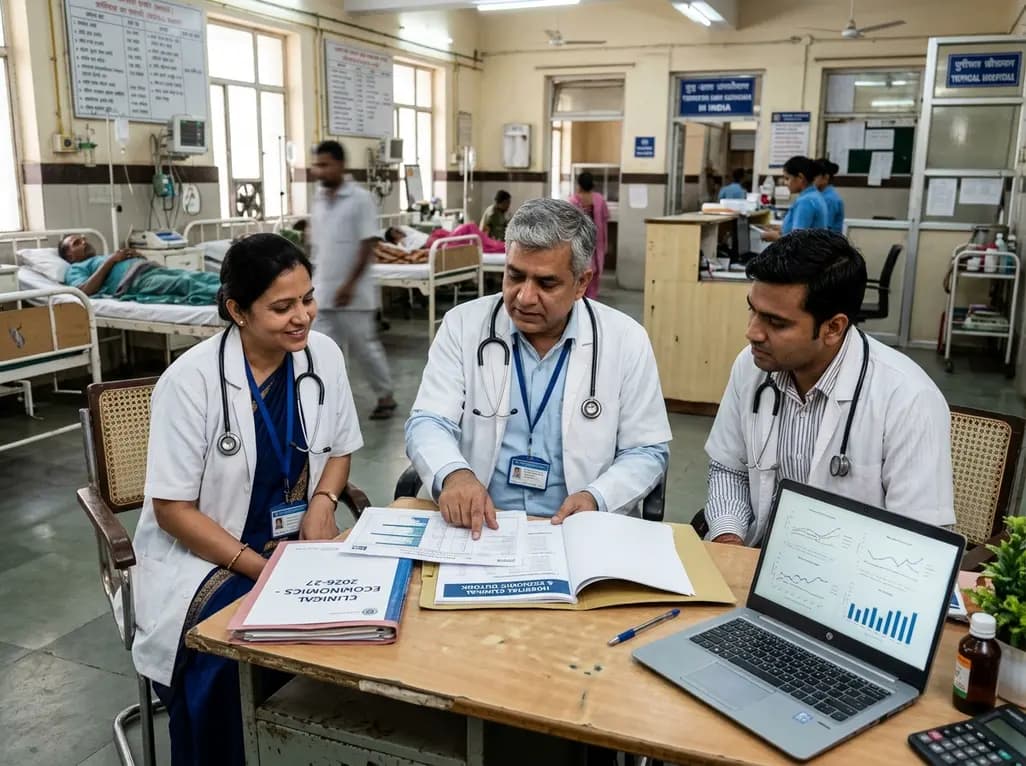
Aon forecasts India's healthcare inflation will ease to 10.1% in 2027 from 11.5% in 2026. Despite moderation, healthcare expenses continue to outpace general inflation, propelled by non-communicable diseases, advanced medical therapeutics, and expanding utilization patterns across diverse patient populations.
Today

Non-union fractures occur in 2-5% of cases, causing significant disability and cost. Conservative modalities such as LIPUS, PEMF, and focused ESWT offer non-surgical healing options for defects up to 5-10 mm when adequate mechanical stability exists without infection.
Today

Explore how novel oxygen-releasing PVA hydrogels prevent early post-transplant hypoxic damage in pancreatic beta cells, sustaining viability and insulin secretory function.
Today
