

Loading, please wait...
Loading, please wait...

The Government of National Capital Territory of Delhi is actively reshaping urban healthcare delivery. During a reproductive medicine center inauguration, Chief Minister Rekha Gupta outlined an ambitious Delhi healthcare expansion strategy. Consequently, the administration is bridging tertiary clinical gaps through robust public-private collaborations. Furthermore, authorities are directing substantial investments toward primary prevention, workforce enhancement, and diagnostic screening. This multi-pronged policy aims to transform the capital into an accessible medical destination for every resident.
Public-private partnerships represent a vital mechanism to overcome capital constraints in advanced clinical medicine. Historically, public healthcare institutions handle immense patient volumes, whereas private facilities frequently house cutting-edge technology. Therefore, strategic alliances between both sectors optimize clinical resource allocation across the national capital. The newly operationalized In Vitro Fertilisation center at Sant Parmanand Hospital exemplifies this collaborative paradigm. Infertility affects an estimated ten to fifteen percent of couples in India, creating substantial emotional and financial distress. Advanced interventions, including Intracytoplasmic Sperm Injection and specialized embryology assessments, often remain financially inaccessible to economically weaker demographics. Through structured institutional cooperation, public authorities and private providers can offer subsidised, high-caliber reproductive services. Moreover, specialized clinical teams consisting of reproductive endocrinologists, embryologists, and genetic counselors ensure comprehensive treatment protocols. Such models do not merely expand specialized clinical reach. Additionally, they establish rigorous quality benchmarks across outpatient and inpatient departments. By fostering these partnerships, Delhi establishes an integrated healthcare ecosystem where public oversight aligns seamlessly with private tertiary innovation. Consequently, collaborative governance frameworks will allow municipal health authorities to monitor patient outcomes continuously. Furthermore, joint clinical audits will promote evidence-based medical practices across both public and private institutional settings.
Catastrophic healthcare expenditure continues to pose a severe economic challenge for vulnerable urban populations. To address this persistent barrier, the Delhi administration has substantially augmented financial safety nets. Specifically, the local government added five lakh rupees of state funding to the existing five-lakh union entitlement. Consequently, eligible families now access an annual health protection cover of ten lakh rupees under Ayushman Bharat. Administrative records confirm the approval of over 8.94 lakh Ayushman cards across the territory. Furthermore, targeted social welfare programs prioritize high-risk, vulnerable demographics. For instance, the Ayushman Vay Vandana initiative has already enrolled more than 3.09 lakh citizens aged seventy and above. Additionally, the expanded insurance mechanism covers over 5.28 lakh pension beneficiaries, encompassing widows and disabled individuals alongside their households. Clinicians frequently encounter patients who delay vital interventions because of acute financial constraints. Expanded secondary and tertiary insurance coverage mitigates this problem substantially. Therefore, early hospital presentation and compliance with complex therapeutic regimens improve markedly. Moreover, cashless hospitalization protocols prevent sudden out-of-pocket borrowing during acute medical crises. As a result, families retain financial stability while receiving timely tertiary interventions. Ultimately, robust financial underwriting empowers clinical teams to prescribe guideline-directed therapies without inflicting economic distress upon impoverished households.
Decentralizing medical delivery remains essential to reduce overcrowding in overstretched tertiary centers. Accordingly, Delhi has operationalized 415 Ayushman Arogya Mandirs near residential neighborhoods, bringing routine care directly into communities. These centers emphasize continuous chronic disease management, antenatal care, and essential diagnostic screenings. Complementing these primary facilities, 29 Jan Aushadhi Kendras provide affordable generic medications to ensure continuous pharmacological compliance. Simultaneously, the state is investing heavily in tertiary upgrades. Five major infrastructure initiatives totaling over 503 crore rupees are underway across diverse public hospitals. Highly specialized clinical services have already commenced, including a dedicated Neuro Intensive Care Unit at GB Pant Hospital. Furthermore, authorities have deployed 300 dialysis machines across 16 government institutions. End-stage renal disease demands accessible hemodialysis to prevent fatal metabolic complications. By dispersing dialysis stations across multiple municipal hospitals, patients avoid exhausting travel across the metropolis. In addition, these specialized facilities reduce referral delays for critical neurotrauma and neurological emergencies. Thus, expanding community clinics alongside tertiary specialized wings creates a balanced continuum of medical care. Consequently, secondary centers can manage stabilized patients locally rather than burdening tertiary referral institutions. This balanced structural model guarantees rapid resuscitation during emergencies and preserves advanced beds for truly complex cases.
Adequate physical infrastructure requires a proportionate increase in qualified medical personnel. Under the comprehensive Delhi healthcare expansion roadmap, medical education capacity is undergoing major systemic enlargement. Undergraduate MBBS positions are increasing from 595 to 820 seats across state institutions. Similarly, postgraduate specialty training positions are rising from 553 to 762 seats. This notable expansion ensures a predictable influx of trained clinicians into high-demand specialties. In addition, construction is progressing on a modern medical college at Indira Gandhi Hospital in Dwarka. This single development entails a dedicated capital outlay of approximately 805 crore rupees. Beyond educational capacity, aggressive recruitment drives are tackling immediate hospital staffing shortages. Healthcare authorities have successfully inducted more than 1,200 nursing professionals and 954 senior resident doctors. Moreover, administrative bodies have sanctioned over 4,000 new clinical and paramedical posts. These human resource investments directly alleviate professional burnout among frontline clinicians. Consequently, doctor-to-patient and nurse-to-patient ratios will improve across high-volume emergency and intensive care units. Adequate staffing allows doctors to dedicate sufficient consultation time to every outpatient. Furthermore, junior clinicians gain structured mentorship within well-staffed clinical departments, raising institutional standards of clinical governance. Ultimately, training more specialists internally builds long-term resilience across the regional health system.
Modern healthcare systems must transition from episodic sick care toward systematic disease prevention and digital connectivity. Delhi has accelerated this shift by integrating robust health information technologies and proactive screening programs. Remarkably, the government has generated over one crore Ayushman Bharat Health Account IDs across the city. Concurrently, 38 government hospitals have deployed the Digital Health Management System. This platform standardizes electronic health records and streamlines cross-facility patient referrals. On the preventive front, authorities have launched targeted screening campaigns to identify diseases at earlier, manageable stages. Welfare interventions now encompass 56 free screening tests for neonates to catch congenital disorders early. Additionally, municipal facilities have carried out more than 10,000 complimentary cancer screenings to detect occult malignancies. Human Papillomavirus vaccination drives targeting young girls between nine and fourteen years represent another major preventive milestone. Cervical cancer ranks among the most prevalent malignancies among Indian women, yet prophylactic vaccination provides substantial protection. Therefore, vaccinating adolescent cohorts generates long-term population-level oncological immunity. Furthermore, longitudinal digital health records allow clinical researchers to analyze epidemiological trends effectively across various urban demographics. In summary, combining digital identity tracking with early childhood screening, oncology detection, and immunisation establishes a modern, proactive public health architecture.
Q1: What are the primary financial coverage benefits under the expanded Ayushman Bharat scheme in Delhi?
The revised framework provides an annual coverage of ten lakh rupees per eligible family. The Delhi administration supplements the central government entitlement of five lakh rupees with an additional five-lakh state top-up. Furthermore, specific schemes like Ayushman Vay Vandana specifically cover elderly citizens aged seventy years and above without economic restrictions. In addition, the scheme extends financial protection to hundreds of thousands of pension recipients, eliminating catastrophic out-of-pocket hospital expenses.
Q2: How will the expansion of medical seats and hospital staff influence clinical practice in the capital?
Undergraduate MBBS seats are increasing from 595 to 820, while postgraduate training slots are expanding from 553 to 762. Additionally, over 1,200 nurses and 954 senior residents have joined public hospitals, alongside 4,000 approved posts. This workforce expansion substantially lowers excessive patient-to-provider ratios in emergency and inpatient wards. Consequently, resident physicians face reduced occupational burnout, allowing medical teams to dedicate greater clinical attention to individualized diagnostic care and bedside therapeutic management.
Q3: What preventive healthcare services are being integrated at the community level in Delhi?
Community healthcare focuses heavily on primary prevention through 415 newly operationalized Ayushman Arogya Mandirs. Key initiatives include 56 free metabolic and genetic screening tests for neonates alongside 10,000 subsidized cancer evaluations for high-risk populations. Moreover, widespread Human Papillomavirus immunisation campaigns protect young girls against cervical cancer. Supported by over one crore digital health accounts, these preventive programs identify chronic illnesses early, drastically lowering emergency hospitalizations and improving community health outcomes.
Disclaimer: This content is for informational and educational purposes only. It does not constitute medical advice or replace professional judgment. Refer to the latest local and national guidelines for clinical practice.
References

Read summarized clinical updates, watch expert medical content, and earn CME certifications right from your smartphone.
Open your smartphone camera to scan and install.





Delhi is undergoing a major healthcare overhaul with enhanced Ayushman Bharat insurance up to ₹10 lakh, increased MBBS and PG medical training seats, expanded primary network mandirs, new tertiary neuro-ICUs, and public-private reproductive technology initiatives to build a resilient, preventative healthcare model.
Today

Findings from the randomized phase 3 AML21 trial indicate that an increase in fetal haemoglobin from baseline to day 10 serves as a reliable early biomarker for complete remission in older AML patients treated with decitabine, addressing a critical need for early indicators of response.
Today

Researchers have engineered an innovative CRISPR-Cas12a fluorescent diagnostic kit for clinical sST2 detection. By combining nanotechnology with enzymatic trans-cleavage, this platform enables rapid, ultrasensitive heart failure diagnosis and risk stratification, outperforming conventional laboratory ELISA methods.
Today

Non-union fractures occur in 2-5% of cases, causing significant disability and cost. Conservative modalities such as LIPUS, PEMF, and focused ESWT offer non-surgical healing options for defects up to 5-10 mm when adequate mechanical stability exists without infection.
Today
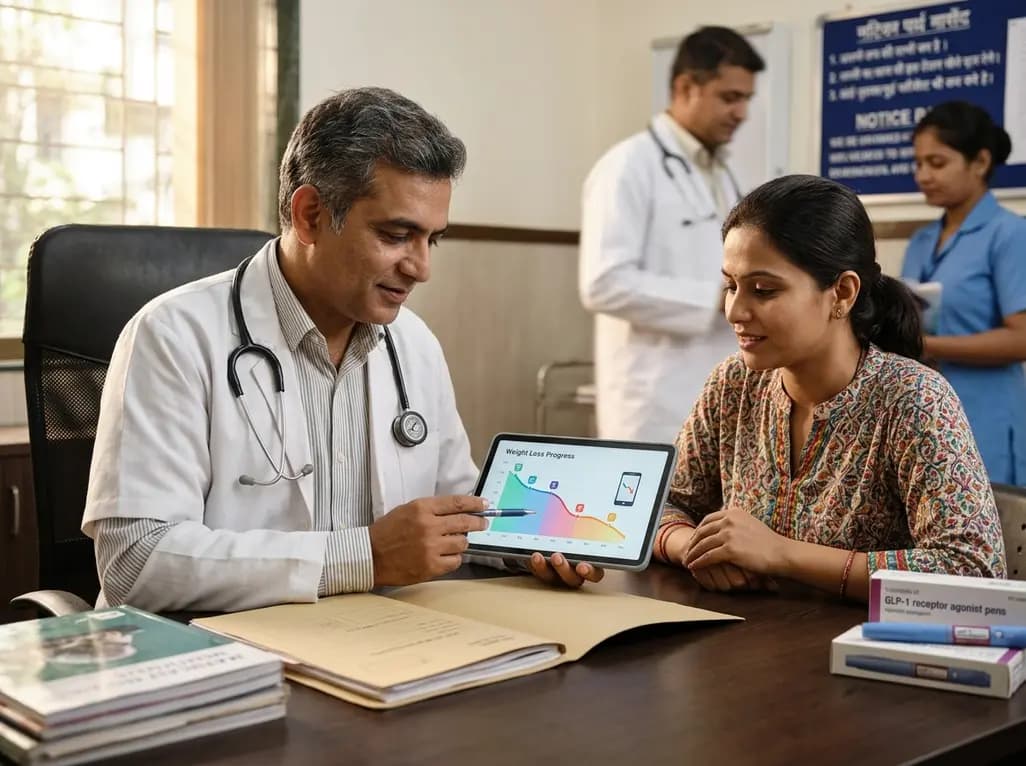
A retrospective study of 6,113 adults shows that combining GLP-1 receptor agonists with digital health apps nearly doubles the odds of achieving significant weight loss. Frequent progress logging serves as a primary behavioral driver of long-term metabolic success.
Today
