

Loading, please wait...
Loading, please wait...

Pancreatic islet transplantation represents a promising curative modality for patients suffering from brittle type 1 diabetes mellitus. However, acute graft failure frequently occurs during the immediate post-implantation window before microvascular networks adequately re-establish. To overcome this critical hurdle, bioengineers have developed advanced oxygen-releasing PVA hydrogels that supply supplemental oxygen directly to vulnerable endocrine cells. These specialized biomaterials mitigate ischemic necrosis, preserve cellular metabolism, and protect insulin secretory pathways during the critical avascular stage of engraftment.
Pancreatic beta cells maintain exceptionally high metabolic activity due to continuous glucose sensing and insulin synthesis. Consequently, these endocrine cells exhibit extreme vulnerability to oxygen deprivation. During islet isolation and subsequent transplantation, surgeons inevitably sever the rich native intra-islet microvasculature. Therefore, transplanted islets depend entirely on passive oxygen diffusion from the surrounding host tissue until functional angiogenesis develops, a process that typically requires ten to fourteen days. During this critical avascular window, severe hypoxia rapidly triggers beta-cell apoptosis, uncouples mitochondrial respiration, and curtails glucose-stimulated insulin secretion. Studies show that clinicians routinely lose up to sixty percent of transplanted islet mass within the first seventy-two hours post-procedure. Moreover, inadequate oxygen tension stimulates local inflammatory cascades and promotes early graft dysfunction. While hyperbaric oxygen therapy and systemic oxygen carriers provide transient benefits, they fail to deliver localized, continuous support at the implant site. Consequently, endocrinologists and transplant surgeons urgently require innovative biomaterial platforms that deliver sustained oxygen tension directly to cellular grafts without causing systemic toxicity.
To address early graft hypoxia, researchers engineered multilayered oxygen-releasing PVA hydrogels utilizing physically crosslinked poly(vinyl alcohol). The team selected poly(vinyl alcohol) because of its biocompatibility, mechanical durability, and non-thrombogenic profile. Rather than utilizing chemical crosslinkers that might compromise cellular viability, investigators fabricated the hydrogel matrices through repeated physical freeze-thaw cycles. This physical crosslinking strategy establishes robust polymeric crystallites that yield adjustable swelling kinetics and superior elasticity. Furthermore, researchers incorporated solid calcium peroxide into the core polymeric matrix to serve as an active chemical oxygen generator. Upon hydration, calcium peroxide reacts with ambient water molecules to liberate molecular oxygen over extended timeframes. However, premature hydrolysis during manufacturing often depletes oxygen reserves before therapeutic implantation. Therefore, the researchers incorporated dimethyl sulfoxide during the initial fabrication phase to suppress early spontaneous hydrolysis. As a result, the finalized hydrogel construct retained high concentrations of active solid peroxide, facilitating stable and reproducible oxygen liberation after hydration.
Although calcium peroxide serves as an effective oxygen progenitor, its primary decomposition generates intermediate hydrogen peroxide and free radical species. Beta cells possess notoriously low endogenous levels of antioxidant enzymes, specifically catalase and glutathione peroxidase. Consequently, beta cells suffer rapid oxidative injury and cytotoxic membrane damage when exposed to unregulated peroxide byproducts. To overcome this fundamental barrier, the investigators engineered a sophisticated three-layer architectural construct. Specifically, they sandwiched the calcium peroxide-containing core between two outer protective hydrogel layers functionalized with active catalase enzymes. When water permeates the hydrogel core, calcium peroxide hydrolyzes and releases oxygen along with hydrogen peroxide intermediates. As these chemical intermediates diffuse outward, the catalytic outer layers rapidly degrade hydrogen peroxide into harmless water and additional molecular oxygen. Morphological analyses and swelling tests demonstrated that this layered architecture preserved structural stability while sustaining dissolved oxygen levels in physiological media for twenty-eight continuous days. Thus, the enzyme-shielded configuration successfully resolves peroxide-mediated cytotoxicity while prolonging graft oxygenation.
To evaluate biological safety and efficacy, investigators cultured human 1.1B4 pancreatic beta cells under severe hypoxic conditions alongside the engineered hydrogels. In particular, the researchers tested varying concentrations of calcium peroxide to identify optimal dosing thresholds. Formulations containing 0.1% weight-by-volume calcium peroxide produced remarkable cytoprotective results. Specifically, beta cells cultured with this formulation demonstrated significant metabolic vitality, achieving a relative metabolic activity of 170.0 ± 9.1% by day seven. Furthermore, these cells retained their glucose responsiveness, demonstrating robust glucose-stimulated insulin secretion comparable to normoxic controls. In contrast, formulations loaded with higher concentrations, such as 0.5% calcium peroxide, triggered cellular toxicity. These higher loadings elevated lactate dehydrogenase leakage, suppressed cell proliferation, and significantly downregulated insulin gene expression at later timepoints. Crucially, matched hydrogel controls lacking the protective catalase outer layers exhibited inferior cell survival and marked cellular injury. These findings confirm that controlled oxygen release coupled with enzymatic peroxide scavenging preserves beta-cell integrity and metabolic competence under hypoxic stress.
The successful development of this multilayered hydrogel platform offers powerful translational implications for the future of regenerative endocrinology. By bridging the ischemic gap before vascularization occurs, these self-oxygenating scaffolds can significantly improve the survival rate of transplanted donor islets. Furthermore, this biomaterial platform provides immediate value for ongoing human embryonic stem cell and induced pluripotent stem cell replacement protocols. Stem cell-derived beta clusters experience identical diffusion barriers when implanted subcutaneously or within alternative pre-vascularized pockets. Therefore, incorporating sustained oxygenation matrices could reduce the total cellular biomass required to establish clinical euglycemia. Consequently, patients would require fewer donor organs and lower doses of immunosuppressive therapies. Nevertheless, researchers must complete comprehensive in vivo rodent and non-human primate studies to establish long-term degradation kinetics, host foreign-body responses, and systemic safety. In summary, functionalized biomaterials that sustain localized oxygen tension represent a transformative frontier in curable cellular interventions for brittle diabetes mellitus.
Transplantation procedures completely sever the native capillary network supplying isolated pancreatic islets. Consequently, transplanted cells depend entirely on passive oxygen diffusion from neighboring tissue beds until host microvessels revascularize the graft, which takes up to two weeks. Because highly active beta cells require abundant oxygen to sustain mitochondrial respiration, prolonged ischemia rapidly triggers cellular necrosis, inflammatory apoptosis, and widespread graft destruction.
Hydrolysis of calcium peroxide produces both molecular oxygen and intermediate hydrogen peroxide molecules. Because beta cells have minimal antioxidant defenses, unbuffered peroxide causes severe oxidative cell death. Therefore, investigators engineered a multilayered hydrogel sandwiching the peroxide core between outer layers containing active catalase. These protective layers immediately decompose intermediate hydrogen peroxide into water and beneficial oxygen, fully neutralizing cytotoxic compounds before cellular exposure.
The formulation containing 0.1% calcium peroxide maintained physiological oxygen tensions without overwhelming enzymatic defenses, achieving robust glucose-stimulated insulin secretion and 170% metabolic activity at day seven. In contrast, the higher 0.5% concentration released excessive chemical intermediates that exceeded local catalase capacity. Consequently, the concentrated formulation increased cellular cytotoxicity, induced lactate dehydrogenase leakage, and diminished insulin gene expression.
Disclaimer: This content is for informational and educational purposes only and should not be taken as professional medical advice. While we strive to provide accurate, up-to-date information, medicine is an ever-evolving field, and recommendations may change over time. Readers are strongly advised to confirm any information presented here with up-to-date and independent sources and consult qualified healthcare professionals before making any clinical decisions or treatment changes. Refer to the latest local and national guidelines for clinical practice.
References
Isayeva A et al. Development of oxygen-releasing PVA hydrogels for protecting pancreatic beta cells from the hypoxic damage in diabetes. RSC Adv. 2026 Nov 03. doi: 10.1039/d6ra10280h. PMID: 42979036.
Pedraza E et al. Preventing hypoxia-induced cell death in beta cells and islets via locally delivered oxygen. Proc Natl Acad Sci U S A. 2012;109(11):4245-4250. doi: 10.1073/pnas.1113560109.
Montazeri L et al. In situ oxygen-generating scaffolds improve cell survival and promote angiogenesis in tissue-engineered constructs. Biomaterials. 2020;255:120172. doi: 10.1016/j.biomaterials.2020.120172.

Read summarized clinical updates, watch expert medical content, and earn CME certifications right from your smartphone.
Open your smartphone camera to scan and install.





Explore how novel oxygen-releasing PVA hydrogels prevent early post-transplant hypoxic damage in pancreatic beta cells, sustaining viability and insulin secretory function.
Today

Delhi is undergoing a major healthcare overhaul with enhanced Ayushman Bharat insurance up to ₹10 lakh, increased MBBS and PG medical training seats, expanded primary network mandirs, new tertiary neuro-ICUs, and public-private reproductive technology initiatives to build a resilient, preventative healthcare model.
Today

Aon forecasts India's healthcare inflation will ease to 10.1% in 2027 from 11.5% in 2026. Despite moderation, healthcare expenses continue to outpace general inflation, propelled by non-communicable diseases, advanced medical therapeutics, and expanding utilization patterns across diverse patient populations.
Today
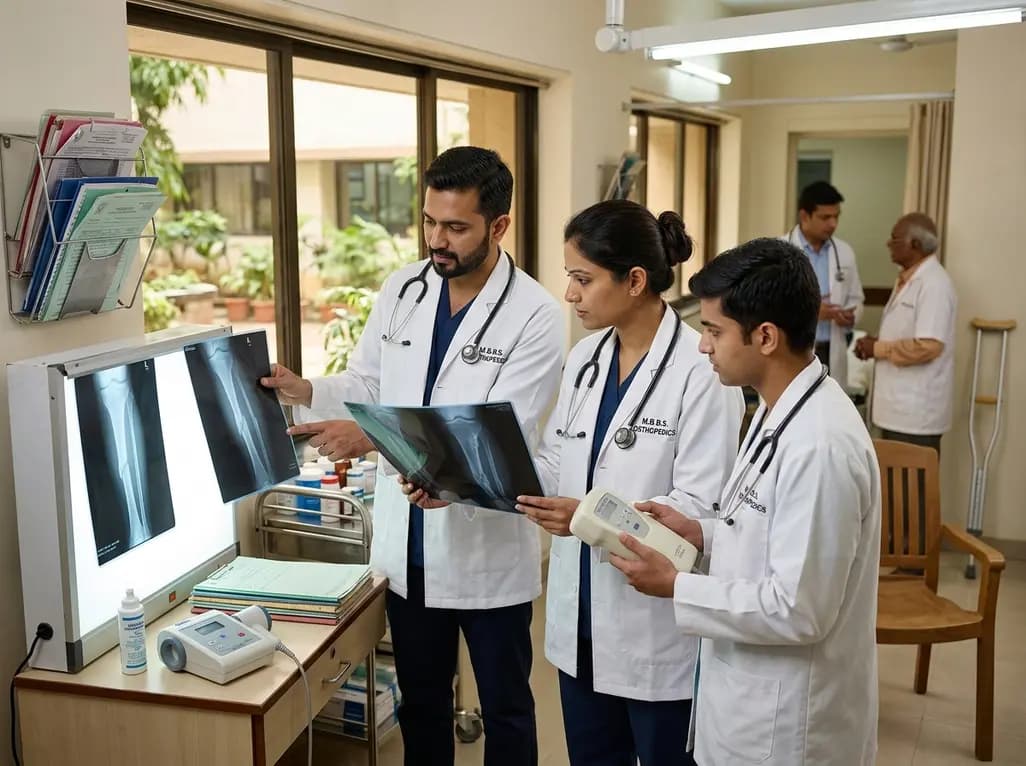
Non-union fractures occur in 2-5% of cases, causing significant disability and cost. Conservative modalities such as LIPUS, PEMF, and focused ESWT offer non-surgical healing options for defects up to 5-10 mm when adequate mechanical stability exists without infection.
Today

A Brazilian birth cohort reveals significant sex-specific associations between preterm birth and adolescent adiposity, underscoring the urgent need for targeted long-term cardiometabolic surveillance and tailored clinical monitoring.
Today
