.webp&w=384&q=75)

Loading, please wait...
Loading, please wait...

Migrant populations and refugees in crisis-prone regions like the Thai-Myanmar border often face exclusion from local health systems. The COVID-19 pandemic highlighted significant gaps in migrant health security and universal health coverage (UHC). To address these deficiencies, health leaders established the ANISE network. This collaborative effort aims to bridge the gap between pandemic preparedness and the realities of displaced populations.
Systems must empower community-led and locally anchored capacities to strengthen migrant health security. Governance also requires cross-sectoral and cross-border institutional arrangements. Finally, resilient systems necessitate enabling governance supported by sustainable domestic resource mobilization. Furthermore, community networks and integrated surveillance effectively prevent communicable diseases in these volatile settings.
The analysis illustrates how community networks, multisectoral collaboration, and integrated surveillance systems support communicable disease prevention. However, several persistent barriers hinder migrant-inclusive health security. Legal status constraints for undocumented migrants and low affordability create significant hurdles. Additionally, weak data coordination across different health and local authorities disrupts the continuity of care. Recent funding cuts from agencies like USAID have exacerbated these challenges, particularly in nutrition and disease control. Consequently, the current crisis serves as a stress test for systems serving vulnerable populations.
The shift from temporary humanitarian responses to institutionalized governance is essential. Experts emphasize that migrant health can no longer rely solely on external donor funding. Instead, strengthening health systems requires greater local ownership and the integration of migrant health into broader national UHC agendas. This transition ensures that health security remains robust even when external support declines.
Community-led networks provide locally anchored capacity. They support service delivery and communicable disease prevention in areas where official government infrastructure may be weak or inaccessible to migrants.
Cuts in external funding, such as those from USAID, weaken essential health functions like nutrition, disease control, and health protection. This forces systems to shift toward more sustainable domestic resource mobilization.
Disclaimer: This content is for informational and educational purposes only. It does not constitute professional medical advice, diagnosis, or treatment. Refer to the latest local and national guidelines for clinical practice.
References

Read summarized clinical updates, watch expert medical content, and earn CME certifications right from your smartphone.
Open your smartphone camera to scan and install.





Learn how community-led systems and local ownership can strengthen health security for migrants and refugees, even amid declining international funding....
6 months ago
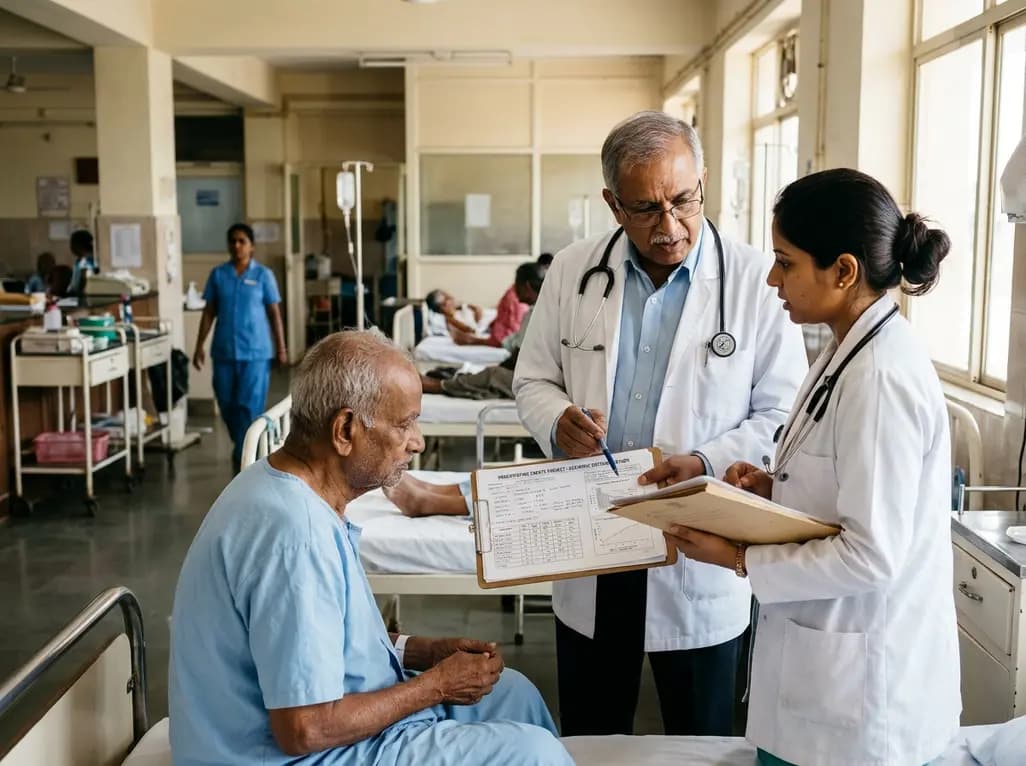
Failing to account for competing events like mortality in longitudinal geriatric studies produces biased risk estimates and misleading inferences. This review highlights key methodological principles, insights from the Precipitating Events Project, and practical approaches for clinical research appraisal.
Today

A study in JAMIA Open shows lightweight open-source reasoning LLMs achieve up to 95% sensitivity and accelerate evidence synthesis screening by nearly twentyfold, presenting a cost-effective, scalable AI solution for biomedical research and systematic reviews.
Today
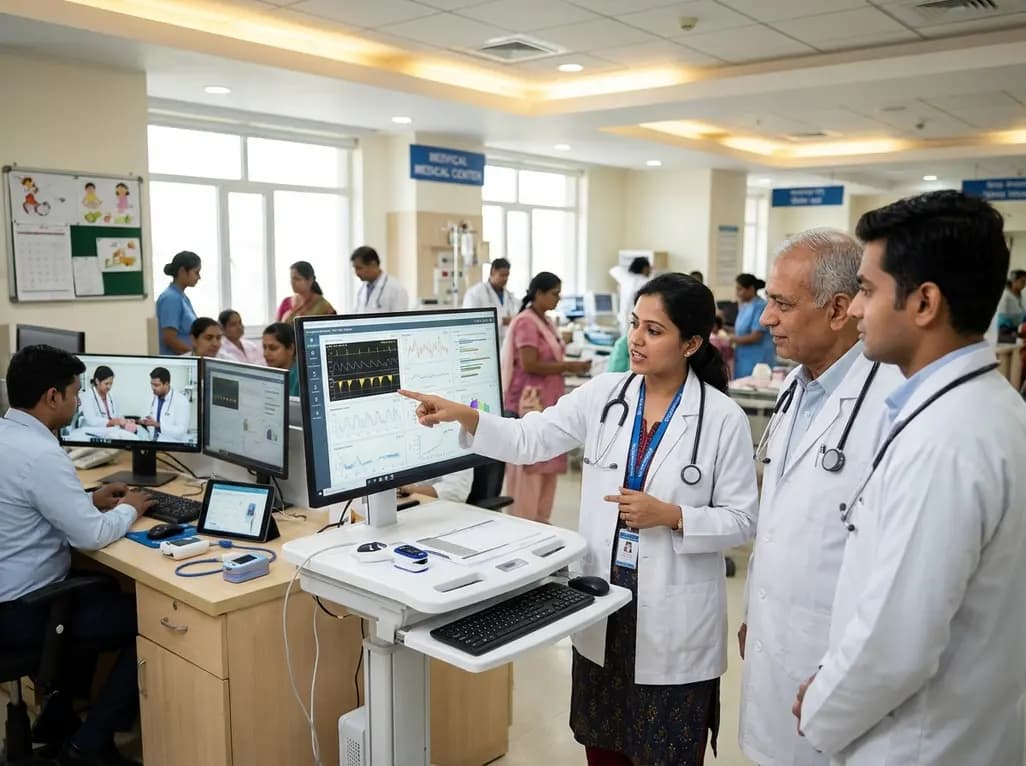
A landmark study details how an enterprise pediatric remote patient management model expanded from a single cardiology pilot to 16 diverse specialty programs by combining centralized digital operations with specialty clinical leadership.
Today
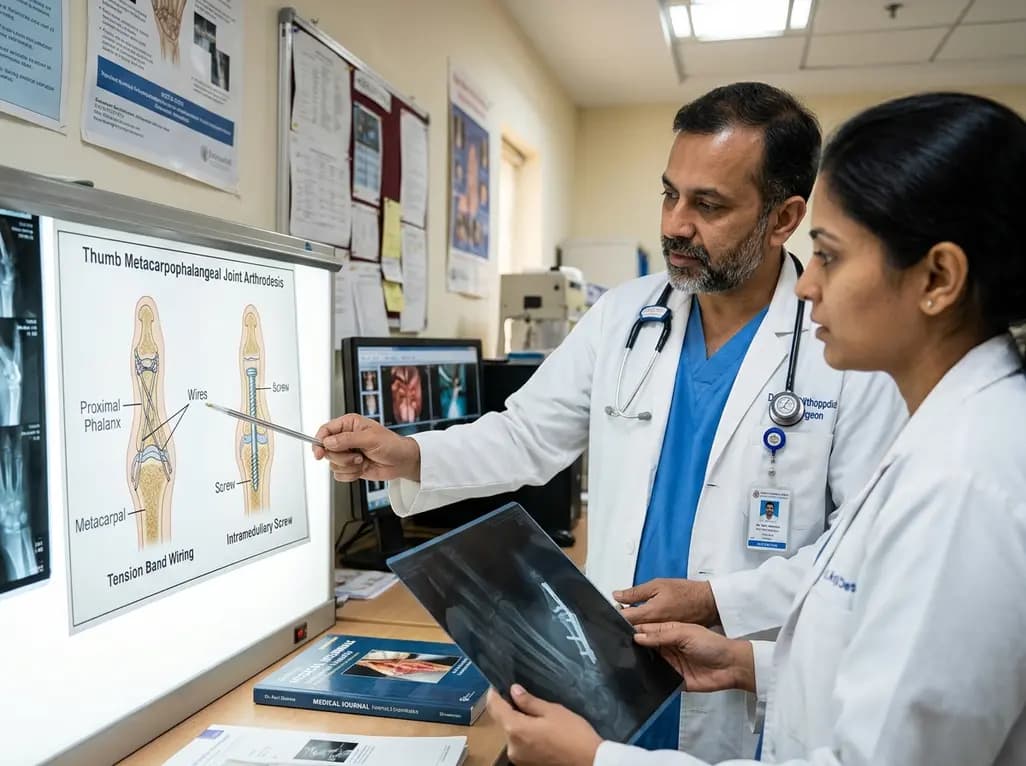
A comparative review of tension band wiring and intramedullary screw fixation in thumb metacarpophalangeal arthrodesis, evaluating union rates, hardware complications, and clinical outcomes.
Yesterday
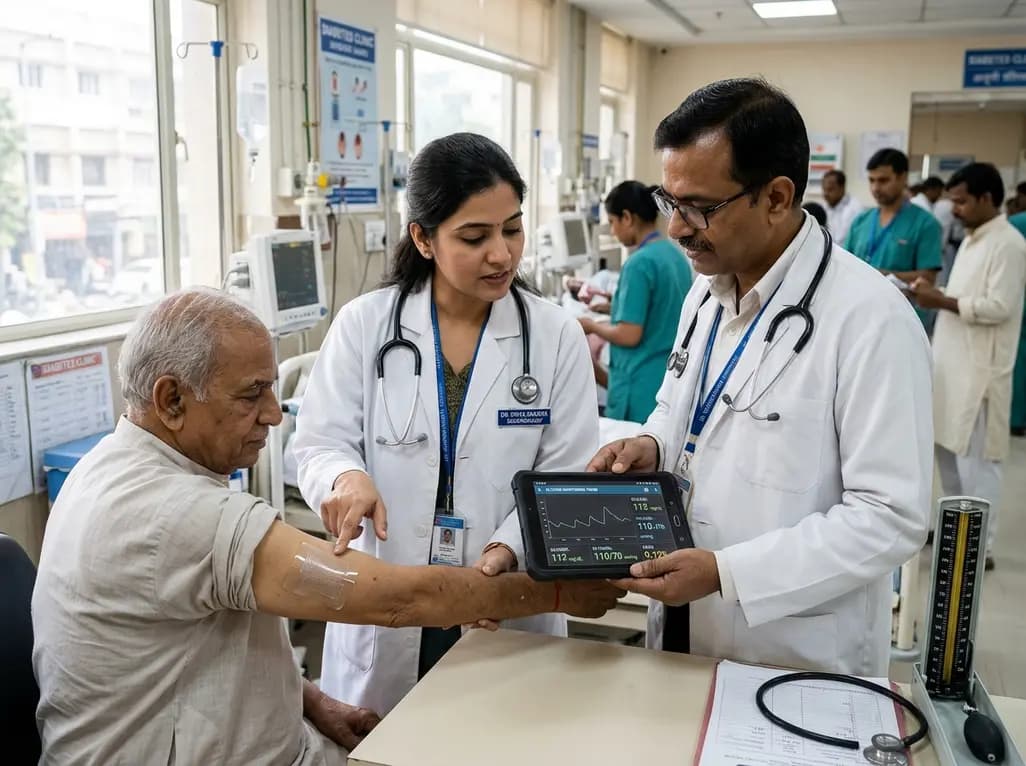
A breakthrough ultrathin multimodal sensor decouples physical hemodynamic monitoring from disposable electrochemical calibration, achieving long-term wearable glucose prediction with 81.36% accuracy and a 9.12% MARD. This offers a robust, drift-free solution for outpatient metabolic surveillance.
Today
