

Loading, please wait...
Loading, please wait...

Managing children with treatment-resistant juvenile idiopathic arthritis remains a formidable therapeutic challenge for clinicians worldwide. Although biologic agents have revolutionized pediatric rheumatology, a concerning subset of patients still develops intractable synovitis and severe flares. For these difficult cases, clinicians increasingly consider refractory JIA combination therapy to overcome drug resistance and achieve clinical remission. A pioneering international multicentre case series published in Rheumatology (Oxford) now offers valuable real-world evidence supporting this strategy. Specifically, the study evaluates the efficacy and safety of pairing a Janus kinase inhibitor with a targeted biologic agent. Consequently, these findings provide vital insights for pediatricians and rheumatologists seeking alternative treatment strategies for severe refractory disease.
Systemic juvenile idiopathic arthritis and extended polyarticular subtypes involve redundant inflammatory cascades driven by excessive cytokine signalling. Historically, clinicians relied on systemic corticosteroids to manage persistent inflammatory flares. However, prolonged steroid therapy produces devastating toxicities in growing children, including growth failure, osteopenia, and pathologic fractures. While modern biologics targeting interleukin-1, interleukin-6, and tumor necrosis factor have transformed care, ten to twenty percent of patients remain refractory. These difficult-to-treat children cycle through multiple biologic agents without attaining disease quiescence. Furthermore, sequential treatment failures permit progressive joint damage to accumulate. In the multicentre series, seventy-seven percent of patients had documented corticosteroid toxicity before initiating dual therapy. Additionally, thirty-nine percent had developed permanent joint damage. Consequently, pediatric rheumatologists need innovative therapeutic combinations that neutralize distinct inflammatory pathways simultaneously. Co-targeting intracellular signaling with Janus kinase inhibitors and extracellular cytokines offers a compelling strategy to restore immune balance.
The international multicentre retrospective study reviewed real-world clinical data across nine specialized pediatric rheumatology centres in the United Kingdom and Ireland. Investigators identified thirteen pediatric patients who received concurrent treatment with a Janus kinase inhibitor and a biologic agent. Among this refractory cohort, eleven patients had systemic JIA or Still’s disease, one had psoriatic arthritis, and one had extended oligoarticular arthritis. Before clinicians initiated refractory JIA combination therapy, patients had received a median of five conventional, biologic, or targeted synthetic DMARDs over sixty-six months. Clinicians commenced dual targeted therapy at a median patient age of twelve years. Remarkably, tofacitinib combined with tocilizumab served as the most common treatment pairing. Although two patients utilized combination therapy briefly as a bridging regimen, eleven children remained on dual therapy for twelve months or longer. Therefore, this sustained duration permitted robust paired statistical analyses. Ultimately, the study documents practical clinician experience managing children who had exhausted conventional single-agent options.
The therapeutic results demonstrated striking clinical improvements across the study cohort after initiating dual targeted therapy. Specifically, paired analyses at twelve months showed a significant drop in active joint counts from a baseline median of five joints down to two joints. This articular improvement achieved statistical significance with a p-value of 0.009. Furthermore, disease control persisted over long-term observation. At the final clinical follow-up, after a median of 21.5 months, six out of ten patients continuing dual therapy achieved completely inactive disease. In addition to suppressing synovitis, dual targeted therapy delivered profound glucocorticoid-sparing benefits. Twelve-month intravenous methylprednisolone pulse requirements dropped from a baseline median of 109 mg/kg down to zero mg/kg (p=0.013). Moreover, eight out of ten patients continuing combination therapy completely discontinued systemic corticosteroids by their last visit. Thus, the regimen successfully rescued patients from steroid dependence while driving refractory arthritis into sustained remission.
Administering two concurrent targeted immunosuppressive agents inherently raises concern regarding opportunistic infections and drug toxicity. Reassuringly, study investigators reported zero serious infections throughout the follow-up period across the multicentre cohort. This safety finding provides significant comfort to clinicians considering intensive immunomodulation in pediatric populations. Nevertheless, physicians must remain vigilant because targeted immunomodulators still carry specific non-infectious risks. During the observation window, clinicians recorded two serious non-infectious adverse events: one case of femoral head avascular necrosis and one case of pulmonary alveolar proteinosis. Avascular necrosis often reflects cumulative corticosteroid exposure rather than direct combination therapy toxicity. Conversely, pulmonary alveolar proteinosis represents an aggressive known complication of systemic JIA. Therefore, clinicians initiating dual targeted therapy must conduct meticulous baseline evaluations and serial monitoring. Essential surveillance includes routine hematology panels, liver enzymes, renal parameters, and ongoing screening for cardiopulmonary symptoms.
These real-world findings establish combination targeted therapy as a viable therapeutic strategy for children with refractory juvenile idiopathic arthritis. Current international management guidelines usually recommend sequential monotherapy switches when patients fail targeted biologics. However, sequential switching frequently fails in aggressive autoinflammatory phenotypes where multiple cytokine pathways operate concurrently. Pairing a Janus kinase inhibitor like tofacitinib with an interleukin-6 inhibitor like tocilizumab attacks both intracellular signalling and extracellular cytokine triggers. Consequently, this synergistic approach offers a rescue pathway for patients facing progressive joint destruction or corticosteroid complications. In clinical settings, specialists can utilize combination therapy for sustained maintenance or as a temporary bridge to induce disease quiescence. Nevertheless, clinicians should restrict this advanced intervention to specialized tertiary pediatric rheumatology centres. Until randomized trials emerge, these real-world data empower clinicians to consider combination targeted regimens when treating highly refractory juvenile arthritis.
The best candidates are pediatric patients with severe, treatment-refractory systemic or polyarticular juvenile idiopathic arthritis who have failed multiple conventional and biologic DMARDs. Children suffering from severe glucocorticoid toxicity or progressive articular damage also represent prime candidates. Furthermore, clinicians should reserve this approach for tertiary pediatric rheumatology centers equipped with experienced multidisciplinary teams. These specialized units ensure rigorous clinical monitoring, individualized drug selection, and immediate management of any emerging adverse events during therapy.
Clinicians must implement comprehensive baseline screening and serial laboratory surveillance throughout dual targeted therapy. Baseline assessments should rule out latent tuberculosis, chronic viral hepatitis, and pre-existing pulmonary disease. During active treatment, physicians should monitor complete blood counts, hepatic transaminases, serum creatinine, and fasting lipid profiles every four to twelve weeks. Additionally, clinicians must educate caregivers to recognize early infection signs and maintain high diagnostic suspicion for pulmonary alveolar proteinosis and macrophage activation syndrome.
Yes, clinicians can successfully apply combination targeted therapy as a temporary bridging strategy in highly active disease. In the international cohort, two patients utilized this dual targeted approach temporarily to quell severe refractory inflammation rapidly. Once clinicians achieve stable disease quiescence, they can carefully taper and discontinue one targeted agent, transitioning the patient back to monotherapy. This flexible bridging strategy rapidly controls severe inflammatory flares while mitigating the cumulative risks of extended dual immunosuppressive exposure.
Disclaimer: This content is for informational and educational purposes only and does not constitute medical advice, diagnosis, or treatment. Healthcare professionals should exercise their independent clinical judgment when applying this information. Refer to the latest local and national guidelines for clinical practice.
References

Read summarized clinical updates, watch expert medical content, and earn CME certifications right from your smartphone.
Open your smartphone camera to scan and install.





A multicentre case series demonstrates that combination targeted therapy pairing a JAK inhibitor with a biologic induces remission, lowers active joint counts, and eliminates systemic steroid reliance in severe refractory juvenile idiopathic arthritis without causing serious infections.
Today
New PEX-NET registry data reveal that the right atrial pressure to cardiac output (RAP/CO) slope during exercise right heart catheterization is an independent predictor of long-term mortality in pulmonary hypertension, outperforming conventional resting measures.
Today

A review of the evolution of maternal and pediatric therapeutics over two decades, examining developmental pharmacokinetics, lactation pharmacology, pediatric formulations, and evidence-based guidance for clinicians managing pregnancy and childhood diseases.
Today

A landmark Nature study reveals that only 27% of individuals with obesity have active clinical disease. By incorporating waist circumference and organ dysfunction, this new diagnostic framework moves beyond BMI to prevent widespread misclassification and guide personalized metabolic intervention.
Today

Chronic nonbacterial osteomyelitis (CNO) is a pediatric autoinflammatory bone disorder. This review covers the French protocol, emphasizing whole-body MRI as the diagnostic gold standard, prudent biopsy avoidance, first-line NSAID treatment, and second-line biologic or bisphosphonate therapies for spinal lesions.
Today
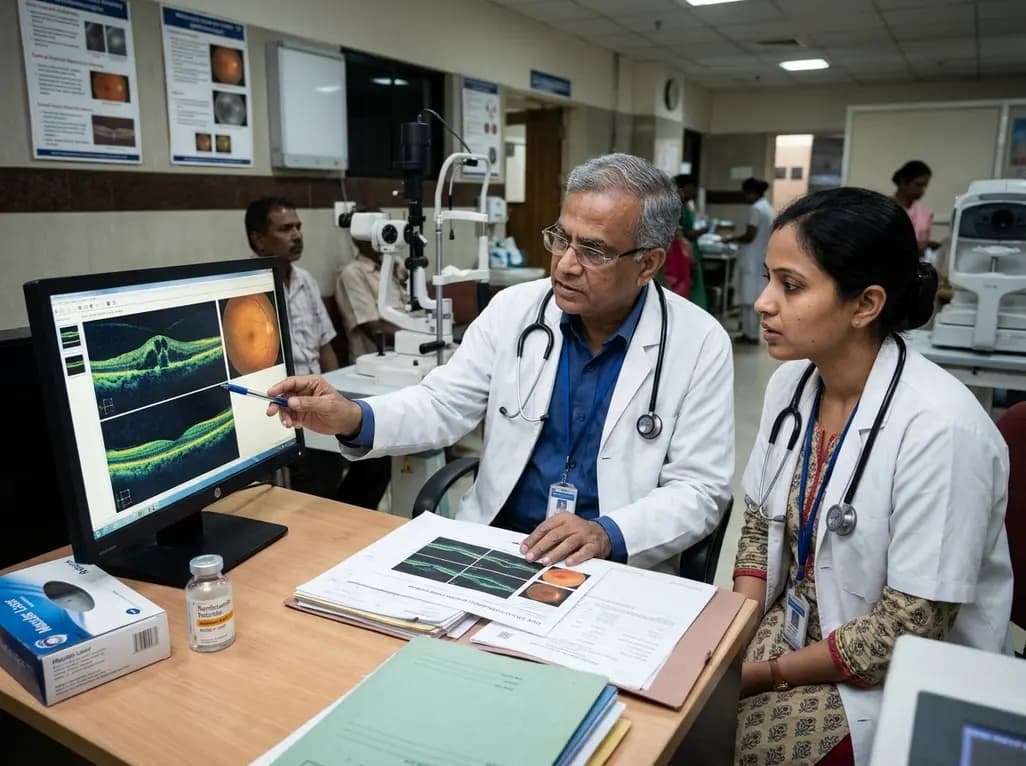
A real-world retrospective study demonstrates that combining intravitreal ranibizumab with focal/grid macular laser significantly improves visual acuity and central macular thickness compared to laser monotherapy in patients with center-involved diabetic macular edema.
Today
