

Loading, please wait...
Loading, please wait...

Body mass index has guided clinical weight classification for over five decades. However, reliance on weight and height alone routinely misclassifies patient risk. A landmark international study published in Nature has now validated a revolutionary framework for clinical obesity diagnosis that looks beyond simple anthropometrics. Senior author Professor Francesco Rubino and international researchers demonstrated that only a minority of individuals with high adiposity suffer from active metabolic harm. Consequently, this study challenges long-standing diagnostic practices across global healthcare systems. By separating asymptomatic fat accumulation from organ-damaging pathology, modern medicine can finally establish proportionate, individualized cardiometabolic care.
For decades, clinicians have recognized that body mass index acts as a crude surrogate measure. Although simple to calculate, BMI cannot differentiate between skeletal muscle mass and adipose tissue. Furthermore, it completely ignores visceral fat distribution, which drives insulin resistance, chronic inflammation, and endothelial dysfunction. Many muscular athletes register an elevated BMI despite having excellent cardiovascular profiles. Conversely, individuals with normal weight may harbor substantial visceral adiposity and severe metabolic derangements. In South Asian populations, this discrepancy causes significant diagnostic delay because individuals accumulate visceral fat at much lower body weights.
In addition to misclassifying adiposity, BMI fails to assess whether excess weight impairs organ health. A static number on a scale cannot indicate the presence of hepatic steatosis, sleep apnea, or early nephropathy. Therefore, clinicians frequently overtreat metabolically healthy individuals while undertreating high-risk patients. Epidemiologists and professional societies have long demanded a more sophisticated diagnostic paradigm. Shifting the diagnostic benchmark empowers physicians to target therapy toward individuals facing tangible clinical risks rather than statistical probabilities. Ultimately, modern clinical practice requires diagnostic precision rather than population-level mathematical estimates.
To resolve diagnostic ambiguity, a Lancet Commission recently proposed a two-step diagnostic paradigm. First, physicians assess excess body fat using anthropometric measurements such as waist circumference, waist-to-height ratio, or direct body composition analysis. Second, clinicians examine whether the excess adiposity actively causes organ dysfunction. Under this framework, clinicians divide patients into two distinct categories: pre-clinical obesity and clinical obesity.
Specifically, pre-clinical obesity characterizes individuals who carry excess adiposity without demonstrable organ impairment or functional limitation. In these patients, excess fat represents an established risk factor rather than an active illness. Conversely, clinical obesity diagnosis applies when excess adiposity directly triggers organ damage or substantially impairs daily activities. For example, clinical obesity includes weight-related type 2 diabetes, non-alcoholic steatohepatitis, heart failure with preserved ejection fraction, or severe osteoarthritis. Therefore, clinical obesity represents a true, active chronic disease requiring prompt medical intervention. Meanwhile, pre-clinical obesity demands preventive lifestyle counselling and longitudinal monitoring without aggressive pharmaceutical therapy. Furthermore, this clinical separation reassures patients who previously received stigmatizing diagnoses despite enjoying normal physiological parameters.
The Nature publication rigorously evaluated this proposed framework using extensive longitudinal data. The investigators analyzed health records from nearly 850,000 adults across four diverse nations: Britain, the United States, China, and Spain. By applying the two-step criteria, the research team discovered remarkable diagnostic shifts compared to standard BMI classifications. Overall, approximately 1% to 3% of individuals previously classified as obese did not meet the revised diagnostic threshold. More strikingly, between 5% and 9% of adults with high adiposity were newly recognized as having obesity despite having a non-obese BMI.
Crucially, the study demonstrated that only 27% of adults with obesity had active clinical obesity. Across the total adult population, this group represented approximately 8.5% of individuals. Furthermore, the researchers tracked long-term progression over fifteen years of follow-up. Reassuringly, approximately 82% of patients with pre-clinical obesity did not advance to clinical obesity. However, disease progression rates varied significantly across geographic regions, with higher progression observed in cohorts from China and Spain. Ultimately, these longitudinal data demonstrate that excess adiposity does not automatically cause organ disease, reinforcing the necessity of functional clinical assessments.
The study findings hold immense relevance for clinicians practicing in India and South Asia. South Asian individuals possess a distinct metabolic phenotype characterized by high body fat percentages at comparatively low BMI values. In addition, South Asians exhibit a pronounced propensity for visceral adiposity and ectopic fat deposition in the liver and skeletal muscle. Consequently, standard global BMI thresholds consistently fail South Asian patients. Using BMI alone allows severe metabolic abnormalities, including early-onset type 2 diabetes and premature coronary artery disease, to progress undetected.
By integrating waist circumference and organ dysfunction into routine evaluations, Indian doctors can accurately identify hidden metabolic danger. Furthermore, Indian consensus guidelines already recommend lower anthropometric cut-offs, defining obesity at a BMI of 25 kg/m² and abdominal obesity at waist circumferences exceeding 90 centimeters for men and 80 centimeters for women. The new framework aligns perfectly with these regional clinical adaptations. Moreover, identifying whether an Indian patient has pre-clinical or clinical obesity prevents unnecessary overtreatment while securing aggressive intervention for vulnerable patients. Thus, adopting functional criteria directly addresses the unique cardiometabolic risks endemic to the Indian subcontinent.
Differentiating between pre-clinical and clinical obesity fundamentally reshapes clinical decision-making and health economics. Historically, uniform BMI guidelines determined patient eligibility for pharmacotherapy and metabolic surgery. However, this outdated approach frequently resulted in overtreating healthy individuals while denying therapy to those with urgent metabolic need. Under the new paradigm, clinicians can tailor therapeutic intensity to the patient's objective disease state.
Patients diagnosed with pre-clinical obesity benefit most from primary prevention strategies. For instance, structured nutritional counselling, moderate physical activity, and regular metabolic monitoring prevent disease onset effectively. In contrast, patients suffering from clinical obesity require prompt, disease-modifying therapies to halt or reverse organ damage. Clinicians should prioritize modern incretin mimetics, such as GLP-1 receptor agonists and dual GIP/GLP-1 agonists, for these high-risk individuals. Furthermore, metabolic surgery provides profound benefits for patients with severe mechanical or metabolic organ impairment. In addition, insurance providers must update reimbursement policies to cover waist circumference measurements and organ health evaluations. Consequently, this diagnostic evolution will streamline resource allocation, reduce health disparities, and improve patient outcomes worldwide.
Q1: How does the new framework distinguish between pre-clinical and clinical obesity?
The framework distinguishes the two states based on the presence of weight-induced organ dysfunction. Pre-clinical obesity occurs when an individual exhibits elevated body fat without measurable organ damage or physical disability. In contrast, clinical obesity represents an active disease state where excess adiposity directly impairs organ function. Examples include weight-related heart disease, non-alcoholic fatty liver disease, type 2 diabetes, or obstructive sleep apnea requiring immediate therapeutic management.
Q2: Why is body mass index considered inadequate for diagnosing obesity?
Body mass index relies solely on height and weight calculations. Consequently, it cannot differentiate between skeletal muscle and adipose tissue, nor does it evaluate visceral fat distribution. Muscle-bound athletes often register falsely high BMI values, while individuals with high visceral adiposity may have normal BMI readings. Crucially, BMI fails to measure whether excess body fat actually harms organ function, leading to frequent misclassification, overtreatment of healthy individuals, and undertreatment of vulnerable patients.
Q3: How does this new diagnostic criteria affect medical treatment decisions?
This diagnostic framework transforms treatment strategies by shifting care toward personalized medicine. Patients diagnosed with pre-clinical obesity receive lifestyle recommendations, nutritional guidance, and longitudinal surveillance to prevent metabolic deterioration. Conversely, individuals diagnosed with clinical obesity qualify immediately for intensive, disease-modifying therapies. These interventions include modern GLP-1 receptor agonists, dual incretin therapies, and metabolic bariatric surgery, ensuring that intensive pharmacological and surgical resources target patients facing urgent health risks.
Disclaimer: This content is for informational and educational purposes only. It does not constitute medical advice or replace professional judgment. Refer to the latest local and national guidelines for clinical practice.
References

Read summarized clinical updates, watch expert medical content, and earn CME certifications right from your smartphone.
Open your smartphone camera to scan and install.





A landmark Nature study reveals that only 27% of individuals with obesity have active clinical disease. By incorporating waist circumference and organ dysfunction, this new diagnostic framework moves beyond BMI to prevent widespread misclassification and guide personalized metabolic intervention.
Today

A breakthrough blood test measuring the RNA biomarker Tu-Stroma detects microscopic serous tubal intraepithelial carcinoma (STIC) lesions with remarkable accuracy. This non-invasive diagnostic tool offers crucial biological insight to guide prophylactic surgery decisions for women carrying high-risk genetic mutations.
Today

Thoracic aortic aneurysm lacks etiologic medical therapy. A new study reveals that targeting specific αV integrins with Cilengitide attenuates TGF-β and mechanotransduction pathways, effectively limiting pro-fibrotic remodeling and aortic bulb dilation in both syndromic and sporadic disease models.
Today
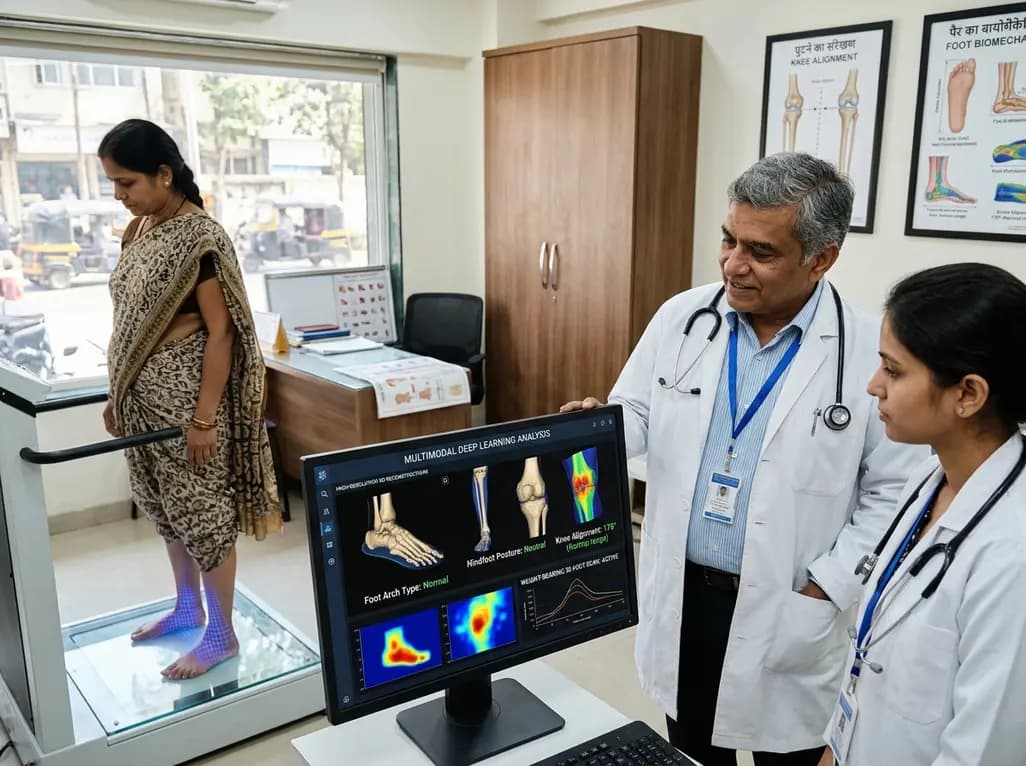
A multimodal deep learning framework utilizing weight-bearing 3D foot scans accurately screens lower-limb alignment, including arch type, hindfoot posture, and knee alignment, offering an accessible, radiation-free alternative to radiography for early biomechanical triage.
Today

A real-world retrospective study demonstrates that combining intravitreal ranibizumab with focal/grid macular laser significantly improves visual acuity and central macular thickness compared to laser monotherapy in patients with center-involved diabetic macular edema.
Today
