

Loading, please wait...
Loading, please wait...
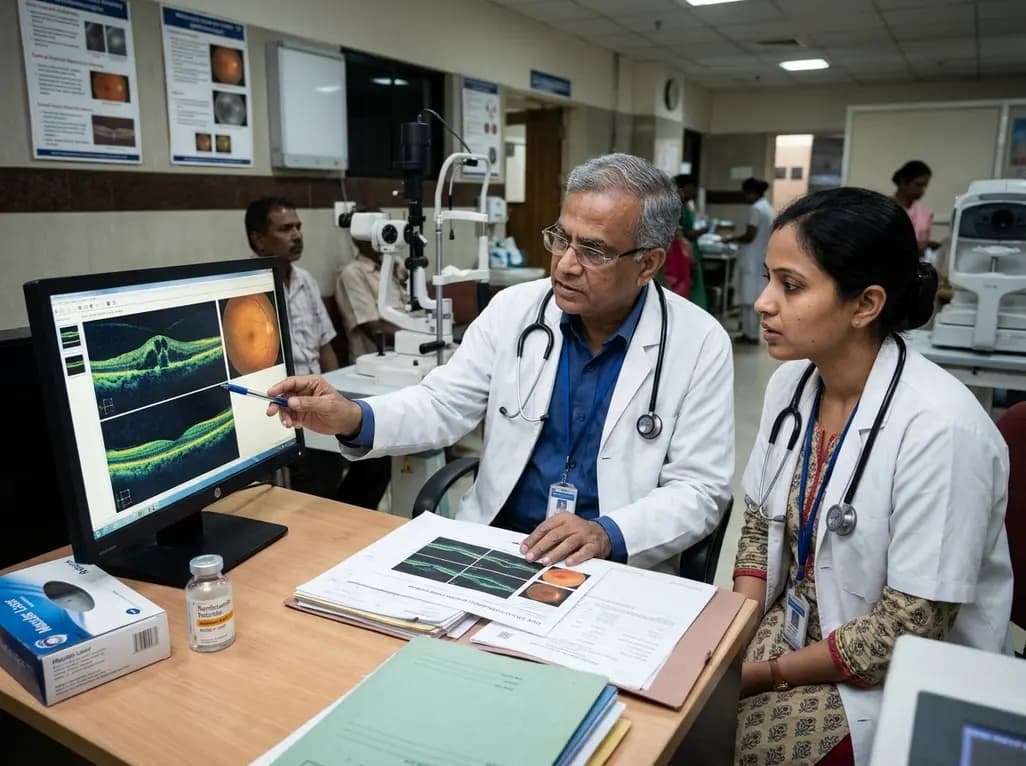
Diabetic retinopathy remains a leading cause of preventable visual impairment worldwide. Among its complications, center-involved diabetic macular edema poses persistent clinical challenges. Historically, focal and grid photocoagulation served as the primary therapeutic standard. However, modern clinical practice relies heavily on intravitreal anti-VEGF pharmacotherapy to suppress vascular leakage. While these injections rapidly restore macular anatomy, their high frequency imposes substantial burdens on patients and healthcare systems. Consequently, combining ranibizumab with macular laser represents a strategic approach to enhance anatomical stability and lessen injection frequency. A recent propensity-matched cohort study evaluated this combination therapy against laser monotherapy in patients with non-proliferative diabetic retinopathy. By analyzing six-month functional and structural outcomes, researchers provided compelling evidence regarding this integrated protocol.
Understanding macular edema pathophysiology explains the complementary actions of anti-VEGF injections and photocoagulation. Chronic hyperglycemia damages retinal microvasculature, triggering local retinal ischemia. Consequently, hypoxic retinal tissues upregulate vascular endothelial growth factor, increasing capillary permeability. This breakdown allows fluid and lipids to collect within intraretinal layers, causing progressive visual distortion. Ranibizumab, a targeted monoclonal antibody fragment, binds vascular endothelial growth factor to seal leaky endothelial junctions rapidly. However, pharmacotherapy alone cannot eradicate chronically incompetent microaneurysms. Furthermore, frequent intravitreal injections elevate cumulative risks of endophthalmitis, ocular hypertension, and patient non-adherence. In contrast, focal macular laser selectively coagulates leaking microvascular lesions, while grid laser stimulates the retinal pigment epithelium. Macular photocoagulation also diminishes outer retinal metabolic demand. Therefore, combining ranibizumab with macular laser produces a synergistic effect. The initial injection reduces macular thickness, facilitating safer, low-energy laser application. Ultimately, this coordinated strategy sustains capillary stability while reducing long-term injection demands.
Evaluating real-world outcomes requires rigorous methodology to prevent confounding by indication. In this retrospective study, investigators analyzed 196 eyes from patients with non-proliferative diabetic retinopathy and center-involved macular edema. To ensure balanced cohorts, researchers utilized propensity score matching, establishing two equivalent groups of 98 eyes. One group received intravitreal ranibizumab combined with individualized focal or grid laser, while the control group received laser photocoagulation alone. Participants completed standardized clinical evaluations across a six-month follow-up period. Pre-treatment assessments incorporated spectral-domain optical coherence tomography and fluorescein angiography to define edema morphology. Specifically, angiography identified focal microaneurysms for targeted ablation, whereas diffuse edema dictated grid treatment patterns. The primary outcome was best-corrected visual acuity change. Additionally, secondary metrics assessed central macular thickness reduction, rates of two-line visual gains, and ocular safety. By balancing critical baseline variables, this design ensured that observed differences reflected authentic therapeutic efficacy.
Six-month functional results demonstrated clear clinical superiority for the combination treatment arm. Specifically, eyes treated with ranibizumab and adjunctive photocoagulation achieved a mean visual acuity improvement of -0.17 LogMAR. In contrast, the laser monotherapy group showed a modest gain of only -0.10 LogMAR, establishing statistical significance. Moreover, 57.6 percent of eyes in the combination arm achieved a meaningful visual gain of 0.2 LogMAR or greater. Conversely, only 31.8 percent of eyes receiving laser monotherapy reached this therapeutic threshold. These findings emphasize the limitations of relying exclusively on thermal photocoagulation for central edema. Photocoagulation halts progressive vision loss but rarely restores damaged photoreceptors quickly. Intravitreal ranibizumab, however, rapidly resolves intraretinal fluid, preventing irreversible neurosensory damage. Consequently, patients experience accelerated visual recovery and improved contrast sensitivity. For working-age individuals managing diabetes, achieving rapid functional visual improvements preserves employment capacity and overall quality of life.
Optical coherence tomography confirmed that anatomical improvements closely matched functional visual gains. Specifically, the combination cohort achieved a mean central macular thickness reduction of 152.3 micrometers at month six. In comparison, eyes receiving laser monotherapy achieved a reduction of only 86.7 micrometers. This substantial anatomical drying indicates superior resolution of both intraretinal cysts and subretinal fluid collections. Because persistent edema causes progressive photoreceptor apoptosis, rapid structural normalization helps preserve the ellipsoid zone and external limiting membrane. Furthermore, pre-treatment pharmacotherapy decreased retinal thickening before laser delivery. Consequently, ophthalmologists applied lower laser energy, minimizing collateral thermal damage to adjacent neurosensory retina. Applying laser through severely swollen tissue often requires higher power, which increases the risk of symptomatic laser scar expansion. Therefore, sequential anti-VEGF drying followed by focal photocoagulation establishes a safer environment for targeted retinal treatment.
Managing diabetic macular edema in clinical practice requires balancing optimal efficacy with real-world treatment adherence. Landmark clinical trials demonstrated the efficacy of anti-VEGF monotherapy, but real-world clinics often struggle to maintain intense injection schedules. Frequent injections create heavy economic and logistical hurdles, particularly in resource-constrained healthcare systems. Consequently, combining ranibizumab with targeted macular laser provides a durable solution to consolidate structural gains. In this study, the dual regimen maintained superior outcomes without increasing adverse events, such as endophthalmitis or sustained ocular hypertension. However, retina specialists must apply photocoagulation with extreme precision. Directing laser burns too close to the foveal avascular zone risks causing permanent central scotomas. Therefore, clinicians should restrict focal laser to discrete microaneurysms located safely outside the fovea. Ultimately, this individualized combination strategy offers clinicians a practical pathway to optimize patient vision while reducing long-term monitoring fatigue.
Combining ranibizumab with targeted macular laser helps reduce overall injection frequency in center-involved diabetic macular edema. Anti-VEGF pharmacotherapy rapidly dries intraretinal fluid, allowing clinicians to apply lower-energy laser burns to leaking microaneurysms. This durable vascular coagulation stabilizes local capillaries and mitigates chronic leakage. Consequently, patients achieve sustained retinal dryness, which diminishes the need for frequent ongoing retreatments compared to anti-VEGF monotherapy regimens.
Patients with center-involved edema driven by distinct, leaking microaneurysms located outside the foveal avascular zone benefit most from this combined approach. Clinicians utilize fluorescein angiography to identify discrete vascular lesions suitable for focal coagulation. Additionally, patients facing financial limitations or travel barriers benefit substantially. In real-world practice, combining therapies establishes durable disease stabilization, protecting visual function when patients cannot adhere to strict monthly injection visits.
Clinicians must avoid applying laser burns within the foveal avascular zone to prevent permanent central scotomas and visual loss. Titrating laser power to achieve light, barely visible burns minimizes collateral thermal spread to surrounding neuroretinal layers. Furthermore, administering intravitreal ranibizumab prior to photocoagulation thins the edematous retina, which enhances laser precision. Practitioners should also monitor intraocular pressure and watch for rare adverse events like endophthalmitis.
Disclaimer: This content is for informational and educational purposes only and should not be considered professional medical advice. Always seek the advice of a qualified healthcare provider regarding a medical condition. Refer to the latest local and national guidelines for clinical practice.
References

Read summarized clinical updates, watch expert medical content, and earn CME certifications right from your smartphone.
Open your smartphone camera to scan and install.





A real-world retrospective study demonstrates that combining intravitreal ranibizumab with focal/grid macular laser significantly improves visual acuity and central macular thickness compared to laser monotherapy in patients with center-involved diabetic macular edema.
Today

A retrospective cohort study reveals that lower Geriatric Nutritional Risk Index scores and higher C-reactive protein levels at hemodialysis initiation are independently and jointly associated with prolonged hospital stays of 30 days or more, underscoring the vital need for early nutritional and anti-inflammatory care.
Today
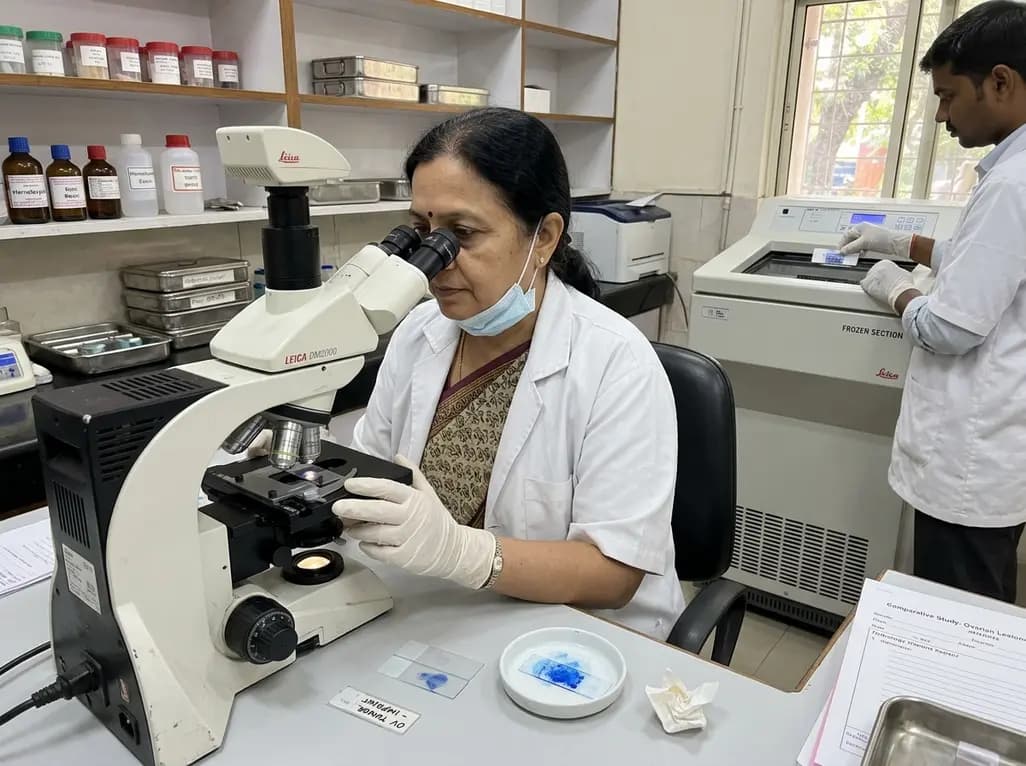
A new comparative study demonstrates that intraoperative imprint cytology achieves 96.6% diagnostic accuracy in ovarian tumours, outperforming frozen section in sensitivity for borderline lesions and offering an accessible, rapid alternative for resource-constrained surgical centres.
Today
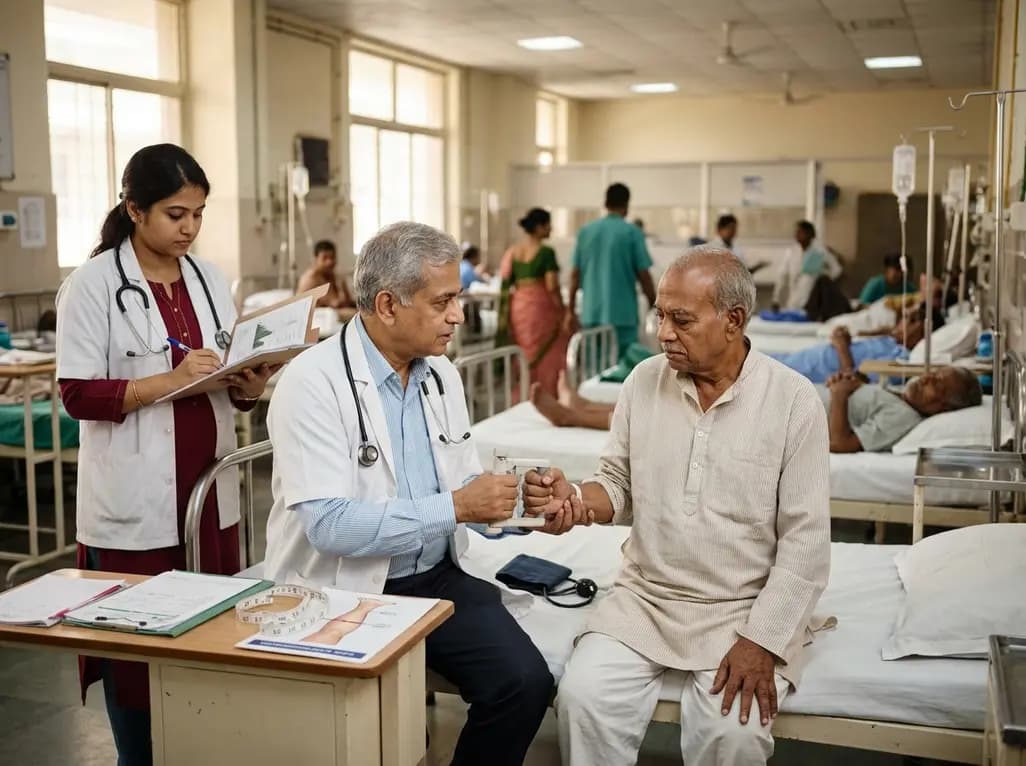
Even older heart failure patients with high SPPB scores (≥10) exhibit high 1-year mortality and readmission rates. Adding sarcopenia assessments—grip strength, chair stand test, and calf circumference—reveals critical residual risks, enabling targeted post-discharge interventions.
Today

A validated 10-item survey measures preoperative expectations for posterior spinal fusion in adolescent idiopathic scoliosis. While parents and teens agree on avoiding future surgery, their priorities diverge on appearance and sports, underscoring the critical need for separate preoperative evaluations.
Today
