.webp&w=384&q=75)

Loading, please wait...
Loading, please wait...
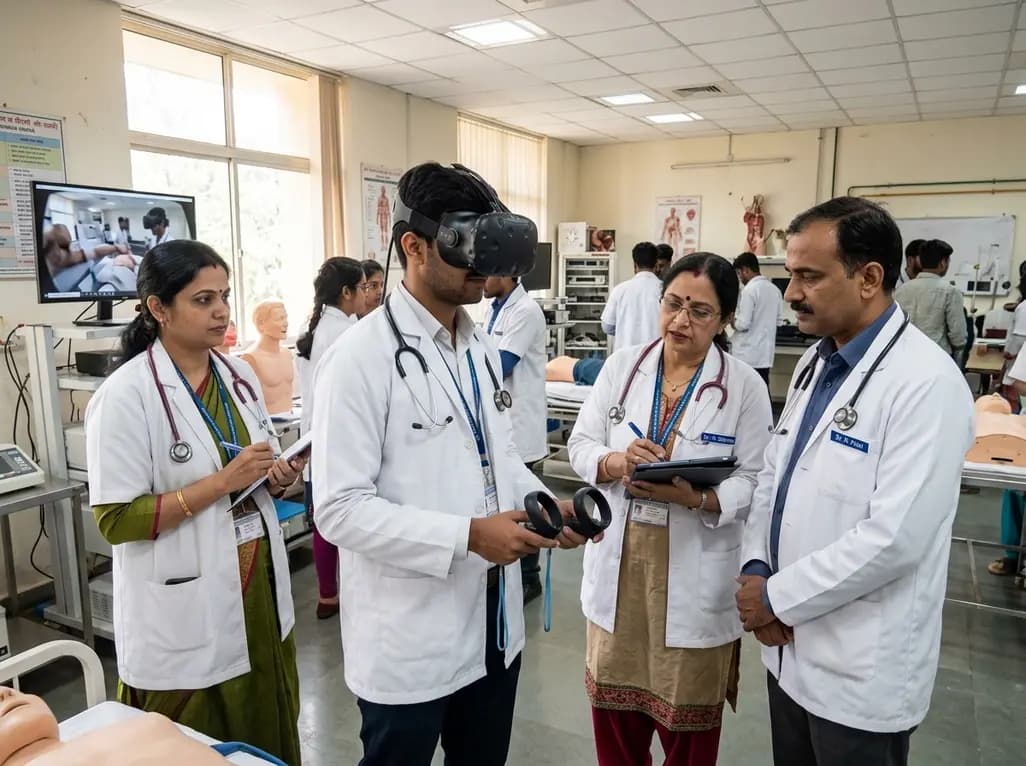
Modern medical education increasingly integrates extended reality technologies to prepare future physicians for demanding healthcare environments. Specifically, institutions deploy immersive environments to teach complex procedural tasks and critical diagnostic reasoning. Educators widely appreciate that virtual reality clinical skills modules offer standardized, risk-free scenarios that permit repeated practice without patient harm. Consequently, medical colleges worldwide invest heavily in head-mounted displays and simulated interactive hospital wards. However, educational researchers frequently encounter challenges when evaluating the genuine user experience of these simulation sessions. Without robust and thoroughly validated evaluation tools, educators cannot determine whether a learner struggles because of clinical difficulty or poorly designed simulation interfaces. Therefore, standardized psychometric questionnaires have emerged to systematically capture immersion, cognitive load, user motivation, and technical usability. Nevertheless, instruments developed in one educational setting might not perform reliably in another. When students encounter subtle linguistic differences or unfamiliar technical phrasing, their survey responses can become skewed. Medical educators must therefore rigorously evaluate how evaluation instruments function across culturally diverse and multilingual student cohorts.
To assess learner engagement accurately, researchers established the Immersive Technology Evaluation Measure, commonly referred to as ITEM. This comprehensive multidomain questionnaire evaluates five essential pillars of simulation: immersion, motivation, cognitive load, usability, and debriefing effectiveness. Although developers originally applied cognitive interviewing during early survey creation, limited evidence existed regarding how these questions operate across diverse linguistic contexts. A recent qualitative study conducted at United Arab Emirates University investigated this critical knowledge gap. Researchers evaluated how native Arabic-speaking undergraduate medical students enrolled in an English-medium program interpreted each survey item following virtual reality clinical skills simulations. Ten third-year and fourth-year medical students participated in cognitive interviewing sessions utilizing concurrent think-aloud protocols and structured verbal probing. Transcripts, audio recordings, and field observations underwent systematic analysis to uncover subtle comprehension breakdowns. Surprisingly, the investigation demonstrated that participants experienced significant comprehension or response-process difficulties in nearly half of the survey questions. These findings demonstrate that established psychometric tools require careful contextual re-evaluation before broad implementation.
Detailed analysis revealed that response-process difficulties affected 47.5 percent of the questionnaire items across all five core domains. Difficulties appeared most prominent within the debriefing, immersion, and usability categories, whereas motivation and cognitive load presented fewer comprehension obstacles. The investigators identified several recurring linguistic and referential triggers behind these misunderstandings. For instance, generic terms like 'activity' and 'technology' caused significant ambiguity because students struggled to distinguish between the clinical learning objective and the virtual hardware interface. Furthermore, unfamiliar idioms and abstract terminology created unexpected cognitive hurdles for bilingual learners. In one notable example, students interpreted the word 'concern' as emotional distress or personal anxiety rather than intellectual focus. Similarly, participants frequently associated the phrase 'mentally demanding' with psychological stress or mental illness rather than intellectual concentration. Additionally, complex negative sentence constructions and vague temporal frames made it difficult for participants to select representative Likert scale options. These misunderstandings clearly indicate that surface fluency in English does not guarantee uniform interpretation of specialized educational surveys.
Rather than executing indiscriminate sweeping revisions, the investigative team applied a nuanced, evidence-based approach to refine the questionnaire items. Through structured researcher consensus, eleven problematic items received targeted wording modifications or contextual clarifications to resolve persistent ambiguity. For example, vague references were replaced with explicit descriptions distinguishing the virtual reality software from the physical headset. In contrast, six problematic items remained intentionally unchanged because altering their wording risked introducing secondary meanings absent from the original psychometric design. Furthermore, two questions received layout and presentation adjustments to optimize visual clarity, while six additional items underwent minor wording standardization for overall consistency. Importantly, the researchers preserved the original five-domain organizational framework without deleting any survey questions. This restrained refinement strategy protected the structural integrity of the instrument while significantly improving comprehensibility for non-native English speakers. Consequently, the study highlights how qualitative cognitive probing protects questionnaire validity without compromising the theoretical constructs defined during original instrument development.
These crucial insights extend far beyond a single university, carrying profound implications for healthcare training programs globally. As medical institutions worldwide expand their digital curricula, diverse student bodies increasingly learn in English-medium programs outside native English-speaking nations. Consequently, educators cannot assume that standardized evaluation instruments convey identical meanings across varying cultural and linguistic landscapes. When survey questions generate semantic confusion, collected data misrepresent actual student immersion, mental effort, and technological usability. Furthermore, curriculum developers risk making misguided instructional changes based on flawed survey feedback. Employing cognitive interviewing techniques provides medical educators with an indispensable method to identify hidden response-process errors before launching large-scale quantitative evaluations. By systematically identifying semantic ambiguities, institutions can refine assessment instruments to ensure equitable, reliable feedback. Ultimately, refining tools like ITEM ensures that immersive virtual reality clinical skills curricula foster genuine clinical competency, optimize learner satisfaction, and advance evidence-based simulation standards worldwide.
The Immersive Technology Evaluation Measure is a multidomain evaluation instrument designed for healthcare simulation. It systematically assesses learner experiences across five distinct educational domains: immersion, motivation, cognitive load, usability, and debriefing. Medical educators use this validated measure to evaluate how effectively extended reality platforms support procedural mastery, clinical reasoning, and overall student engagement during immersive medical simulation exercises.
Bilingual medical students experienced comprehension difficulties primarily because of ambiguous referential terms, unfamiliar idiomatic phrasing, and complex negative wording. For instance, learners frequently interpreted terms like 'concern' as personal anxiety rather than focused attention. Similarly, they associated 'mentally demanding' with psychological strain instead of cognitive effort, highlighting how subtle semantic nuances influence survey interpretation in multilingual environments.
Cognitive interviewing enhances survey development by uncovering hidden response-process errors that standard statistical metrics overlook. By utilizing think-aloud exercises and targeted verbal probing, researchers observe how participants interpret questions, retrieve memories, and select answers. This qualitative approach allows medical educators to identify confusing phrasing, eliminate cultural bias, and refine question clarity before deploying surveys across broader academic cohorts.
Disclaimer: This content is for informational and educational purposes only and does not substitute for qualified clinical judgment or institutional curriculum standards. Refer to the latest local and national guidelines for clinical practice.
References

Read summarized clinical updates, watch expert medical content, and earn CME certifications right from your smartphone.
Open your smartphone camera to scan and install.





Explore new research refining the Immersive Technology Evaluation Measure (ITEM) for virtual reality clinical skills among bilingual medical learners, highlighting the critical role of cognitive interviewing.
Today
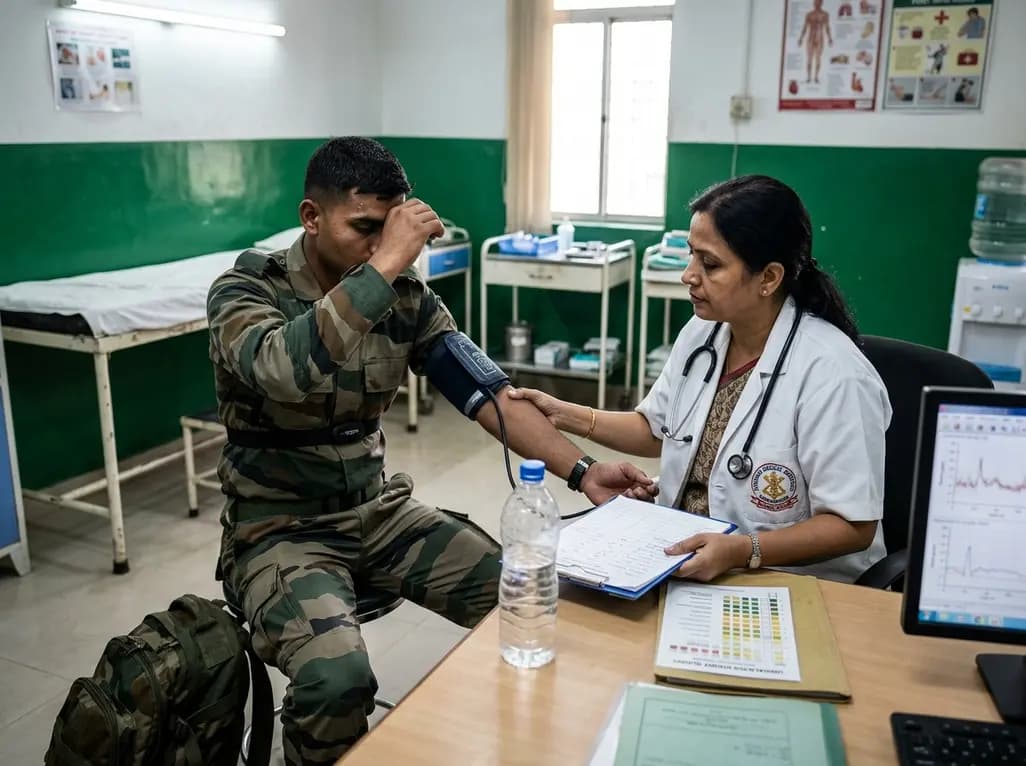
A simulated 9.65 km foot march with heavy load carriage causes significant fluid deficits and cardiorespiratory strain. Monitoring urine specific gravity, heart rate, and fluid replenishment is vital to prevent exertional heat illness in tactical personnel and endurance athletes.
Today
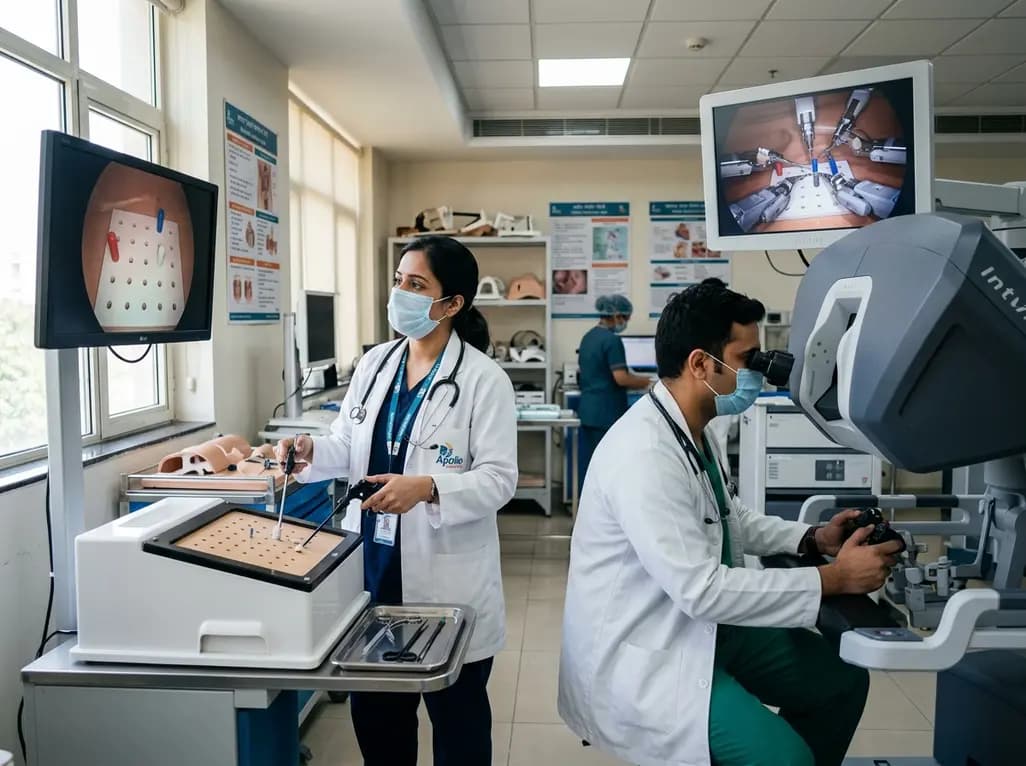
A randomized crossover study demonstrates that conventional and robotic laparoscopy require distinct neuropsychological and psychomotor skills. While trainees master conventional laparoscopy faster, robotic proficiency demands individualized, adaptive curricula tailored to specific learner profiles.
Today
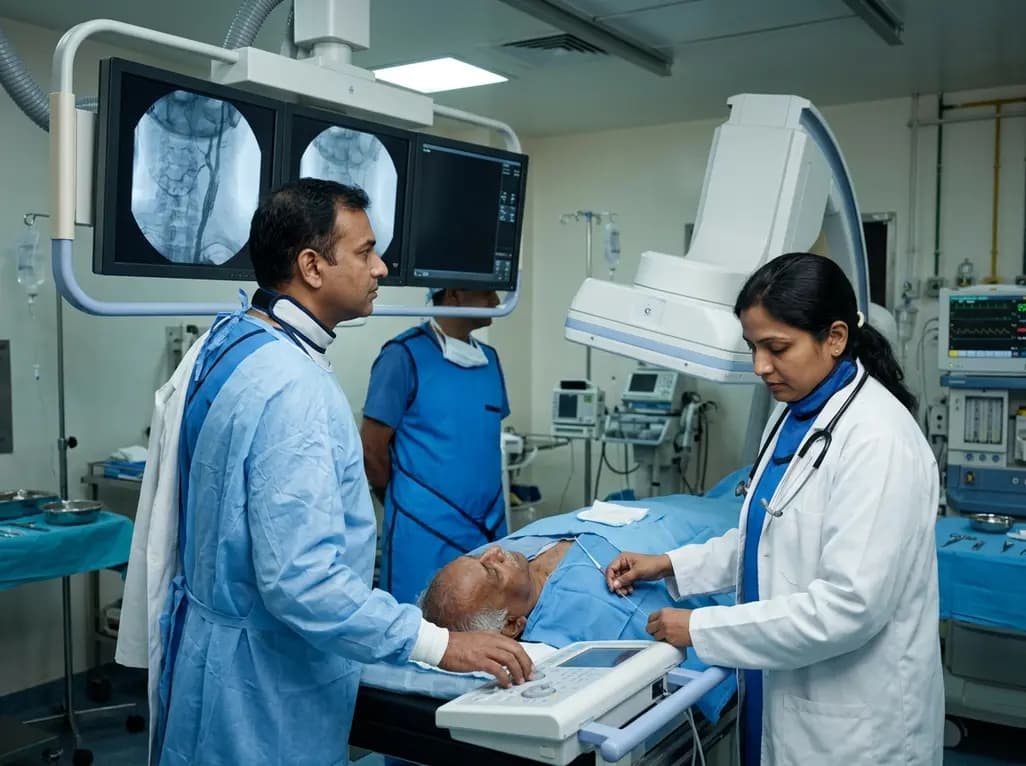
A retrospective study of 109 patients undergoing elective carotid artery stenting evaluated radiation exposure on biplane flat-panel systems. Standardized workflows and dedicated low-dose protocols provide crucial baseline data to establish neurointerventional diagnostic reference levels and optimize patient safety.
Today

A scoping review of 51 studies reveals that spinal manual therapy on the lumbo-pelvic area is commonly used for isolated lower extremity pain, predominantly knee conditions. While thrust manipulation is frequent, reporting deficits highlight the need for standardized technique descriptions to guide practice.
Today

The Supreme Court has reserved its judgment on FSSAI's proposed front-of-pack nutritional warning labels for packaged foods. With debates over compliance timelines, added versus total sugars, and ultra-processed food definitions, this landmark decision carries profound public health implications for India.
Today
