.webp&w=384&q=75)

Loading, please wait...
Loading, please wait...
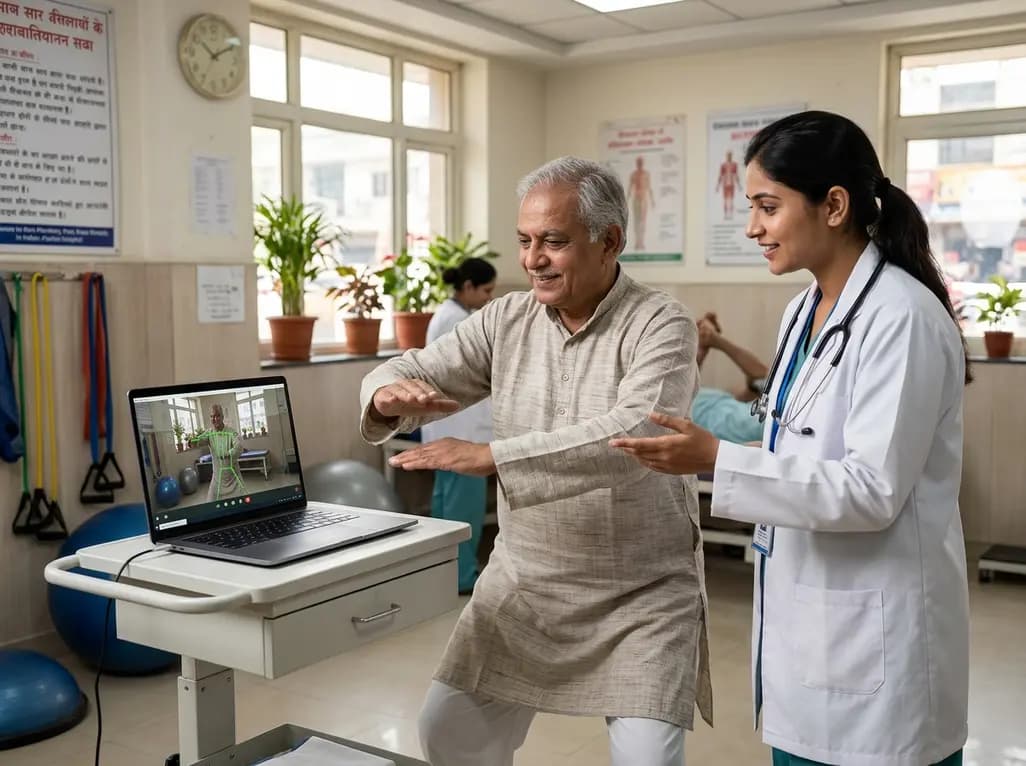
Proprioceptive decline often impairs motor coordination and postural control as individuals age. Traditional mind-body routines such as Baduanjin qigong provide effective neuromusculoskeletal conditioning, yet unsupervised older adults frequently struggle to maintain accurate biomechanical alignment. Emerging digital health platforms now leverage computer vision to overcome these rehabilitation barriers. In a novel clinical investigation, investigators evaluated whether webcam-based real-time visual feedback could improve movement precision among older adults during structured exercise sessions. Understanding the practical value of markerless motion tracking provides valuable guidance for geriatric specialists, physiotherapists, and integrative medicine practitioners seeking accessible telerehabilitation solutions.
Aging inevitably alters sensory feedback loops, diminishing joint position sense and dynamic balance. Consequently, older adults face a heightened vulnerability to accidental falls and progressive functional decline. Traditional Chinese modalities like Baduanjin qigong deliver gentle, repetitive kinematic training that enhances core stability, flexibility, and cognitive engagement. However, without continuous external guidance, practitioners easily adopt compensatory movement strategies. These aberrant patterns can compromise therapeutic efficacy and induce musculoskeletal strain.
Markerless motion capture technology offers an attractive solution to this clinical dilemma. By utilizing standard consumer webcams, automated computer vision algorithms track anatomical landmarks and calculate joint angles in real time. Therefore, patients can instantly view their physical posture mirrored alongside optimal reference templates. Clinicians hope this immediate augmented feedback will accelerate sensorimotor recalibration and enhance movement consistency. Furthermore, webcam systems eliminate the need for expensive wearable sensors or cumbersome clinical hardware. Hence, this accessible approach holds substantial promise for scalable home rehabilitation and community-based fall prevention programs.
To evaluate this digital innovation objectively, researchers enrolled thirty-one community-dwelling older adults in a rigorous six-week pilot randomized controlled trial. Ultimately, twenty-eight participants completed the protocol with fully analyzable motion data, dividing evenly into feedback and nonfeedback cohorts. The investigators conducted all training sessions face-to-face inside a supervised motion-analysis laboratory. This controlled setting ensured standardized lighting, environmental consistency, and direct clinical oversight.
Participants performed standardized Baduanjin routines while a single monocular webcam captured their movements. Specifically, an automated computer vision algorithm extracted two-dimensional skeletal coordinates across major joint centers. The feedback group observed real-time graphical displays showing their movement alignment against ideal kinematics, whereas the control group practiced without visual overlays. To capture longitudinal performance changes, researchers applied a linear mixed-effects model assessing weekly two-dimensional pose discrepancy. Additionally, the statistical design incorporated participant-specific random intercepts and applied conservative Holm adjustments across twenty-four exploratory joint and movement comparisons to prevent misleading false-positive outcomes.
The primary statistical analyses yielded nuanced results that temper initial enthusiasm. Specifically, the linear mixed-effects model revealed no statistically significant group-by-week interaction and no significant overall week effect across the trial. Nevertheless, participants in the visual feedback cohort achieved an estimated average two-dimensional pose discrepancy 1.20 degrees lower than control subjects over six weeks. However, this marginal between-group advantage demonstrated high sensitivity to the chosen analytical method.
Furthermore, individual week-by-week contrasts lost statistical significance once investigators applied Holm multiplicity corrections. Although nominal unadjusted improvements emerged in the right shoulder, elbow, and knee joints, none survived rigorous global adjustment. Notably, Form 3, known as 'Raising the Hand to Regulate the Spleen and Stomach,' represented the sole movement exhibiting robust durability. This specific unilateral overhead extension showed a substantial mean discrepancy reduction of 3.70 degrees in the feedback cohort, retaining significance after Holm adjustment. Consequently, these findings suggest that real-time visual guidance exerts highly selective biomechanical effects rather than widespread kinematic enhancement.
A central justification for deploying digital coaching tools is preventing longitudinal error drift during repetitive exercise. Clinicians worry that independent practitioners gradually develop unnoticed kinematic deviations over successive weeks. Therefore, the trial specifically evaluated participant-specific error slopes and within-participant standard deviations across the six-week intervention. Surprisingly, these specialized longitudinal assessments revealed no significant divergence between the feedback and nonfeedback groups.
Several biomechanical and neurocognitive factors likely explain this unexpected observation. First, all participants practiced inside a supervised laboratory setting with skilled human oversight. This baseline professional monitoring may have prevented substantial motor deterioration in both cohorts, creating a ceiling effect. Moreover, processing concurrent visual guidance imposes substantial cognitive demands upon older individuals. Divided visual attention between an instructional screen and internal somatic sensations can paradoxically impair intrinsic motor consolidation. Thus, while augmented visual cues guide immediate adjustments during execution, they may not automatically translate into permanent proprioceptive retention without dedicated periods of unassisted retrieval practice.
These clinical findings provide essential insights for geriatricians, physiatrists, and AYUSH clinicians designing modern exercise prescriptions. Traditional mind-body therapies like Baduanjin and Yoga emphasize internal interoception, diaphragmatic breathing, and mindful biomechanical coordination. Integrating markerless artificial intelligence tools can potentially expand access across rural and semi-urban healthcare settings. However, clinicians must recognize that rudimentary two-dimensional webcam metrics offer modest real-world improvements over standard guided instruction.
Consequently, healthcare practitioners should avoid viewing automated visual feedback as a complete replacement for clinical expertise. Instead, providers should deploy digital tracking as an adjunct tool within hybrid care pathways. For example, therapists can utilize automated pose analysis to flag gross kinematic errors during home practice between formal clinical sessions. Moving forward, engineering teams must validate markerless algorithms against gold-standard three-dimensional optoelectronic systems. Furthermore, upcoming trials must assess patient-reported mobility improvements, balance confidence scores, and actual fall incidence rather than relying solely on proxy geometric angles.
Baduanjin qigong is a traditional Chinese mind-body practice consisting of eight discrete, gentle physical movements combined with controlled breathing and mental focus. Clinical studies demonstrate that regular practice enhances dynamic balance, joint flexibility, and lower-limb muscular strength in older adults. Consequently, these physiological improvements help reduce accidental fall risks, alleviate joint stiffness, and support independent daily functional mobility.
The visual feedback group achieved a modest average reduction of 1.20 degrees in pose discrepancy over six weeks. However, this marginal benefit was sensitive to statistical models and did not produce significant weekly trajectories. Furthermore, only one individual routine, Form 3, retained statistically significant kinematic improvements after applying strict multiplicity corrections across all evaluated movements and joints.
No, current evidence indicates markerless webcam tools should complement rather than replace professional clinical oversight. The study revealed no significant prevention of longitudinal error drift, suggesting that automated cues cannot substitute for skilled clinical correction. Therefore, providers should utilize digital platforms as supportive monitoring tools within hybrid care models to maintain safety and exercise adherence between scheduled clinical visits.
Disclaimer: This content is for informational and educational purposes only and should not be construed as medical advice. Always consult a qualified healthcare provider for clinical decisions. Refer to the latest local and national guidelines for clinical practice.
References

Read summarized clinical updates, watch expert medical content, and earn CME certifications right from your smartphone.
Open your smartphone camera to scan and install.





A 6-week pilot randomized study evaluated whether webcam-based real-time visual feedback enhances 2D pose accuracy during Baduanjin qigong practice in older adults. The intervention showed modest pose error reductions in select movements, highlighting both promises and pitfalls of markerless digital rehabilitation.
Today

A crossover study demonstrates that locally deployed large language models with exact-match knowledge augmentation significantly elevate outpatient prescription review accuracy to 97.2%, curbing hallucinations and securing patient data without requiring complex cloud infrastructure.
Today
A new scoping review protocol systematically maps global evidence on how climatic shifts, ambient heat, and pollution impact human fertility. Discover key physiological mechanisms, clinical preconception strategies, and critical public health alignments under Sustainable Development Goals 3 and 13.
Today
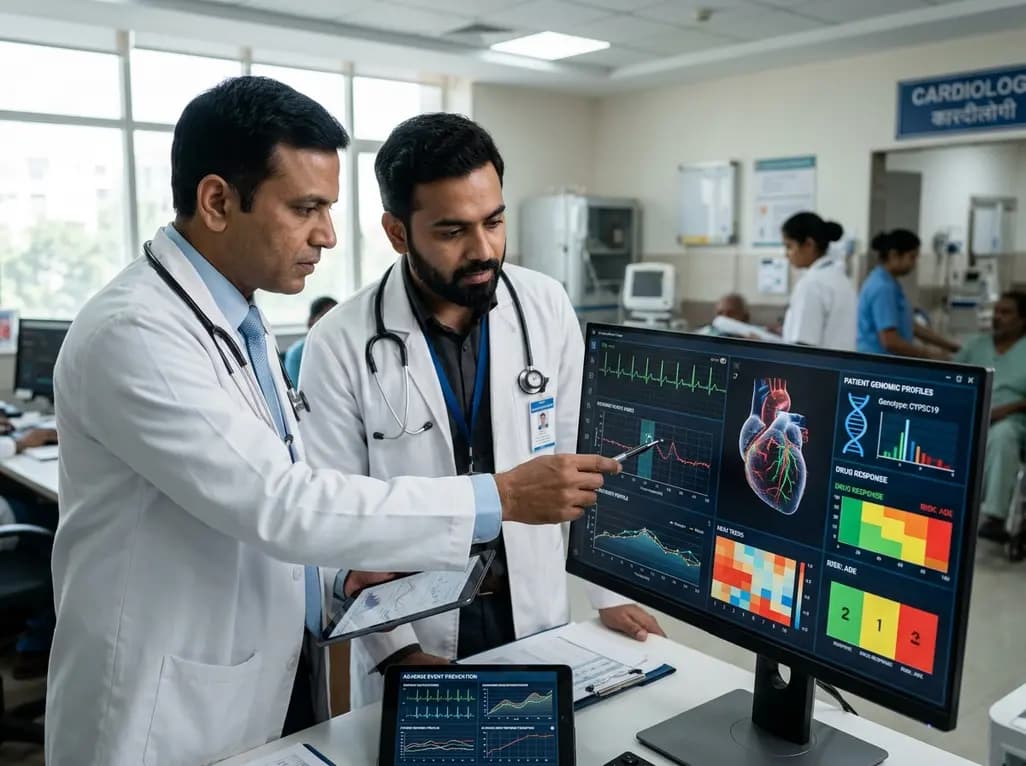
Pharmacogenomics and artificial intelligence are revolutionizing cardiology by tailoring therapies to individual genetic profiles and clinical data, reducing adverse drug events, and improving cardiovascular patient outcomes.
Today
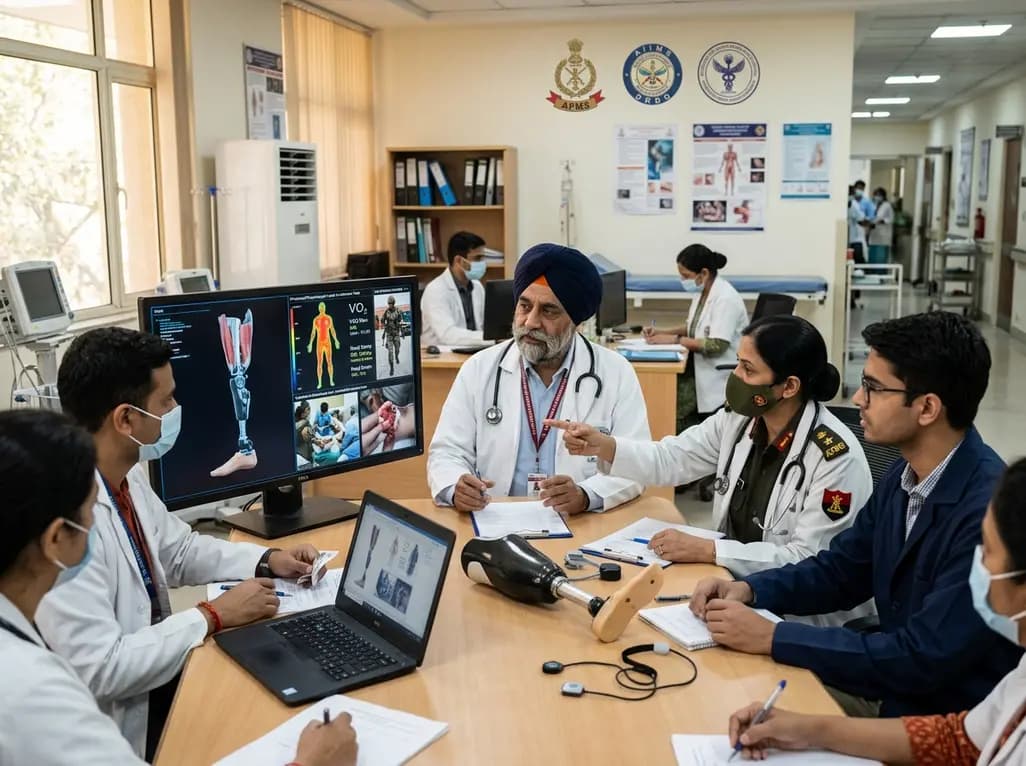
India's premier scientific bodies have joined the Armed Forces Medical Services to solve unique physiological and operational challenges faced by soldiers. The national collaboration covers combat casualty care, artificial intelligence diagnostics, bionic prosthetics, and extreme-environment physiological resilience.
Today
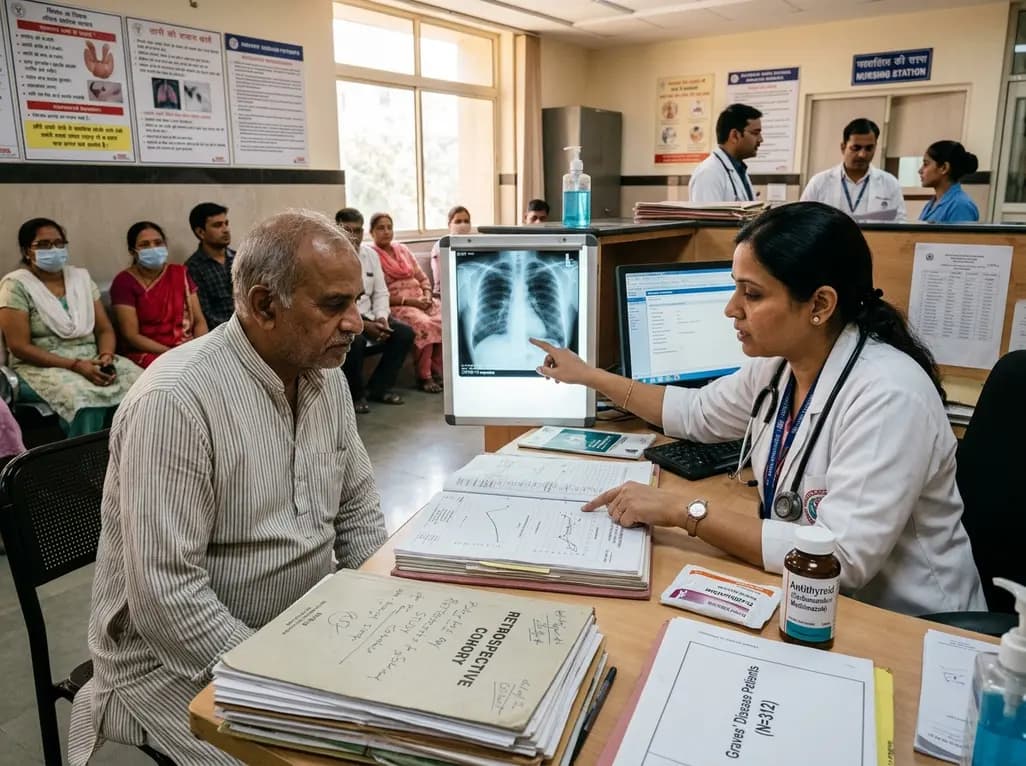
A retrospective cohort study evaluates the short- and long-term impacts of SARS-CoV-2 infection on patients with Graves' disease receiving antithyroid drug therapy, highlighting thyroid status destabilization, clinical symptom exacerbations, and post-viral sequelae.
Today
