.webp&w=384&q=75)

Loading, please wait...
Loading, please wait...

Hydatid disease, which the parasite Echinococcus granulosus causes, typically involves the liver and lungs. However, clinicians in endemic regions like India occasionally identify cysts in atypical organs. Successful rare hydatid cyst management depends on recognizing these unusual presentations early. Because these cases are uncommon, they often mimic malignancies, abscesses, or other benign cysts. Consequently, doctors must maintain a high index of suspicion when encountering cystic lesions in any anatomical site.
In addition to standard laboratory tests, advanced imaging plays a pivotal role in the diagnostic workup. Specifically, magnetic resonance imaging (MRI) provides superior detail for cysts located in the central nervous system, spine, or heart. In contrast, computed tomography (CT) excels at detecting osseous involvement or retroperitoneal disease. Therefore, choosing the correct modality based on the anatomical site is critical for accurate preoperative staging and avoiding accidental rupture during intervention.
Surgery remains the primary treatment for most rare-site hydatid cysts. Furthermore, surgeons often prescribe albendazole to reduce the risk of secondary hydatidosis and postoperative recurrence. Although surgical excision is highly effective, the procedure requires meticulous site-specific planning to protect vital adjacent structures. Finally, a multidisciplinary team of surgeons, radiologists, and infectious disease specialists should manage these complex cases to ensure optimal long-term outcomes.
Magnetic resonance imaging (MRI) is the preferred triage tool for the central nervous system and spine, as it offers better soft-tissue characterization than CT.
Surgery is typically the index treatment for rare sites to prevent complications like rupture or pressure effects, though it is usually paired with albendazole therapy.
While India is endemic for hydatid disease, involvement of rare sites like the brain, bone, or heart occurs in less than 10% of reported cases.
Disclaimer: This content is for informational and educational purposes only. It does not constitute medical advice or a professional physician-patient relationship. Always seek the advice of your physician or another qualified health provider with any questions you may have regarding a medical condition. Refer to the latest local and national guidelines for clinical practice.
References
1. Zülfikaroğlu B et al. Rare anatomical localizations of hydatid cysts (2020-2025): Narrative review of presentation, imaging, and management. Turk J Surg. 2026 Feb 20. doi: 10.47717/turkjsurg.2026.2025-9-22. PMID: 41717794.
2. Alekya K, Meraj MD, Moorthy NLN. Imaging features of hydatid cyst in unusual locations: A case series. Indian J Med Sci. 2025;77:163-6. doi: 10.25259/IJMS_198_2024.
3. Mathur PN et al. Hydatid disease-still endemic in the southern region of state of Rajasthan, India: a clinical study carried out in tertiary care. Int Surg J. 2016;3(4):1802-1805.
"
Read summarized clinical updates, watch expert medical content, and earn CME certifications right from your smartphone.
Open your smartphone camera to scan and install.





A comprehensive review of diagnosing and treating hydatid cysts in rare anatomical locations, highlighting imaging triage and surgical strategies for clinic...
8 months ago
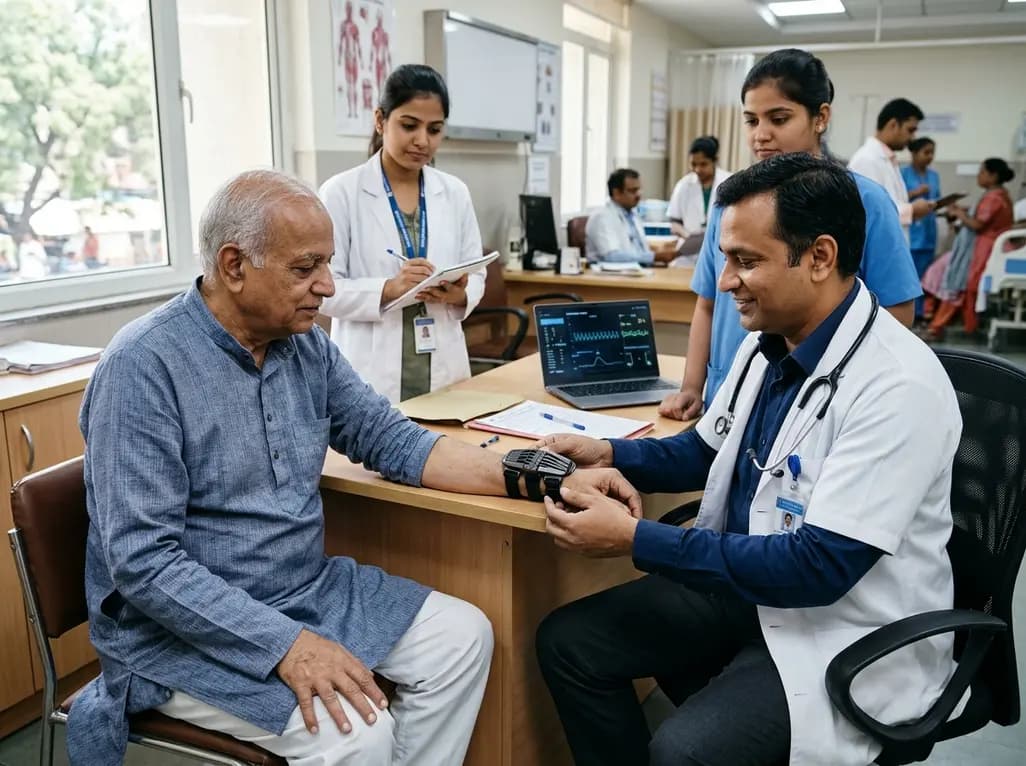
The TREM-AB open-label pilot study evaluated a wearable passive nonlinear vibration absorber for essential tremor. The Nonlinear Energy Sink bracelet reduced clinical Fahn-Tolosa-Marin tremor scores by 32.1% and electrophysiological tremor power by 49.2% with no adverse effects reported.
Today

A study in JAMIA Open shows lightweight open-source reasoning LLMs achieve up to 95% sensitivity and accelerate evidence synthesis screening by nearly twentyfold, presenting a cost-effective, scalable AI solution for biomedical research and systematic reviews.
Today
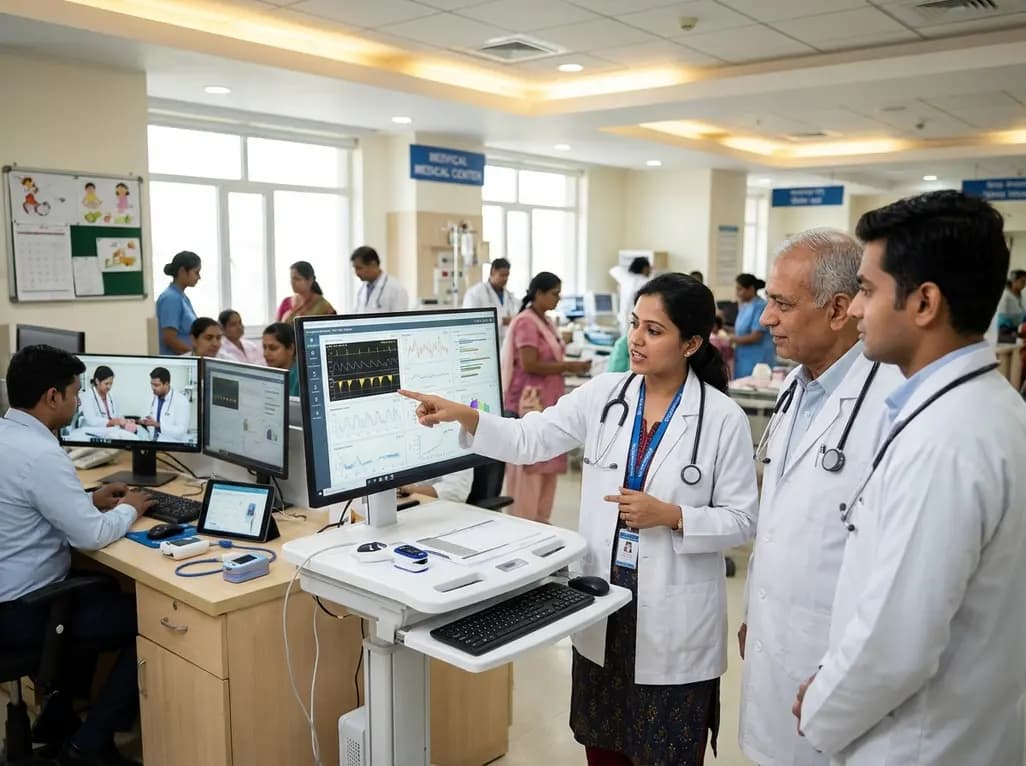
A landmark study details how an enterprise pediatric remote patient management model expanded from a single cardiology pilot to 16 diverse specialty programs by combining centralized digital operations with specialty clinical leadership.
Today
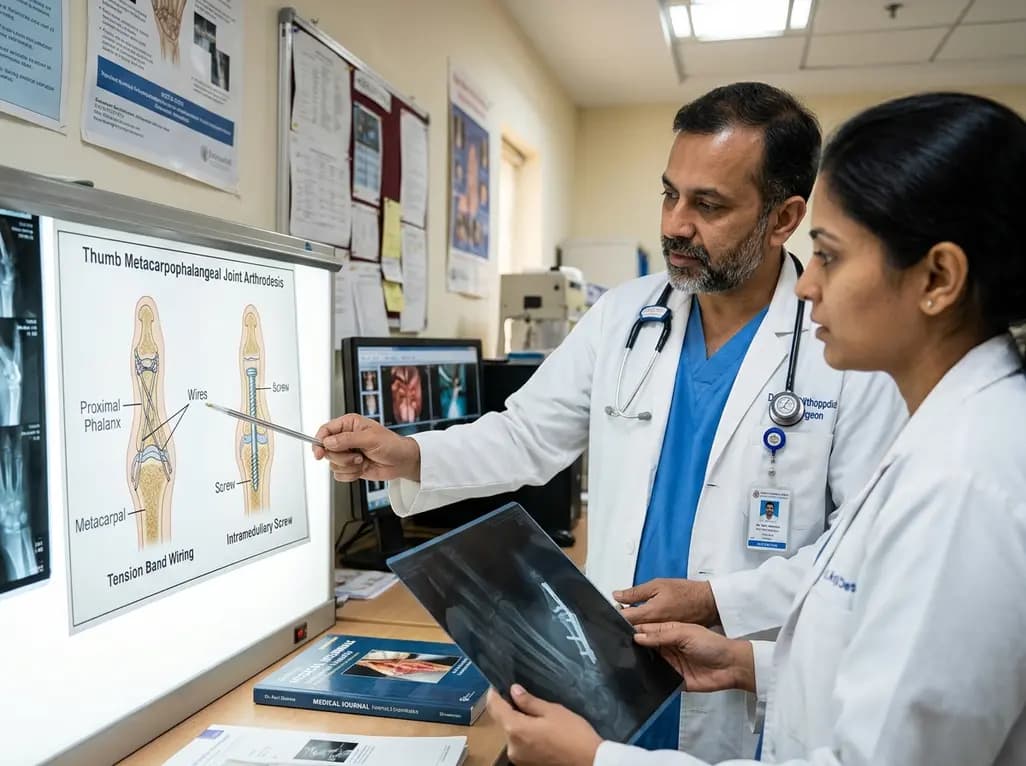
A comparative review of tension band wiring and intramedullary screw fixation in thumb metacarpophalangeal arthrodesis, evaluating union rates, hardware complications, and clinical outcomes.
Today
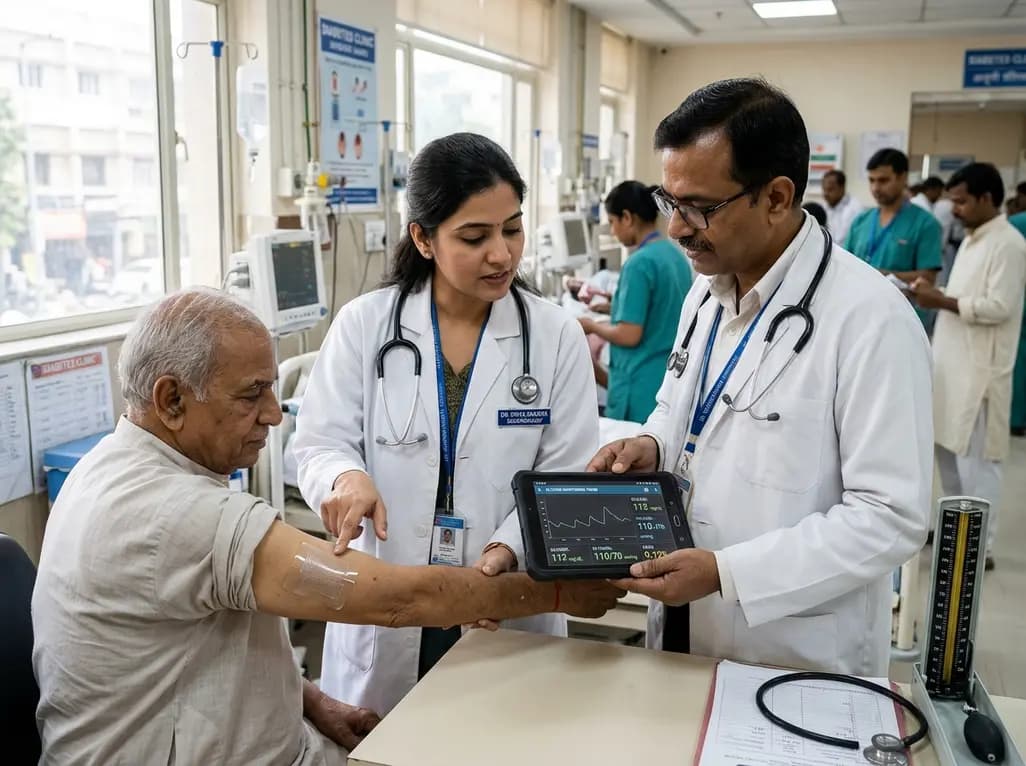
A breakthrough ultrathin multimodal sensor decouples physical hemodynamic monitoring from disposable electrochemical calibration, achieving long-term wearable glucose prediction with 81.36% accuracy and a 9.12% MARD. This offers a robust, drift-free solution for outpatient metabolic surveillance.
Today
