.webp&w=384&q=75)

Loading, please wait...
Loading, please wait...
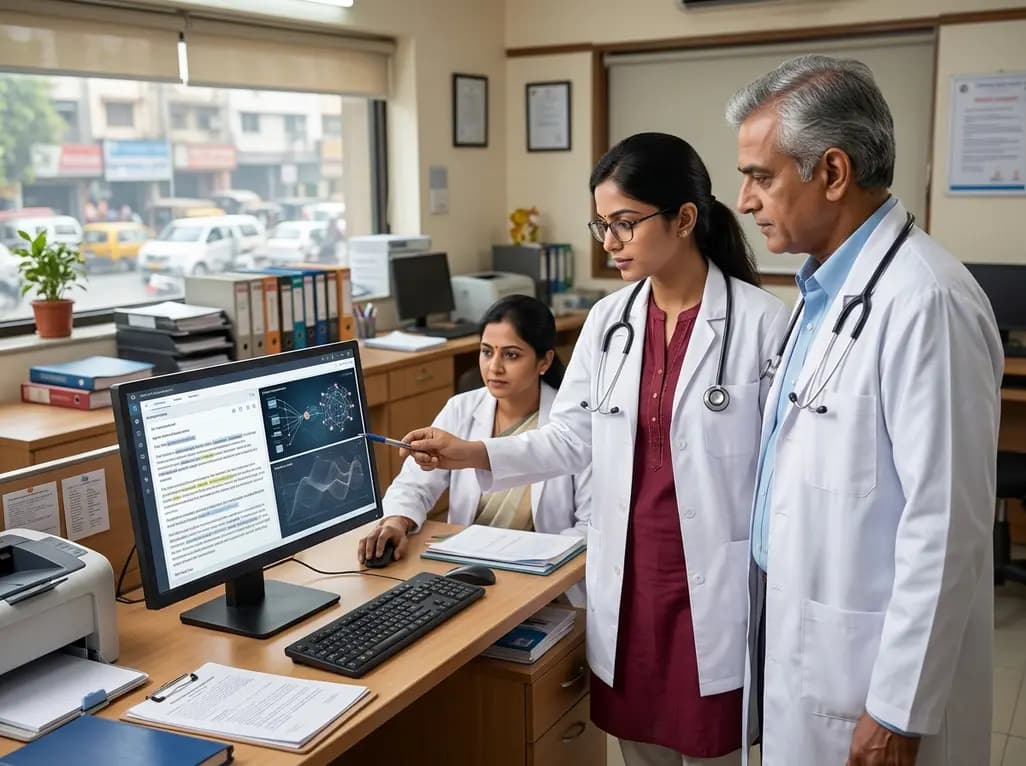
Modern healthcare systems generate millions of electronic health records daily, creating unprecedented opportunities for biomedical discovery. However, secondary data sharing requires stringent privacy protections to eliminate protected health information. As clinical documentation expands across electronic portals, clinical text anonymization has emerged as a fundamental prerequisite for ethical medical research. Traditional rule-based filters and conventional machine learning classifiers frequently struggle with idiosyncratic medical prose, regional abbreviations, and unstructured notes. Consequently, researchers have turned to generative artificial intelligence and advanced computational paradigms to achieve dependable de-identification without erasing essential diagnostic nuances.
For decades, healthcare institutions relied heavily on deterministic regular expressions and dictionary lookups to redact sensitive patient identifiers. Although these legacy tools performed reasonably well on structured database fields, they routinely missed nested clinical context. For example, doctors frequently record personal names within narrative descriptions of family history, emergency consultations, or social circumstances. Therefore, simplistic pattern-matching software either under-redacts vital personal secrets or over-redacts meaningful diagnostic details. Recently, deep learning algorithms improved entity recognition, yet these models still falter when confronting ambiguous syntax and dialectal shifts. In response to these persistent limitations, clinical investigators are evaluating large language models capable of understanding holistic sentence semantics. Moreover, international privacy legislation, including India's Digital Personal Data Protection Act and global data directives, demands near-flawless de-identification standards before sharing health data. Consequently, healthcare technology teams require automated systems that maintain high precision while preserving vital clinical intent. Modern workflows must consistently isolate names, institutional titles, specific calendar dates, and unique geographic markers across diverse outpatient narratives without corrupting the underlying diagnostic meaning.
Standard transformer architectures utilize multi-head self-attention mechanisms to determine relationships between tokens. However, identifying complex boundaries for protected health information often introduces conflicting probability distributions across final attention layers. To resolve this structural bottleneck, researchers integrated neuromorphic quantum annealing into foundational language model architectures. Specifically, the investigative team converted the final attention layer of open-weight models into a global constraint satisfaction problem. They modeled token-level entity classification using Quadratic Unconstrained Binary Optimization mathematical formulations. By routing these intricate optimization equations through the Dynex neuromorphic quantum computing platform, the system resolves contextual ambiguities rapidly. As a result, the network optimizes candidate label sequences simultaneously rather than evaluating isolated token probabilities greedily. Furthermore, this hybrid architecture operates seamlessly on top of existing open-source backbones, such as Llama-3.1-8B and Llama-3.3-70B. Healthcare data scientists therefore combine the deep linguistic fluency of transformer models with the global combinatorial efficiency of quantum hardware. This innovative synthesis produces sharper boundary recognition for elusive health entities while drastically reducing false attribution across unstructured medical summaries.
To evaluate this hybrid methodology, investigators assembled a gold-standard benchmark containing one thousand Portuguese outpatient clinical notes. Five trained medical researchers manually annotated five crucial entity classes: patient names, temporal dates, individual identifiers, clinical organizations, and specific geographic locations. Subsequently, the researchers assessed four distinct strategies across a held-out test split of five hundred notes. The standalone Llama-3.1-8B model registered an initial macro-F1 score of 0.602, reflecting notable difficulty with multi-token entities. In contrast, the quantum-enhanced Dynex-QML-8B model improved this metric dramatically to 0.733, matching much larger conventional systems. Meanwhile, the standalone Llama-3.3-70B architecture produced a respectable macro-F1 score of 0.726 under standard inference parameters. Most remarkably, the quantum-enhanced Dynex-QML-70B variant achieved the highest overall score of 0.855. This performance represents an absolute macro-F1 improvement of 0.128 over the base 70B system. Bootstrap statistical evaluations confirmed that this performance leap achieved high empirical significance. Consequently, quantum optimization provides clear advantages when extracting multifaceted health entities from real-world electronic health documentation.
Clinical documentation presents unique semantic hurdles due to condensed shorthand, typographical oversights, and informal phrasing. In outpatient clinics, physicians frequently record names that double as standard vocabulary words or geographic references. Standard natural language processing models frequently confuse these overlapping terms, generating false positives that degrade record utility. In addition, temporal dates and administrative identification numbers follow diverse formats across different hospital departments. The quantum-enhanced architecture resolved these ambiguities by maintaining global contextual constraints across entire sentences. For instance, when analyzing ambiguous institutional names, the hybrid solver evaluated surrounding syntactic cues through unified quadratic optimization. As a result, the model avoided premature token classification errors that frequently plague standard autoregressive generation. Furthermore, the hybrid pipeline demonstrated superior recall across delicate patient identifiers, ensuring that sensitive personal clues did not slip through undetected. By elevating entity recall without eroding precision, the architecture preserves critical clinical narratives while protecting patient identities. This balanced accuracy ensures that downstream clinical trials and public health studies receive pristine, usable medical documentation.
Implementing trustworthy automated anonymization delivers profound clinical and operational advantages for modern healthcare institutions. First, rigorous de-identification unlocks terabytes of dormant electronic records for predictive modeling, epidemiology, and multi-institutional clinical trials. Second, automated pipelines drastically reduce the manual labor and financial expenditures traditionally required to prepare research cohorts. In regions like India, where hospitals handle massive patient volumes, manual record de-identification represents an impossible administrative hurdle. Furthermore, complying with India's Digital Personal Data Protection Act requires indisputable verification that shared data cannot inadvertently re-identify patients. Integrating quantum-enhanced hybrid software allows medical institutions to establish robust, auditable safeguards around patient confidentiality. However, health technology leaders must also weigh computational infrastructure costs and latency before deploying specialized quantum pipelines hospital-wide. End-to-end processing efficiency remains a vital metric for real-time outpatient integration. Nevertheless, as cloud-accessible quantum annealing matures, hybrid architectures will likely become accessible to diverse healthcare networks. Ultimately, adopting mathematically verified anonymization protocols ensures that patient privacy and scientific advancement advance together harmoniously.
Quantum annealing reformulates the final token classification layer of a large language model into a global quadratic optimization problem. Instead of selecting tokens sequentially through standard greedy decoding, the quantum solver evaluates complex mutual constraints across the entire narrative at once. Consequently, this mathematical optimization reduces boundary misclassifications, resolves ambiguous proper nouns, and significantly boosts overall detection precision across complex clinical documentation.
Data protection statutes, such as India's Digital Personal Data Protection Act, impose severe legal penalties for unauthorized exposure of personal health data. Fully de-identified records fall outside strict consent limitations, allowing safe data utility for secondary biomedical research. Robust clinical text anonymization ensures that sensitive identifiers like patient names, addresses, and medical record numbers are permanently removed, protecting patient dignity while enabling multi-center epidemiological discovery.
Yes, healthcare institutions do not need dedicated on-premise quantum supercomputers to leverage hybrid architectures. Modern implementations connect open-source models to neuromorphic cloud platforms like Dynex through secure programming interfaces. As a result, hospitals process initial language representations on standard local servers, offloading only the final combinatorial optimization equations to cloud annealers. This hybrid distribution makes advanced de-identification accessible without excessive capital expenditures or infrastructure disruption.
Disclaimer: This content is for informational and educational purposes only and does not substitute for clinical judgement or formal legal advice. Refer to the latest local and national guidelines for clinical practice.
References

Read summarized clinical updates, watch expert medical content, and earn CME certifications right from your smartphone.
Open your smartphone camera to scan and install.





A landmark study evaluates quantum-enhanced large language models for clinical text anonymization in electronic health records. By pairing Llama architectures with quantum annealing optimization, the hybrid framework significantly outperforms standalone models, achieving a macro-F1 score of 0.855.
Today
A crossover study demonstrates that locally deployed large language models with exact-match knowledge augmentation significantly elevate outpatient prescription review accuracy to 97.2%, curbing hallucinations and securing patient data without requiring complex cloud infrastructure.
Today
A new scoping review protocol systematically maps global evidence on how climatic shifts, ambient heat, and pollution impact human fertility. Discover key physiological mechanisms, clinical preconception strategies, and critical public health alignments under Sustainable Development Goals 3 and 13.
Today
Pharmacogenomics and artificial intelligence are revolutionizing cardiology by tailoring therapies to individual genetic profiles and clinical data, reducing adverse drug events, and improving cardiovascular patient outcomes.
Today
India's premier scientific bodies have joined the Armed Forces Medical Services to solve unique physiological and operational challenges faced by soldiers. The national collaboration covers combat casualty care, artificial intelligence diagnostics, bionic prosthetics, and extreme-environment physiological resilience.
Today
A retrospective cohort study evaluates the short- and long-term impacts of SARS-CoV-2 infection on patients with Graves' disease receiving antithyroid drug therapy, highlighting thyroid status destabilization, clinical symptom exacerbations, and post-viral sequelae.
Today
