.webp&w=384&q=75)

Loading, please wait...
Loading, please wait...

Military personnel frequently face severe traumatic events during active service deployments. Consequently, many defense force veterans develop complex post-traumatic stress disorder, which severely impairs daily social and workplace functioning. Evaluating psychological resilience in CPTSD provides crucial clinical insights for developing targeted psychiatric interventions. Recent research involving Australian Defence Force veterans examined how individual resilience modifies the relationship between trauma symptom severity and functional impairment. Investigators evaluated mental health support-seeking former service members in primary care settings using validated psychological tools. Their primary objective was determining whether resilience acts as a protective buffer against profound occupational disruption. Furthermore, researchers analyzed distinct symptom clusters, including disturbances in self-organization. Initial findings confirmed that veterans presenting with complex trauma exhibited significantly lower resilience scores compared to non-affected peers. Therefore, assessing resilience factors offers clinicians a practical strategy to identify individuals at elevated risk for severe disability. Understanding these psychological dynamics allows healthcare teams to design comprehensive rehabilitation protocols tailored to trauma-exposed populations.
Trauma exposure among military veterans often involves repeated interpersonal stressors and combat scenarios. Consequently, cumulative trauma exposure directly correlates with increased severity across multiple psychiatric symptom domains. In this cross-sectional study, researchers identified weak positive correlations between trauma exposure numbers and disturbances in self-organization. Additionally, higher trauma burden directly corresponded with greater post-traumatic stress symptom severity and functional impairment. Veterans suffering from complex post-traumatic stress disorder experienced substantially greater difficulty maintaining employment and personal relationships. Specifically, core symptoms such as hyperarousal, emotional dysregulation, and persistent negative self-concept significantly degraded daily functioning capacity. Furthermore, participants meeting diagnostic criteria for complex trauma demonstrated markedly reduced psychological resilience. These cumulative deficits underline the complex nature of military trauma, where symptoms reinforce one another over time. Consequently, clinicians must evaluate overall daily functioning alongside standard symptom checklists. Addressing both functional deficits and core trauma symptoms remains essential for achieving meaningful clinical recovery in veteran healthcare settings.
Psychological resilience refers to an individual's capacity to adapt successfully despite severe stress or adverse experiences. Importantly, statistical mediation analysis revealed that resilience partially mediated the relationship between post-traumatic stress symptoms and functional impairment. Even after controlling for total trauma exposures, resilience maintained a statistically significant indirect effect on daily functioning outcomes. Therefore, individual resilience mechanisms appear to cushion the direct negative impact of severe trauma symptoms on performance. However, because veterans with complex post-traumatic stress disorder exhibit reduced baseline resilience, their protective buffer is frequently compromised. Consequently, symptom severity exerts a stronger unmitigated toll on daily quality of life. Furthermore, these findings emphasize that psychological resilience in CPTSD functions as a dynamic resource rather than a static trait. Identifying these mediating pathways provides strong evidence for integrating resilience-focused modalities into psychiatric care protocols. Clinicians can leverage these insights to optimize recovery trajectories for treatment-seeking veterans.
Incorporating resilience assessments into routine psychiatric evaluations offers clear diagnostic and therapeutic advantages for healthcare providers. Typically, standard trauma therapy focuses primarily on reducing intrusive memories and emotional distress. However, addressing symptom reduction alone may not automatically restore full occupational or interpersonal functioning. Consequently, clinicians should concurrently implement targeted interventions designed to strengthen coping mechanisms and emotional adaptability. Psychotherapy frameworks such as cognitive processing therapy and acceptance and commitment therapy enhance adaptive psychological flexibility. Additionally, structured peer support groups foster interpersonal trust and self-efficacy among former defense force members. Furthermore, recognizing that psychological resilience in CPTSD serves as a vital mediating factor enables personalized treatment planning. Clinicians can identify specific psychological vulnerabilities early, thereby preventing long-term disability. Ultimately, combining symptom-focused trauma therapies with resilience-enhancing strategies produces superior clinical outcomes.
Distinguishing complex post-traumatic stress disorder from standard trauma presentations is critical for effective clinical management. Complex post-traumatic stress disorder includes core trauma symptoms alongside persistent disturbances in self-organization, emotional regulation, and relational capacity. Consequently, veterans experiencing complex trauma encounter more profound impairment across personal, social, and occupational domains. Moreover, cumulative trauma exposure frequently leads to chronic feelings of worthlessness and persistent interpersonal detachment. In contrast, standard post-traumatic stress disorder typically centers on fear-based responses tied to discrete traumatic incidents. Recognizing these diagnostic nuances ensures that clinicians apply appropriate therapeutic modalities tailored to specific symptom clusters. Furthermore, research demonstrates that lower resilience levels specifically exacerbate disturbances in self-organization among veteran populations. Therefore, therapeutic interventions must directly address core identity beliefs alongside traditional trauma processing techniques.
Future psychiatric studies should further explore longitudinal changes in psychological resilience among trauma-exposed veteran cohorts. Cross-sectional findings clearly establish that resilience mediates functional outcomes, but prospective studies can clarify cause-and-effect trajectories over time. Additionally, researchers should evaluate whether specific pharmacological or psychotherapeutic treatments directly enhance baseline resilience in high-risk individuals. Mental health organizations can utilize these scientific findings to refine clinical practice guidelines for military healthcare systems. Furthermore, primary care clinicians working with former service members must maintain high vigilance for unrecognized complex trauma. Early identification of resilience deficits allows for timely referral to specialized psychiatric services before severe functional impairment becomes fixed. Consequently, multidisciplinary care teams combining psychiatrists, psychologists, and social workers can deliver comprehensive, collaborative interventions, ultimately improving long-term life satisfaction for veterans.
Psychological resilience acts as a critical mediating buffer between trauma symptom severity and daily functional impairment. Specifically, higher resilience levels help individuals adapt to severe emotional stress, thereby preserving social and workplace functioning. However, because veterans with complex PTSD often experience reduced resilience, targeted therapeutic interventions aimed at building psychological coping skills are essential to improve daily functional outcomes and promote long-term psychiatric recovery.
Complex post-traumatic stress disorder incorporates standard trauma symptoms, such as flashbacks and hypervigilance, alongside severe disturbances in self-organization. These disturbances include persistent emotional dysregulation, chronic feelings of worthlessness, and profound relational difficulties. Consequently, complex trauma leads to more extensive functioning impairment across social and professional domains. Recognizing these distinct diagnostic features ensures clinicians implement specialized, comprehensive treatment plans rather than standard fear-focused therapies.
Yes, evidence-based psychiatric interventions can successfully enhance psychological resilience in military veterans. Modalities such as cognitive processing therapy, acceptance and commitment therapy, and structured mindfulness training strengthen psychological flexibility and adaptive coping. Additionally, combining individual psychotherapy with peer support programs restores interpersonal trust and self-efficacy. By proactively building resilience skills, clinical care teams can reduce functional disability and improve overall quality of life for trauma-affected individuals.
Disclaimer: This content is for informational and educational purposes only and does not constitute medical advice, diagnosis, or treatment. Always seek the advice of a qualified healthcare provider with any questions regarding a medical condition. Refer to the latest local and national guidelines for clinical practice.
References
Suriyawong W et al. The role of psychological resilience in the relationship between complex post-traumatic stress disorder symptom severity and functioning impairment in mental health support-seeking Australian defence force veterans: A cross-sectional study. Aust N Z J Psychiatry. 2026 Jul 23. doi: 10.1177/00048674261465559. PMID: 42490137.

Read summarized clinical updates, watch expert medical content, and earn CME certifications right from your smartphone.
Open your smartphone camera to scan and install.





A study on Australian Defence Force veterans shows that psychological resilience partially mediates the relationship between CPTSD symptom severity and functional impairment. Findings highlight the clinical importance of targeting resilience alongside standard trauma therapies to improve outcomes.
3 months ago

Failing to account for competing events like mortality in longitudinal geriatric studies produces biased risk estimates and misleading inferences. This review highlights key methodological principles, insights from the Precipitating Events Project, and practical approaches for clinical research appraisal.
Today

A study in JAMIA Open shows lightweight open-source reasoning LLMs achieve up to 95% sensitivity and accelerate evidence synthesis screening by nearly twentyfold, presenting a cost-effective, scalable AI solution for biomedical research and systematic reviews.
Today
A landmark study details how an enterprise pediatric remote patient management model expanded from a single cardiology pilot to 16 diverse specialty programs by combining centralized digital operations with specialty clinical leadership.
Today
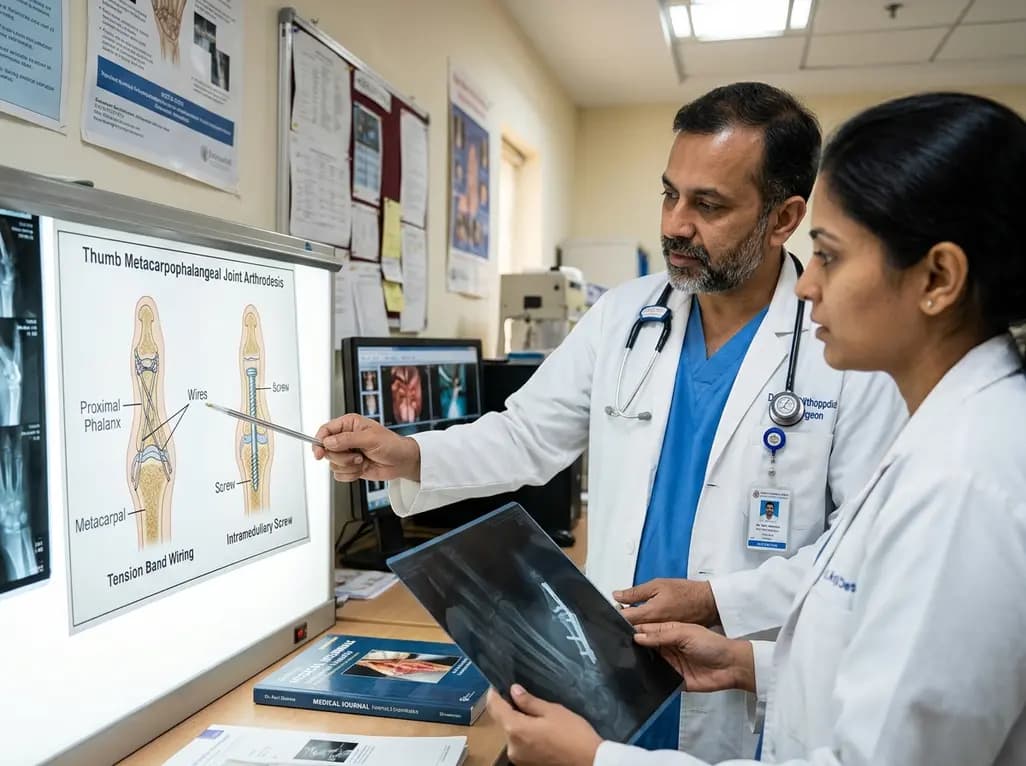
A comparative review of tension band wiring and intramedullary screw fixation in thumb metacarpophalangeal arthrodesis, evaluating union rates, hardware complications, and clinical outcomes.
Yesterday
A breakthrough ultrathin multimodal sensor decouples physical hemodynamic monitoring from disposable electrochemical calibration, achieving long-term wearable glucose prediction with 81.36% accuracy and a 9.12% MARD. This offers a robust, drift-free solution for outpatient metabolic surveillance.
Today
