.webp&w=384&q=75)

Loading, please wait...
Loading, please wait...

In modern healthcare systems, safeguarding digital medical records represents a foundational ethical and statutory responsibility. Healthcare professionals frequently face complex clinical situations where urgent collaborative care clashes with strict data confidentiality protocols. In these intense environments, clinicians and trainees often feel compelled to bypass security protocols to assist colleagues or expedite patient care. A pivotal study investigated how perceived medical need influences prosocial patient information disclosure among healthcare trainees. The researchers evaluated the dual role of personal information-security norms as direct predictors and moderating variables. Understanding these cognitive and ethical drivers is essential for building robust governance frameworks that protect confidentiality without impeding life-saving medical collaboration.
Unauthorized data sharing in healthcare settings often stems from benevolent intentions rather than malicious motives. Clinicians frequently encounter urgent clinical scenarios where rapid diagnostic access appears essential for patient survival. Consequently, trainees and clinicians may perceive an immediate medical necessity that prompts informal information exchange. This phenomenon, known as prosocial rule-breaking, occurs when healthcare workers violate institutional privacy rules to advance patient well-being or support overburdened peers. However, informal sharing compromises data integrity, violates patient privacy rights, and exposes healthcare facilities to severe regulatory penalties. When junior team members prioritize immediate clinical utility over formal channels, systemic cybersecurity vulnerabilities inevitably widen. Therefore, healthcare educators must analyze why individuals rationalize rule violations under perceived urgency. Investigating these psychological mechanisms helps institutional leaders craft policies that reconcile prompt clinical communication with uncompromised data protection standards.
To evaluate these dynamics, researchers conducted a cross-sectional experimental investigation involving 210 undergraduate health professions students in South Korea. The cohort included 116 medical students, 42 nursing students, and 52 emergency medical services trainees. The investigators randomly assigned participants across four simulated scenarios in a 2×2 factorial design. This design tested two key variables: clinical disease severity and institutional information security environments. Subsequently, the researchers utilized four-step hierarchical regression models and simple slope analyses to assess both direct and moderating relationships. The primary objective was determining whether perceived medical need for disclosure positively predicted prosocial intention to disclose sensitive records. Furthermore, the investigators examined whether robust personal norms could restrain unauthorized disclosures even during perceived clinical emergencies. The structured scenario-based methodology allowed researchers to isolate normative values from external pressure, offering valuable insights into individual decision-making under stress.
The statistical findings demonstrated that perceived medical need significantly and positively predicted prosocial intentions to disclose patient data. When students believed that an urgent clinical situation warranted immediate communication, their likelihood of sharing confidential records escalated sharply. However, the study uncovered a critical dual statistical role played by personal information-security norms. First, personal norms exhibited a direct negative association with unauthorized disclosure intentions, reinforcing baseline adherence to privacy rules. Second, personal norms served as a potent moderator in the relationship between perceived medical need and disclosure behavior. Specifically, simple slope analysis revealed that when personal security norms were high, the positive impact of perceived medical urgency on unauthorized sharing weakened substantially. Conversely, among students with weak personal security values, perceived clinical urgency prompted widespread willingness to bypass protocols. Thus, deeply internalized ethical norms act as a crucial psychological brake against opportunistic security lapses.
These behavioral observations carry profound implications for contemporary clinical practice, particularly within digital health environments. In outpatient clinics and intensive care units, rapid handovers often occur through informal messaging apps and unsecured verbal exchanges. While clinicians justify these actions as compassionate patient advocacy, such practices directly violate statutory mandates. In India, the Digital Personal Data Protection Act and National Medical Commission regulations establish strict legal duties regarding patient confidentiality. Unsanctioned data transmission creates significant legal liabilities, including severe financial penalties for institutions and disciplinary suspension for medical practitioners. Furthermore, unauthorized data dissemination compromises patient autonomy and damages public trust in digital health infrastructure. Therefore, medical professionals must recognize that prosocial intentions cannot justify procedural non-compliance. Establishing clear, compliant emergency bypass protocols ensures that urgent consultations occur without compromising digital security standards.
Healthcare institutions must implement practical strategies that channel altruistic clinical impulses through secure, authorized technical pathways. Relying solely on punitive measures often encourages surreptitious workarounds rather than genuine compliance. Instead, hospital administrators should deploy interoperable, mobile-optimized clinical communication tools that permit encrypted, rapid data sharing between authenticated providers. In addition, institutions must integrate automated audit trails and role-based access permissions that accommodate urgent consultations seamlessly. Departmental leaders should also cultivate a supportive institutional culture where junior staff can voice workflow bottlenecks without fear of retribution. When technical systems provide efficient, frictionless pathways for clinical coordination, the temptation to engage in unauthorized patient information disclosure diminishes substantially. Combining intuitive software architecture with rigorous administrative oversight enables healthcare facilities to maintain high standards of patient safety alongside uncompromising regulatory compliance.
Addressing these ethical dilemmas requires substantial curricular evolution within undergraduate and postgraduate medical training programs. Academic institutions often teach medical ethics and data privacy as theoretical legal concepts rather than practical clinical skills. Consequently, students struggle to navigate real-world tensions between clinical urgency and digital confidentiality during clinical clerkships. Medical, nursing, and allied health curricula must integrate immersive, scenario-based simulation exercises that challenge trainees with realistic security dilemmas. Educators should guide students through the complex cognitive processes involved in balancing prosocial instincts with statutory privacy duties. Furthermore, faculty mentors must model exemplary information hygiene during ward rounds and interdepartmental handovers. Reinforcing personal security norms during formative clinical training instills lifelong professional discipline. By nurturing strong internal values early, medical education produces clinicians who instinctively protect patient privacy while delivering compassionate, timely healthcare.
Prosocial patient disclosure occurs when healthcare professionals or trainees share confidential medical records without authorization to benefit a patient or assist clinical colleagues. Although motivated by benevolence and clinical urgency rather than malice, this practice bypasses institutional security protocols. Consequently, it creates severe confidentiality breaches, compromises electronic record integrity, and exposes healthcare institutions to significant regulatory penalties.
Personal information-security norms represent an individual's internalized moral obligation to protect confidential data. Research demonstrates that strong personal norms significantly weaken the link between perceived medical urgency and unauthorized disclosures. When clinicians maintain high internal security standards, they resist the impulse to bypass protocols, seeking compliant and secure communication channels even during challenging, high-pressure clinical scenarios.
In India, medical data privacy is governed by the Digital Personal Data Protection Act and National Medical Commission regulations. These statutory frameworks mandate explicit patient consent, strict access controls, and robust digital encryption for all health records. Unauthorized disclosures, even if executed with good clinical intentions, constitute serious statutory violations that can result in substantial monetary fines and professional disciplinary action.
Disclaimer: This content is for informational and educational purposes only and is not intended as a substitute for professional medical advice, diagnosis, or treatment. Always seek the advice of your physician or other qualified health provider with any questions you may have regarding a medical condition or treatment. Never disregard professional medical advice or delay in seeking it because of something you have read. The authors, editors, and publishers of this content do not guarantee the accuracy, completeness, or usefulness of any information provided and are not responsible for any errors or omissions or for the results obtained from the use of such information. Refer to the latest local and national guidelines for clinical practice.
References

Read summarized clinical updates, watch expert medical content, and earn CME certifications right from your smartphone.
Open your smartphone camera to scan and install.





A study explores how perceived medical need and personal security norms shape prosocial patient information disclosure among health professions students, highlighting critical implications for clinical ethics and data privacy.
4 weeks back

A bioengineered oral nanozyme microsupplement converts pathological ROS into a protective polydopamine hydrogel shield. By curbing neutrophil extracellular traps and balancing T cells, this platform outperforms standard 5-ASA in preclinical colitis models, opening new paths for sustained remission.
Today
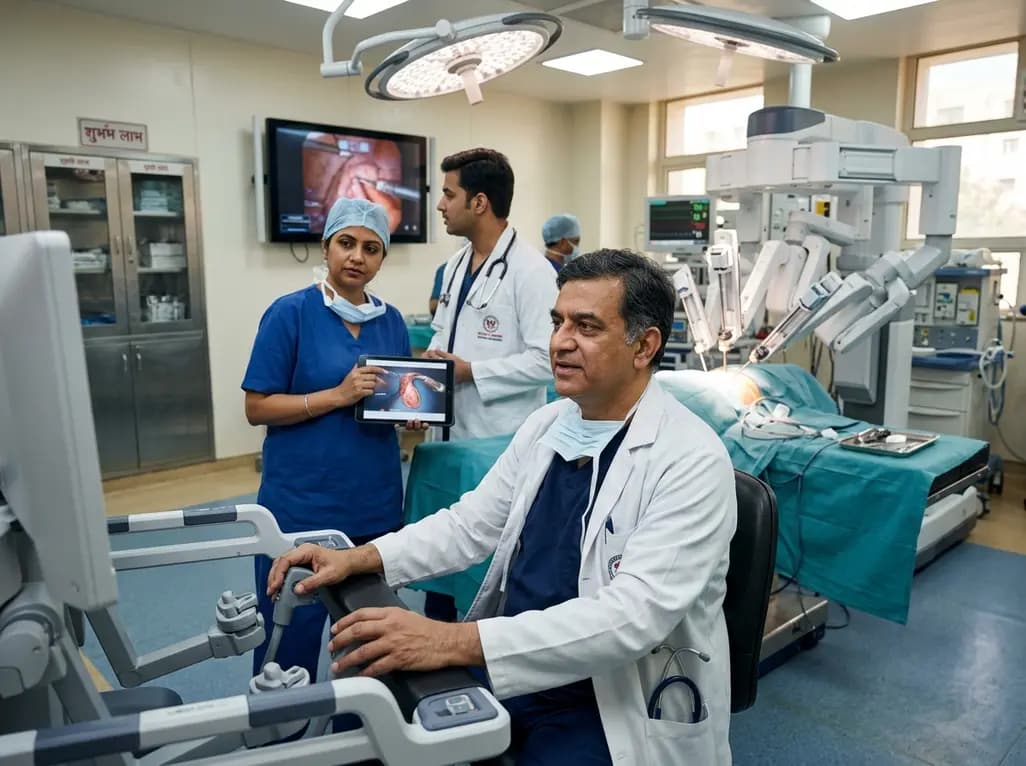
India experiences an exponential rise in robotic-assisted procedures, with Delhi NCR leading system installations and clinical volume. Discover how multidisciplinary surgical adoption, remote telesurgery breakthroughs, and standardized international consensus guidelines are shaping surgical care nationwide.
Today
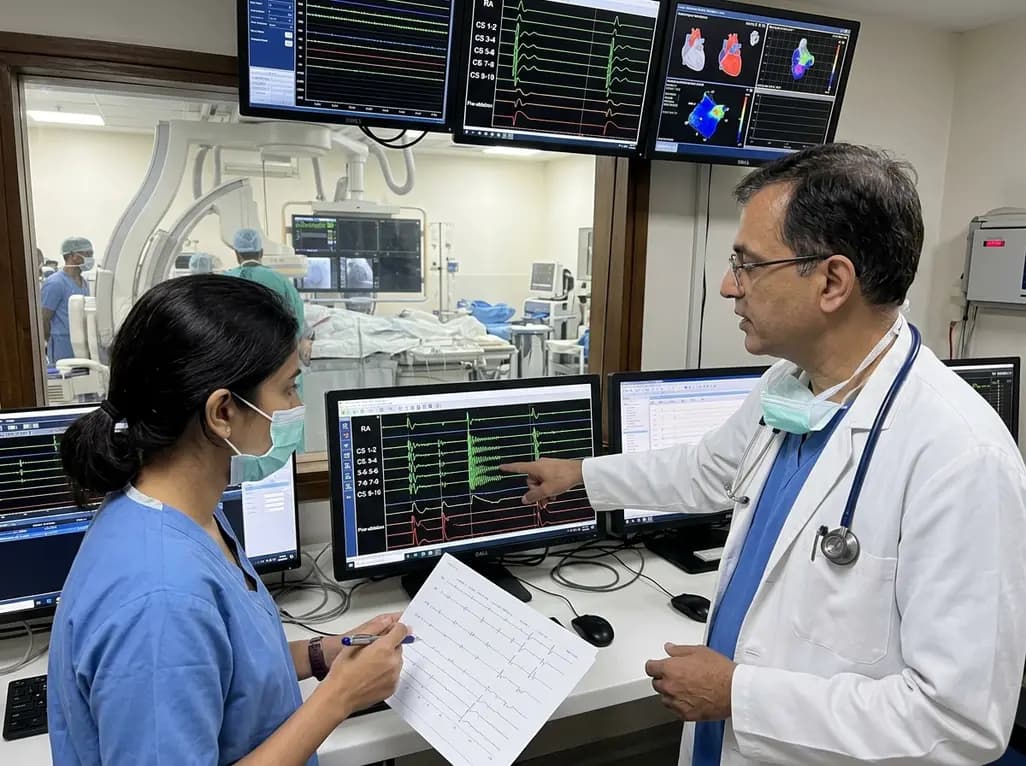
Radiofrequency catheter ablation of the cavotricuspid isthmus successfully terminates typical atrial flutter. This article reviews the mechanisms driving coronary sinus electrogram changes, wavefront activation pathways, and clinical criteria to verify bidirectional block during electrophysiology studies.
Today
A study comparing four knee flexion strength tests after ACL reconstruction using hamstring tendon autografts reveals marked variability in limb symmetry indices. Clinicians must recognize that different strength testing modalities yield divergent return-to-sport clearance rates.
Today
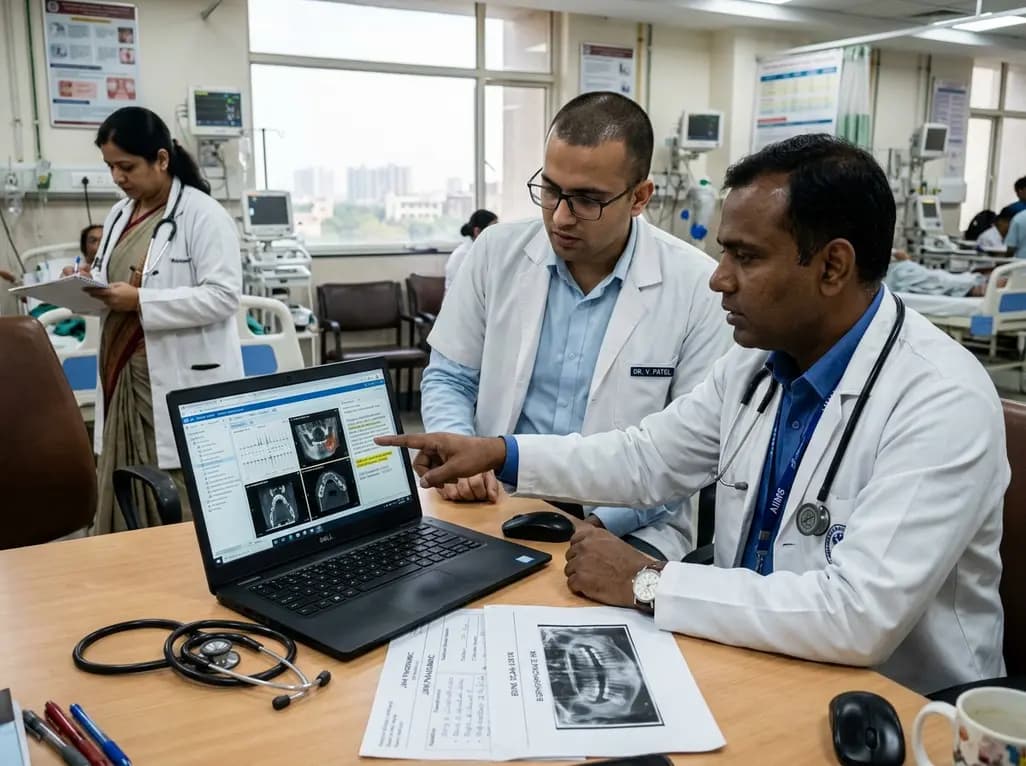
A breakthrough study leverages natural language processing to accurately identify incident medication-related osteonecrosis of the jaw and track antiresorptive drug holidays from clinical narratives in electronic health records, advancing osteoporosis pharmacovigilance and dental safety.
Yesterday
