.webp&w=384&q=75)

Loading, please wait...
Loading, please wait...
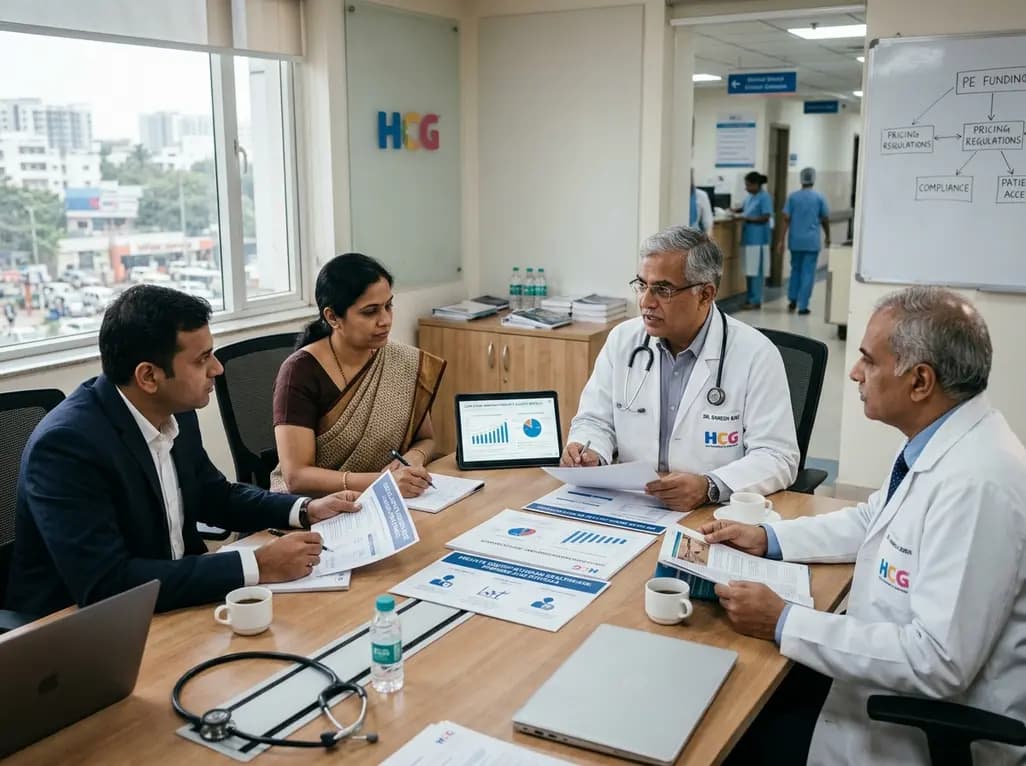
The ongoing expansion of private equity in healthcare continues to transform tertiary clinical delivery across India. As specialized cancer networks scale their operational footprints, hospital leaders face persistent debates surrounding financial returns, operational quality, and patient advocacy. Understanding how private capital interacts with clinical governance has become vital for modern medical practitioners navigating Indian hospital administration.
Private capital has undeniably enabled massive technological leaps in cancer care across the subcontinent. Modern cancer therapies require capital-intensive investments in robotic systems, linear accelerators, and advanced radiosurgery platforms like CyberKnife. Consequently, private equity partnerships provide hospital chains with the vital liquidity needed to procure sophisticated machinery without draining immediate operational reserves.
Furthermore, these substantial financial resources allow oncology centers to modernize infrastructure across tier-two and tier-three Indian cities. Instead of paying heavy shareholder dividends, institutional investors frequently reinvest profits back into technical upgrades and facility development. Therefore, clinicians gain access to cutting-edge diagnostic and therapeutic modalities that dramatically enhance patient outcomes.
In addition, institutional investors bring rigorous supply-chain discipline into hospital systems. They streamline the procurement of surgical consumables, diagnostic reagents, and specialty pharmaceuticals at competitive corporate pricing. Consequently, operational margins improve substantially without lowering standards of medical excellence. When clinical leaders preserve full autonomy over diagnostic decisions and therapeutic choices, this financial discipline generates significant organizational stability. Thus, the alliance between doctor-entrepreneurs and financial partners accelerates modernization while preserving therapeutic excellence.
Public perception often portrays private investment as an aggressive force that compromises patient welfare for shareholder profit. However, clinical leaders actively refute the notion that institutional investors dictate bedside management or direct clinical decisions. Instead, private equity partners concentrate strictly on board-level governance, fiscal accountability, and operational efficiency.
Moreover, experienced physician executives emphasize that medical knowledge and commercial acumen serve complementary institutional purposes. Doctors protect patient welfare, while corporate investors introduce administrative rigor and long-term capital strategy. Therefore, this collaborative model allows cancer hospitals to scale clinical capabilities across geographically underserved areas.
Nevertheless, public skepticism persists regarding the ultimate motivations of private equity funds. Critics frequently point out that private equity firms operate on cyclical investment horizons, seeking profitable exits after multi-year holding periods. To counter this concern, healthcare organizations must implement transparent administrative governance that strictly insulates clinical pathways from commercial metrics. Furthermore, hospital administrators should openly communicate how capital investment directly enhances clinical research, patient safety protocols, and nursing ratios. Ultimately, aligning financial growth with ethical physician leadership creates sustainable healthcare organizations capable of delivering world-class tertiary care.
The widening financial disparity between public and private tertiary healthcare has prompted regulatory scrutiny across India. Specifically, recent parliamentary committee recommendations have proposed strict price capping on hospital room rents and select clinical procedures. However, many healthcare leaders argue that arbitrary price ceilings represent a counterproductive solution that damages institutional viability.
Consequently, imposing rigid price caps without considering underlying operational overheads can stifle clinical innovation and technological upgrades. High-end oncology centers maintain massive expenditures on advanced radiation technology, continuous sterile environments, and highly trained clinical specialists. Therefore, artificial price controls risk eroding the quality of care and halting regional expansion into tier-two cities.
Instead of imposing blunt caps, healthcare economists advocate for comprehensive universal healthcare frameworks. For instance, the government could expand structured public reimbursement schemes that match private clinical delivery, similar to international Medicare models. In addition, transparent tiering of hospital amenities could protect affordability while allowing institutions to cross-subsidize complex oncological procedures. Thus, policymakers and private providers must collaborate on sustainable reimbursement reforms that expand patient access while protecting quality standards.
Clinical research integrity remains the cornerstone of modern evidence-based medicine and patient safety in India. Recently, the Central Drugs Standard Control Organisation suspended the registration of the HCG-Bangalore Institute of Oncology Ethics Committee for 24 months. Specifically, regulatory inspections flagged compliance failures involving delayed reporting of serious adverse events and inadequate management documentation under the New Drugs and Clinical Trials Rules.
However, hospital leadership emphasized that institutional ethics committees function as independent review bodies distinct from direct hospital management. Furthermore, existing clinical trials continue uninterrupted under strict regulatory monitoring, whereas the suspension temporarily restricts the initiation of new drug trials through that specific committee. Hospital authorities have filed appeals while establishing new institutional committees that fulfill every regulatory prerequisite.
Nevertheless, this high-profile regulatory action highlights the paramount necessity of meticulous documentation in clinical research. Institutional ethics committees must maintain rigid operational independence, avoid investigator conflicts of interest, and process adverse event causality assessments promptly. Consequently, clinical investigators across Indian oncology centers must treat regulatory adherence with absolute clinical seriousness. Thus, robust oversight ultimately safeguards human trial participants while elevating the international credibility of Indian clinical research.
Immune checkpoint inhibitors like pembrolizumab and nivolumab have revolutionized modern oncological management across various malignancies. Unfortunately, prohibitive market pricing has historically prevented the vast majority of Indian cancer patients from accessing these life-saving therapies. However, recent scientific innovations and commercial shifts are steadily transforming the domestic affordability landscape.
Firstly, domestic pharmaceutical manufacturers are actively developing generic and biosimilar versions of patented checkpoint inhibitors. Additionally, international pharmaceutical companies increasingly introduce patient assistance and free-drug access programs to mitigate out-of-pocket expenses. Therefore, financial toxicity surrounding advanced immunotherapy is beginning to decline across tertiary cancer institutions.
More importantly, Indian oncologists have pioneered impactful clinical trials evaluating low-dose immunotherapy protocols. For example, clinical studies demonstrate that reduced doses of nivolumab combined with metronomic chemotherapy achieve comparable biological efficacy at approximately one-quarter of standard commercial costs. However, widespread clinical adoption requires robust institutional support and expanded coverage under state and central health insurance schemes. Consequently, public funding mechanisms must formally include evidence-based, low-dose immunotherapy regimens to guarantee equitable cancer care nationwide.
Q1: How does private equity investment influence clinical decisions in Indian hospitals?
Private equity investment primarily influences corporate governance, supply chain optimization, and operational efficiency rather than bedside clinical decisions. Physician leaders retain full clinical autonomy over diagnostic pathways and treatment plans for their patients. Furthermore, institutional capital enables hospital networks to acquire advanced medical technologies like robotic surgery and modern linear accelerators, enhancing overall care delivery without dictating individual doctor-patient therapeutic choices.
Q2: Why do healthcare leaders oppose arbitrary price capping on private hospital services?
Healthcare administrators oppose arbitrary price capping because uniform rate ceilings often ignore significant capital expenditures required for tertiary care infrastructure. Advanced oncology centers invest heavily in high-end radiation machinery, specialized intensive care units, and skilled personnel. Consequently, rigid price controls can stifle innovation and limit hospital expansion into underserved regions. Leaders instead advocate for comprehensive universal healthcare frameworks and transparent reimbursement schemes.
Q3: What clinical evidence supports low-dose immunotherapy protocols in oncology?
Prospective clinical trials conducted in India demonstrate that low-dose immunotherapy regimens can achieve biological efficacy comparable to full-dose therapies. For instance, combining low-dose nivolumab with metronomic chemotherapy or neoadjuvant regimens significantly reduces tumor burden in advanced head and neck cancers. Importantly, this alternative dosing strategy lowers therapy costs to roughly one-quarter of traditional expenses, greatly improving drug affordability and accessibility for underprivileged patient populations.
Disclaimer: This content is for informational and educational purposes only. It does not constitute medical advice or replace professional judgment. Refer to the latest local and national guidelines for clinical practice.
References

Read summarized clinical updates, watch expert medical content, and earn CME certifications right from your smartphone.
Open your smartphone camera to scan and install.





Healthcare Global Enterprises executive leadership examines the transformative impact of capital investments, pricing regulations, and strict regulatory clinical compliance across India's evolving oncology ecosystem, highlighting novel low-dose immunotherapy access models.
Today
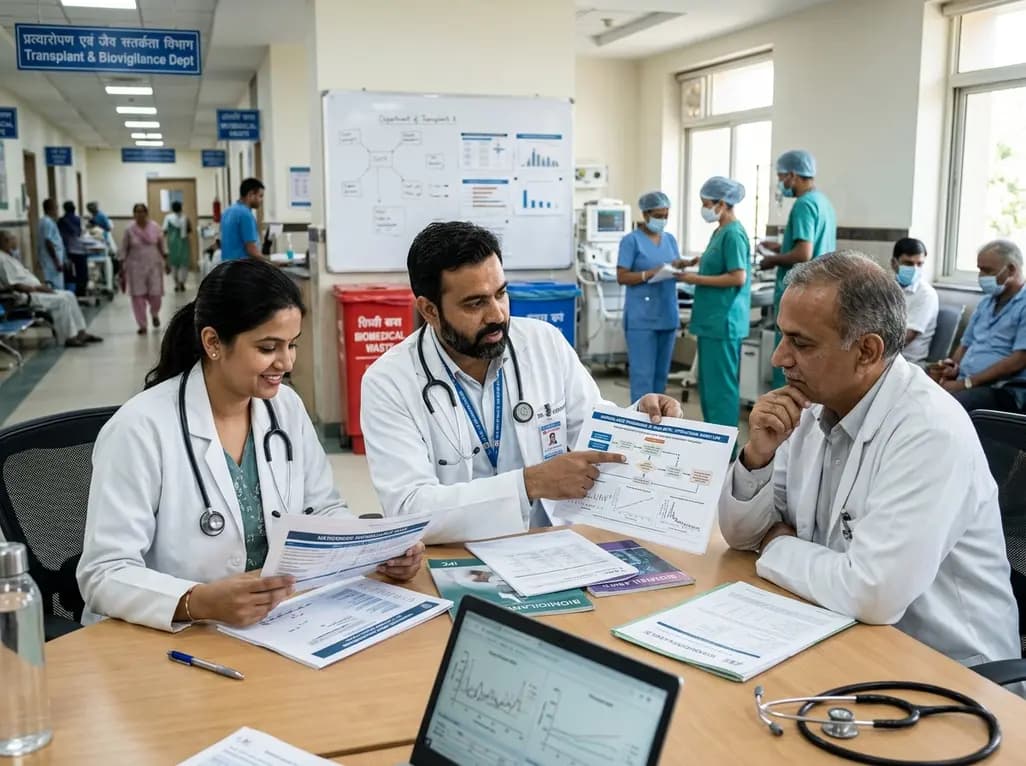
The Indian Government has approved the Biovigilance Programme of India, empowering the IPC to track adverse events in organ and tissue transplant procedures. This nationwide initiative unifies donor and recipient surveillance with established drug and medical device safety mechanisms to elevate clinical standards.
Today
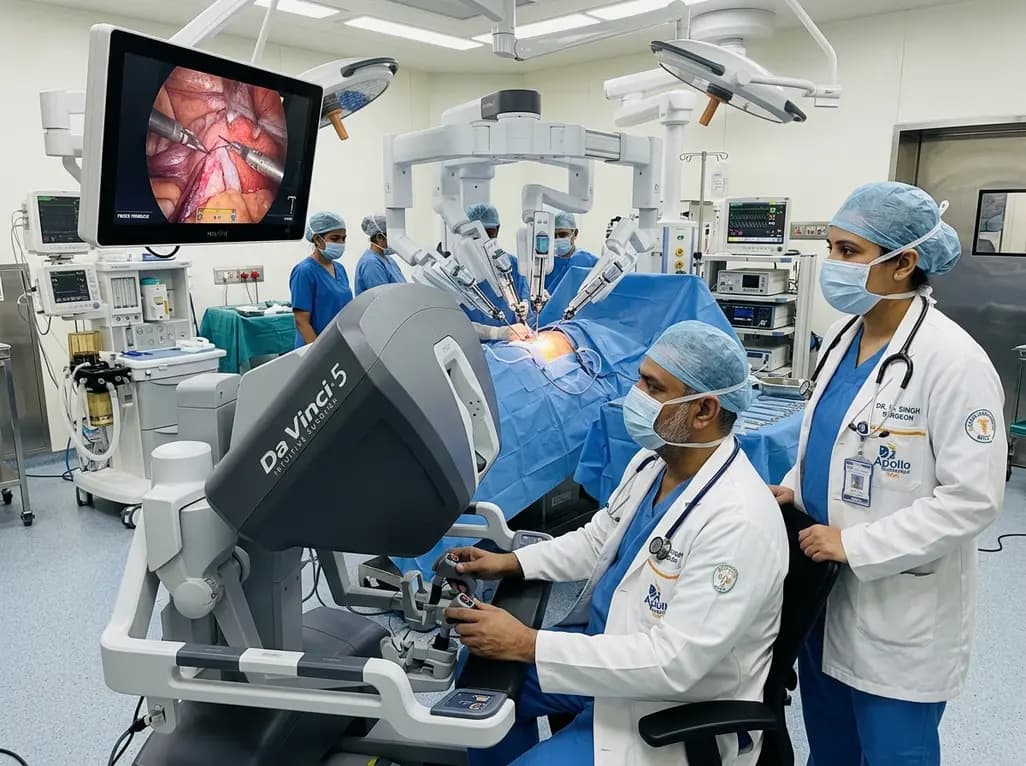
India expands its minimally invasive surgical landscape as Intuitive unveils its fifth-generation robotic platform. Equipped with real-time force feedback and immense computing performance, this innovation assists clinical specialists across urology, gynecology, and general surgery in optimizing operative care.
Today
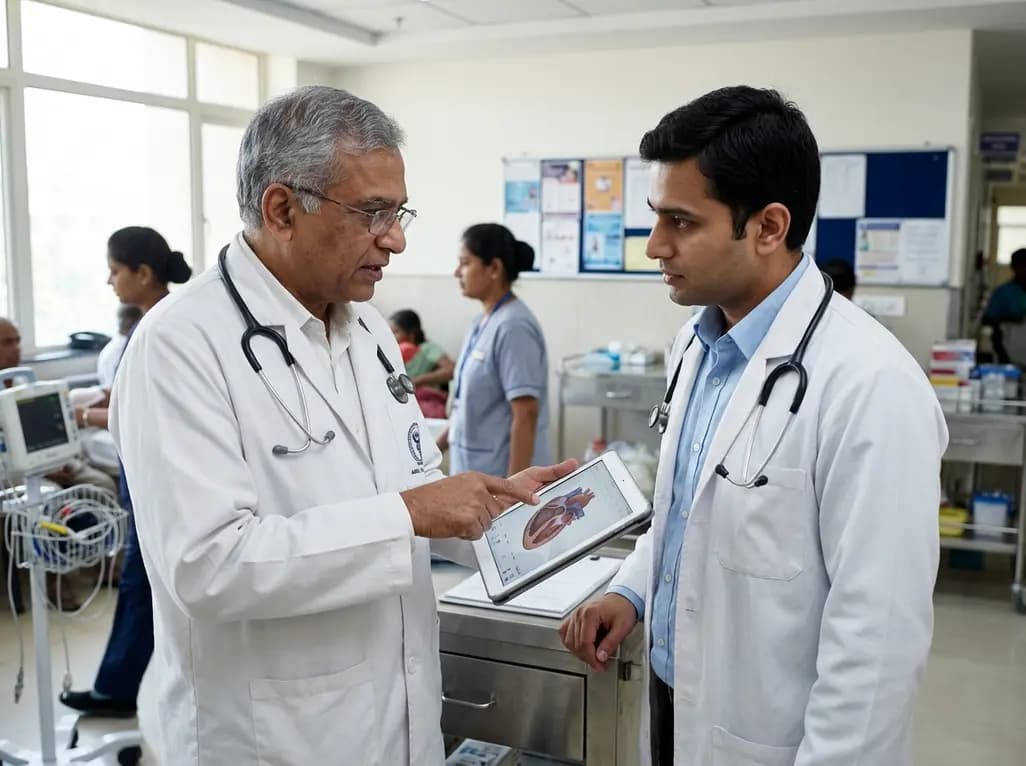
Large-scale biobank research demonstrates that low-grade systemic inflammation quietly remodels ventricular architecture years before cardiovascular symptoms appear. Learn how emerging biomarkers like GlycA and targeted anti-inflammatory pathways could reshape preventive cardiovascular screening and clinical risk evaluation.
Today
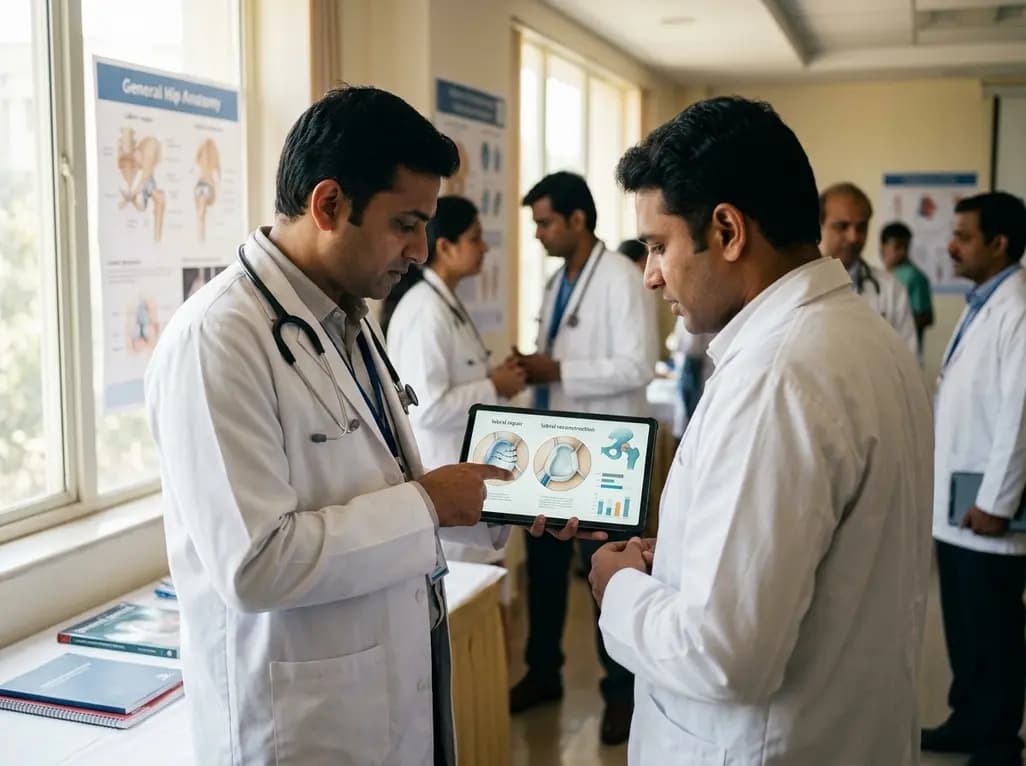
Systematic review comparing labral repair and reconstruction in primary hip arthroscopy shows comparable short- to mid-term patient-reported outcomes, with lower THA conversion after repair but superior outcomes for reconstruction in patients aged 40 and older.
Today

Diabetic peripheral neuropathy involves chronic neuroinflammation and blood-nerve barrier dysfunction. This review discusses advanced nanomedicine formulations, including nanoparticles and hydrogels, designed to overcome pharmacokinetic barriers and modulate the peripheral neuroimmune axis.
Today
