.webp&w=384&q=75)

Loading, please wait...
Loading, please wait...

The transition to motherhood triggers profound biological, psychological, and hormonal changes. Recent neuroimaging research highlights how pregnancy and childbirth reshape maternal neuroanatomy. Clinicians frequently encounter mothers reporting cognitive fatigue, memory lapses, and affective vulnerability during early motherhood. Consequently, understanding whether these structural brain alterations reflect accelerated biological aging or temporary neuroplastic adaptations remains vital. A landmark longitudinal study published in Human Brain Mapping investigated the postpartum brain age gap using advanced machine learning models. By examining structural magnetic resonance imaging (MRI) scans, the investigators revealed that the maternal brain exhibits a transient increase in estimated biological age followed by complete structural recovery within twelve months.
Brain age prediction uses machine learning algorithms trained on extensive neuroimaging datasets to estimate biological age from structural MRI scans. Specifically, the metric known as the brain age gap represents the mathematical difference between MRI-predicted biological age and chronological age. When biological age exceeds chronological age, it indicates accelerated structural aging or acute neurostructural remodeling. Conversely, a negative gap indicates youthful brain morphology. In this controlled investigation, researchers evaluated 55 women, comprising 25 postpartum individuals and 30 matched nulliparous controls. The investigators conducted longitudinal MRI evaluations at approximately 3 months and 12 months after delivery, with controls scanned at identical intervals. At the initial 3-month evaluation, postpartum participants exhibited a pronounced positive gap averaging 2.5 years. In contrast, nulliparous controls displayed a baseline gap of only 0.3 years, demonstrating a statistically significant elevation in the postpartum cohort. Furthermore, the observed effect size was substantial, underscoring notable early postpartum neurostructural deviation captured by predictive algorithms.
Although the initial elevation suggests acute neuroanatomical strain, longitudinal data provide clear clinical reassurance. Specifically, between the 3-month and 12-month assessments, postpartum women experienced a significant reduction in their brain age gap of approximately 3.3 years. Consequently, by 12 months postpartum, their structural brain metrics fully returned to baseline control levels. In contrast, the control group maintained stable brain age values across the same time window, showing minimal longitudinal shift. While the between-group interaction term for longitudinal trajectory did not reach statistical significance due to sample size constraints, the within-group recovery was robust. Furthermore, these dynamic changes confirm that structural shifts in early motherhood represent reversible remodelling rather than permanent damage. In addition, the rapid decline in gap values over nine months indicates that early postpartum stressors abate as sleep patterns and circadian rhythms stabilize. Clinicians should recognize that the maternal central nervous system possesses tremendous capacity for functional restoration.
To uncover the anatomical origins of these alterations, the study authors applied Shapley additive explanations (SHAP), a game-theoretic explainable artificial intelligence method. Importantly, this analysis pinpointed subcortical brain structures as the primary drivers of the elevated brain age gap at 3 months. These deep grey matter nuclei, which include the thalamus, basal ganglia, and limbic circuits, regulate neuroendocrine signaling, stress responses, and maternal caregiving behaviors. Furthermore, subcortical regions undergo intense hormonal exposure during pregnancy and early lactation. As a result, acute shifts in estrogen, progesterone, prolactin, and oxytocin likely induce rapid volumetric remodeling in these specific hubs. However, by 12 months, the explainability metrics for subcortical networks normalized in tandem with the global brain age gap. Moreover, the pronounced effect size observed in subcortical feature attributions highlights the exquisite sensitivity of deep grey structures to postpartum physiology and maternal adaptation.
Beyond structural imaging metrics, the investigators examined whether the postpartum brain age gap correlates with subjective and objective clinical phenomena. Notably, across the entire participant cohort, higher brain age gap values correlated inversely with working memory performance. Additionally, elevated gap scores demonstrated statistically significant positive correlations with depressive symptom scores and subjective cognitive complaints. Many postpartum women describe subjective mental fog or minor forgetfulness, often colloquially termed "mommy brain." Consequently, these empirical correlations validate patient-reported symptoms, showing they reflect measurable subcortical structural shifts rather than psychosomatic stress. Furthermore, these findings emphasize that psychological vulnerability in the fourth trimester relates directly to underlying neurobiological fluctuations. Importantly, recognizing this neurostructural substrate reduces the stigma surrounding postpartum cognitive changes. Therefore, integrating cognitive assessments with affective screening ensures a holistic evaluation of maternal well-being during routine postnatal consultations.
A critical clinical question is whether temporary structural shifts reflect premature neurodegeneration or healthy maternal adaptation. Fortunately, the evidence strongly supports adaptive neuroplasticity. During gestation and early postpartum months, the brain restructures to enhance maternal sensitivity, neonatal cue recognition, and protective instincts. Therefore, cellular mechanisms such as synaptic pruning, glial remodeling, and localized fluid redistribution temporarily alter tissue density. Machine learning models, trained primarily on aging trajectories in non-postpartum populations, misinterpret these specialized adaptive changes as biological aging. Furthermore, complete normalization by one year demonstrates that neural tissues retain robust cellular resilience. These findings provide invaluable clinical insights for obstetricians, neurologists, psychiatrists, and primary care physicians. Clinicians can confidently reassure new mothers that subjective cognitive slips are physiological and temporary. In addition, recognizing subcortical vulnerability highlights the importance of routine postpartum mood screening and multidisciplinary care.
The temporary elevation stems from profound neuroendocrine shifts, fluid redistribution, and targeted synaptic reorganization during late pregnancy and early lactation. Specifically, subcortical structures responsible for maternal bonding, stress regulation, and emotional processing undergo rapid structural remodeling. Machine learning models interpret these unique tissue modifications as accelerated biological aging. However, this process reflects transient, reversible neuroplastic adaptation rather than permanent pathological degeneration.
Research confirms that a higher brain age gap correlates significantly with reduced working memory performance, greater subjective cognitive complaints, and elevated depressive symptom scores. Consequently, these statistical correlations validate common patient experiences such as maternal cognitive fatigue and emotional vulnerability during the first three months postpartum. This provides a clear biological basis for temporary symptoms that gradually resolve as structural metrics normalize.
No, the temporary elevation does not indicate permanent neurodegenerative damage or elevated long-term dementia risk. Longitudinal tracking demonstrates that the brain age gap decreases significantly by 12 months postpartum, returning completely to baseline levels seen in healthy nulliparous controls. Furthermore, this structural normalization underscores the remarkable resilience, dynamic cellular reversibility, and plastic capacity inherent to the maternal central nervous system.
Disclaimer: This content is for informational and educational purposes only. It is not intended as medical advice. Always consult a qualified healthcare professional regarding any medical condition or treatment. Refer to the latest local and national guidelines for clinical practice.
References

Read summarized clinical updates, watch expert medical content, and earn CME certifications right from your smartphone.
Open your smartphone camera to scan and install.





A longitudinal neuroimaging study reveals that postpartum women experience a transient elevation in brain age gap at 3 months that normalizes by 12 months. This shift highlights adaptive neuroplasticity rather than permanent cognitive impairment, correlating with temporary executive and affective fluctuations.
4 weeks back

A bioengineered oral nanozyme microsupplement converts pathological ROS into a protective polydopamine hydrogel shield. By curbing neutrophil extracellular traps and balancing T cells, this platform outperforms standard 5-ASA in preclinical colitis models, opening new paths for sustained remission.
Today

India experiences an exponential rise in robotic-assisted procedures, with Delhi NCR leading system installations and clinical volume. Discover how multidisciplinary surgical adoption, remote telesurgery breakthroughs, and standardized international consensus guidelines are shaping surgical care nationwide.
Today
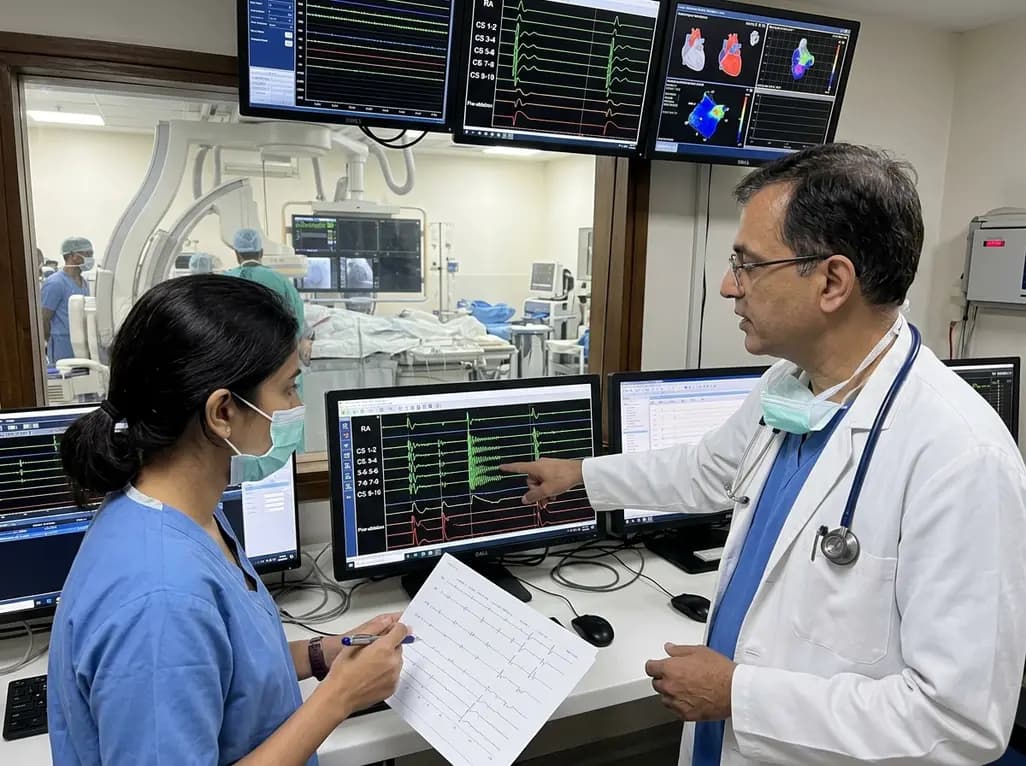
Radiofrequency catheter ablation of the cavotricuspid isthmus successfully terminates typical atrial flutter. This article reviews the mechanisms driving coronary sinus electrogram changes, wavefront activation pathways, and clinical criteria to verify bidirectional block during electrophysiology studies.
Today
A study comparing four knee flexion strength tests after ACL reconstruction using hamstring tendon autografts reveals marked variability in limb symmetry indices. Clinicians must recognize that different strength testing modalities yield divergent return-to-sport clearance rates.
Today

A breakthrough study leverages natural language processing to accurately identify incident medication-related osteonecrosis of the jaw and track antiresorptive drug holidays from clinical narratives in electronic health records, advancing osteoporosis pharmacovigilance and dental safety.
Yesterday
