

Loading, please wait...
Loading, please wait...

Cervical spondylotic myelopathy represents a major cause of progressive spinal cord impairment in aging adults worldwide. Consequently, surgical decompression serves as the standard intervention to halt clinical deterioration and restore functional independence. However, perioperative management practices vary significantly among surgical teams. While clinicians routinely mandate critical care monitoring for traumatic cord injury, clear guidelines for degenerative conditions remain scarce. As a result, decisions regarding post-operative ICU admission often reflect subjective institutional habits rather than standardized risk assessments. Recent clinical evidence now provides valuable clarity on optimizing critical care utilization for these complex spine operations.
Spine surgeons routinely balance aggressive neural decompression against perioperative physiological instability. In acute spinal cord trauma, surgeons frequently maintain elevated mean arterial pressure goals within an intensive care environment. Consequently, many practitioners historically adopted similar management pathways for elective myelopathy procedures. Nevertheless, patients undergoing planned surgery for cervical spondylotic myelopathy demonstrate distinctly different physiological trajectories compared to trauma cases. Chronic compressive lesions generate progressive mechanical stress rather than abrupt ischemic disruption. Therefore, universal critical care observation may not benefit every elective patient.
Furthermore, intensive care units represent highly scarce and expensive resources in hospital systems across India and globally. When clinicians admit low-risk patients to intensive beds unnecessarily, they inadvertently delay care for critically unstable cases. In addition, routine critical care stays often expose individuals to hospital-acquired complications and sleep fragmentation. Modern surgical departments therefore require robust criteria to differentiate patients who genuinely need invasive monitoring from those who can safely recover in specialized step-down units or standard orthopedic wards. Establishing evidence-based triage protocols promotes rational resource stewardship while maintaining uncompromising patient safety.
Recent investigations shed valuable light on patient-specific and surgical variables that drive high-dependency admissions. In a comprehensive cohort study of over four hundred elective myelopathy procedures, researchers identified distinct features governing post-operative ICU admission patterns. Specifically, advanced patient age and multiple stenotic cervical levels significantly increased the likelihood of critical care transfer. Older adults frequently present with subtle cardiopulmonary comorbidities that demand vigilant hemodynamic oversight.
Similarly, anatomical severity strongly influenced post-operative trajectory. An elevated adapted spinal canal occupation ratio indicated severe spinal cord narrowing and prolonged intraoperative manipulation. Surgical complexity also played a decisive role in the ultimate disposition. For instance, posterior surgical approaches, prolonged operative durations, and higher estimated blood loss consistently correlated with intensive care placement. Surgeons operating via posterior instrumentation frequently tackle multilevel pathology involving extensive paraspinal muscle dissection. Consequently, these extended operations yield greater fluid shifts and heightened post-operative pain scores. Interestingly, institutional service allocation also influenced destination, as orthopedic services utilized critical care more frequently than neurosurgical teams. Recognizing these definitive risk factors allows surgical teams to anticipate post-operative requirements well before patient transfer.
A pivotal inquiry centers on whether intensive monitoring shortens overall hospitalization or inadvertently extends inpatient convalescence. To address inherent selection biases, investigators employed rigorous propensity score matching to compare equivalent patient groups. Crucially, the matched analysis demonstrated that non-ICU patients experienced a significantly shorter hospital length of stay compared to ICU cohorts. Patients bypassing critical care averaged approximately two days in the hospital, whereas those entering the ICU remained hospitalized for more than four days.
Furthermore, this marked reduction in hospital duration occurred without any compromise in secondary clinical outcomes. Non-ICU patients achieved favorable discharge dispositions and maintained comparable neurological recovery rates throughout extended follow-up. Moreover, investigators observed no meaningful disparities in severe perioperative complications or three-year reoperation rates between matched cohorts. Thus, routine ICU admission did not confer superior clinical protection or accelerated recovery for appropriately selected patients. Instead, critical care admission frequently initiated a cascade of logistical delays, including prolonged catheterization, immobilized bed rest, and delayed step-down transfers. These compelling findings clearly demonstrate that well-managed ward recovery can expedite ambulation and accelerate safe home discharge.
Healthcare systems face escalating economic pressures that necessitate disciplined operational efficiency and prudent bed utilization. Intensive care beds carry tremendous daily direct costs, extensive nursing staffing requirements, and high procedural overhead. Therefore, admitting stable spine surgery patients to critical units imposes substantial financial burdens on healthcare facilities and private families alike. In settings with high out-of-pocket expenses, redundant critical care days rapidly escalate medical bills without improving outcomes.
Additionally, unnecessary ICU stays induce system-wide operational bottlenecks. When intensive care beds remain occupied by elective cases requiring minimal intervention, emergency departments and trauma centers struggle to place truly unstable patients. Consequently, hospitals must cancel scheduled elective surgeries or divert emergency ambulances to distant medical centers. By shifting low-risk cervical spine patients toward specialized step-down or surgical wards, clinical administrators liberate vital intensive care capacity. Furthermore, this deliberate reallocation reduces unnecessary laboratory testing, continuous invasive lines, and unnecessary specialist consultations. Implementing selective admission criteria optimizes financial resources, enhances bed turnover, and preserves critical care access for severe neurological or respiratory crises.
Indian tertiary care centers manage unique clinical demographics, marked by substantial patient volumes and diverse infrastructure capabilities. Therefore, spine surgical teams must establish practical, objective triaging algorithms tailored to institutional capabilities. Surgeons should reserve post-operative ICU admission for individuals exhibiting concrete physiological vulnerability. Key indications include advanced age with cardiopulmonary compromise, severe canal stenosis across multiple levels, and profound intraoperative blood loss. Conversely, stable patients undergoing straightforward anterior cervical discectomy and fusion or limited laminoplasties rarely require invasive intensive monitoring.
Moreover, multidisciplinary coordination between neurosurgeons, spine surgeons, anesthesiologists, and nursing staff ensures seamless perioperative transitions. Dedicated intermediate care units or high-dependency step-down wards offer an ideal middle ground. In these environments, experienced nursing staff continuously monitor respiratory function, neurological baseline, and surgical site swelling without incurring ICU overhead. As a result, surgical teams catch potential airway hematomas or neurological changes promptly. Standardizing these objective criteria across departments eliminates arbitrary surgeon-specific preferences and fosters consistent institutional quality. Ultimately, implementing structured post-operative protocols ensures patient safety, shortens recovery time, and optimizes hospital capacity.
Routine ICU admission is not mandatory for all cervical spondylotic myelopathy patients. Clinical evidence shows that routine critical care admission significantly prolongs hospital length of stay without decreasing surgical complications. Therefore, clinicians should restrict ICU placement to high-risk individuals exhibiting significant cardiopulmonary comorbidities, extensive multilevel stenosis, or substantial intraoperative blood loss.
The primary predictors include advanced patient age, severe canal stenosis, elevated spinal canal occupation ratio, and posterior surgical approaches. Additionally, prolonged operative time, significant intraoperative hemorrhage, and preexisting cardiovascular disease heighten monitoring requirements. Identifying these factors helps surgical teams selectively allocate intensive care resources while safely sending stable patients to specialized recovery wards.
Bypassing routine ICU care reduces total hospital stay by nearly two days without compromising neurological recovery or increasing three-year reoperation rates. Furthermore, direct ward recovery promotes early patient mobilization, reduces invasive catheter use, and minimizes hospital-acquired infections. Consequently, hospitals conserve valuable intensive care beds and dramatically lower overall medical expenses for recovering patients.
Disclaimer: This content is for informational and educational purposes only... Refer to the latest local and national guidelines for clinical practice.
References

Read summarized clinical updates, watch expert medical content, and earn CME certifications right from your smartphone.
Open your smartphone camera to scan and install.





A retrospective cohort analysis evaluates post-operative ICU admission patterns in cervical spondylotic myelopathy surgery. Findings highlight clinical predictors and show that avoiding routine ICU stay shortens overall hospital length of stay without compromising safety.
Today

A validated natural language processing pipeline leverages clinical notes and intermediate annotations to identify risky alcohol use across surgical patients, offering automated preoperative risk stratification.
Today

The GESS-AEEM consensus establishes a clear clinical implementation framework for testosterone therapy in postmenopausal women with hypoactive sexual desire disorder, focusing on transdermal dosing, precise laboratory monitoring, and safety communication.
Yesterday
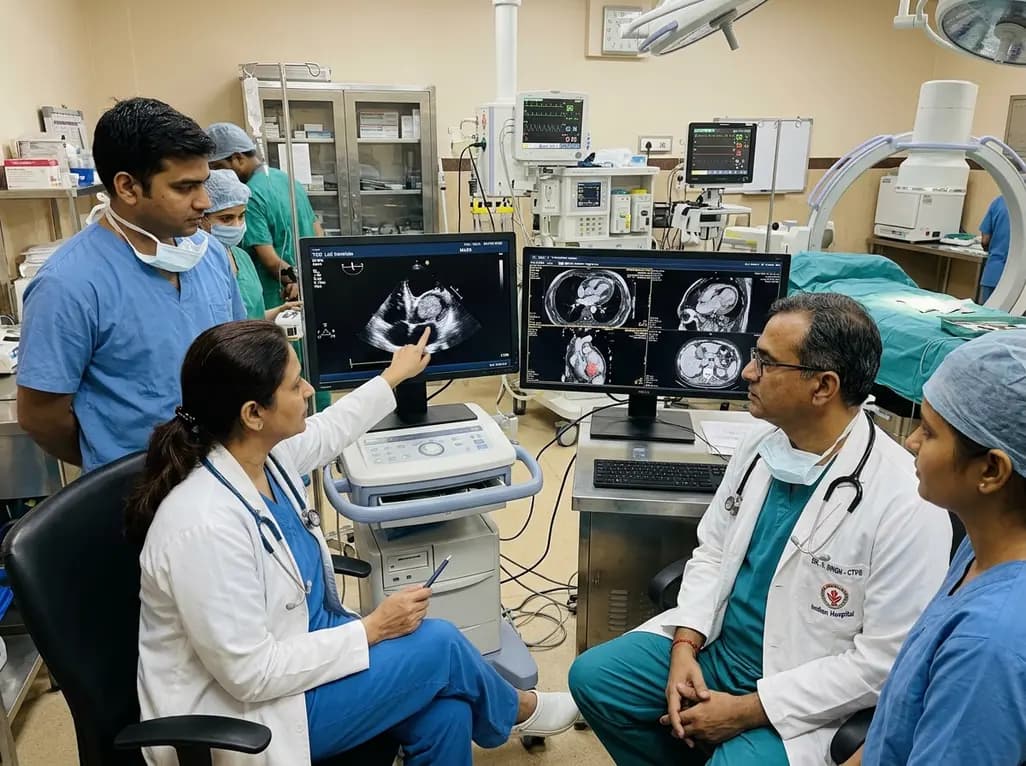
A rare case of an asymptomatic left ventricular hemangioma highlights the vital role of multimodal imaging in differentiating vascular tumors from thrombus. Complete surgical resection under transesophageal echocardiography guidance prevents thromboembolism and delivers optimal outcomes.
Today

A landmark study evaluates long-term quality of life in adolescents and adults with brachial plexus birth injury. Severe functional limitation and limited access to care significantly worsen outcomes, underscoring the urgent need for persistent, multidisciplinary management across adult healthcare transitions.
Today

An analysis of 1,000 posts by macro- and mega-influencers on Instagram and TikTok revealed that 78.5% contained nutrition misinformation, while only 24% of creators held valid credentials. This article examines the clinical risks of viral dietary fads and provides actionable guidance for healthcare professionals.
Today
